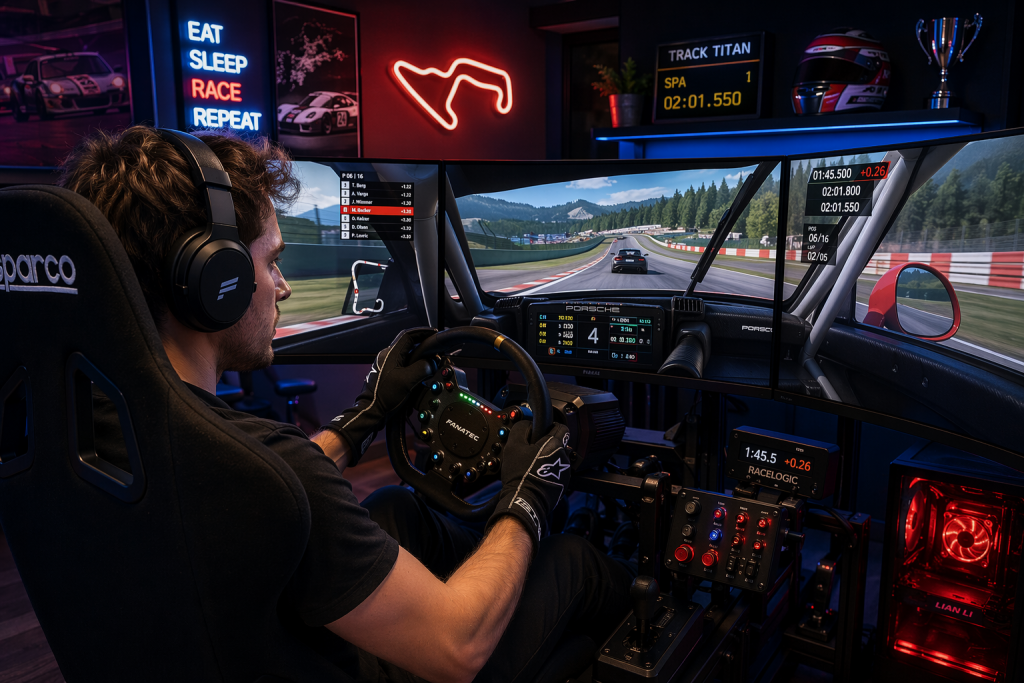
Key Highlights
-
A sim racing steering wheel gives you a more realistic sim racing experience than a basic gaming wheel.
-
Force feedback helps you feel the curb, slip, and chassis movement through the steering wheel.
-
A direct drive system sends torque straight from the motor for sharper control and stronger tactile feedback.
-
Good build quality improves durability, comfort, and long-term racing setup value.
-
The right sim racing wheel setup can support better consistency, confidence, and lap times.
-
Accessories can further improve your racing setup and overall driving experience.
Introduction
A great sim racing steering wheel can change how you drive, react, and improve on track. If you want a more realistic sim racing experience, your steering wheel matters just as much as the rest of your setup. From stronger force feedback to better materials and sharper inputs, the right wheel helps you feel more connected to every corner. That means more confidence, more control, and a racing experience that feels far closer to the real thing.

The Role of Sim Racing Steering Wheels in Modern Racing Simulators
Sim racing steering wheels are your main connection to the car. It turns digital inputs into something you can feel and respond to, which makes the driving experience much more natural.
Force feedback is a big reason why. It sends information from the simulator through the racing wheel, so you can sense curbs, grip changes, and slip as you drive. That added detail helps explain why a better wheel can improve both immersion and control.
Why Sim Racing Steering Wheels Matter for Realistic Driving
Realistic driving requires realistic feedback. A quality sim racing wheel provides tactile sensations that basic gaming gear can’t match, making your racing experience more immersive and informative.
Clear force feedback lets your hands react quickly by transmitting signals like curb strikes, wheel slip, and subtle chassis movements. This helps you adapt your driving style instead of guessing.
The wheel becomes more than a controller—it’s a tool for learning consistency, building confidence, and deepening your connection with the car on screen.
Key Features of a Quality Sim Racing Steering Wheel
A quality sim racing wheel stands out in a few clear ways. The key features include strong force feedback, precise input accuracy, solid build quality, and materials that hold up under regular use. These details directly shape how your racing setup feels and performs.
Just as important, the wheel base should match your needs. Entry-level buyers often start with belt-driven systems, while drivers chasing more realism usually move to direct drive. Each choice affects your control, comfort, and long-term upgrade path.
Force Feedback Technology Explained
Force feedback makes a sim wheel feel lifelike by transmitting information from the simulator through the wheel base, letting you feel the car’s actions—not just see them.
Practically, this means you sense road texture and car behaviour. A direct drive wheel delivers torque straight from the motor, with no gears or belts, resulting in cleaner, faster feedback.
You’ll notice:
-
More details on curbs and surface changes
-
Clearer feedback when the car slips
-
More direct steering response
For serious sim racers, this is one of the best performance upgrades available.
Customizable Controls and Button Layouts
A smart button layout keeps you focused while driving by giving quick access to key functions right on the wheel—no need to reach for a keyboard or pause mid-session.
Customizable controls like rotary encoders and a funky switch make in-race adjustments easier. The more intuitive the layout, the less it distracts from your driving.
Essential control options include:
-
Rotary encoders for quick setting changes
-
Funky switch for menu navigation
-
Well-placed buttons for easy access
When controls fit your driving style, racing feels smoother and more confident.
Build Quality and Materials for Durability
Build quality impacts both feel and longevity. A well-made wheel rim inspires confidence, while poor construction can make the wheel feel less precise over time.
High-end sim racing wheels use materials like aluminum, carbon fiber, and suede—not just for looks, but for durability, comfort, and a premium experience. Magnetic paddles further enhance the shift feel.
Look for:
-
A rigid rim with quality materials
-
Magnetic paddles with precise action
-
Strong finishing and sturdy assembly
For lasting value, prioritize build quality.
Comparing Popular Sim Racing Steering Wheel Types
Not all sim racing wheels suit every driver. Some prioritize affordability; others focus on realism and precision. Key differences include drive system, shape, and price. Entry-level wheels are usually belt-driven—great for beginners. Advanced setups use direct drive for stronger feedback and sharper response.
Wheel style also matters. Formula wheels mimic motorsport designs and work best for formula cars. Traditional wheels offer a familiar feel for various driving styles.
Here’s a quick comparison:
|
Type |
Best For |
Main Benefit |
Price |
|
Belt-driven wheel |
Beginners |
Good feedback, easy entry |
Lower |
|
Direct drive wheel |
Serious racers |
Strong force feedback, high precision |
Higher |
|
Formula wheel |
Formula-style fans |
Motorsport layout, compact design |
Varies |
|
Traditional wheel |
All-around use |
Familiar shape, versatile |
Varies |
Setting Up Your Sim Racing Steering Wheel for Optimum Results
Even the best wheel needs the right setup to perform well. Your sim racing setup should feel stable, comfortable, and accurate from the first session. That starts with proper mounting, a secure wheel base, and careful calibration.
Once the hardware is in place, small adjustments make a big difference. Fine-tuning force feedback and input settings helps the wheel match your racing rig and driving preferences. The next steps show how to get better results from your wheel setup.
Step-by-Step Guide to Mounting and Connecting Your Wheel
Begin with a stable racing rig or sim cockpit—a loose setup reduces accuracy and dulls force feedback. Securely mount the wheel base so it stays in place under load.
Attach the wheel, ensuring any quick-release mechanism locks firmly. Solid connections keep your inputs consistent.
Quick setup steps:
-
Securely mount the wheel base
-
Attach the wheel; lock the quick release
-
Fully connect all cables before starting your simulator
-
Test all controls in your wheel setup
A careful setup prevents future issues.
Calibration Tips for Maximum Accuracy
Calibration transforms a connected wheel into a precise tool. Without it, even high-quality hardware can feel inconsistent or unnatural.
Start by ensuring the wheel centers properly and move smoothly across its range. Match your wheel settings to the simulator’s expectations—accurate calibration delivers cleaner inputs and boosts confidence.
Key steps:
-
Confirm the centre position is correct
-
Test full steering for smooth, accurate response
-
Recheck settings after hardware changes
In sim racing, small calibration errors impact every lap. Proper calibration ensures reliable feedback.
Adjusting Force Feedback and Input Settings
After calibration, adjust the wheel feel to suit your driving style. The goal is clarity, not just strength.
Too little force feedback hides details; too much makes feedback hard to read. Set inputs so the wheel base clearly communicates grip, slip, and surface changes in a controlled, predictable way.
When tuning, focus on:
-
Clear tactile feedback over heavy resistance
-
Natural feeling in corners
-
A balanced setup for comfort during long sessions
A well-tuned wheel builds trust and helps you react faster.
Enhancing the Sim Racing Experience with Accessories
Accessories can make a good setup feel more complete. While the wheel remains the core of the experience, add-ons such as sim racing gloves can improve comfort and grip during longer sessions. Magnetic paddle shifters can also give each shift a cleaner, more positive feel.
Other upgrades can improve usability. A sequential shifter adds more realism for certain driving styles, while shift lights make timing easier to read at a glance. If you want a racing setup that feels more connected and easier to use, the right accessories can support both immersion and control without changing the core wheel itself.
Conclusion
In conclusion, a high-quality sim racing steering wheel can greatly improve your performance by delivering a more immersive and realistic experience. Features like force feedback and customizable controls help you react better to track conditions, boosting your lap times. Proper setup and calibration ensure precise handling, while quality accessories further enhance your racing.
Frequently Asked Questions
Are direct drive sim racing steering wheels worth it for serious racers?
Yes, for serious racers, a direct drive sim racing wheel is usually worth the higher price point. It delivers force feedback straight from the motor, without gear or belt interference, so your racing wheel feels more precise, detailed, and realistic during demanding sessions.
Can I use the same sim racing steering wheel across different platforms in Australia?
Compatibility depends on the sim racing wheel and wheel base you choose. Before buying, check whether the hardware supports your platform, including PC or console options like Xbox Series X. If you play titles such as Gran Turismo DD Pro, platform compatibility should be confirmed first.
What should I consider before buying a sim racing steering wheel locally?
Focus on price point, build quality, and the kind of racing experience you want. A beginner may prefer a belt-driven sim racing wheel, while a more serious driver may want direct drive. It also helps to choose gear that can grow with you and suit the sim racing community you race in.

Matthew is a Sr. Content Writer working as a freelancer in Outreachmonks for the past 5 years. He has completed his education in Bachelor’s in Business Administration. With his articles he loves to impart information about the latest business trends and models.