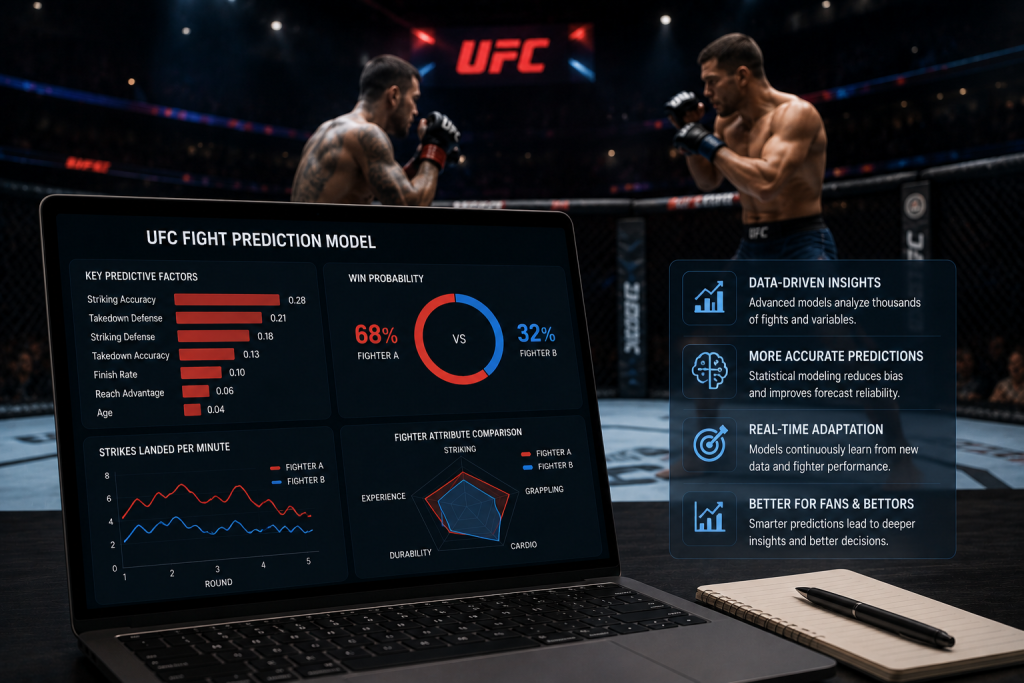
Predicting the outcome of a UFC fight has traditionally involved a mixture of tape study, recent form, and stylistic judgment. Statistical modeling adds another layer by converting measurable performance data into probabilities, helping analysts compare fighters with less reliance on reputation or instinct alone.
Platforms offering UFC betting predictions increasingly use data such as striking output, takedown defence, control time, and opponent quality to estimate how likely each fighter is to win. These projections do not remove uncertainty, but they can make the reasoning behind a forecast more transparent.
From Gut Feelings to Data-Driven Probabilities
Traditional fight analysis often focuses on a fighter’s reputation, finishing record or most recent performance. Statistical models examine a broader set of variables and look for recurring patterns across large samples of previous bouts.
The official UFCStats database shows the type of information commonly used in that process, including significant strikes landed per minute, striking accuracy, strikes absorbed, takedown averages, takedown accuracy, takedown defence and submission attempts. A model can combine those figures with age, reach, stance, fight frequency and strength of opposition to produce an estimated win probability.

Source: UFCStats
Why Matchup Context Still Matters
Raw statistics can be misleading without context. A fighter may post excellent takedown numbers against weak defensive wrestlers but struggle against an opponent with elite balance and scrambling ability. Striking accuracy may also look impressive when most of a fighter’s recent bouts were contested at a slow pace.
This is why many models adjust for opponent quality, weight class, fight duration and the styles each athlete has faced. A useful forecast does more than compare averages. It asks whether the underlying data is likely to translate into the specific matchup in front of the model.
Model Predictions Versus Betting Odds
One of the main uses of statistical modeling is comparing a model’s probability with the probability implied by betting odds. When a model rates a fighter’s chance of winning higher than the market does, that difference may indicate value. When the model and market are closely aligned, there may be little reason to take a position.
For example, a model that gives a fighter a 60% win probability is effectively pricing that outcome at decimal odds of about 1.67 before margin. If the available market price is materially higher, analysts may view the discrepancy as significant. Model error, late injuries, weight-cut issues, and stylistic surprises still need to be considered.
News and Research Support the Shift
The move toward analytics is visible in mainstream MMA coverage as well as specialist prediction sites. ESPN has published UFC title-fight projections built around a data model, showing how probability-based analysis has entered major sports media.
For broader combat-sports coverage, Geek Vibes Nation’s UFC and boxing section provides news and analysis that can add qualitative context to model-based forecasts. Injury reports, camp changes, short-notice replacements, and weigh-in developments often explain why a statistical projection may need to be revised.
The Future of UFC Fight Predictions
Statistical modeling is unlikely to replace experienced fight analysis. Its value lies in organizing information, testing assumptions, and reducing some of the emotional bias that can affect predictions. As datasets improve, models should become better at accounting for opponent strength, recency, and stylistic interaction.
The most credible forecasts will continue to combine numbers with context. Bettors and fans should treat model outputs as estimates rather than guarantees, compare projections with current information and use licensed operators where betting is legal.
Riley Cortez is a veteran sports betting strategist who blends data-driven analysis with real-world sportsbook experience. With a background in predictive modeling, Riley specializes in NFL props, NBA live betting, and long-odds futures markets. He writes with the goal of helping bettors make smarter decisions while navigating modern sportsbooks and evolving betting legislation.