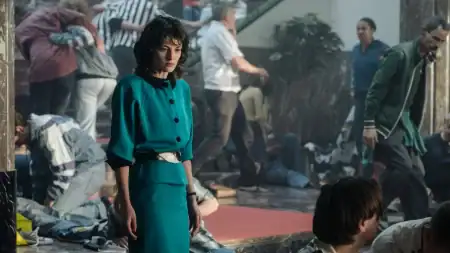
Old fan films often look “wrong” by modern standards and completely right for what they are. MiniDV motion, VHS bleed, homemade masks, practical sparks, borrowed locations, and rough title cards are not merely defects. They are evidence of how a group of fans turned limited time and money into a finished world. A remaster should make that work easier to see, not disguise it as a production from another decade.
That changes the restoration question. Instead of asking how clean, sharp, or colorful the footage can become, ask which imperfections obstruct the film and which define it. The best remasters separate technical damage from creative texture, preserve an untouched master, and document every interpretive choice.
The flaws may be part of the film
A horror short shot on a consumer camera may use murky shadows as atmosphere. A superhero fan film may rely on soft focus to hide costume seams. A science-fiction miniature may feel convincing partly because the original resolution blends its edges. Aggressive enhancement can expose what the filmmakers intentionally or practically kept outside the image’s attention.
Begin with a viewing session, not a filter. Note tracking errors, compression blocks, unstable exposure, tape noise, clipped audio, and genuinely unreadable details. In a separate column, note grain, lens softness, practical-effect texture, period titles, and color choices that belong to the work. The first list contains repair candidates. The second contains characteristics to protect.
Make a preservation master before touching the image
Create an untouched digital master from the best available source. If several copies exist, compare them rather than assuming the newest upload is best. A disc may have cleaner audio, a tape may preserve more picture area, and an early export may avoid later platform compression. Keep checksums and basic notes about the source, capture device, frame rate, resolution, and audio format.
Work from a duplicate. Restoration creates branches: conservative cleanup, screening copy, online encode, perhaps an alternate-color version. Those branches should never overwrite the preservation master. This follows established archival practice in spirit: preserve the highest-quality source and create access copies for specific audiences.
Fan film preservation workflow from source capture through conservative restoration and screening export
Clean defects without polishing away the era
For a copy affected by noise, blur, or compression, the UniFab Video Enhancer can provide a first-pass repair. Its online service is described as reducing noise, sharpening details, recovering texture, and correcting blur, compression artifacts, poor lighting, and color imbalance. Processing runs in a browser through FabCloud and supports common inputs including MP4, AVI, and MOV.
Use a short effects-heavy scene as the test. Watch smoke, prosthetics, miniatures, dark costumes, and fast camera moves frame by frame and in motion. The online service is limited to 2× scaling and uses credits after the initial allowance, but the more important limit is aesthetic: recovered detail is an algorithmic interpretation. If makeup becomes waxy, grain freezes, or stars pulse between frames, reduce the setting. A believable remaster should still feel photographed.

Repair sound and titles as separate elements
Image restoration attracts attention, but weak sound can make a remaster feel unfinished. Preserve the original mix, then address hum, sudden level changes, damaged dialogue, and channel imbalance in a separate audio pass. Do not remove every background sound. Room tone, tape hiss, and location noise can support continuity even when they are technically imperfect.
Titles deserve their own decision. Rebuilding a barely readable credit may be appropriate if the original font, timing, and wording are documented. Replacing a handmade title sequence with a fashionable template is not restoration. When the source is incomplete, include the limitation in release notes rather than silently inventing a cleaner history.
Scale for modern screenings with restraint
A fan film created for a standard-definition television may now be projected at a festival or watched on a 4K panel. A UniFab Video Upscaler AI can prepare a larger delivery copy after cleanup. Its product page lists general, texture-focused, anime, and film/TV models, with local output advertised up to 16K and FabCloud up to 4K.
The highest number is rarely the right target. A clean 1080p master can be an excellent outcome for SD material, especially when the film contains digital effects rendered at the original size. Test edges around masks, miniatures, composited lasers, subtitles, and rolling credits. Upscaling should improve presentation distance and encode resilience without turning every practical surface into brittle, invented detail.
Use shot-by-shot review instead of one global preset
Fan films are often assembled from mixed cameras and conditions. Day exteriors, dim interiors, animation, borrowed stock shots, and end credits may all need different treatment. Divide the timeline into logical groups and apply the lightest useful correction to each. A single strong preset can make one scene impressive while breaking five others.
Review should include people familiar with the project when possible. A director, editor, effects artist, or long-time fan may recognize that a strange color cast was deliberate, a jump was in the original, or a prop detail should remain hidden. If nobody from the production is available, state that decisions were made by the restoration team and avoid claiming creator approval.
Shot review board comparing grain faces miniatures titles and dark scenes for a fan film remaster
Treat colorization as an alternate edition
Some black-and-white fan projects were monochrome by necessity; others chose it as style. If color would help a retrospective, educational feature, or special presentation, publish it as an alternate edition rather than replacing the original. The UniFab’s Video Colorizer is designed to colorize monochrome footage and correct faded color, using temporal consistency to reduce frame-to-frame flicker.
The page offers vivid cinema, muted documentary, warm nostalgic, and customizable looks, along with scene-aware adjustment. It also says the result is historically plausible, not guaranteed exact. That caveat is crucial for costumes, props, and lighting gels whose true colors are unknown. Keep the monochrome master beside the colorized version, disclose the process, and consider including comparison frames in the release notes.

Package the remaster with context
A thoughtful release includes more than the movie file. Add source notes, restoration credits, a list of major interventions, known limitations, and acknowledgments for original cast and crew. If the film uses a copyrighted universe, avoid implying official status and preserve any original disclaimers. Captions and a clean audio description track can make the remaster accessible to more fans.
Create separate files for archival storage, screenings, and web delivery. The archive copy prioritizes preservation; the screening copy prioritizes dependable playback; the web copy balances quality and bandwidth. Keep all of them tied to the same version record. Future fans should be able to understand what they are seeing and, if necessary, return to the source.
Frequently asked questions
Should film grain be removed from a fan film remaster?
Remove only grain or noise that blocks the image. Stable photographic grain often belongs to the source; frozen or smeared texture created by processing is a warning that cleanup is too strong.
Is 4K a meaningful target for VHS or MiniDV footage?
It can be a delivery format, but it does not create authentic captured detail. A well-restored 1080p master may look more natural and require less storage.
Can missing effects or frames be generated with AI?
That becomes reconstruction rather than routine restoration. If used, it should be approved where possible, clearly disclosed, and stored as a separate version from the preserved original.
Should a colorized edition replace the black-and-white master?
No. Keep the original as the primary historical version and label colorization as an alternate interpretation.
What is the most important remastering record?
A concise change log linking the untouched source to every output. It should identify tools, settings, major decisions, reviewers, and unresolved limitations.

Amanda Dudley is a lecturer and writer with a Ph.D. in History from Stanford University. After earning her doctorate in 2001, she decided to pursue a fulfilling career in the educational sector. So far, she has made giant strides by working as an essay writer for EssayUSA, where she delivers high-quality academic papers to students who need them.