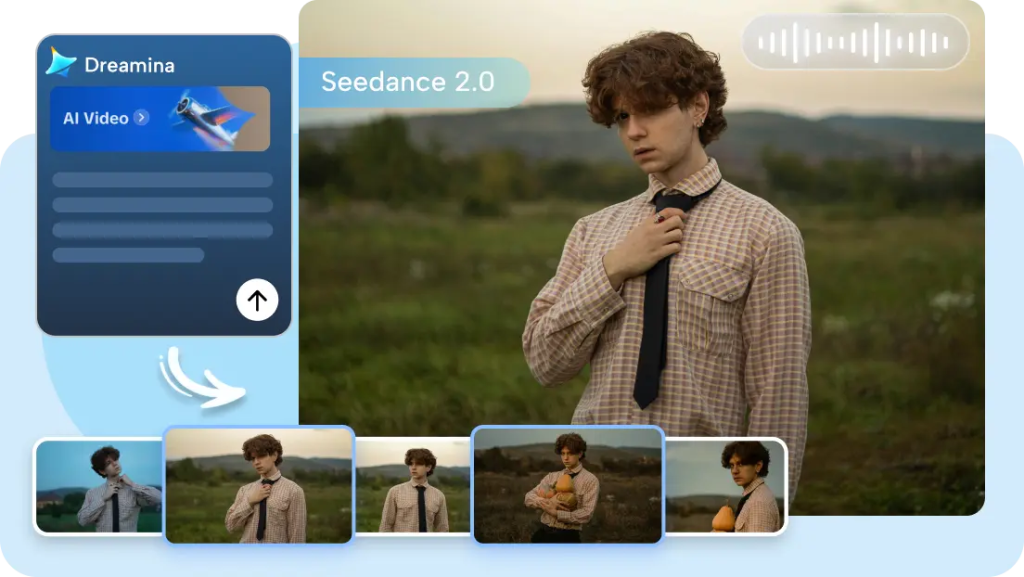
Creators are publishing videos daily across all media. Audiences will choose from multiple options, and so the onus is on creators to find a method to capture your/their attention. Ideas still matter, but creators must develop a method for the consistent publication of content. Artificial Intelligence is quickly becoming an invaluable resource in this area. Seedance 2.0 and Seedance 2.5 represent a new generation of creative tools, while Dreamina further expands the possibilities by giving content creators more options to design visual concepts and produce fresh, engaging forms of digital content.
Always a Challenge
Being a professional content creator is an all-consuming job. One day might be focused on idea creation, while the next day could be focused on gathering audio and visual media, and the day after that could be focused on the assembling of all the gathered media. The job does not end there, as you must also manage audience interaction and engagement, as well as trending topics, all while being your own project manager creating a publishing schedule. AI models can lessen the load of some creative processes. Rather than starting from zero, ideas can now be built and visualized through the assistance of AI and used to determine the direction of the project.
Creative Resource of Seedance 2.0
Seedance 2.0 builds off new AI tools to help creative users develop visual content. This presents creators the chance to develop new ideas and consider new avenues when building out their video projects. Video content doesn’t have to be built from video recordings alone. AI technology can assist creators with new, imaginative, and even abstract concepts that are too difficult to capture on camera. The technology can help with the creative process and aid in the development of ideas that traditional video production would be too time-consuming to undertake.
New Opportunities with Seedance 2.5
Modern creators have ever-growing demands that are met with the advancements of AI technology. The competitive nature of content production means that users need tools that will allow them the creative freedom to express their ideas. AI video technology is capable of being the foundation of a new realm of possibility when it comes to content development. For creators this evolution is critical, the goal is never to just produce a video, it is to have more flexibility in producing a full content strategy.
Generating Ideas for Content Without the Need to Record
The first stage of creation is one of the most difficult for many producers, especially since they have difficulty conceptualizing what they want the final output to resemble. AI video generation is something that can provide workflow support for brainstorming. A producer could be thinking of doing a travel video, short film, making an ad, or a story video and have no idea what the visuals could be, and AI is a good start for generating an early reference for the idea. It is even good enough to help the producer understand if the idea is worth developing and going through the production phases of the idea. Hours that are usually put into recording something that will not even be released to the public can be saved if the producer is given the chance to conceptualize the idea first.
Improving Video Introductions
The first impression that a video makes is integral to a channel’s success. If the opening fails to capture a viewer’s attention, they will exit the video and therefore, the main message will be lost to the viewer. Because of this, a lot of time is spent on the hook and intro. AI Video generation can aid in bringing multiple options and ideas to the opening of a video. Maybe the intro can be a dramatic sequence, an unorthodox location, or a creative visual animation. AI generators such as Seedance 2.0, Seedance 2.5 from Dreamina can help creators develop the structure of their video openings in more advanced, engaging, and innovative ways.

Creating Concepts for Visual Storytelling
Creators don’t always have to make educational/informational content. Some creators focus on making fictional stories, entertainment, and emotional content. AI video generation is a way for these creators to express their ideas. A storyteller has the ability to create their own character, world, and situation and start to visualize them. This can help during the pre production phase of a project, even if the creator ends up rendering the actual video using traditional methods. AI can be used to help Think of ideas beyond the script and acts as a visual brainstorming partner.
Creating content based on a variety of niches
Different content niches call for different visual styles. A tech channel might focus on videos that have a futuristic slant, whereas a travel channel might focus on videos that have beautiful nature scenes. An exercise video might be rendered in a different style than a video focusing on a history channel that focuses on images from a different era. The ability to generate video using AI may allow creators the ability to work in a variety of niches and come up with different styles of video for their target audience in different categories. Seedance 2.0 and Seedance 2.5 might be of particular interest to these creators.
Making Your Travel Content Unique
Travel creators usually share similar footage from the same locations, since travel content is almost always visual. AI can help travel content creators add imaginative elements travel content usually lacks. Creators could depict travel locations how they may have looked in the past, how they may appear in the future, or even add creative travel transitions. AI can help travel content stand out. While AI won’t replace the travel footage creators actually take, it can help travel creators add a creative layer to their content.
Conclusion
AI can help users explore concepts, create visuals, and test new methods; however, it is not capable of developing relationships with an audience. Seedance 2.0 and Seedance 2.5 are rapidly developing in the technological world, offering creators more advanced tools. The best idea is to learn how these technologies operate while continuing to add skills for storytelling, editing, communication, creativity, etc. When creators use AI to assist their content creation rather than enabling it, the end product will be quicker to publish, entertaining, and most importantly, creator focused.

Caroline is doing her graduation in IT from the University of South California but keens to work as a freelance blogger. She loves to write on the latest information about IoT, technology, and business. She has innovative ideas and shares her experience with her readers.