TL;DR
- Both Achilles and Hector are already dead by the time Odysseus begins his long journey home.
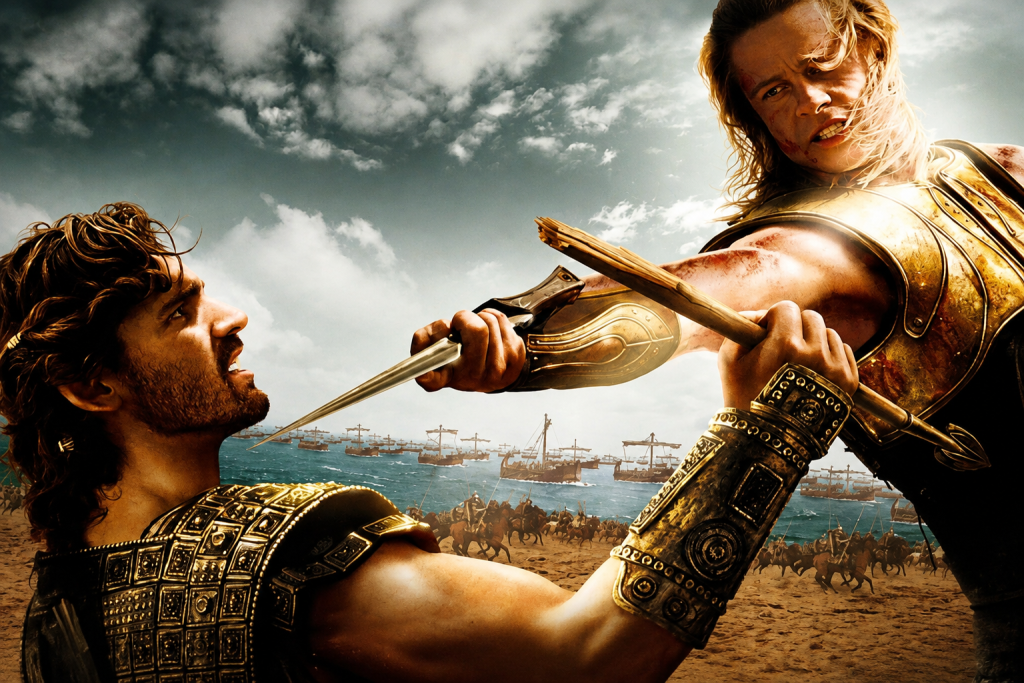
- Achilles kills Hector during the final year of the Trojan War after Hector kills Patroclus.
- Achilles dies later in the war, after the events covered by The Iliad but before Troy falls.
- Achilles appears as a spirit in Homer’s Odyssey, although Christopher Nolan removes that encounter from his movie.
- Hector does not play the same role in The Odyssey because his story primarily belongs to The Iliad.
Christopher Nolan’s The Odyssey contains an enormous collection of characters associated with Greek mythology and the Trojan War, so viewers familiar with stories such as Troy may notice two particularly famous warriors are nowhere to be found.
Where are Achilles and Hector?
The answer is surprisingly simple.
They’re both dead.
By the time Odysseus begins the voyage that becomes The Odyssey, the legendary confrontation between Achilles and Hector has already happened. Both men’s stories primarily belong to an earlier stage of the Trojan War.
Understanding their absence requires separating three pieces of mythology that popular culture frequently blends together: The Iliad, the fall of Troy and The Odyssey.
The Odyssey Takes Place After The Trojan War
The biggest thing to understand is that The Odyssey is not primarily a story about the Trojan War.
It is about what happens afterward.
Odysseus spends approximately ten years fighting at Troy before the Greeks finally take the city. His attempt to sail home to Ithaca then turns into another journey lasting roughly ten years.
Hector and Achilles belong mainly to the war.
Odysseus belongs to both parts of the story.
He fights alongside Achilles during the Trojan conflict and later becomes the central figure of the journey home.
Hector Dies Before Troy Falls
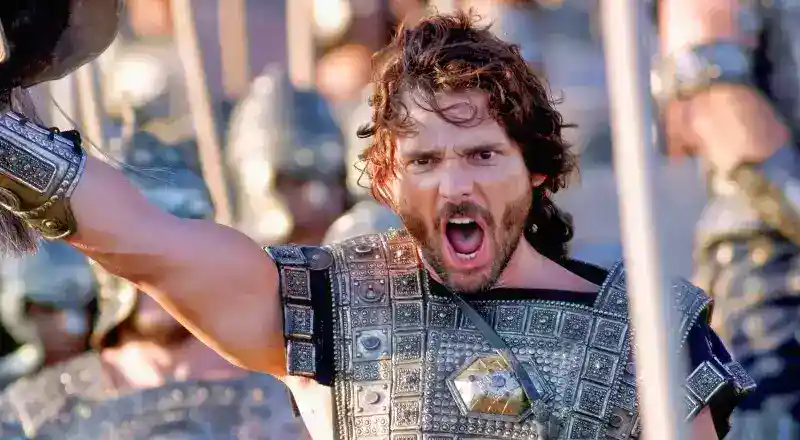
Hector is Troy’s greatest warrior and one of the central characters in Homer’s Iliad.
He is the son of King Priam and Queen Hecuba, husband of Andromache and the most important defender standing between the Greek army and the destruction of Troy.
Unlike many of the Greeks, Hector is not fighting in a foreign country for glory or conquest.
He is defending his home.
His fate becomes directly connected to Achilles through the death of Patroclus.
Why Does Hector Kill Patroclus?
Achilles spends much of The Iliad refusing to participate in the fighting because of his bitter conflict with Agamemnon.
As the Greeks begin suffering without their greatest warrior, Patroclus asks permission to wear Achilles’ armor and enter the battle.
The armor gives the Greeks hope and terrifies the Trojans, who initially believe Achilles has returned.
Patroclus pushes too far.
Hector ultimately kills him.
That death changes the entire direction of Achilles’ story.
Why Does Achilles Kill Hector?
Patroclus’ death destroys Achilles emotionally.
Whatever anger kept him away from the war suddenly becomes insignificant compared with his desire for revenge.
Achilles returns to battle and eventually confronts Hector outside the walls of Troy.
Hector initially flees, with Achilles chasing him around the city before the Trojan prince finally stops and fights.
Achilles kills him.
The killing itself is only part of what makes the sequence so important.
Consumed by grief and rage, Achilles refuses Hector’s request that his body be treated respectfully. He ties Hector’s corpse behind his chariot and drags it away, denying the fallen warrior the dignity normally expected even between enemies.
It becomes one of the darkest moments in Achilles’ story.
The Iliad Actually Ends With Hector
This is where the chronology is often misunderstood.
The Iliad does not end with the Trojan Horse.
It does not show Troy being destroyed.
It does not even show Achilles dying.
Instead, Homer’s poem ends with Hector.
His father, King Priam, secretly enters the Greek camp and personally begs Achilles to return his son’s body.
Priam’s grief finally breaks through Achilles’ rage. For a brief moment, two men on opposite sides of the war mourn together.
Achilles returns Hector’s body.
Troy holds a funeral.
That is where The Iliad ends.
So When Does Achilles Die?
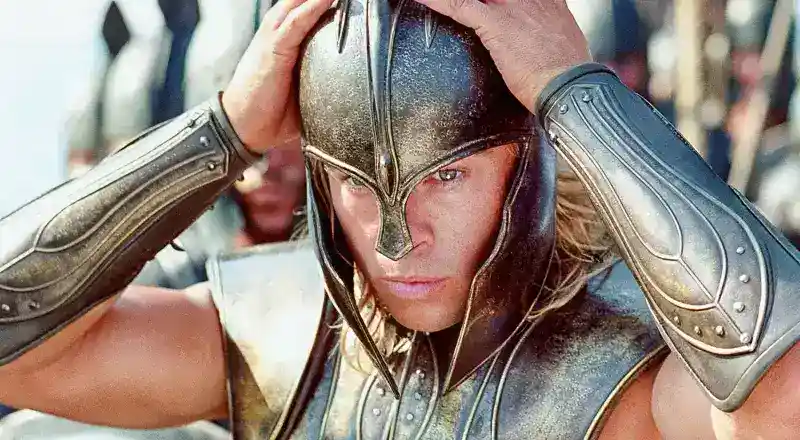
Achilles survives the events of The Iliad.
He does not survive the Trojan War.
Other ancient traditions continue his story beyond the point where Homer’s poem stops. Achilles eventually dies before Troy falls, traditionally after Paris shoots him with an arrow with the involvement of Apollo.
The famous idea that the arrow strikes Achilles in his only vulnerable heel comes primarily from later mythology rather than directly from Homer’s Iliad.
Different versions of the myth handle the details differently, but the important chronological point remains the same.
Achilles is already dead before Odysseus begins his voyage back to Ithaca.
What Happens Between The Iliad And The Odyssey?
The Trojan War does not transition neatly from the final page of The Iliad into the beginning of The Odyssey.
A great deal happens in between.
- Hector has already been killed and buried.
- Achilles eventually dies.
- Paris also dies before the war ends.
- The Greeks devise the Trojan Horse strategy.
- Sinon helps convince the Trojans to accept the horse.
- Greek soldiers hidden inside emerge during the night.
- Troy is sacked and destroyed.
- The surviving Greek leaders begin their journeys home.
Different ancient works and later traditions fill in portions of this gap.
That gives Nolan material beyond The Odyssey itself to draw from when showing Odysseus’ memories of the Trojan War.
Is Achilles Actually In Homer’s Odyssey?
Yes.
This is where the question becomes particularly interesting.
Achilles may be dead, but Homer still gives him one memorable appearance.
When Odysseus travels to the realm of the dead, he encounters the spirits of several people connected to his past.
One of them is Achilles.
Odysseus praises the dead warrior and suggests that Achilles should still consider himself fortunate because he was honored as one of the greatest men among the living and now commands respect among the dead.
Achilles rejects that idea.
The warrior who once pursued eternal glory now explains that being a celebrated dead hero means far less to him than simply being alive.
Why Does Achilles’ Odyssey Scene Matter?
Achilles’ appearance completely changes how readers can look back at his earlier choices.
Throughout his story, Achilles faces a famous decision.
He can return home, live a long life and eventually disappear from heroic memory.
Or he can remain at Troy, die young and achieve everlasting fame.
He chooses glory.
By the time Odysseus meets his spirit, Achilles has experienced what that choice actually means.
Fame is considerably less impressive when you are dead.
The encounter also creates an important contrast between Achilles and Odysseus.
Achilles sacrificed a long mortal life for heroic immortality through legend.
Odysseus spends his story desperately trying to return to ordinary mortal life with Penelope and Telemachus.
Why Isn’t Achilles In Christopher Nolan’s The Odyssey?
Nolan removes Achilles’ encounter with Odysseus.
There was significant speculation before the movie’s release that Elliot Page might be playing Achilles. That turned out to be incorrect.
Page plays Sinon, the Greek soldier who becomes instrumental in convincing the Trojans to accept the wooden horse.
When Nolan’s Odysseus encounters the dead, the film focuses instead on figures such as Sinon and Agamemnon.
The change fits the specific story Nolan wants to tell.
Homer uses Achilles to explore whether heroic glory is worth dying for.
Nolan is more interested in forcing Odysseus to confront people whose deaths and suffering are tied directly to the war he helped win.
Sinon becomes especially useful because of his role in the Trojan Horse, which Nolan turns from Odysseus’ greatest strategic accomplishment into a central source of guilt.
What About Hector?
Hector is even further removed from the events of The Odyssey.
He is already dead and buried before Troy itself falls, and Homer does not give him an equivalent reunion with Odysseus during the journey home.
Hector’s great literary story is The Iliad.
His death represents the approaching destruction of Troy. Once the city’s greatest defender is gone, the eventual Greek victory feels increasingly inevitable even though Homer’s poem stops before the city actually falls.
That makes Hector enormously important to the larger mythology without requiring him to physically appear during Odysseus’ voyage.
Does Hector Appear In Nolan’s Movie?
Nolan does not bring Hector into the story as an active character.
The movie includes extended material connected to the Trojan War, but those sequences are presented through Odysseus’ experience of Troy, the wooden horse and the destruction that follows.
They are not intended to provide a complete recreation of the ten-year war.
That distinction matters.
If Nolan were adapting The Iliad, leaving Achilles and Hector out would be almost unimaginable.
But he is adapting The Odyssey.
By the time the main journey begins, their famous conflict belongs to the past.
Why Does Nolan Show The Trojan Horse But Not Achilles Vs. Hector?
Because the Trojan Horse is directly connected to Odysseus.
Achilles and Hector’s duel is one of the defining events of the Trojan War, but it is not Odysseus’ defining contribution to the conflict.
The wooden horse is.
Odysseus is traditionally credited with devising the strategy that allows the Greeks to finally penetrate Troy after ten years of unsuccessful warfare.
Nolan also uses that victory as one of the moral wounds driving his version of the character.
The destruction of Troy becomes something Odysseus spends the rest of the film attempting to understand.
Showing Achilles killing Hector might provide another spectacular battle sequence.
Showing the Trojan Horse tells us something directly about Odysseus.
The Trojan War Timeline Explained
- The Trojan War begins.
- The Iliad takes place during a short period in the war’s final year.
- Hector kills Patroclus.
- Achilles returns to battle and kills Hector.
- Hector is buried, ending The Iliad.
- Achilles dies sometime afterward.
- Odysseus devises the Trojan Horse strategy.
- Troy falls.
- The surviving Greeks begin returning home.
- Odysseus’ long voyage becomes the story of The Odyssey.
- Odysseus later encounters Achilles’ spirit in Homer’s poem.
- Nolan removes that Achilles encounter from his movie.
Achilles And Hector Aren’t Missing — Their Story Already Happened
That is ultimately the easiest way to understand their absence.
Hector and Achilles are not somewhere else fighting another battle while Odysseus is lost at sea.
Their battle is already over.
Hector died defending Troy.
Achilles avenged Patroclus and then died before the Greeks finally captured the city.
Odysseus is one of the survivors left behind to deal with what came next.
Homer briefly brings Achilles back as a spirit to reflect on whether all that heroic glory was worth dying for.
Nolan chooses not to.
Instead, his film keeps its attention on Odysseus and the consequences of surviving a war that killed so many of the legendary men around him.
Achilles and Hector may be absent from Odysseus’ journey, but their deaths are part of the world he is trying to sail home from.

DC Fanboy! Superman is the greatest comic book character of all time. Favorite movies are Man of Steel, Goonies, Back To the Future