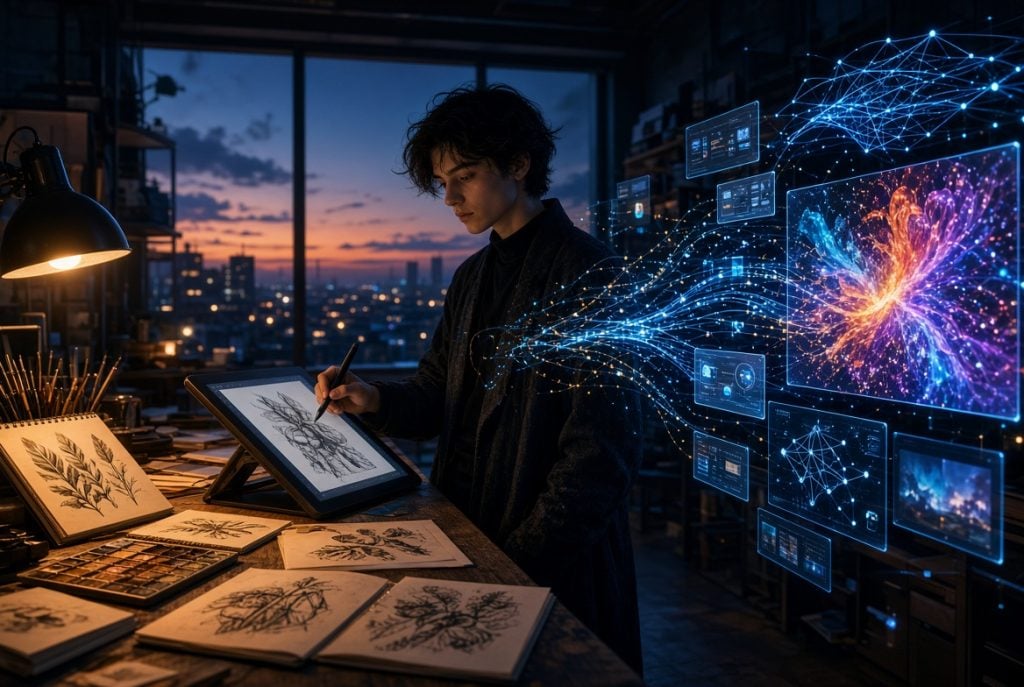
Back in the day, becoming a “visual creator” implied being good at using more complicated tools or equipment. This would require knowledge of photography, editing skills, and even design software. The more software you could work with, the more work you could handle.
Nowadays, with some creativity, one can conceptualize an image and convert it to a photograph, even without having access to every tool available in design software. Not that it renders all skills irrelevant by any stretch. It does, however, shift the focus from technical execution to creative judgment . The creator must still consider not only the idea but also the emotion, plot, detail, and purpose.
That represents a significant shift . The computer can assist in creating the image, but the individual still determines what the image conveys.
When Ideas Matter More Than Tools
Artlist’s AI image generator could be seen as one way a basic concept can be transformed into a visual piece. For example, someone can enter text describing someone walking up to the edge of a busy street on a nice, sunny evening, with beautiful light shining across their face, and cars passing in the background. Artlist takes those instructions and converts them into a static image.
The interesting part is not just the image. It is the thought behind it. A creator must decide what the viewer should see first. They must think about color, light, place, people, and feeling. They may change one small detail and see the whole image take on a different mood.
This makes creative thinking more important. Being aware of where to click still counts, but choosing what to ask for is almost as valuable. An hour once spent understanding how to produce a specific visual can now be spent pondering why this particular effect needs to be produced at all. And then the work changes from “how do I do that?” to “what should it communicate?”
This shift may allow many more people to create something. A student with a story they want to tell can create images of it. A small business entrepreneur who has an idea for a product can produce an image of it. A writer can now lend a figure to a story that existed only in their mind. The software is getting to do more for us; however, truly great ideas still need care and consideration.
The Creator Becomes a Director
AI also gives creators more room to make choices. Think about a short video scene. Maybe the artist wants a woman to stroll through a peaceful marketplace in the early morning. She is in a blue gown. The road is wet from the rain, and a few distant lights are lit. The camera starts far away, then moves closer. That is not just a request for an image. It is a plan. The creator is thinking about what happens, what the viewer sees, and how the moment feels. This is close to the work of a director.
AI may generate an image with flaws. It might change a face; perhaps a hand might look a bit odd, or the lighting might not match the next shot. These are issues the user must identify and correct. That is where a person’s good judgment becomes the deciding factor. Because different people have different ideas, even the same tool can produce a very different outcome. The person with a clear story can guide the tool better.
A New Kind of Visual Skill
Artificial Intelligence is not here to erode craftsmanship, it’s here to enhance it. Lighting, editing, motion, composition, sound design, and colour grading still matter. They guide the creative process, allowing creators to have a visual ‘instinct’ for when things are right.
Yet the equation is shifting, and a creator will not have to manually execute everything behind all the small steps. Instead, they might spend more time thinking through plans, ideating, shoring up and improving the weaker areas, and developing their narrative voice.
It raises the value of taste, too. Taste guides the creator to recognize when an image has insufficient substance, when an environment is overly busy. That kind of judgment can’t come from a button.
It grows through practice. A creator watches films, studies photos, reads stories, looks at design, and pays attention to how people react. Over time, they build a sense of what works.
AI can speed up the making process, but it cannot replace that human sense of meaning. The change is also opening the door to people who once felt shut out of visual work. A teacher can create pictures for a lesson. A shop owner can make product scenes. A young writer can build a world around a story. Someone with no formal training can still have a strong creative voice.
The tools may be doing more of the hard work, but the creator still gives the work its purpose. The visual creator of the future may not be known only for technical skill. They may be known for having strong ideas and knowing how to guide them. AI is narrowing the gap between an idea and an image. That gives creators more freedom to test, change, and build.
The biggest shift is simple. The person holding the mouse is becoming the person holding the vision. And that may be what being a visual creator means next. The craft is there, but its center is moving from control toward imagination and choice.

Caroline is doing her graduation in IT from the University of South California but keens to work as a freelance blogger. She loves to write on the latest information about IoT, technology, and business. She has innovative ideas and shares her experience with her readers.