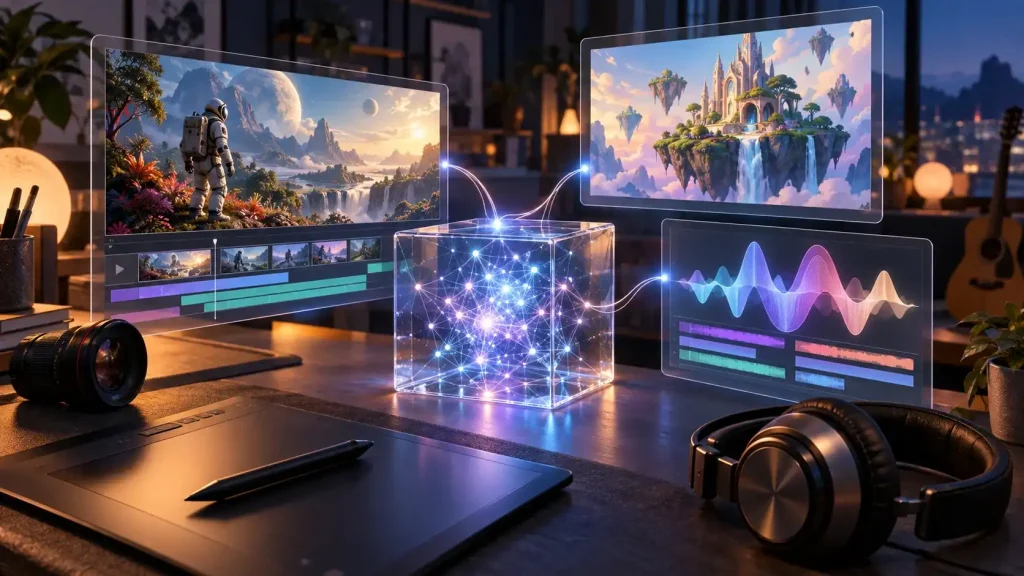
AI. Showing up everywhere in content creation now. Entertainment too. Stuff that once needed specialized software. Expensive gear. Whole creative teams. Now? AI tools handle a lot of it. Automate steps. Simplify others. Visual concepts. Video editing. Music production. Writing. Interactive entertainment. How content gets made is changing. How it gets experienced too.
Doesn’t replace real creativity, though. Not necessarily. Gives creators more ways to experiment. Refine ideas. Work faster. And the tools keep evolving. Influence shows up everywhere. Social media. Streaming. Gaming. Advertising. Online publishing. Even how people take in financial and tech info.
Doesn’t replace real creativity, though. Not necessarily. Gives creators more ways to experiment. Refine ideas. Work faster. And the tools keep evolving. Influence shows up everywhere. Social media. Streaming. Gaming. Advertising. Online publishing. Even how people take in financial and tech info.
AI Is Making Content Creation More Accessible
Biggest change? Lower barrier to entry. Way lower. Professional-looking content used to mean knowing complex editing programs. Or owning specialized equipment. Now AI platforms automate some of the technical stuff. People at every skill level can dive into creative projects.
AI can generate images from written descriptions. Suggest video edits. Remove unwanted background stuff. Clean up audio. Draft early scripts. Less time on repetitive tech work. More time on actual ideas.
That accessibility fueled independent creators too. People who once needed designers, editors, production teams for certain jobs? Might handle early project stages alone now.
AI and Video Production
Video’s one of the biggest forms of online entertainment. And AI’s touching almost every stage.
AI-assisted editing can spot scenes. Organize footage. Generate captions. Improve sound. Suggest cuts based on content. Some systems even turn written concepts into visual storyboards. Or early video sequences.
Social media creators? Less time prepping short-form content. Bigger productions? Help with pre-production. Visual planning. Post-production. Other workflows.
Humans still matter, though. A lot. Automated systems can spit out polished results. Miss context. Emotion. Humor. Creative intent. Editors and directors still decide what makes the final cut.
AI-Generated Images and Visual Experiences
Image generation. Another huge area. Modern systems create illustrations. Concept art. Backgrounds. Promo graphics. Other visuals. All from text descriptions.
Really handy early in creative projects. A filmmaker might use generated images to explore a fictional world’s look. A game developer might test character or world concepts before final assets get made.
Digital artists can fold AI into an existing workflow. Not rely on it for everything. AI material becomes references. Variations. Starting points. Then gets edited. Refined.
Questions linger, though. Copyright. Originality. Attribution. Training data. Still shaping the whole AI artwork debate.
Artificial Intelligence in Music and Audio
Music’s changing too. AI can help with composition. Sound design. Vocal processing. Other audio tasks.
AI systems generate musical ideas. Suggest arrangements. Separate instruments from recordings. Clean up audio. Musicians get to experiment with new sounds. Without doing every technical task by hand.
Independent musicians and creators? Practical ways to build demos. Background music. Experimental tracks. Pro producers use similar tech as part of a bigger process.
AI-generated music’s sparked debates too. Authorship. Rights of musicians whose recordings might be used to build AI systems. Those issues aren’t going away. Especially as the tech gets smarter.
AI Is Changing Gaming and Interactive Entertainment
Gaming. Another spot where AI shapes both production and player experience. Developers use it for character behavior. Testing. Procedural content. Dialogue. Other parts of game creation.
Makes digital worlds more dynamic too. Non-player characters react to players in more varied ways. Adaptive systems tweak experiences based on how people play.
Beyond traditional games? Interactive storytelling. Virtual experiences. Characters might respond to natural conversation. Not just scripted lines. New kinds of entertainment. More personal. More responsive.
AI, Digital Information, and Online Discovery
Not just entertainment. AI’s changing how people find and process info online. News platforms. Financial sites. Education services. Other publications. More and more automation to organize huge amounts of information.
Financial content, for example, can be built around an earnings calendar. Helps readers see when companies will release quarterly financial info. When those dates hit, an earnings report can lay out revenue. Profits. Expenses. Other business results.
Shows how AI helps organize info. Important financial or factual material still needs careful human review, though. Automated systems process info fast. Accuracy, context, interpretation still matter. Especially when people rely on it to understand real-world events.
Personalization and the Future of Entertainment
Streaming services and platforms already use algorithms. Recommend movies. Shows. Music. Games. Other content. AI makes those systems sharper. Analyzes viewing behavior. Preferences. Patterns.
Personalization helps people find relevant stuff. Millions of pieces of media out there. Easy to get lost. Highly personalized systems also shape what people see online, though. So transparency and user control? Important.
Future of entertainment? Likely a mix. Human creativity plus machine-assisted tech. AI speeds up production. Opens new creative doors. But audiences still want storytelling. Originality. Emotional connection. Cultural relevance.
The Importance of Human Creativity
Tech’s moving fast. AI still doesn’t remove the need for human creative decisions. A tool generates possibilities. People decide which ideas mean something. Which fit. Which are worth building on.
Writers. Filmmakers. Musicians. Designers. Developers. Other creators. They bring personal experience. Cultural perspective. Stuff automated systems can’t just copy the same way. The most interesting AI uses might come from collaboration. Tech and human imagination. Side by side.
AI keeps evolving. Content creation’s getting more flexible. More accessible. The tech’s changing how creative work gets made. But choosing ideas? Communicating meaning? Connecting with audiences? Still human. Still at the heart of entertainment.

Caroline is doing her graduation in IT from the University of South California but keens to work as a freelance blogger. She loves to write on the latest information about IoT, technology, and business. She has innovative ideas and shares her experience with her readers.