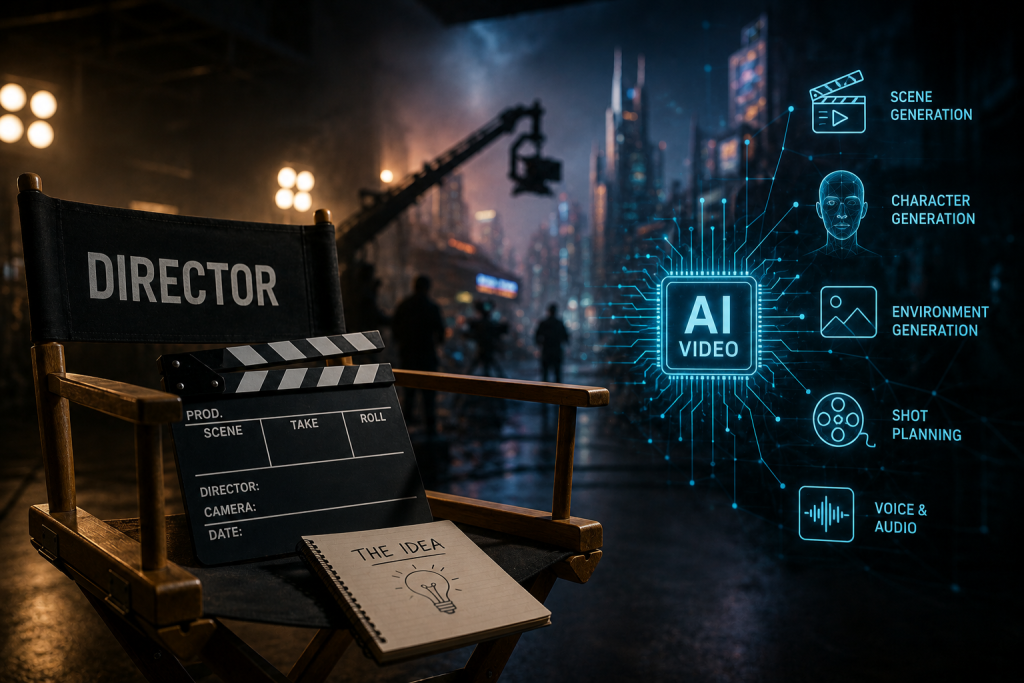
Anyone who has ever tried to make something that looks like a movie knows where the dream runs into a wall. It is not the idea. Ideas are free, and the internet is drowning in people who have a great one. The wall is everything after: the camera you cannot afford, the lens you rent for a day, the location that needs a permit, the crew, the color pass, the edit. For decades the gap between what a person could imagine and what they could actually put on a screen has been made of money and gear. That gap is where most creative ambition quietly goes to die.
A new class of AI video tools is chipping at that wall, and the most interesting of them right now comes from ByteDance, the company behind TikTok. It is worth setting the hype aside and looking at what the thing actually does, because for the kind of creator who reads a site like this one, the specifics matter more than the buzzwords.
What ByteDance Actually Shipped
The tool is Seedance 2.5, unveiled in June at ByteDance’s Volcano Engine FORCE conference. Strip the launch language and the useful facts are concrete. From a single written prompt or one reference image, it generates a continuous thirty-second shot at native 4K with 10-bit color, and it produces the sound in the same pass as the picture instead of leaving you to score a silent clip afterward. It handles both text-to-video and image-to-video, so you can describe a scene from scratch or feed it a still and let it move.
The part that should catch a creator’s eye is the reference handling. Seedance 2.5 accepts up to fifty inputs in a single run, and not just images. Video, audio, 3D models, and style boards all count, which means you can hand it a character, a location, a camera-move reference, and a look, and ask it to keep all of them consistent across the shot. That is the difference between rolling dice on a vibe and actually art-directing a frame. Practically, it means you can drop in your own concept art or a storyboard panel, pin a character design, and have the same face and the same look carry from one shot to the next instead of mutating every time you hit generate. For anyone who has tried to fake continuity across a homemade series, that consistency is the feature that actually earns its keep. ByteDance also claims roughly twenty percent better prompt adherence than its last model, though that number is the company’s own and hasn’t been independently tested.
Why Thirty Seconds Is the Whole Ballgame
If you have played with earlier AI video, you already know the failure mode. The clip looks incredible for two seconds, then the face slides off, the hands turn into a bundle of breadsticks, and the background melts into abstract soup. These models drift, and the errors compound frame by frame, which is why the first wave capped out at a few seconds before the illusion collapsed.
Holding a coherent scene for a full thirty seconds is the actual headline, and it has nothing to do with resolution. Resolution got solved a while ago. Consistency is the hard problem, the thing that separated a fun toy from a tool you could build a shot around, and thirty unbroken seconds is a real answer to it. It is also, not coincidentally, a useful length. Thirty seconds is a teaser. It is a title sequence. It is a single sustained establishing shot, the kind of thing that used to require a drone, a permit, and a very patient operator.
The Concept Trailer and the Music Video
Two formats that fandom runs on suddenly get a lot cheaper, and they are worth calling out because they are exactly the projects people abandon for lack of budget. The first is the concept trailer, the proof-of-idea sizzle reel that used to demand a whole production just to pitch a vision. The second is the music video, long the most gear-hungry short format there is, the thing an unsigned artist could almost never fund.
Here the leap between versions tells the story. Seedance 2.0, barely a year old, generated four-to-fifteen-second clips at up to 1080p and took twelve reference inputs. Seedance 2.5 pushes that to a single thirty-second shot at native 4K with as many as fifty references, and because those references can include audio, a musician can drop in the actual track and ask for visuals that move with it rather than describing a mood and praying. For a bedroom artist or a fan cutting a tribute, that is the difference between an idea and a finished piece. The same logic covers the trailer: feed it the tone, the palette, the key beats, and get something you can put in front of people without apologizing for the budget you did not have.
None of this means a laptop now spits out a blockbuster. It means the floor moved. The projects that used to stall at “we can’t afford to shoot that” now stall at “is this idea actually good,” which is a much more honest place for a creative decision to live.
Where the Illusion Still Cracks
Let’s be adults about the limits, because pretending they aren’t there is how you get burned. AI video still cannot act. A performance that hangs on a real human face doing something exact, the flicker of a real emotion an actor gives a line, is the one thing these systems fake badly, and if your story lives on that, you need a person in front of a lens. The models have tells if you look for them, and hands remain the usual giveaway. Anyone selling you a prompt as a full replacement for a director is overselling.
There is also a wallet-level catch the sizzle reels skip. Length and resolution are what eat credits, so a full thirty-second 4K render is not free, and going for maximum quality on your first attempt is a great way to watch a good idea come out wrong at full price. Signing in and the starter credits cost nothing, which is plenty to learn how Seedance 2.5 behaves before real money is on the line, but the tap is not bottomless. The workflow that keeps it cheap is boring and correct: rough the shot in short and low-res, fix one thing at a time, and only pay for the finished 4K version once the cheap draft already works. One thing that does land in a creator’s favor: the clips you render are yours to publish, including on monetized channels, so the output is not trapped behind some watermark or personal-use-only clause.
So no, the crew is not obsolete and the camera is not dead. But the wall between a good idea and a watchable version of it just got a lot lower, and it got lower for exactly the people who never had the budget to climb it. For a community that has always cared more about the idea than the equipment, that is the part worth paying attention to.