Death comes for everyone eventually, some sooner rather than later. It doesn’t care how old or young its next victim is, but the only guarantee in life is that it comes to an end. No amount of delaying it makes it easier to deal with, but with technology evolving every day, there are new ways to keep those we’ve loved and lost close. Anima is technological reanimation at its most vulnerable. Stripping someone’s memory down to pixels to hold near rather than the real aspects that made them special. How do we mourn in a world where no one wants to be forgotten?
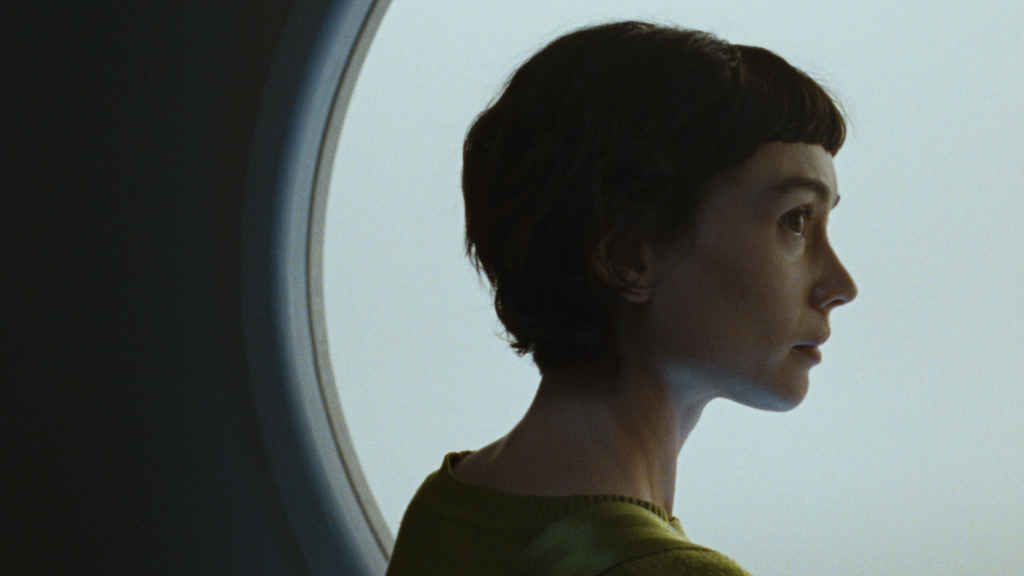
On the surface, Anima doesn’t give way to the heartfelt emotion that the film possesses. Starting as a road trip that sprinkles in bits of sci-fi, it doesn’t reveal how emotional it is right away—introducing Beck (Sydney Chandler), a young woman dealing not only with the loss of her touring-musician father but also with the loss of her job. Opening the film with her being fired, but not for her lack of skills, or so the bearer of the news says. Instantly, her melancholic and reserved demeanor is noted, but she isn’t without work for long. An invitation for an interview interrupts the awkward, but seemingly normal, conversation with her mother, Jo (Maria Dizzia).
Much like any young woman navigating the world, Beck’s life is complicated. Not only her work life, but everything is falling apart. Her relationship with her mother is strained; even when Beck lands a new job, her mother sows threads of disapproval. Her father is no longer around, and their connection through music is fading. He was an inspiration for her to get into the arts, hoping that it would bring them closer, even going to school for it, which also isn’t going well for her. All in all, Beck needs a change—to heal from the loss of a father she barely knew and to find her own purpose.
The journey Beck goes on in Anima brings her into the life of Paul (Takehiro Hira), thanks to her new job at an experimental health facility. The details of her work are simple: she’s a personal driver for the clients of her employer, bringing them from their homes to the facility, getting them there before they die to ensure their after-death wishes. Which makes it even more surprising that Paul, from his appearance, wouldn’t likely be near his life’s expiration date. A successful businessman who dresses in nice suits and lives in a lavish home, when their road trip begins, both have no idea that Paul saying his last goodbyes and visiting his favorite places would mend both of their brokenness.
Anima is deeply thoughtful and doesn’t stop even when the light leaves another life. Writer and director Brian Tetsuro Ivie crafts a story that not only examines how tech is reshaping how we are remembered, but also how unlikely strangers can have huge impacts. Beck and Paul, from the outside looking in, are complete opposites: a college kid and a wealthy CEO. One full of life, and the other quickly approaching the end. He makes their new and short-lived friendship believable, and how they both bond over stories of their fathers. Both leave each other changed, showing what is real and important in life—real human connections.
Not only does the screenplay excel at telling a thought-provoking and intimate story, but the cast nails the perfect amount of emotion and vulnerability needed to achieve a believable connection in only 90 minutes. Chandler does so much expression through her face, and she has complete control of every tiny movement she makes. So much is being said through her large, bright eyes, especially when faced with increasingly upsetting situations. She plays Beck with intelligence and maturity, showing how loss made her grow up fast. Hira gives a powerful performance that made me shed more than a few tears. He takes a man who, on paper, would come across as absent and cold and gives him a yearning warmth for life.
It’s hard not to love the retro-futurism in Anima, from the Nissan 300ZX Paul lets Beck drive to the old-school tech Beck uses. While objects like Beck’s phone and clothing make it hard to tell what year this film is set in, the clean, sleek design of the facility has a timeless, futuristic look. It makes the details of their work seem even more mysterious while also inviting. It helps that Ivie’s screenplay establishes technology altering grief with Beck’s first job with the concept of “forever pets”—pets that never die, taking away the need for flesh-and-blood pets and never having to say goodbye again.
With only 90 minutes to place audiences into the lives of two individuals living two different lives, the details of their lives are there, but it’s still murky. And that mostly comes from the lack of time that can be spent with them to sit with the harsh moments. Paul saying goodbye to someone he just said hello to—it’s a moving moment, but it flees the screen too soon. The film focuses quite a bit on exploring Paul’s needs before his death, and Beck often only gets smaller moments of characterization. Audiences get to know enough about them to feel moved by their outcomes, but the film’s runtime could be better utilized to feel a deeper connection.
Anima is the sci-fi film we need right now, full of empathy and introspection. While it questions the morality of introducing technology into even the most delicate situations like death, it’s a healing journey for two lost souls. With its stunning retro-futurism and compelling performances, it’s an emotionally charged story that will move you.
Anima held its World Premiere as part of the Narrative Spotlight section of the 2026 SXSW TV & Film Festival.
Director: Brian Tetsuro Ivie
Screenwriter: Brian Tetsuro Ivie
Rated: NR
Runtime: 96m
Anima is the sci-fi film we need right now, full of empathy and introspection. While it questions the morality of introducing technology into even the most delicate situations like death, it's a healing journey for two lost souls. With its stunning retro-futurism and compelling performances, it's an emotionally charged story that will move you.
-
9
-
User Ratings (0 Votes)
0