Ben Affleck’s new film Animals is a movie of many stories—some conflicting, some intriguing, and some confusing. It cradles a crib of political melodrama, trying to be both a morality play and a high-stakes thriller. It aims for intrigue, but it never becomes an engaging, worthwhile story. This is a film where, even as you clock-watch, you still want to see it through, in part because you believe (or hope) something will happen. And that’s it: something(s) happen, but it posits a bigger question: is it worth it?
Outside of one performance, the answer is a resounding no.
Tangential to the overall story, but it speaks to how I feel about this movie. One scene shows Ben Affleck‘s son in the movie, Denny, going trick-or-treating in an LA neighborhood. In the scene, the yards and area are decorated as if Spirit Halloween decided to have a garage sale. It’s a dizzying, overstuffed, cluttered sight. That’s how Animals comes across—many ideas spiraling in a thousand directions inside an obnoxious script; you turn around, look, and say, what a mess. In a nutshell, you have no better image or takeaway for this film.
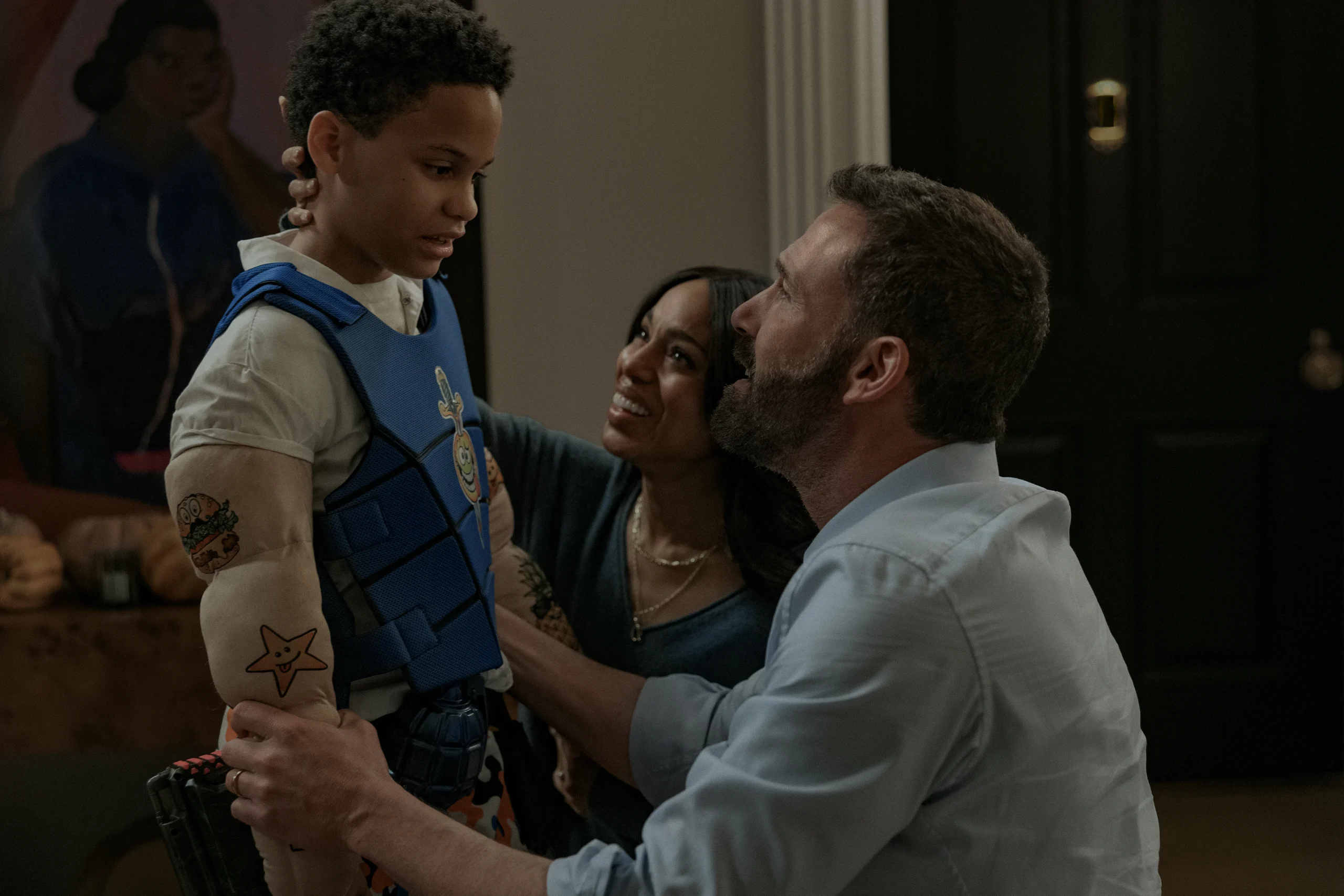
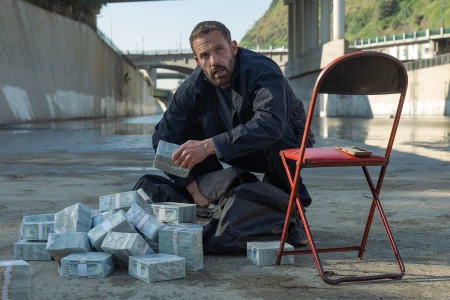
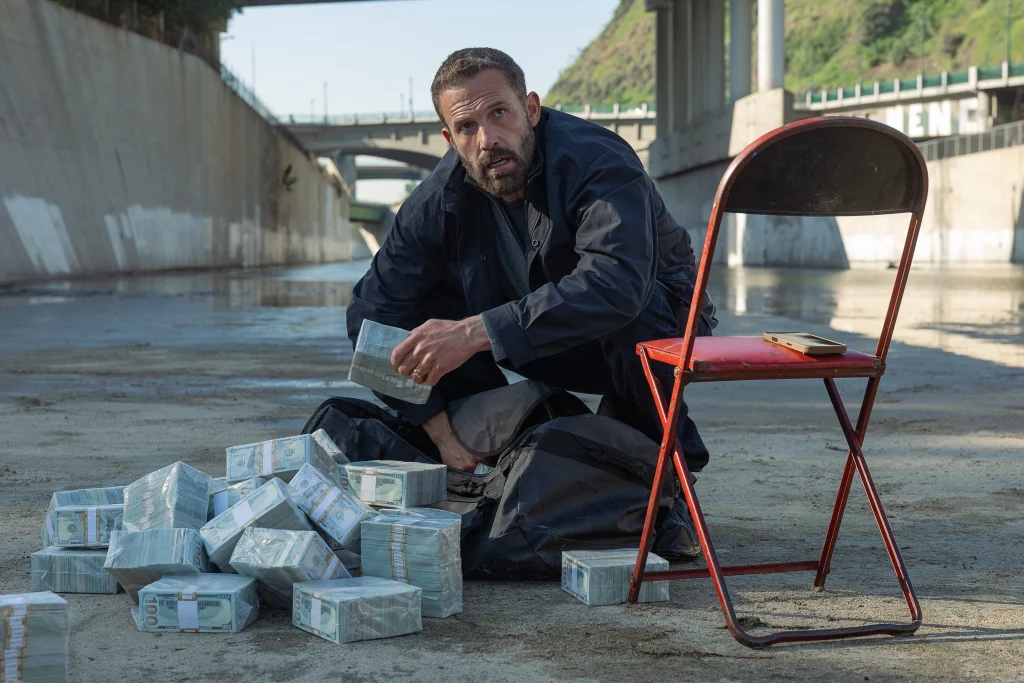
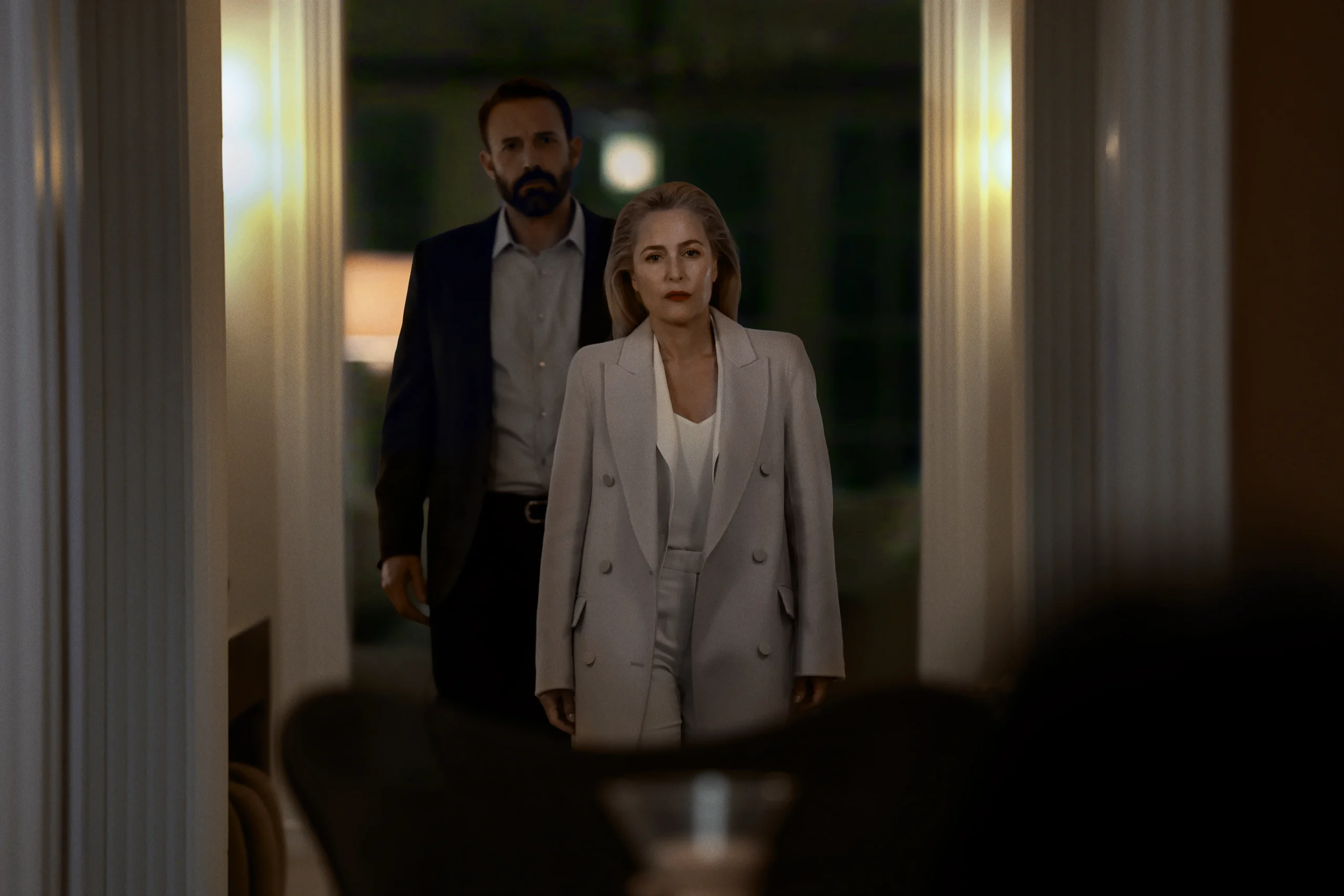
The story follows politician Mark Kimball (Affleck), who is running for mayor in a hotly contested race. On Halloween night, Kimball and his wife, Abigail (Kerry Washington), receive the worst imaginable phone call: their son Denny (Christopher Woodley) has been kidnapped. In a race against time, they scramble to raise the ransom money as they fall into a web of deception. At the urging of his campaign manager, Sam (Steven Yeun), they bring in a fixer, Dayle (Gillian Anderson), to procure the ransom. Yet with each decision, the Kimballs make harder choices that tear their world apart.
Now, anyone who has seen Spike Lee’s Highest 2 Lowest, a remake of Akira Kurosawa’s High and Low, will know the kidnapping-related twist. For all intents and purposes, Animals retells this classic story. Instead of a wealthy executive or a music mogul, we have a politician. Now, I’ll concede the premise is intriguing, and it attempts to comment on how, at our most basic instinct, we are animals. The problem is that the film overplays its thematic delivery and underplays its more compelling elements.
Gillian Anderson brings the heat to an otherwise listless fire. Her character, Dayle, a duplicitous, shadowy operative, is by far the film’s most compelling element. She arrives on scene with dramatic flair and brings real bite to her exchanges. While the other characters undergo a moral reckoning, Dayle embodies moral grayness. Domineering and calculating. It is the only performance with any sense of fun, and it at least gives the story some interest, rather than Affleck’s Kimball and Washington’s Abigail at each other’s throats.
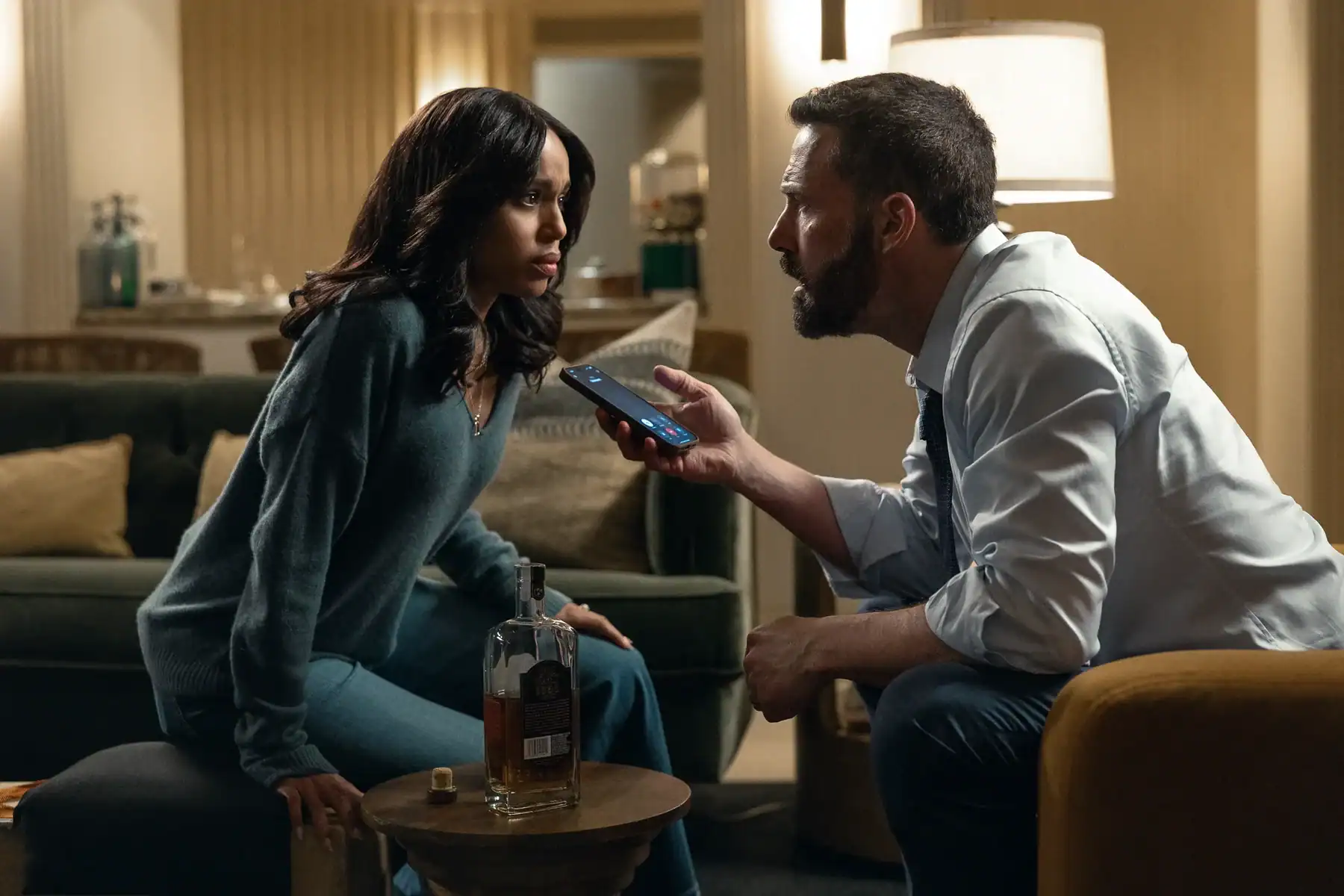
By contrast, the Kimballs appear static. Some backstory tries to beef up the tension. Kimball pours all their marital savings into keeping his campaign afloat, money they would need when they receive the ransom call. As for Abigail, she is distant from her husband and has begun having an affair, with plans to divorce him after the election. These story beats add wrinkles to iron out in the overall plot, and they make the wayward kidnapping plot more compelling.
The problem is that the story also doesn’t invest in the kidnapper. The build-up never comes, and the whole thing, along with the film itself, feels anticlimactic. A largely disembodied voice on the phone using a modulator is trite, and the climax feels rushed and uneven.
A compelling movie exists somewhere among the clichés and melodrama. Oh, and they used AI in production. That’s not why the film suffers, though it certainly doesn’t help. Animals wishes to be thought-provoking and engaging, raising ethical and moral quandaries. Yet all it elicits is blank stares. As for questions, the only one I had after the credits rolled was: why are there so many aerial and drone shots in the movie? Probably not the question to be thinking about after a movie.
Animals is now streaming on Netflix.
A compelling movie exists somewhere among the clichés and melodrama. Oh, and they used AI in production. That's not why the film suffers, though it certainly doesn't help. Animals wishes to be thought-provoking and engaging, raising ethical and moral quandaries. Yet all it elicits is blank stares. As for questions, the only one I had after the credits rolled was: why are there so many aerial and drone shots in the movie? Probably not the question to be thinking about after a movie.
-
GVN Rating

Writing & podcasting, for the love of movies.
His Letterboxd Favorites: The Dark Knight, Halloween, Jaws & The Odyssey.