It’s hard not to feel frustrated by Hailey Gates’ feature debut film Atropia, which introduces complex messaging in a satire that hardly explores those messages in a meaningful way. It’s a laugh-out-loud comedy shown through military role-play, and while the film has genuinely hilarious segments, Gates loses focus on the film’s more serious lessons. A Bush-era wartime comedy is tough to pull off, and thanks to the film’s deeply committed performances, Atropia is mostly an enjoyable watch.
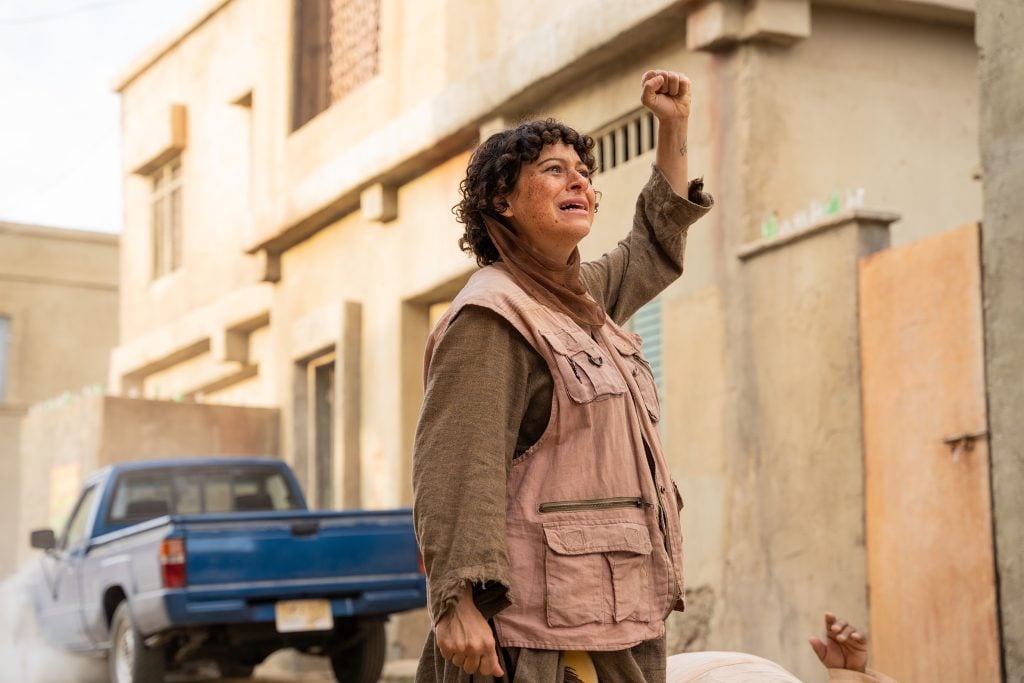
Named after the fictional country Atropia, nestled in sunny California, the setting is used by the American military to place new soldiers in combat-like scenarios for training. Decorated in Iraqi fashion, the makeshift village is filled with actors and actresses looking for a paycheck or, like Fayruz (Alia Shawkat), looking for her big break. She’s an opportunist, looking to change roles when it benefits her, and keeps tabs on when Hollywood bigwigs show up to tour the facility. As new troops enter the simulated encounters and new roles are announced, Fayruz finds herself battling repressed feelings from her past while in the crosshairs of Cupid’s bow—or so she thinks.

Gates gives audiences plenty to be entertained by in Atropia: forbidden love, deadpan humor, and peeks into American military practices. As each new role is given out to the talent, there’s a guilt felt over their participation in aiding soldiers in their cruel missions. A few claim to have roots in Iraqi culture and embellish their newly appointed character assignments; others give the bare minimum in their performances. Fayruz often claims to be the most talented among the bunch, playing roles such as a chemist hiding to evade capture or a bride getting married in a village celebration. Mixing her often overused humor with her conflicted thoughts on the Iraq War, Fayruz shakes up the simulation when she goes off script in an act of absurdist rebellion.
There’s no shortage of stellar performances in Atropia. Shawkat leads the film as charming as she’s ever been, not afraid to let her character get into the mud of things. Her fellow villagers are often less humor-focused, like the calm demeanor of Noor (Zahra Alzubaidi) or her secret love interest, Abu Dice (Callum Turner), who blurs the lines between simulation and real life. When Atropia explores the dynamics between those performing in the village and the trainee soldiers, it points out how American culture views those in Iraq through biased characterizations for this staged play. Even with Fayruz attempting to teach soldiers about Iraqi culture, their demeanor remains the same.
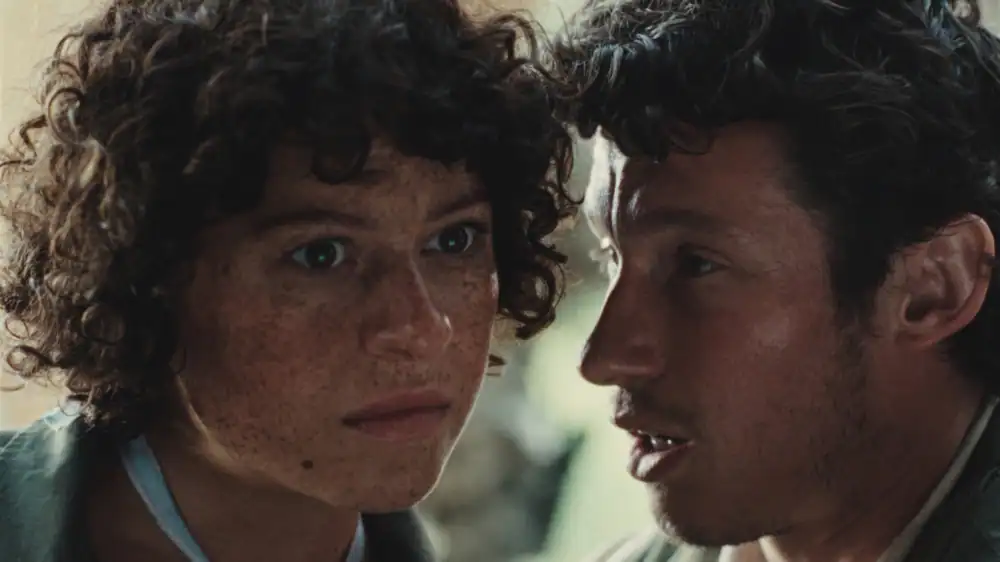
While Atropia doesn’t always hit the emotional heights that the cast and subject matter are more than capable of achieving, there are moments like Fayruz dealing with a rift within her family caused by her work, or how the heads of the simulation, Hayden (Tim Heidecker) and Pina (Chloë Sevigny), don’t have the soldiers’ best interests in mind. Those moments are unfortunately few and far between, with Gates choosing to oversaturate the film with jokes that don’t land. The cast does a wonderful job of building tension and conflict when needed, while also reminding audiences that this film is satire through and through. Felt in the out-of-the-blue fling between Fayruz and Abu, what starts out as enemies-to-lovers quickly devolves into something over-the-top and distracting from the film’s overarching anti-war message.
Both Shawkat and Turner fail to capture a spark between them in their on-screen interactions, which is a shame considering they are both talented in their own right. Their romance feels like a waste of screen time that could have been better spent on the side characters, especially since they represent some of the most important elements of the simulation’s story. Much of the Iraqi perspective is filtered through Fayruz, and the sense of community among the actors and actresses feels like a mismatched family. However, little time is spent exploring them as actual people rather than background players in a military performance, existing mainly to further Fayruz’s shenanigans. While the film is inspired by a real American training camp, Medina Wasl, Atropia shows just a sliver of activity that most citizens aren’t privy to.
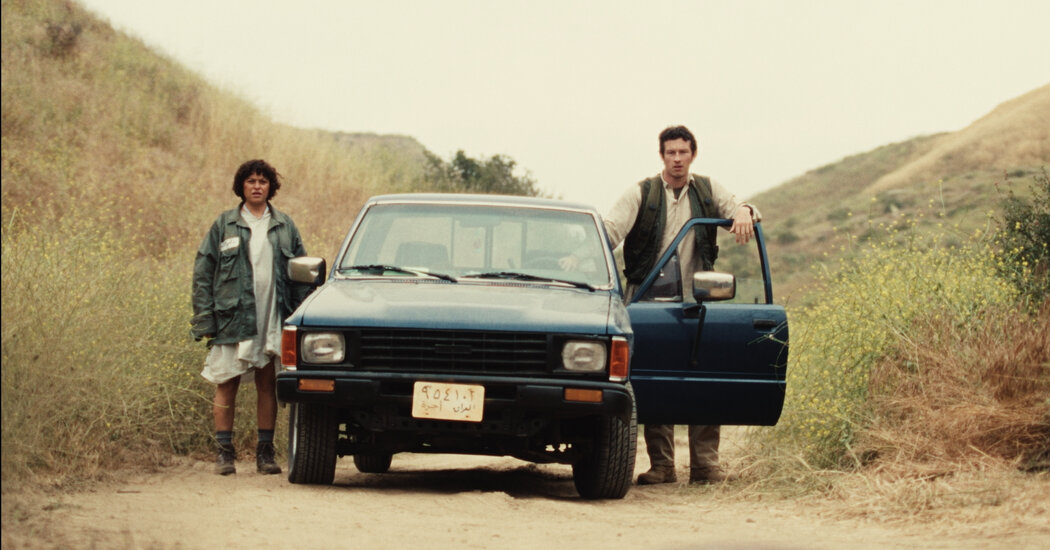
For those looking for a cheeky comedy that doesn’t feel like most wartime films set in the early to mid 2000’s, there’s plenty to enjoy on a surface level. It helps that this isn’t Shawkat’s first time working with Gates; in 2019, their short film Shako Mako would go on to be the basis for this film. They both share a connection in wanting to show this side of a usually ignored perspective on America’s invasion of Iraq. With disconnected leaders, toxic methods of displaying manliness, and disrespect toward an entire culture, Atropia leaves enough for audiences to reflect on even after the credits roll, despite its issues.
Atropia is a wave of nostalgia for those who remember life in 2006, with on-the-ground reporters relaying news to American homes through biased lenses, iconic fashion, and an even more iconic sighting of the very first iPod. Gates transports us to the Bush era, the immediate post-9/11 world that still has impacts today, and shows how history continues to repeat itself. But displaced humor and oddly paced scenes take away from the film’s strengths within the cast, making the 103-minute runtime move at a turtle’s speed.
By no means is Atropia within the highest ranks of films that 2025 has to offer, but it’s a fine enough feature debut from Gates—one that chooses to frame America’s obsession with entertainment as a part of every aspect of life, while showing a side of the War on Terror that isn’t seen enough. Its awkward humor and needless romance hold the film back from its true potential. But it’s worth a watch for Shawkat’s charm alone.
Atropia is currently playing in select theaters courtesy of Vertical.

Gates transports us to the Bush era, the immediate post-9/11 world that still has impacts today, and shows how history continues to repeat itself. But displaced humor and oddly paced scenes take away from the film’s strengths within the cast