A red Batmobile. A completely different-looking Alfred. And a secret identity Bruce Wayne uses when Batman just will not get the job done.
Batman has been around for so long that it is easy to forget that everything we associate with the character was not there from day one. The Batcave, Robin, the Bat-Signal, Alfred as we know him today, and even some of the most famous parts of Bruce Wayne’s origin were added over time.
Writers and artists spent decades building Batman into the character we know now. Some ideas stuck. Others disappeared. And a few things that seem completely normal today actually have some pretty strange beginnings.
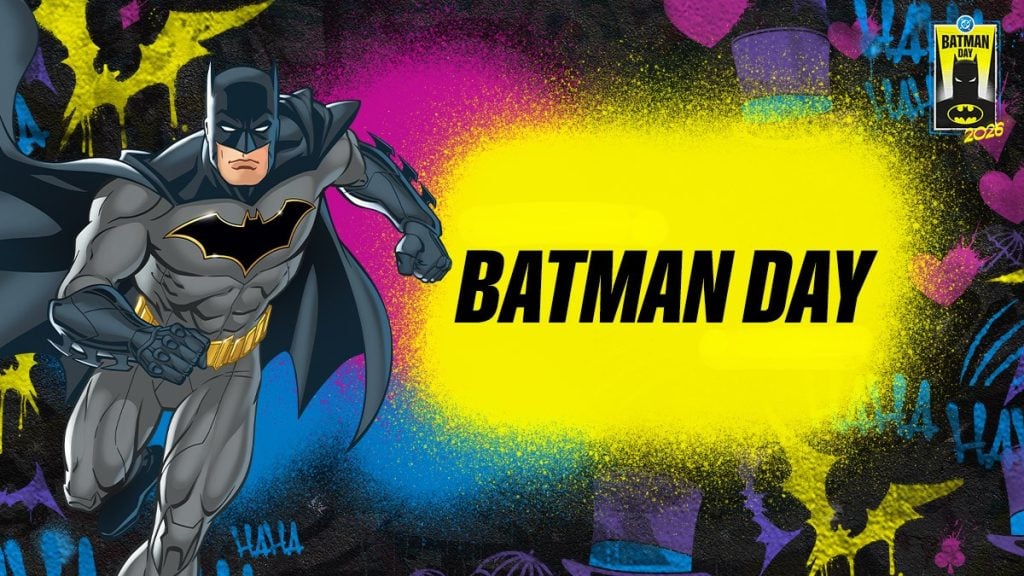
With DC celebrating Batman Day on September 19 this year, it feels like the perfect time to look at some of the more interesting pieces of Batman history that even longtime fans may not know.
A quick note before we get started: Batman has obviously gone through countless changes, reboots, alternate universes, films, and different versions over the years. These facts are mostly about the character’s comic-book history, so something that happened in a 1940s Batman story may not necessarily apply to the Batman you are reading today.
1. Readers met Batman before they even knew why he became Batman
Batman made his debut in Detective Comics #27, which hit newsstands on March 30, 1939, with a May cover date. His first story, “The Case of the Chemical Syndicate,” was written by Bill Finger and drawn by Bob Kane. The entire thing was only six pages long.
What is interesting is that one of the most important parts of Batman’s story was not even there yet.
There was no murder of Thomas and Martha Wayne. No young Bruce standing over his parents. No explanation for why this wealthy guy decided to dress like a giant bat and fight criminals at night.
That came a few months later in Detective Comics #33, where Batman’s now-famous origin story was told in only two pages.
Think about that for a second. Readers were introduced to Batman as this mysterious crimefighter before they had any idea what happened to Bruce Wayne. Today, nearly every Batman adaptation feels like it has to remind us about Crime Alley. Back then, Batman himself was the mystery.
Source: DC, “Batman, a History of Heroics: The Beginning.”
2. The famous falling pearls were added decades later

When most people picture the death of Bruce Wayne’s parents, there is probably one image that immediately comes to mind: Martha Wayne’s necklace breaking and pearls falling across the pavement.
That was not in the original Batman origin.
Neither was Martha’s first name, the name Crime Alley, or even the name of the movie the Wayne family had just watched.
According to DC, the famous image of Martha’s necklace snapping and the pearls falling appeared in Frank Miller’s The Dark Knight Returns #1 in 1986.
That means one of the most recognizable images in Batman history did not show up until nearly 50 years after the character was created.
It is kind of crazy when you think about how often that shot has been repeated in Batman movies, television shows, animation, and comics since then.
Source: DC, “The Evolution of Batman’s Origin.”
3. Batman did not always have his famous no-killing rule
Batman refusing to kill is one of the biggest parts of the character today. Writers have built entire stories around how far Bruce will go without crossing that line.
But early Batman was a little different.
In Batman #1 in 1940, Batman actually used a machine gun against monsters. That sounds almost impossible when compared to the version of Batman most fans know today.
According to DC, editor Whitney Ellsworth eventually stepped in and established that Batman would no longer kill or use guns.
That decision became one of the most important rules in Batman history.
And honestly, Batman became a more interesting character because of it. There is always more tension when Batman has to find another way out of a situation instead of simply killing whoever is standing in front of him.
Source: DC, “Batman, a History of Heroics: 1940s–1950s.”
4. Robin showed up much earlier than people sometimes realize
Batman has this reputation as the ultimate loner. He stands on rooftops. He disappears into the shadows. He works alone.
Except Batman really has not been alone for most of his history.
Dick Grayson made his debut as Robin in Detective Comics #38 in 1940, roughly one year after Batman himself first appeared.
That means Robin is not some later addition to Batman mythology. He has been part of Batman’s story almost from the beginning.
Dick was a circus acrobat whose parents were murdered, giving Bruce an obvious connection to the young boy. Bruce saw someone going through the same kind of tragedy that changed his own life.
Robin also gave writers a different side of Batman to explore. Bruce was no longer just the angry vigilante chasing criminals through Gotham. He suddenly had someone depending on him.
Source: DC’s official Robin profile.
5. Alfred originally looked completely different
If you picture Alfred Pennyworth, you probably imagine the thin, proper, mustached butler who has spent decades keeping Bruce Wayne alive while occasionally reminding him that running around Gotham every night dressed as a bat might not be the healthiest lifestyle.
That was not the original Alfred.
When Alfred appeared in Batman #16 in 1943, he was heavier, clean-shaven, and was used much more for comedy. He also had dreams of becoming a detective himself.
Then came the 1943 Batman movie serial.
Actor William Austin played Alfred as a thinner man with a mustache. His appearance became so closely associated with the character that the comics eventually changed Alfred to look more like him.
The comics even explained Alfred’s new appearance by having him return from a health resort looking thinner and sporting a mustache.
So in one of the funnier twists in Batman history, it was not the movie changing a character from the comics. The comics changed the character because of the movie.
Source: DC, “An Ode to Alfred Pennyworth.”
6. The first Batmobile was red
Batman driving around Gotham in a bright red convertible sounds completely wrong.
But it happened.
DC identifies the vehicle seen in Detective Comics #48 in 1941 as the first car actually called the Batmobile. Batman had already driven cars before that, but this was the first one officially given the famous name.
And yes, it was red.
It also looked far more like a normal car than the massive armored Batmobiles fans are used to today. There was a small bat ornament on the hood, and the vehicle even had a modified battering ram that allowed Batman to smash through walls.
So while it may not have looked particularly intimidating, Batman was apparently still perfectly comfortable driving it through a building.
The darker, more recognizable Batmobile designs would come later.
Source: DC, “We Rank (Almost) Every Batmobile Ever,” entry 23.
7. Commissioner Gordon was around before the Bat-Signal
Commissioner Gordon has been part of Batman’s world from the very beginning. He actually appears in Batman’s first story in Detective Comics #27.
The Bat-Signal, however, did not arrive until Detective Comics #60.
It is strange to imagine Gotham without it now.
The image of that giant bat symbol lighting up the clouds has become one of the easiest ways to tell audiences that Gotham is in trouble and Batman is needed.
It also says a lot about Batman’s relationship with the police. Gordon is not exactly calling Bruce Wayne on the phone. Instead, Gotham basically turns on a giant light and asks its mysterious vigilante to come help.
Somehow, that became completely normal.
Sources: DC’s account of Batman’s debut; DC, “Eight Gifts that Detective Comics Has Given to Batman.”
8. The giant penny in the Batcave originally had nothing to do with Two-Face

The giant penny sitting inside the Batcave feels like something that should obviously be connected to Two-Face.
It is not.
The penny goes all the way back to World’s Finest Comics #30 in 1947 and a villain named Joe Coyne, better known as the Penny Plunderer.
Yes, Batman once fought a criminal whose entire gimmick involved pennies.
That story eventually gave us one of the most recognizable trophies inside the Batcave.
It is also one of those wonderfully strange reminders of just how long Batman has been around. When you have been fighting crime since 1939, eventually you are going to end up with some weird souvenirs.
Source: DC, “The Secret Origins of the Batcave’s Best Trophies.”
9. Bruce Wayne has another identity besides Batman
Batman cannot exactly walk into every criminal hangout and start asking questions.
That is where Matches Malone comes in.
Matches is one of Bruce Wayne’s most useful undercover identities. Instead of showing up dressed like Batman and terrifying everyone in the room, Bruce can pose as a criminal and get people talking.
Batman first used the identity in Batman #242 in 1972, written by Dennis O’Neil. In that story, Bruce took on the identity after the real Matches Malone died.
The history of the character has changed a little over the years, but Matches Malone has remained one of Batman’s best undercover tools.
It also gives Bruce a chance to actually do some old-fashioned detective work instead of solving every problem with the Batmobile or a fist to the face.
Source: DC’s “Ask the Question” column on the first use of Matches Malone.
10. Batman once moved out of Wayne Manor
Wayne Manor and the Batcave seem like such permanent parts of Batman that it is hard to imagine Bruce operating anywhere else.
But he has.
During the Bronze Age of Batman comics, Dick Grayson left for college and Bruce eventually closed the Batcave and moved into a penthouse at the Wayne Foundation building in downtown Gotham.
For a period of time, Batman was basically living right in the middle of the city he was protecting.
The move also fit the direction Batman stories were taking at the time, with more focus on street crime, corruption, and Bruce being closer to Gotham itself.
And if nothing else, it probably made the commute a lot easier.
Source: DC’s official Batman history, “The Bronze Age.”
Batman has always been changing
One of the best things about looking back at Batman’s history is realizing just how much of the character was built over time.
There was no master plan in 1939 that included Robin, the Bat-Signal, the Batcave trophies, Matches Malone, a dozen different Batmobiles, or Alfred eventually turning into the version everyone recognizes today.
Writers and artists kept adding ideas. Some worked. Some did not. And some became such an important part of Batman that it is almost impossible to imagine the character without them.
That is probably one of the reasons Batman has lasted this long.
The character can change without completely losing what makes him Batman.
So this Batman Day, celebrate the Dark Knight, the Bat-Signal, Gotham City, and all the big iconic moments.
But maybe save a little appreciation for the red Batmobile and the giant penny too.
Historical references are linked beside the relevant sections. Issue dates may refer to cover dates unless an on-sale date is explicitly given. This is an independent celebratory article and is not affiliated with DC.

DC Fanboy! Superman is the greatest comic book character of all time. Favorite movies are Man of Steel, Goonies, Back To the Future