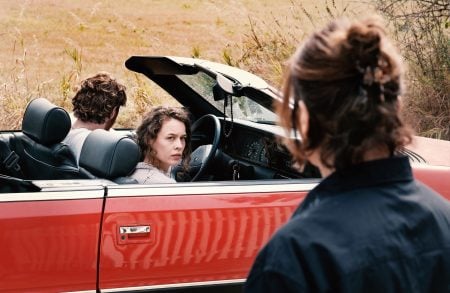
Powerful doesn’t even begin to describe Dolores Fonzi’s newest film Belén in the slightest. Based on a true story that beats the drum for women’s rights that can still be heard today, it shows how women’s bodies are policed, even down to the pain they feel. It’s an inspiring call for justice—for the women who came before and the women who will lead into the future. Fonzi creates an impactful look into women’s reality, making her film feel intimate and personal all at once. Belén is a film that is much needed, with its universal fight for freedom in a punishing world.
Not only does Fonzi write and direct her film Belén, but she also stars in it. Her character, Soledad Deza, is not only the lawyer to Julieta (Camila Plaate) but also a mother and wife. And when she’s not fulfilling her duties at home, she fights injustice by representing Julieta after her public defender, Beatriz Camaño (Julieta Cardinali), fails to prove her innocence. Julieta is imprisoned after being found guilty of killing her child—a child she didn’t even know she was pregnant with. After going to the hospital for abdominal pains, she finds herself on an operating table, being handcuffed for a crime she knows she did not commit. But just like her pain, her story is ignored by those who can deliver justice—until her story becomes public and ignites a passionate battle for women’s rights.
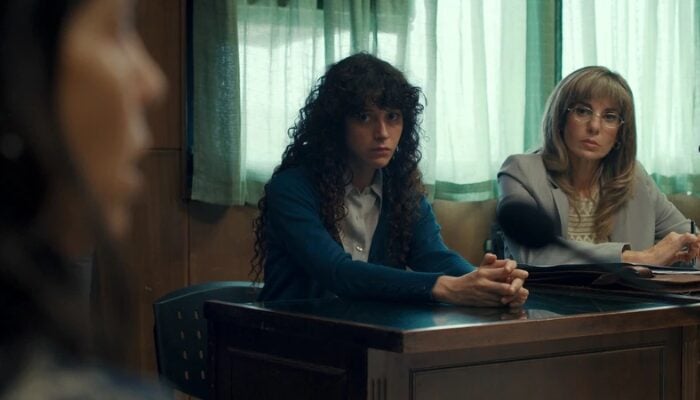
First and foremost, Belén is a story about how women’s pain is neglected at every turn until it can’t be ignored. When Julieta first enters the hospital, she’s screaming in pain, and it barely moves the staff into action. Hushed by nurses while they have to hold her up just to walk, doctors forcefully pull down her pants because she can’t remove them fast enough for testing. Fonzi makes it a point, especially at the beginning of the film, to highlight that Julieta was never taken seriously—a theme that holds true as the film progresses. Effectively, Julieta’s character has a story that is relatable to any woman who has felt neglected by the healthcare system, and when the police barge in to arrest her, there’s no one there to advocate for her.
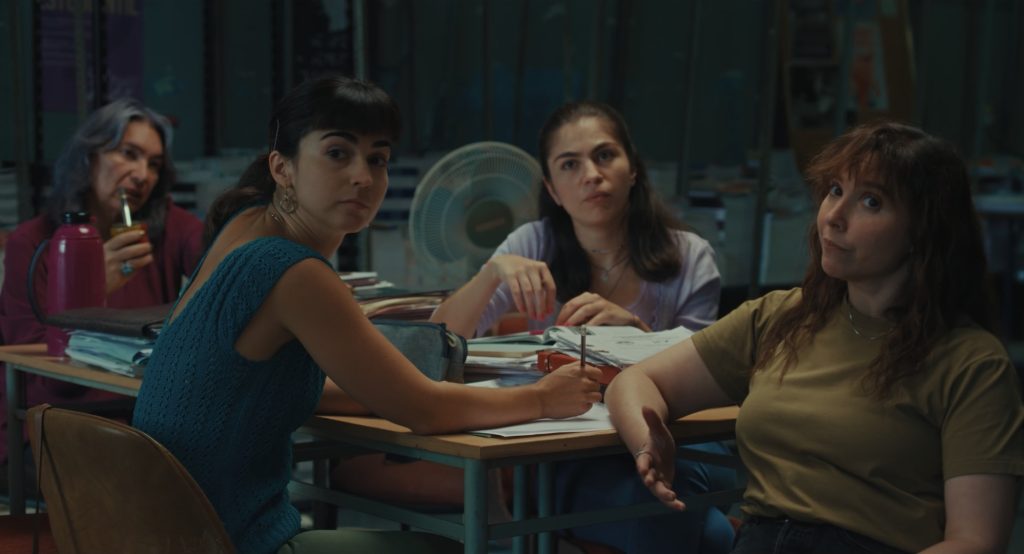
Julieta suffers a miscarriage—a life-altering experience—but never gets a moment to grieve or heal from the loss. Instead, her public defender, Beatriz, puts in so little effort that Soledad finds herself challenging the court’s decision to let Julieta waste years of her life behind bars. Belén truly comes to life during its focus on proving Julieta’s truth is the truth, showing women banding together to amplify not just her story but theirs as well. Through heated television debates, organized marches, and advocacy work within the community, it’s an inspiration to see what the power of women can achieve—and that when injustice happens to one, it can happen to all.
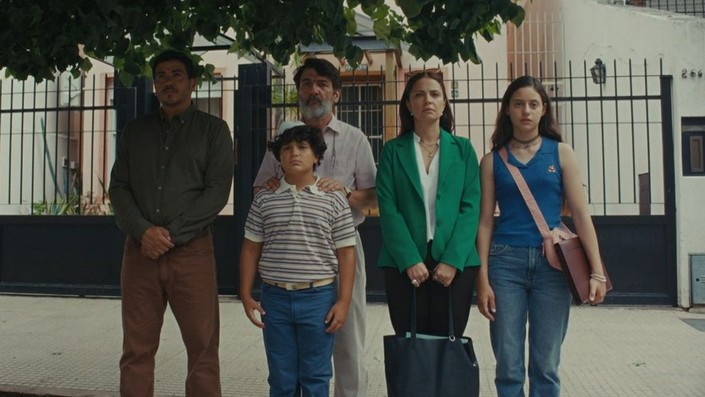
Wishing to stay private, Julieta and her team choose to name her Belén for the public—meaning Bethlehem. It’s apparent that religion plays a large role in how Julieta is viewed. And as her story spreads, so do the numbers within their movement, making the real-life connections to the film feel that much more poignant. There’s never a moment in Belén where Julieta’s fate feels like it’s in safe hands, with threats on her legal team’s life and the unfortunate feeling that this type of situation still happens today. It’s a film that is incredibly topical, and Fonzi doesn’t shy away from showing how isolating infant loss and false persecution can be.
While much of the film teeters between hopeful resolutions and utterly hopeless dread with Julieta, Fonzi and her fellow writers Laura Paredes, Agustina San Martín, and Nicolás Britos never let one overshadow the other. There are plenty of scenes within the film that make it hard to feel optimistic about the future for young women, but there’s also enough to embolden them to continue evoking change. They show the flaws of the local judicial system and how its incompetence comes off as malice shrouded in misogyny—where panels of men judge women for things out of their control, especially when every avenue taken fails them. It’s heartbreaking that even today, stories like Belén are not out of the norm, but if anything, this film stands as a testament to the force of a unified whole.
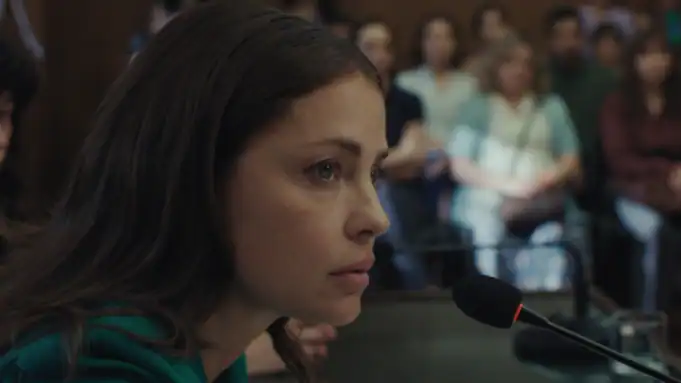
A film that is about women, directed by a woman, and starring a large number of women—it’s refreshing to see such sensitive themes and topics handled in this way. The performances in Belén are what leave the longest impression, Fonzi being the film’s brightest spot. Her work is just as inspiring as the film itself, playing Soledad in such a layered way. She’s a mother first and foremost, and she makes it a point to show her daughter how to advocate for herself and others. It’s an enthralling performance that will make audiences want to take to the streets to make the world a better place. Plaate’s reserved and withdrawn approach to Julieta pairs well with Fonzi, and the way her eyes emote her suffering is nothing short of masterful. When she takes the stand to defend herself, it shows the fire inside of her to continue fighting. Plaate makes sure that audiences know that she has a bright future ahead of her.
Taking place in Tucumán, Argentina, the views are beautiful, and when juxtaposed with Julieta’s life behind bars, it’s a reflection of the freedom she doesn’t have. Its natural beauty—from lush landscapes to a unique mixture of architecture—shows a country filled with life. The streets, at one point, are filled with women marching, demanding the release of the woman they know as Belén. Outside of these hospitals and government buildings is a world that hasn’t given up, and it’s what propels Julieta to continue fighting.
Belén is an important and harrowing story not just for women to take notice of, but for all those who want to live in a just world. When those in power fail to protect the most vulnerable, it’s up to communities to come together—and that’s exactly what Fonzi’s newest film will inspire.
Belén will debut in select theaters on November 7, 2025, courtesy of Amazon MGM Studios. The film will be available to stream on Prime Video on November 14th.
Belén is an important and harrowing story not just for women to take notice of, but for all those who want to live in a just world. When those in power fail to protect the most vulnerable, it’s up to communities to come together—and that’s exactly what Fonzi’s newest film will inspire.
-
GVN Rating