

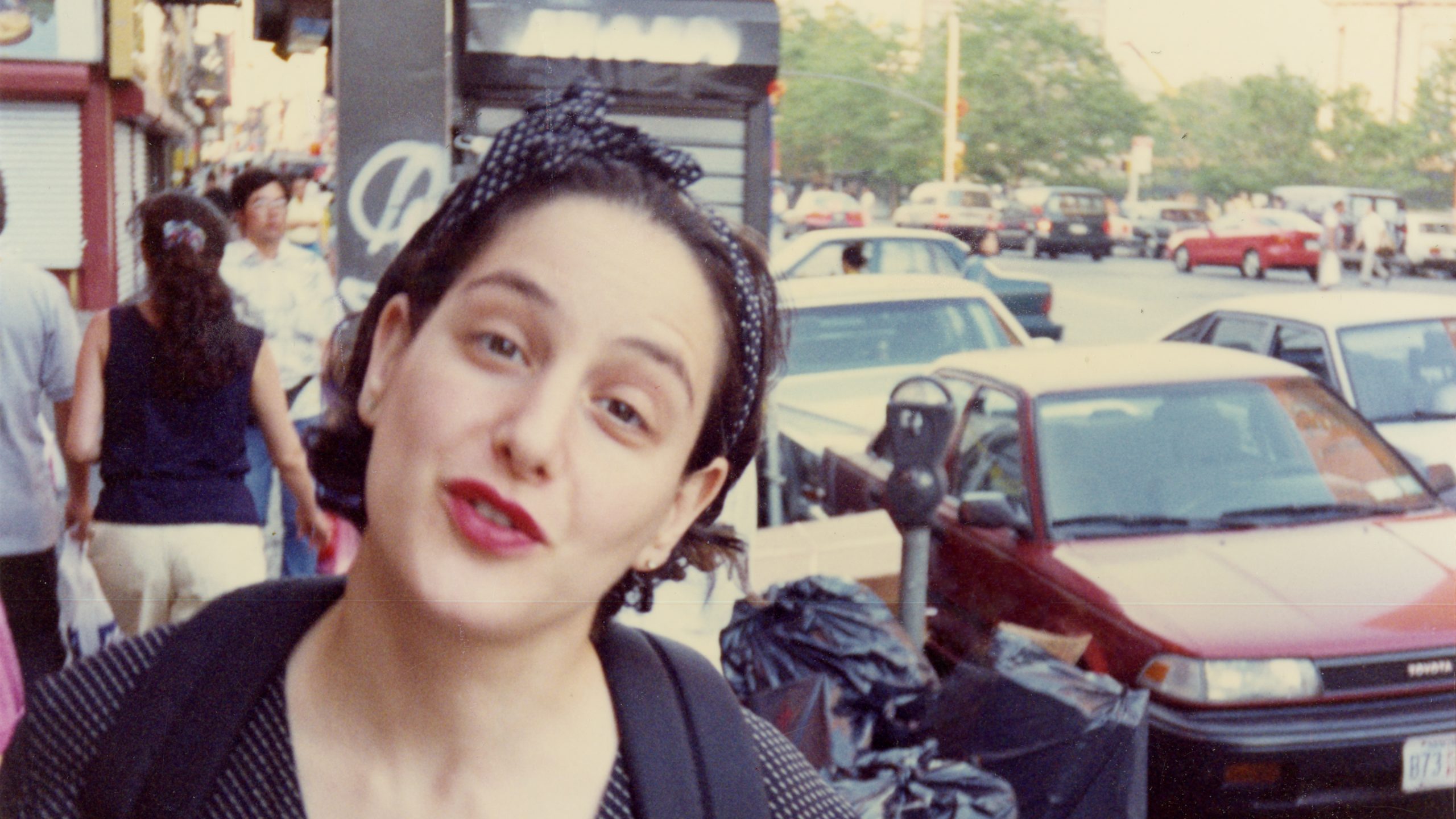
Reflective documentary filmmaking has reached its most profound level with I’m Not Everything I Want to Be, Klára Tasovská’s excellent photographic documentary about Czechoslovakian photographer Libuše Jarcovjáková, where she reflects on her subject using a self-reflective window of using the subject’s own work to tell the story in full. It’s a different case with BENITA, but similar in its ambitious journey to discover an artist through her own work. Using fragments of her creations to describe the artist, rather than outlining it bit by bit to create a corpus that represents an artist who left our world too soon, before she was fully capable of expressing herself.
Alan Berliner’s reflective documentary about his friend, the late filmmaker Benita Raphan, is an immersive exploration of who she was as an artist but also as a person. At the beginning of his documentary, Berliner poses an important question, “How well do I really know Benita?” and that question has left me wondering, how well do we think we even know one another? Our friends, our partners, even our families. How well does one know a person? His attempt to figure out Raphan is a highly successful one and also an enjoyable dive into her work, reflective of her psyche and her inner artistic soul.

It’s always scary to reflect on art made by someone who took their own life. It feels voyeuristic, but like voyeurism in a morgue within an abandoned cemetery, neglected and decaying with forgetfulness. Yet, the only spectator is the one at the other side of the screen, watching a person who carried so much life inside them, who decided in a moment to take that life away because it hurt them so much to live.
But BENITA celebrates life while honoring the dead. Raphan’s life—if not really long on this earth—is truly a cause for celebration, for the light and art she brought into the world. Berliner uses Benita’s rich archive to create a magical world of handwritten notes, music, images, and snippets from her ethereal short films that explore the lives of artists and historical figures. He interweaves it with interviews with her friends, boyfriend, and family. To each person, Raphan was a different personality. But they all agree on two things: her talent and her oddity.

In one of the most brilliant parts of the documentary, Berliner discloses that there is not a single photo of him and Raphan together—a detail I find so realistic, heartbreaking as it is. I can’t begin to describe how many friends I’ve loved and gotten really close to without a single photo. Some of them, we no longer talk. Others, we’re still friends, but it’s not as easy to be in the same physical space together. And sadly, some of them are no longer with us on this earth. Another interesting side of Raphan that Berlinger perfectly highlights is her sensitivity and fragility. We often tend to forget the artist behind the creation; even a brave and bold short film could easily be made by a highly sensitive soul that struggles to survive in an ever-shifting, not-always-kind world. It’s both bittersweet and nostalgic to reminisce about Raphan as a woman and as an artist, and as a woman-artist, a hybrid of both existences she harbored when she was alive.
After watching BENITA, I thought to myself, don’t we all wish we had a great friend like Berlinger, who will keep our legacy alive even long after we’re gone? This is a kind documentary for the hopeful souls.
BENITA is currently being exhibited at regional film festivals. The film will next screen on February 28, 2026, at The Jewish Film Institute in San Francisco for Winterfest 2026.
After watching BENITA, I thought to myself, don’t we all wish we had a great friend like Berlinger, who will keep our legacy alive even long after we’re gone? This is a kind documentary for the hopeful souls.

Jaylan Salah Salman is an Egyptian poet, translator, and film critic for InSession Film, Geek Vibes Nation, and Moviejawn. She has published two poetry collections and translated fourteen books for International Languages House publishing company. She began her first web series on YouTube, “The JayDays,” where she comments on films and other daily life antics. On her free days, she searches for recipes to cook while reviewing movies.