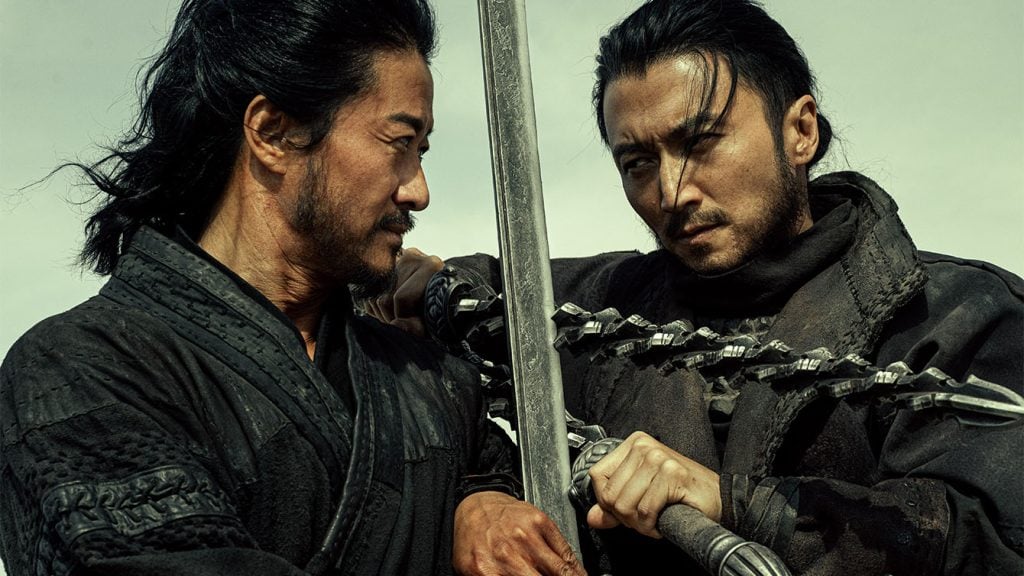
Yuen Woo-Ping has had a chokehold on audiences since his first film credit. He started his career on Ng See-Yuen’s The Bloody Fists blocking fight choreography in 1972. Woo-Ping’s work stood out against an otherwise ordinary period martial arts from the 2nd unit director of The Chinese Boxer, See-Yuen himself marking his debut on Fists. But Woo-Ping’s career catapulted from there. His style of staging fights on camera evolved over time, incorporating more balletic movements and wire work to combine with what some call “shapes” in fight choreography, particularly the use of animal styles and some exaggerated movements designed for the screen. Working closely with the physical portion of martial arts in filmmaking has put Woo-Ping in a critical position to direct them. His name has become synonymous with the genre for this reason.
With his first feature since 2018’s Master Z: Ip Man Legacy, Woo-Ping has brought back his signature fluid style in a new way. Blending fighting styles with wire work and a more intense incorporation of environmental influences during fights, Blades of the Guardians is by far his best modern work. Adapted from the extremely popular Biao Ren manhua from 2015, Woo-Ping and producer/star Wu Jing were drawn to the use of its period-adjacent traditional chivalrous code and modern western influences. Their idea was to revive the martial arts film by taking on a wuxia chock-full of a captivating rogues’ gallery set within the framework of a western. And by placing Jing squarely in the lead role of Blades of the Guardians, there is a sort of poetic justice to such a meaty role gifted to him.
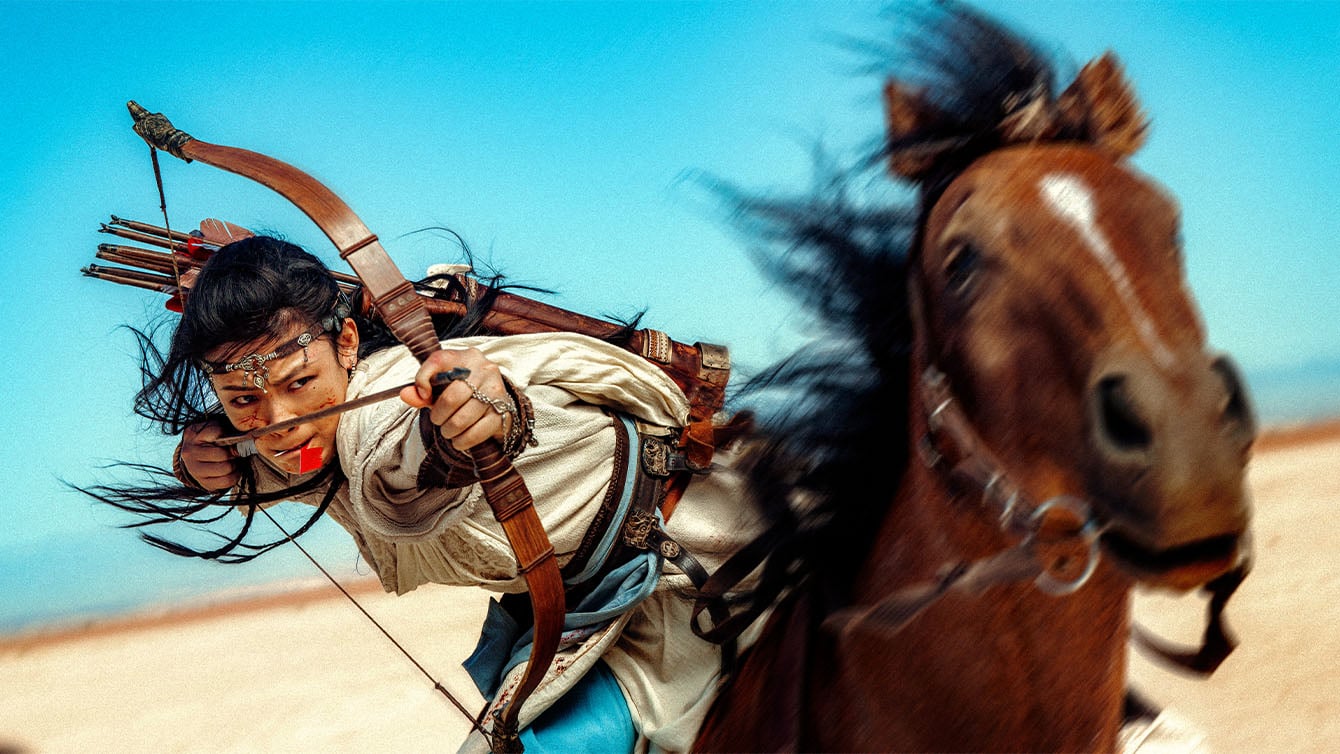
Wu Jing has been cast as the lead many times across his career, but more so in the service of China’s output of propagandistic genre machine. But instead of being given relative scraps to work with in movies like Wandering Earth, Woo-Ping rewards his star and co-producer with something altogether enriching. This extends beyond the screen to the other cast members as well. All actors who have fights in the script joined the crew before production began to train in martial arts, swordsmanship and horseback riding. The preparations were a real investment for the main actors that pays off in each and every scene. There’s a tangibility of craft here that many action movies attempt but fail at, where the answer of how it was gained is just hard work and dedication. That’s not something you can fix in post.
It’s so refreshing to see a new, true wuxia film cut through the brunt of this generation of action films stuck in trends of simplifying what martial arts films did from the 1970s to the 1990s. Woo-Ping puts choreography and his fights at the front and center of conflicts in Guardians without once letting up. Each sequence brings something new and challenging to the characters fighting, the element of danger present and immensely influential. Almost every moment feels like fortune can tip in either fighter’s direction. The opening action sequence had me absolutely giddy, literally getting up from my seat and physically cheering. This is what martial arts diehards have been waiting to see, and from a master entering his 80s, that is no small feat.
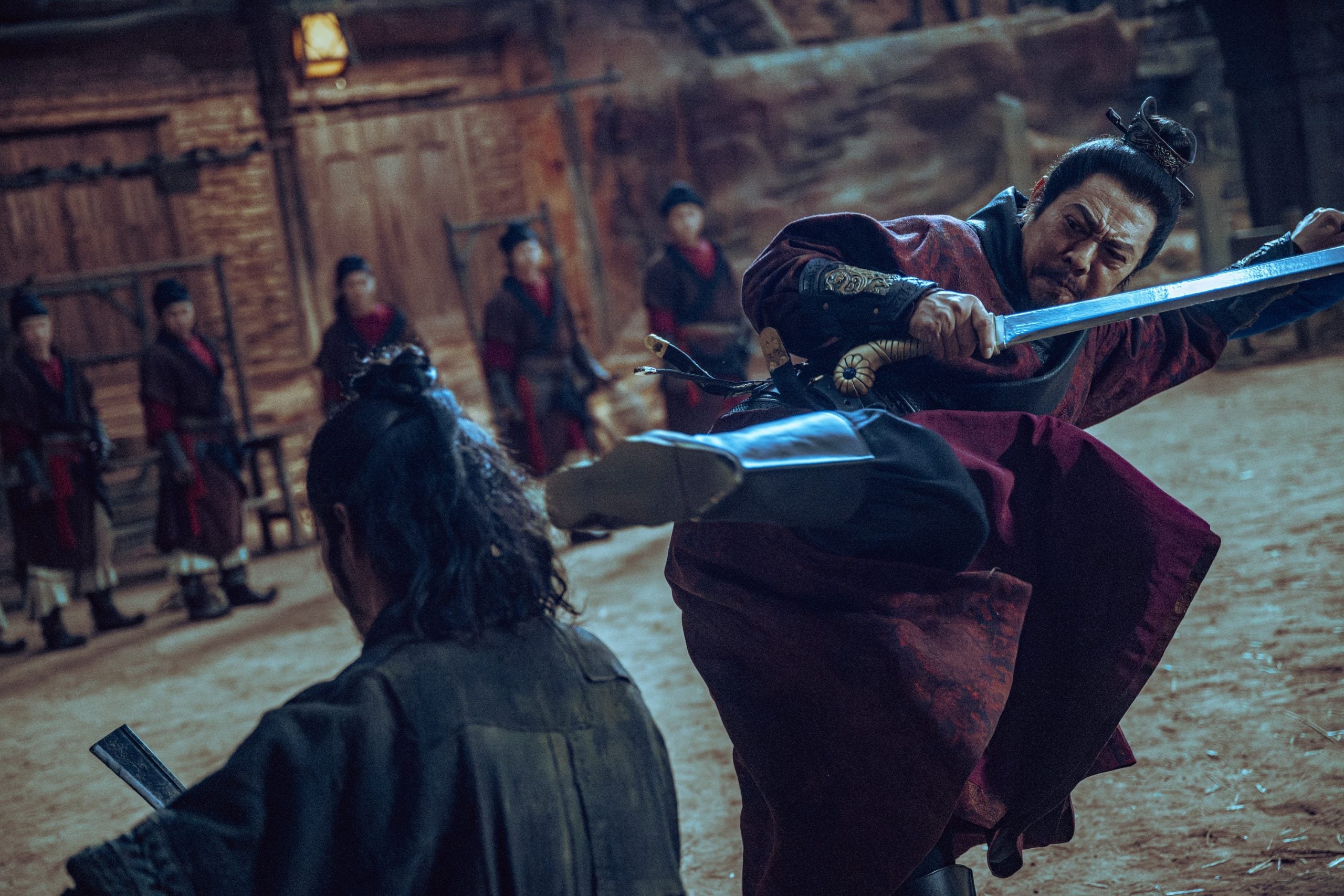
Although the film runs at a solid two hours, it follows a simple structure. Woo-Ping paces this consistently, making it feel like a runaway train with robbers in high pursuit, and the film can easily get away from you with how invested you become. In fact, it runs at a pace so lively it feels alive with an energy not felt since Tai Chi Master. Guardians returns to the wide scope Woo-Ping utilized for his cast of characters in Tai Chi, but instead of adeptly compacting it all in 90 minutes, this film has real room to breathe and is all the better for it. Its drama may be overly simple, but the performances and personality that oozes through each character make it real.
Particularly delightful alongside Jing’s scrappy swordsman Dao Ma is the focus of the film’s plot: Zhi Shi Lang (Sun Yizhou), a masked rebel leader needing protective transport to the city of Chang’an to foster and lead a revolution. Yizhou’s performance of someone so obviously not used to hardships betrays a part of his dramatically masked secrecy as a powerful figure. In a way, his turn from stoicism to comedy refreshes everything: here is not only a person who is seen as a token of resistance but actually a human being with his own thoughts and coping mechanisms to the difficulties he didn’t account for. Woo-Ping calls attention to the importance of cultivating the ideas contained within people who seem to act inharmonious to their internal beliefs, a common thread across each of the film’s characters, but warring in Zhi Shi Lang and Dao Ma especially.
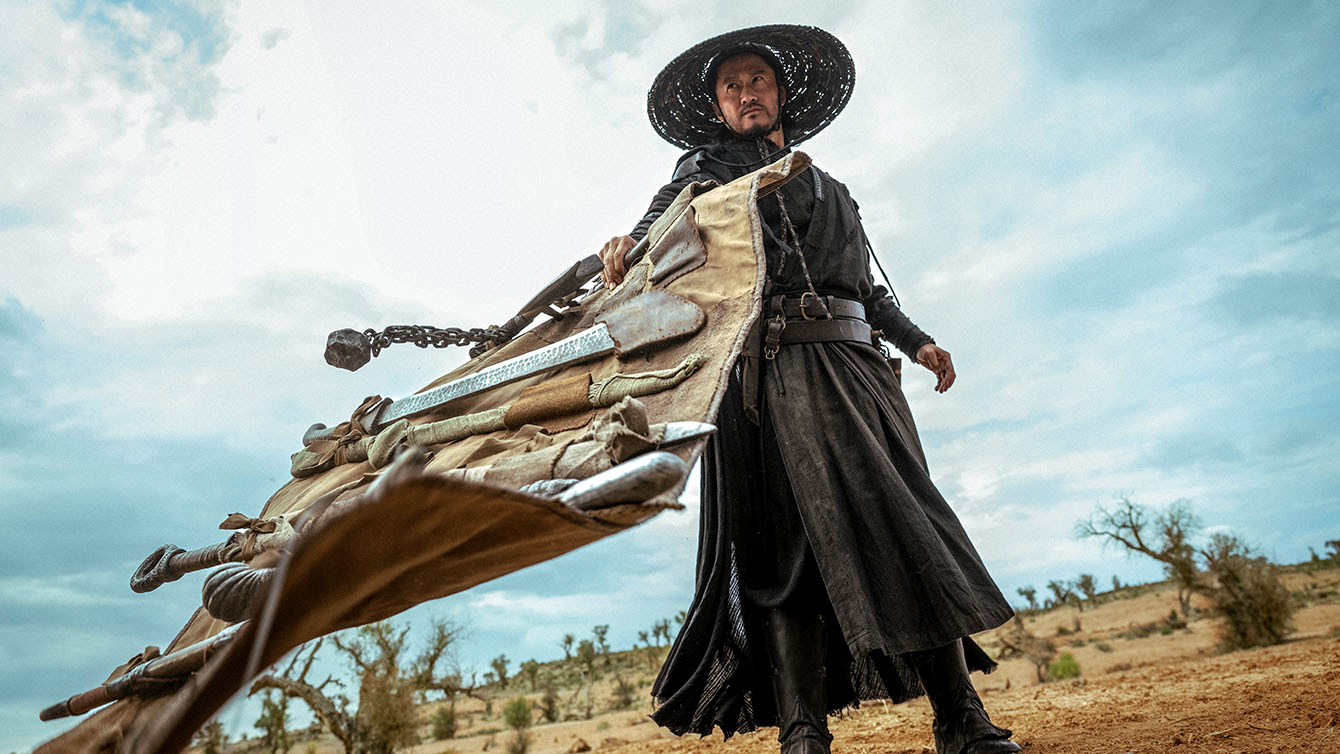
Each character is similarly complex in different ways, which colors how the drama feels from beat to beat. Picking up these dynamics in combat deepens the relationships between characters, expanding on them while Woo-Ping dazzles with seamless choreo and wire work. In moments like these, we’re brought back to something that feels like the martial arts days of old. And for all intents and purposes, this is what we’ve been missing out on in the action and martial arts corners of moviegoing, something coherent in that a genre like this could be so ridiculous or implausible is grounded by thoughts and fears mirroring our own, not a two-dimensional rendering of it. Even if a film of the latter quality includes themes of the above as I have read them, they won’t feel tangible if they aren’t explored with focus and determination.
Cutting through any perceived hyperbole here, Blades of the Guardians may not be the masterpiece to end all masterpieces. If it becomes the final film of an incredible and untouchable career, this does contain everything from Woo-Ping’s past, carrying the history of martial arts cinema with it which makes the genre great. Woven in is a variegated tapestry of the past 60 years of kung fu film history residing in the fabric: textures of Chang Cheh’s Five Venoms, King Hu’s A Touch of Zen, Joseph Kuo’s Swordsman of All Swordsmen, Kenji Misumi’s Lone Wolf and Cub: Sword of Vengeance, Tony Lou Chun-Ku’s Bastard Swordsman, and Tsui Hark’s The Blade can all be felt. Woo-Ping shows just how focused and determined he is still after all these years since first working on fights on the set of The Bloody Fists. Focus and determination happen to be core tenets in all facets of martial arts. If Yuen Woo-Ping has shown us anything, it’s the mastery of these mixed with an extensive passion for storytelling. On the set of The Matrix, he adapted to each cast member’s strengths, working with them through those virtues rather than drilling them relentlessly or haphazardly miming moves.
Woo-Ping is a martial arts instructor in his own way. He delivers an education of styles to cast and crew, with a connective tissue of narrative links that happen to be put to film. And who are we to deny that he is a master at what he does? Blades of the Guardians: Wind Rises in the Desert is the official title of this newest from him. Whether this means he intends to return to continue the story, hand it off to another if there is more to tell, or leave it as a singular film with a curious subtitle that plays with our expectations, Yuen Woo-Ping has earned a place in the sun as he watches his disciples spread his teachings.
Blades of the Guardians is currently playing in select theaters courtesy of Well Go USA.
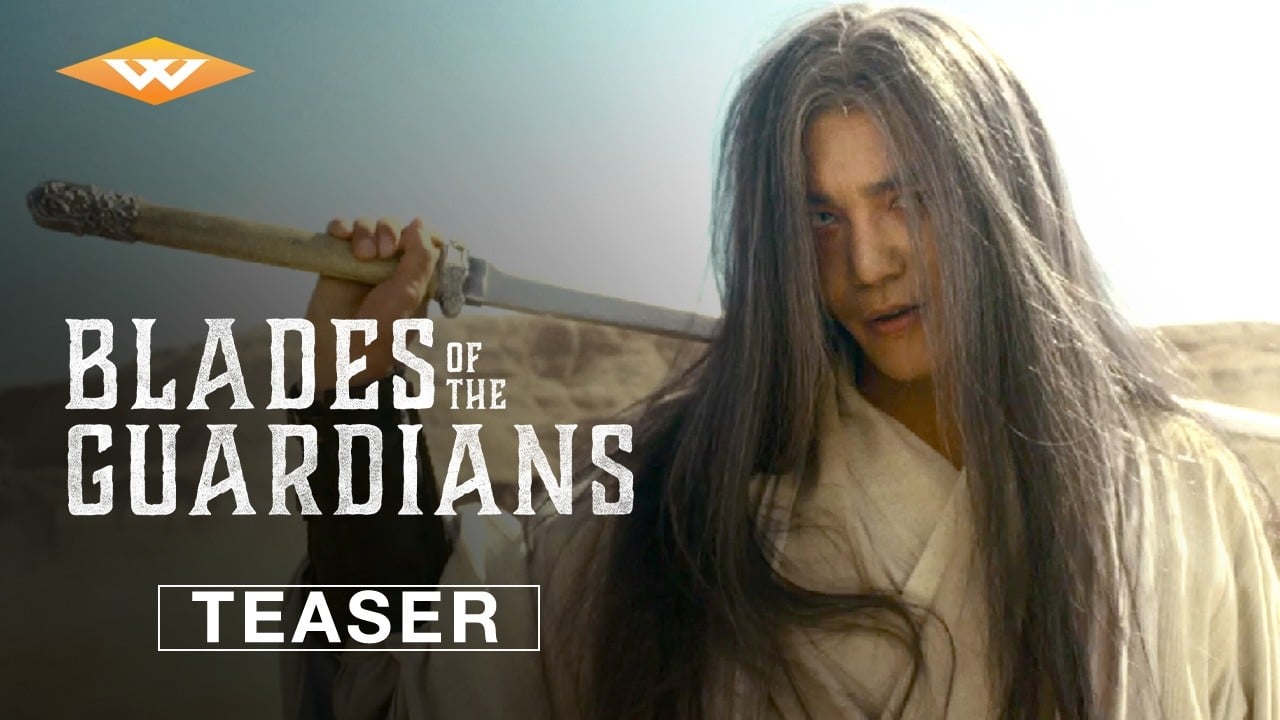
With his first feature since 2018’s Master Z: Ip Man Legacy, Woo-Ping has brought back his signature fluid style in a new way. Blending fighting styles with wire work and a more intense incorporation of environmental influences during fights, Blades of the Guardians is by far his best modern work.

Anya is an avid writer on films. You can read her diary at letterboxd and words on recent releases on medium. In its off time it volunteers as a projectionist & martial arts film programmer, reads disgusting horror novels, is still trying to get a D&D group together, and spends her hard-earned rent money on tattoos and blurays.
![‘The Boys’ Season 5 Premiere Doesn’t Pull Any Punches [SPOILER WARNING]](https://cdn.geekvibesnation.com/wp-media-folder-geek-vibes-nation/wp-content/uploads/2026/04/THBY_S5_UR_501_00331_R2_3000-450x300.jpg "‘The Boys’ Season 5 Premiere Doesn’t Pull Any Punches [SPOILER WARNING]")