

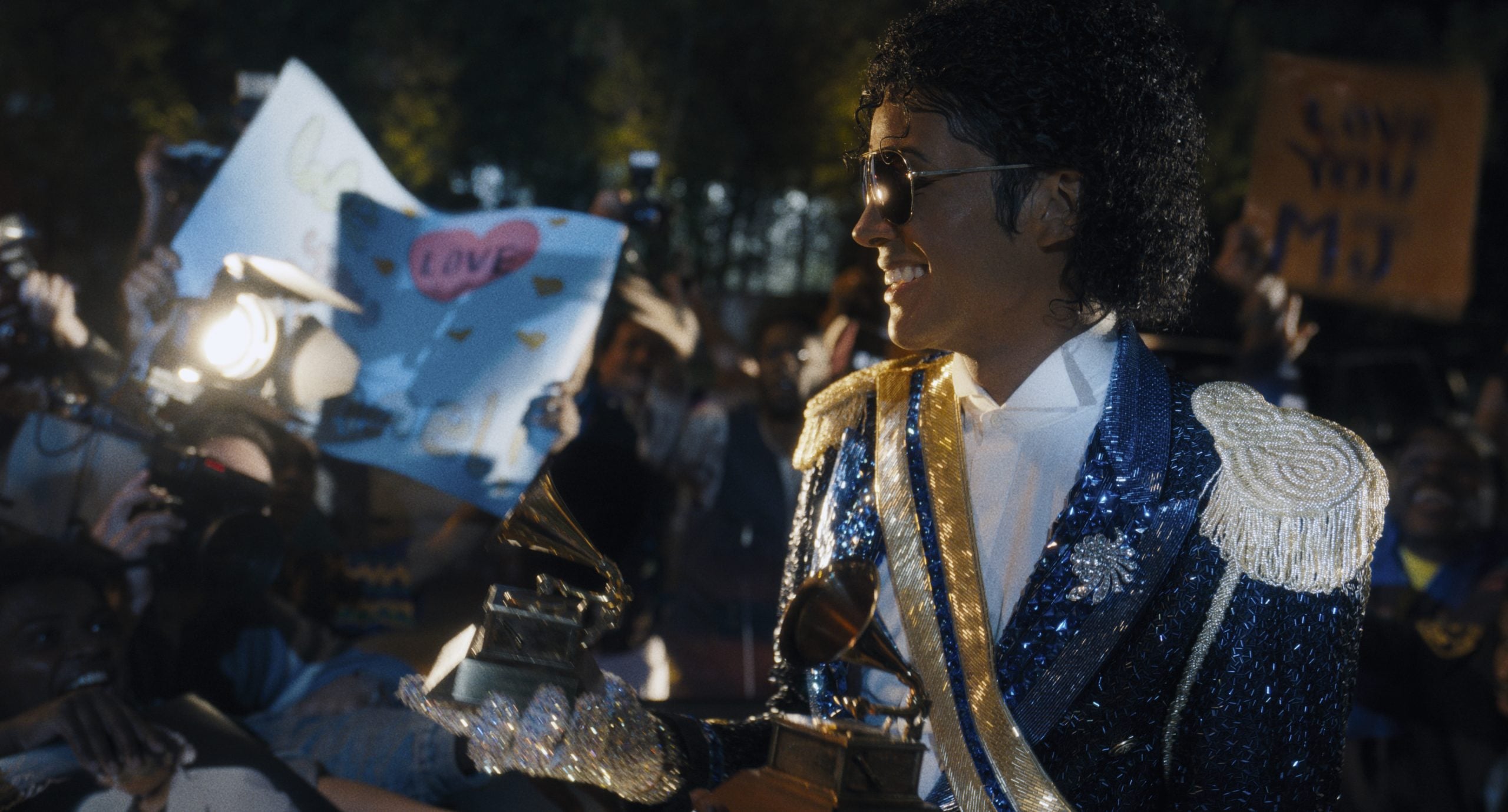
It’s November, which means awards season is slowly starting to kick into gear. The Gotham Awards are taking place at the end of the month, while the Golden Globe and Critics Choice nominations are just around the corner. With the first major predictions beginning to take shape, it’s becoming easier to see which films are emerging as serious contenders and which ones are struggling to find their footing. But there’s one movie whose absence from these conversations has been puzzling me: Michael.
Whether you’re looking at predictions from YouTube personalities like The Oscar Expert or major industry publications like Variety, Michael is largely nowhere to be found or at the very least bottom of their pile. Considering the film’s enormous box-office success, its reception from audiences, and the campaign Lionsgate appears to be putting together, it’s hard not to wonder why. How does a movie that has become such a massive cultural and commercial phenomenon seem to be almost entirely missing from the awards conversation? Is it simply the overwhelmingly negative critical reception? Is there more skepticism surrounding music biopics? Or are awards pundits overlooking a potential contender because it doesn’t fit the usual profile of an awards-season favorite?
I think there’s a much bigger conversation to be had about Michael, and whether we could be looking at one of this awards season’s biggest dark horses.
The Box Office Phenomenon

Let’s start with the most obvious thing working in the movie’s favor: its box-office success. Michael didn’t just perform well, it became a genuine phenomenon. The film crossed the $1 billion mark worldwide, becoming the first biopic in history to achieve that milestone and the highest-grossing biopic ever made. For Lionsgate, it was also the first movie in the studio’s history to reach that number.
That’s an enormous achievement, especially considering the critical reception it received. At the time of writing, Michael holds a 38% score on Rotten Tomatoes from critics, compared to an astonishing 97% audience score from verified viewers. That kind of divide is really difficult to ignore. Critics might have been largely unimpressed, but audiences clearly had a very different experience with the film. People showed up and helped turn a movie that could have easily been another music biopic into one of the biggest box-office successes of the year.
And that’s where I think the awards conversation becomes interesting. Commercial success doesn’t automatically translate into awards recognition, nor should it, but it can create a level of cultural relevance that is difficult to manufacture. Michael became a major cinematic event, reaching audiences across generations and international markets. It also demonstrated just how much interest there still is in Michael Jackson and his legacy.
There is also something worth considering about the scale of this achievement. Music biopics have historically been popular with audiences, that’s a no-brainer, but crossing the billion-dollar threshold is an entirely different accomplishment. Bohemian Rhapsody and Elvis both found success with audiences and went on to receive significant awards recognition. Michael has surpassed them commercially, even if its critical reception has been considerably more divisive.
Of course, I don’t think box-office numbers alone are enough to make a convincing awards case. The Academy isn’t going to hand out nominations simply because a movie made a lot of money. But when a film becomes this successful, attracts this much attention, and connects with audiences on such a massive scale, I find it difficult to understand why it shouldn’t at least be part of the conversation.
Lionsgate Is Clearly Going All In
Another thing working in Michael’s favor is that Lionsgate doesn’t appear to be treating this as just another awards-season campaign. The studio seems determined to keep the movie in the conversation, and there are already some encouraging signs of activity within the industry.
In October, Lionsgate kicked off its For Your Consideration campaign with a special screening at the Directors Guild of America in Los Angeles. The event included a Q&A with director Antoine Fuqua, producer Graham King, and cast members Jaafar Jackson, Colman Domingo, Nia Long, and Juliano Valdi. Reports from the screening described a standing ovation for Jaafar, which is certainly an encouraging response for someone whose performance is at the center of the film’s awards ambitions.
The studio has also continued organizing screenings and appearances across several cities. One particularly interesting event took place on November 3 at the WME Screening Room in Beverly Hills, where Dwayne Johnson introduced the screening before a Q&A and reception with Colman Domingo and Jaafar Jackson. Having someone of Johnson’s stature involved in promoting the film is another indication that Lionsgate is making an effort to bring Michael in front of influential industry figures.
Then there’s the Gotham Film Awards, which have announced that the cast and filmmakers behind Michael will receive the Gotham Musical Tribute at this year’s ceremony. The film has also landed a nomination for the Gotham Audience Award, putting it alongside titles such as Obsession, Project Hail Mary, and The Drama. While the Musical Tribute is an honorary recognition rather than a competitive nomination, it’s still a notable moment for the film, particularly this early in awards season.
The Hollywood Music in Media Awards have also recognized the film, with nominations including Best Song – Onscreen Performance for Jaafar Jackson’s rendition of “Bad” and recognition in the Music-Themed Film, Biopic or Musical category for director Antoine Fuqua.
All of this tells me that Lionsgate is serious about making Michael part of the awards conversation. The studio has the resources, the willingness to campaign, and a movie that already has an enormous amount of public attention behind it. There is clearly an effort to get the film in front of people who could potentially help its awards chances.
Of course, a strong campaign doesn’t necessarily mean a successful one. We’ve seen plenty of movies receive significant studio backing, organize high-profile screenings, and bring recognizable industry names into the fold, only to struggle when nominations actually arrive. Kate Winslet’s Lee is a good example. Winslet campaigned extensively for the film, which included a screening hosted by Leonardo DiCaprio, but that attention ultimately did little to change its awards-season fortunes.
The difference, admittedly, is that Michael has the backing of a much larger studio and the kind of box-office success that Lee could only dream of. Still, the underlying point remains: money and visibility can get a movie into the room, but they can’t guarantee that voters will embrace it.
Nevertheless, I think it’s too early to dismiss what Lionsgate is doing. The campaign is active, the film is receiving recognition from awards organizations, and there are at least some encouraging reports coming out of industry screenings. Whether that enthusiasm translates into nominations is another question, but the studio is certainly giving Michael every opportunity to make its case.
Michael Jackson Is Still a Cultural Phenomenon
Another thing I think is important to consider is the person at the center of this entire conversation. Michael Jackson wasn’t just a successful musician or another celebrity whose popularity faded with time. He was one of the most influential entertainers in history, and his impact on music and popular culture is still felt today. There are very few artists who can claim to have reached the kind of worldwide recognition that Jackson did, and even fewer whose work continues to attract audiences across multiple generations.
Think about it. More than 15 years after his death, his music and dance is still being celebrated and his influence can be seen in artists who came long after his biggest commercial successes. From his groundbreaking music videos to his live performances, fashion, and choreography, Jackson helped shape what modern pop stardom looks like. His influence extends well beyond music, and his place in popular culture is something that very few entertainers have ever managed to achieve.
In fact, the success of Michael has provided a pretty remarkable reminder of just how much interest there still is in him. Following the film’s release, Jackson experienced a massive resurgence in music streaming, with his catalog reaching roughly four times its pre-release levels, according to Sony Music. His songs found new audiences, older hits returned to the charts, and younger listeners were introduced to music that was released decades before they were born. That’s not something every music biopic can accomplish.
I think this is an important distinction when discussing the film’s awards prospects. Michael isn’t simply benefiting from people who grew up listening to his music and want to revisit those memories. There’s a genuine level of interest in Jackson that continues to cross generational and international boundaries. His music has remained part of the cultural conversation for decades, and the movie has managed to introduce that legacy to an entirely new audience.
Of course, Michael Jackson’s legacy is complicated, and his life and the allegations surrounding him remain subjects of considerable debate. That is a conversation that shouldn’t be dismissed or brushed aside. However, it would also be difficult to deny the extraordinary influence he had on entertainment and the lasting connection millions of people around the world still have with his music.
And that’s ultimately what makes this movie such an interesting awards-season prospect. You’re dealing with a subject whose name alone carries an enormous amount of recognition. The film has tapped into something that goes beyond the usual audience for a musical biopic, and its box-office success is evidence of that. Whether awards voters personally connected with the movie or not, it’s difficult to argue that Michael hasn’t become one of the year’s biggest cultural events.
The Lack of Black-Led Contenders Could Work in Its Favor
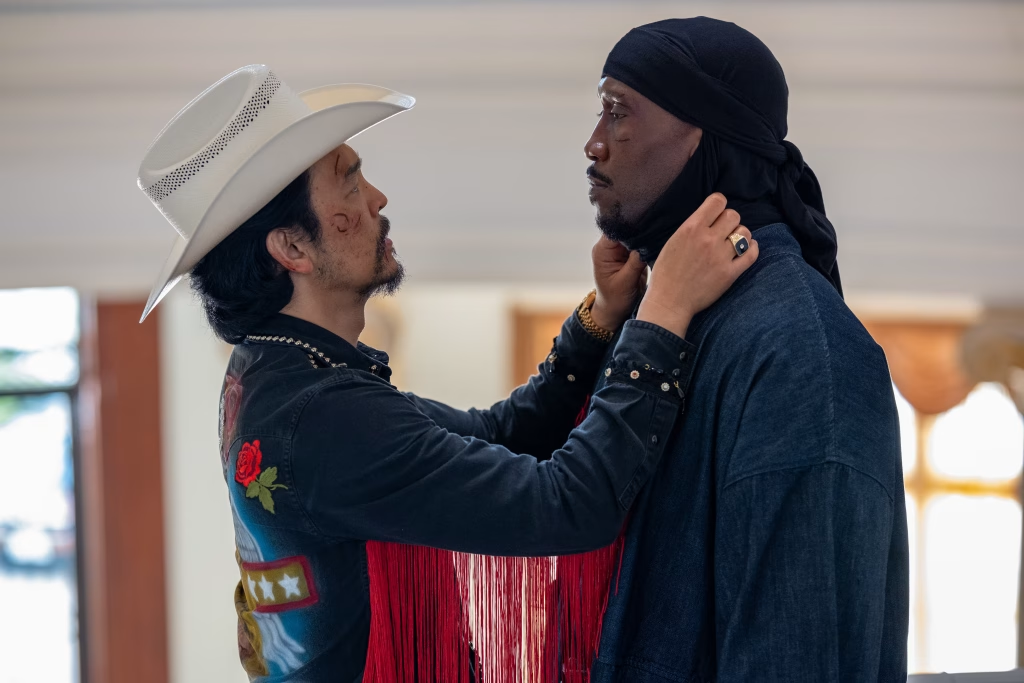
There’s another aspect of this awards season that I think is worth discussing: the relatively limited number of Black-led performances currently receiving serious attention in the major acting races. Unfortunately the reality is that this season there aren’t any black led films that are expected to make a dent this season, movies like Is God Is and Your Mother Your Mother Your Mother don’t appear to be at the top of mind at Amazon. This isn’t to suggest that a movie should receive nominations simply to fill a gap, but when you look at the current predictions, it’s worth asking why a film like Michael isn’t receiving more consideration.
The Best Actor race is particularly interesting. There are several established names dominating the conversation, including Matt Damon for The Odyssey, Andrew Scott for Elsinore, John Malkovich for Wild Horse Nine, and Ryan Gosling for Project Hail Mary. These are all performances that have generated considerable attention, and there’s nothing wrong with that. However, there are also opportunities for less conventional contenders to break through, especially with a few spots in the category still appearing relatively open.
Mahershala Ali is another name worth mentioning for Your Mother Your Mother Your Mother, although his path to a nomination remains uncertain. Meanwhile, Jaafar Jackson is still fighting for recognition despite starring in one of the year’s biggest films. It raises an interesting question about what kind of performance needs to come along for someone outside the usual awards conversation to receive serious consideration.
I also think there’s something worth discussing about the broader opportunities for Black performers this season. Awards recognition has historically been an ongoing conversation when it comes to Black actors and the kinds of roles that receive attention. A film like Michael, with its enormous reach and cultural significance, represents an opportunity to recognize a Black-led production that has connected with audiences on a scale very few films ever achieve.
Again, I’m not arguing that commercial success or representation should automatically earn someone a nomination. Jaafar Jackson still needs to make the case through his performance, just like everyone else. But I do think it’s worth questioning why his name is so easily left out of the conversation when the film itself has accomplished something extraordinary.
If anything, this could be an opportunity for awards voters to recognize a performance that might not fit the traditional mold of an Oscar contender. And considering how much attention Michael has received outside the critical community, I don’t think it’s unreasonable to expect the film to have a presence in at least some of these conversations.
Is Jaafar Jackson Really Too Unknown to Be an Awards Contender?
This brings me to what I think could be one of the most interesting aspects of Michael’s awards campaign: Jaafar Jackson himself. One of the most common arguments against a potential Best Actor nomination is that he’s simply too inexperienced or too unknown to compete with some of the more established names in the category. I understand where that argument comes from, considering this is his first major acting role, but I also think it’s a little shortsighted.
For starters, Jaafar isn’t exactly an unknown quantity anymore. He is the face of a movie that has grossed over $1 billion worldwide, and his portrayal of Michael Jackson has become one of the biggest talking points surrounding the film. He’s been heavily involved in the promotional campaign, appeared in interviews, attended screenings, and become a recognizable figure to audiences who might not have known his name before the movie’s release. There are countless interviews and promotional videos featuring him online that have attracted millions of views. You can certainly argue that this doesn’t make him an established actor, but the idea that nobody knows who he is at this point seems increasingly difficult to defend.
More importantly, I don’t think previous acting experience should be the deciding factor when evaluating a performance. Austin Butler is a particularly interesting comparison. Before starring in Baz Luhrmann’s Elvis, Butler had spent years working in television and had appeared in supporting roles, but he wasn’t a major movie star or someone audiences were necessarily expecting to become an Oscar contender. His portrayal of Elvis changed that, earning him an Academy Award nomination and a Golden Globe win. His performance became the defining role of his career, and he was able to establish himself as a leading man through that opportunity.
Gary Busey is another example worth remembering. He earned an Academy Award nomination for playing Buddy Holly in The Buddy Holly Story, a performance that helped establish him as a serious dramatic actor. There are plenty of examples throughout awards history of performers delivering career-defining work when given the opportunity to portray a real-life figure. Jaafar shouldn’t automatically be excluded from that conversation simply because he hasn’t built an extensive filmography beforehand.
I also find the current conversation surrounding Inde Navarrette particularly interesting. Navarrette is receiving considerable attention for her performance in Obsession, with Focus Features mounting a full awards campaign around her and several pundits predicting a potential Best Actress nomination. She’s a talented performer, and I’m not suggesting she doesn’t deserve the recognition she’s receiving. However, she’s also relatively early in her career and isn’t someone who entered this awards season as an established Hollywood leading lady. So why is her lack of experience seemingly less of an obstacle than Jaafar’s?
I understand that the circumstances aren’t identical. Navarrette has received considerable praise for her performance, and Obsession has developed its own awards momentum. But that’s precisely why I think Jaafar deserves a closer look. If we’re willing to consider a relatively new performer for one of the biggest acting categories in the industry, why shouldn’t we extend that same consideration to someone who has delivered a performance in one of the year’s biggest movies?
And this isn’t just about his popularity or the fact that he happens to be playing his famous uncle. The performance itself needs to be evaluated. Jaafar had an enormous responsibility taking on someone as recognizable as Michael Jackson, whose voice, mannerisms, dancing, and stage presence are known by millions of people around the world. There was always going to be an incredible amount of scrutiny surrounding whether he could convincingly portray him. Yet even some of the movie’s most critical reviews have singled out Jaafar’s performance as one of its strongest elements. The Playlist’s recent Best Actor discussion even acknowledged that critics almost universally praised his portrayal, despite their reservations about the film itself.
That’s an important distinction. You don’t necessarily have to love Michael to appreciate what Jaafar brings to it. And if the performance is strong enough to stand apart from the movie’s broader reception, then I think it deserves to be evaluated on its own merits.
I’m not saying Jaafar Jackson should suddenly be considered a frontrunner or that his nomination is guaranteed. There are plenty of established performers competing for those five spots, and the critical reception of Michael remains a significant obstacle. But dismissing him because he’s new to the industry feels like an incredibly weak argument when the entire point of awards season is to recognize exceptional work, regardless of how established someone was before delivering it.
If anything, Jaafar could be one of the more interesting potential nominees precisely because this is his first major acting role. What better way to introduce a new performer to the industry than through a performance that has already reached such an enormous audience?
The Reviews Are a Major Obstacle, But Not an Automatic Death Sentence
Of course, there’s one pretty significant problem working against Michael, and it’s something that has followed the movie since its release: the reviews. There’s no getting around the fact that critics were largely unimpressed with Antoine Fuqua’s biopic. With a 38% score on Rotten Tomatoes and a Metascore of 39, the film has struggled to find critical support, and that’s probably the biggest obstacle standing between it and a more serious awards-season presence.
Historically, movies with overwhelmingly negative reviews have a difficult time gaining traction during awards season. Critics’ groups, industry publications, and awards pundits all play a role in shaping the conversation, and when a movie receives that kind of reception, it’s naturally going to have a harder time building momentum. However, I don’t think negative reviews automatically eliminate a film’s chances. Awards history has given us several examples of movies that were heavily criticized yet still managed to find their way into the conversation.
Take Ron Howard’s Hillbilly Elegy, for example. The film currently sits at just 24% on Rotten Tomatoes, yet it managed to secure two Academy Award nominations, including Best Supporting Actress for Glenn Close and Makeup and Hairstyling. Despite the overwhelmingly negative response to the movie itself, it still found recognition in multiple categories.
Then there’s Andrew Dominik’s Blonde, which received similarly divisive reactions from critics and currently holds a 42% Rotten Tomatoes score. Despite the backlash surrounding the film, it earned an Academy Award nomination for Ana de Armas in Best Actress. Again, the critical reception didn’t stop the movie from receiving recognition.
Neither example is a perfect comparison, and I’m not suggesting that Michael is guaranteed to follow the same path. But they demonstrate that a movie doesn’t necessarily need widespread critical approval to receive awards recognition. Sometimes a particular aspect of a production, whether that’s a performance, the technical craftsmanship, or another creative achievement, can stand out even when the overall film doesn’t connect with critics.
I also think it’s worth remembering that awards season isn’t exclusively about critical consensus. Industry support, studio campaigning, audience enthusiasm, and the overall cultural impact of a film can all contribute to its visibility. Michael has already demonstrated that it has an audience on a scale that very few movies achieve, and Lionsgate clearly intends to make the most of that success. Those factors don’t erase the reviews, but they do give the film a few advantages that shouldn’t be overlooked.
Ultimately, the critical reception is going to make things considerably harder for Michael. It’s difficult to imagine the movie becoming a major Oscar contender without some meaningful industry support, particularly when so many other films have received much stronger reviews. But I also think writing it off entirely because of its Rotten Tomatoes score would be premature. If awards history has taught us anything, it’s that a movie’s critical reception doesn’t always tell the entire story of how its awards campaign will unfold.
So, Where Does Michael Actually Stand?
At the end of the day, Michael is something of a unicorn. How often does a biopic about one of the most celebrated singers in history become a billion-dollar box-office phenomenon? We’re talking about Michael Jackson, an artist whose music and influence have reached practically every corner of the world. A film about his life was always going to attract attention, but the scale of this success is something else entirely. To suggest that a movie like this has no place in the awards conversation feels incredibly shortsighted.
And honestly if you believe a biopic about Michael Jackson that has grossed over a billion dollars won’t or shouldn’t even be part of the discussion, I think you’re lying to yourself about the kind of cultural moment this film has become. That doesn’t mean it deserves an Oscar nomination simply because audiences bought tickets, or that the critical reception should be ignored. But there’s a difference between questioning whether Michael is worthy of awards recognition and acting as though it isn’t worth considering at all.
This is an extraordinary achievement for a music biopic, and it’s not something that happens every year. Awards season is full of films that arrive with critical acclaim and industry support, but every once in a while, something comes along that doesn’t fit the usual expectations. Michael is that kind of movie. Whether voters ultimately embrace it or not, its absence from the conversation is becoming just as interesting as the possibility of it breaking through. I don’t know how far this film can go, nor am I saying or suggesting it’s locked at the Academy Awards but I certainly wouldn’t count it out. Just a thought.

Roberto Tyler Ortiz is a movie and TV enthusiast with a love for literally any film. He is a writer for LoudAndClearReviews, and when he isn’t writing for them, he’s sharing his personal reviews and thoughts on Twitter, Instagram, and Letterboxd. As a member of the Austin Film Critics Association, Roberto is always ready to chat about the latest releases, dive deep into film discussions, or discover something new.