Director Michał Marczak’s follow-up to All These Sleepless Nights takes an entirely different approach than any true-crime documentary about a missing teenager we’ve seen. There are no photos of Krzysztof, aka Chris, no social media posts popping up, or joyful home videos that could detract from the seriousness and tragedy unfolding on the night of the 27th of May 2023. After leaving the family home around 4 am, the 16-year-old takes the bus to Warsaw and vanishes soon after near the Vistula River.
No one has seen him ever since, and while your mind could leap to the most straightforward explanation, Chris’ father, Daniel, doesn’t leave any stone unturned. As he’s not ready to give up just yet, he roams the shores of the Vistula. Not in the hope of finding his son alive – as he’s sure that Chris is dead – but finding answers and closure instead. Did Daniel’s happy-go-lucky son take his own life, or is there another explanation? Despite the many runaway theories floating around, Daniel’s gut feeling tells him that he’ll find his son’s body at any moment now.
While it might seem surreal that someone keeps looking despite knowing deep down what happened, Marczak never becomes judgmental nor portrays the search as purposeless. Closure will always make your heart skip a beat whenever Daniel finds something. Whether it’s a bone, a tin, or a sighting that might not go anywhere, the filmmaker ensures that the audience feels Daniel’s emotional strength and the sliver of hope throughout each scene.
It’s that strength that keeps him searching, but it also takes him away from his home. His wife and the rest of the family are openly grieving Chris and giving his passing a place. However, Daniel chases every lead that comes his way. Whether it’s taking a metal detector along the edge of the water or turning a leisure drone into a high-quality thermal scanner, he spares neither time nor trial to find his son. The clever editing highlights Daniel’s immense determination even more. At first, the visuals are a mix of the extended scenes of him on the water and cutbacks to family life. However, the more his search gains control over his life, the fewer family moments we see on screen.
Therefore, it feels like the longer this documentary goes on, the more Daniel’s story becomes an unconscious effort to keep Chris alive rather than finally mourning him. While this cry for help could have easily turned this documentary into an overdramatised portrayal of a destroyed father, Marczak, as a cinematographer, and Daniel keep the feature much more subdued but equally up close and personal. The documentary’s immersive aspect is present from the get-go. The camera is always side-by-side with the protagonists. Whether it’s gliding with them over the water or sitting down for an emotional interview-style scene, the immediacy of finding a body and the intimacy of the family story are interwoven beautifully.
The distorted angles convey the anger and uncertainty they feel, while the aerial shots elevate the drama and the scale of the story. Chris’ case made headline news in Poland, and Marczak’s work is beginning to broaden its scope to include Polish society and the mental health crisis more towards the middle.
However, Closure always put the spotlight on Daniel’s objective. His state of mind might seem unusual to others, as he finds a strange calm and purpose in the long-lasting search for his son. That sense of calm slowly settles over the documentary, narrowing it to a grieving father, his boat, and his quiet resolve. A surprising third-act element brings this state of mind into even sharper focus, making the tragedy even more impactful.
Even when the physical search declines and the documentary’s pace itself slows, there’s always the digital trace to uncover. While there isn’t an overabundance of social media usage in this feature, this aspect can’t be entirely ignored as it’s undeniably present in a teenager’s life. When Daniel begins tracing Chris’s online footprint, especially his TikTok account, he tries to understand the possible isolation and unhappiness his son felt because of it. While the rivers offer him physical anchors to try and find what happens, social media is a much more challenging aspect to get a hold of. It connected his son with the outside world, but it might also have contributed to the disastrous events.
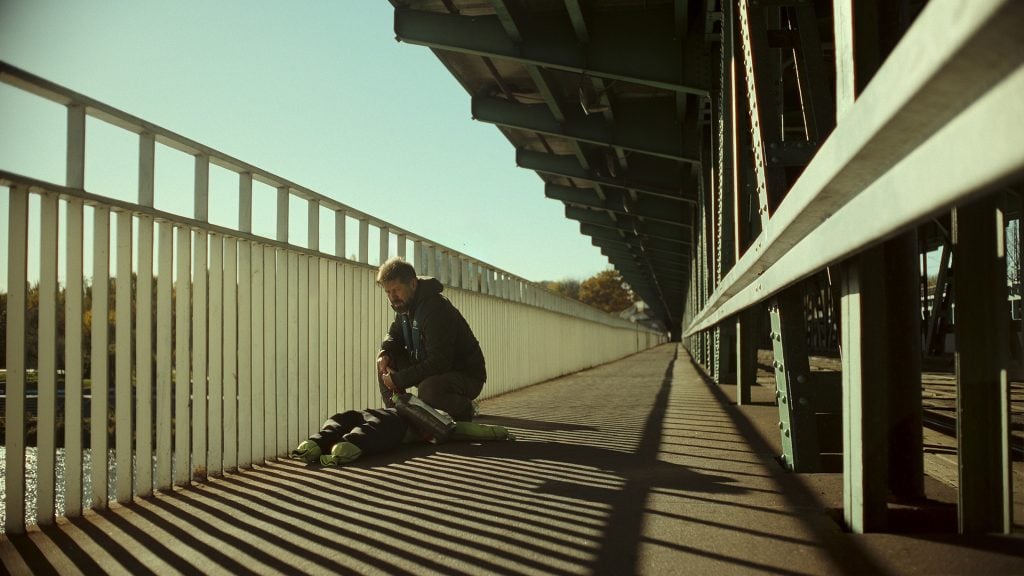
While Marczak’s Sundance-selected documentary starts in typical true-crime fashion – as Daniel’s father throws a dummy of the bridge where his son was last seen – after its 108-minute runtime, it has become so much more than that. Instead of an exploration of a mysterious disappearance, Closure is a heartbreaking, up-close, subtle portrayal of grief, uncertainty, and the fear of finally having to let go.
Closure had its World Premiere in the World Cinema Documentary Competition section of the 2026 Sundance Film Festival.
Director: Michał Marczak
Rated: NR
Runtime: 108m
Closure is a heartbreaking, up-close, subtle portrayal of grief, uncertainty, and the fear of finally having to let go.
-
7.5
-
User Ratings (0 Votes)
0