


Ask anyone who has played ranked for more than a few seasons and you will hear a version of the same complaint. The ladder feels different now. Matches are faster, mistakes get punished harder, and the player across from you seems to know exactly where you are going before you do. Some of that is nostalgia. A lot of it is real, and it comes from a quiet arms race that has been running underneath competitive gaming for years.
Ranked used to be a hobby
In the early days of League of Legends, ranked was something you played after dinner with friends. Guides lived on forums, builds were argued about in comment sections, and a Gold border actually meant something at school the next day. Nobody had a second monitor full of matchup data.
That changed slowly, then all at once. Streaming turned high elo play into entertainment, and suddenly millions of people were watching Challenger players up close. Third party sites began tracking every game ever played. Build aggregators told you the statistically best item path for every champion in every lane. The information gap between a casual player and a dedicated one shrank, and the skill floor rose with it.
Today a typical Platinum lobby plays with a level of macro awareness that would have looked like Diamond a decade ago. Wave management, timers and objective trades are common knowledge. When everyone is studying, standing still means falling behind.
 A late night ranked session. For many players, the ladder now feels closer to a job than a hobby.
Smurfs, boosters and the trust problem
The second pressure point is who is actually in the lobby. Smurfing has been a sore spot in League of Legends for as long as free accounts have existed. A high rank player on a fresh account can stomp a whole bracket for a week before matchmaking catches up. Account boosting adds another layer, where the person who earned the rank is not the person playing it.
Developers have responded with MMR calibration adjustments, faster placement systems and behavioral models that flag accounts climbing suspiciously quickly. Riot has also rolled out its Vanguard anti-cheat into League of Legends, running at the kernel level to block unauthorized software from interacting with the client. The goal across every major competitive title is the same: make the ladder feel trustworthy again.
The problem is that trust is hard to rebuild once players start doubting it. When you lose a game to a Lee Sin who lands every kick, it is tempting to assume something is wrong, even when the honest answer is that he has played that champion for five thousand games.
The rise of tooling
Alongside all of this, a whole ecosystem of tools has grown around competitive play. Some of it is completely accepted. Replay analyzers, rune pages synced from stats sites, coaching platforms and overlays that show cooldowns after the game are part of normal life for serious players.
Some of it sits in a less conventional area. In competitive games like League of Legends, there has always been a segment of the community interested in automation and scripting tools, from orbwalking helpers that optimize kiting to evade logic that dodges skillshots. Established platforms like Cado’s LoL script are examples of how far that side of the scene has developed, maintaining active communities, technical documentation and regular updates that track each game patch.
Whatever your opinion on it, the presence of that ecosystem reflects where modern ranked has ended up. When the gap between good and great comes down to a few frames of reaction time, some players will inevitably look for an edge outside the client. Publishers understand this dynamic, which is why anti-cheat engineering has become one of the most resource-heavy disciplines in gaming, relying on behavioral telemetry and memory integrity checks rather than simple signature scans.
Why it all feels so intense
Seen through that lens, the atmosphere of modern solo queue is completely understandable. You have a player base that studies the game like a sport, a matchmaking system fighting smurfs and boosted accounts, anti-cheat software watching client integrity, and a parallel world of third-party tools pushing in the opposite direction. Each side continuously reacts to the other.
For the average player, the result is a ladder that rewards preparation more than ever. Champion pools are narrower. Warding is sharper. Early leads snowball because everyone knows how to press them. A single bad trade at level three can decide a lane, and in solo queue there is rarely a comeback built on someone else’s mistake, because fewer people make the obvious ones.
It also explains why ranked anxiety has become a common topic in gaming communities. Players talk about needing to warm up in normals, avoiding ranked after a loss streak, or quitting a season early to protect their rank. That pressure did not exist in the same way when the ladder felt like a side activity.
What esports changed
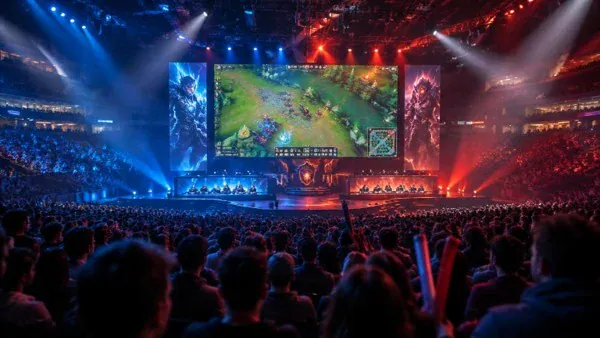
Esports pulled all of this into the spotlight. Global tournaments like the League of Legends World Championship draw tens of millions of concurrent viewers, and fans now dissect pro strategies within hours of them appearing on broadcast. When a pro team wins with an unexpected pick, that champion’s solo queue presence spikes the very next day. Ranked has become a testing ground for whatever the pros are executing, which speeds up the meta for everyone.
There is a positive side to this. Players learn faster, guides are better than they have ever been, and the community knowledge around games like League is enormous. The cost is that the casual space in ranked has shrunk. Many players now treat normals or modes like ARAM as the place to relax, and ranked as a place to perform.
Where things go next
This technological tug-of-war is almost certainly here to stay. Game studios continue refining machine learning models to detect unnatural input patterns and timing anomalies, while third-party developers continue finding new ways to operate around client restrictions. As long as competitive ranks carry social prestige, the incentive to push technical boundaries will remain.
What could change is how games present ranked progression to players. There is growing interest in systems that reward consistency over raw win rate, clearer communication about bans, and more honest matchmaking explanations. Riot has experimented with visible numerical Rank Rating (RR) gains in Valorant, while League has split its competitive calendar into multiple ranked splits to keep progression active and reduce late-season stagnation.
Ranked play feels different today because the culture around it has matured. Players know more, train harder, and have a vast ecosystem of software and data shaping their decisions before they even enter champion select. Whether you thrive on that hyper-competitive intensity or miss the simpler days of forum guides and casual after-dinner games, solo queue has permanently evolved into a high-stakes arena.

Hi! I’m Bryan, and I’m a passionate & expert writer with more than five years of experience. I have written about various topics such as product descriptions, travel, cryptocurrencies, and online gaming in my writing journey.