The Criterion Collection has announced six new titles to debut on Blu-Ray in June: The Human Condition (1959), Streetwise/Tiny: The Life Of Erin Blackwell (1984 & 2016), The Signifyin’ Works of Marlon Riggs (1986-1995), Visions of Eight (1973), Pariah (2011) and Pickup On South Street (1953). These represent a landmark wartime epic, an astonishing thirty-year documentary collaboration, the filmed evolution of a pathbreaking gay, Black artist, a unique look at the 1972 Olympic Games in Munich, the feature directorial debut from Dee Rees and Samuel Fuller’s crackling noir classic. Details on these films can be found below:
[youtube https://www.youtube.com/watch?v=rbBiTlGhrPY]
The Human Condition
Street Date: June 8, 2021
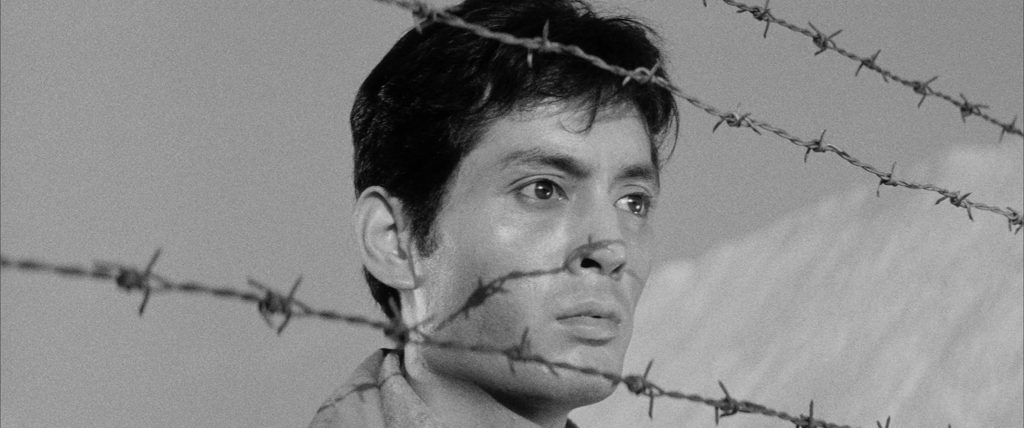
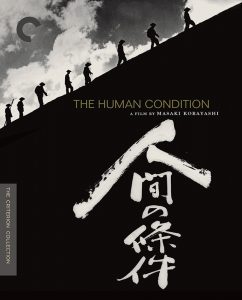 Synopsis: This mammoth humanist drama by Masaki Kobayashi is one of the most staggering achievements of Japanese cinema. Originally filmed and released in three installments of two parts each, the nine-and-a-half-hour The Human Condition, adapted from Junpei Gomikawa’s six-volume novel, tells of the journey of the well-intentioned yet naive Kaji—played by the Japanese superstar Tatsuya Nakadai—from labor camp supervisor to Imperial Army soldier to Soviet prisoner of war. Constantly trying to rise above a corrupt system, Kaji time and again finds his morals to be an impediment rather than an advantage. A raw indictment of Japan’s wartime mentality as well as a personal existential tragedy, Kobayashi’s riveting, gorgeously filmed epic is novelistic cinema at its best.
SPECIAL FEATURES
- On the Blu-ray: High-definition digital restoration, with uncompressed monaural (Parts 1–4) and 4.0 surround DTS-HD Master Audio (Parts 5 and 6) soundtracks
- On the DVD: Restored high-definition digital transfer
- Excerpt from a 1993 Directors Guild of Japan interview with director Masaki Kobayashi, conducted by filmmaker Masahiro Shinoda
- Interview from 2009 with actor Tatsuya Nakadai
- Appreciation of Kobayashi and The Human Condition from 2009 featuring Shinoda
- Trailers
- PLUS: An essay by critic Philip Kemp
Street Date: June 15, 2021
 Synopsis: In 1983, director Martin Bell, photographer Mary Ellen Mark, and journalist Cheryl McCall set out to tell the stories of homeless and runaway teenagers living on the margins in Seattle. Streetwise follows an unforgettable group of kids who survive by hustling, panhandling, and dumpster diving. Its most haunting and enduring figure is iron-willed fourteen-year-old Erin Blackwell, a.k.a. Tiny; the project’s follow-up, Tiny: The Life of Erin Blackwell, completed thirty years later, draws on the filmmakers’ long relationship with their subject, now a mother of ten. Blackwell reflects with Mark on the journey they’ve experienced together, from Blackwell’s battles with addiction to her regrets to her dreams for her children, even as she sees them repeat her own struggles. Taken together, the two films create a devastatingly frank, empathetic portrait of lost youth growing up far too soon in a world that has failed them, and of a family trying to break free of the cycle of trauma—as well as a summation of the life’s work of Mark, an irreplaceable artistic voice.
DIRECTOR-APPROVED SPECIAL EDITION FEATURES
- New, restored high-definition digital transfers of both films, supervised by director Martin Bell, with uncompressed monaural soundtrack for the Streetwise Blu-ray and 5.1 surround DTS-HD Master Audio soundtrack for the Tiny: The Life of Erin Blackwell Blu-ray
- New audio commentary on Streetwise featuring Bell
- New interview with Bell about photographer Mary Ellen Mark
- New interview with Streetwise editor Nancy Baker
- Four short films by Bell
- Trailer
- English subtitles for the deaf and hard of hearing
- PLUS: An essay by historian Andrew Hedden; journalist Cheryl McCall’s 1983 Life magazine article about teenagers living on the street in Seattle; and reflections on Blackwell written by Mark in 2015
Street Date: June 22, 2021
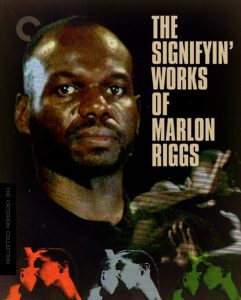 Synopsis: There has never been a filmmaker like Marlon Riggs (1957–1994): an unapologetic gay Black man who defied a culture of silence and shame to speak his truth with resounding joy and conviction. An early adopter of video technology who had a profound understanding of the power of words and images to effect change, Riggs employed a bold mix of documentary, performance, poetry, music, and experimental techniques in order to confront issues that most of Reagan-era America refused to acknowledge, from the devastating legacy of racist stereotypes to the impact of the AIDS crisis on his own queer African American community to the very definition of what it is to be Black. Bringing together Riggs’s complete works—including his controversy-inciting queer landmark Tongues Untied and Black Is . . . Black Ain’t, his deeply personal career summation—The Signifyin’ Works of Marlon Riggs traces the artistic and political evolution of a transformative filmmaker whose work is both an electrifying call for liberation and an invaluable historical document.
SPECIAL FEATURES
- New high-definition digital masters of all seven films, with uncompressed stereo soundtracks on the Blu-rays
- Four new programs featuring editor Christiane Badgley; performers Brian Freeman, Reginald T. Jackson, and Bill T. Jones; filmmakers Cheryl Dunye and Rodney Evans; poet Jericho Brown; film and media scholar Racquel Gates; and sociologist Herman Gray
- Long Train Running: The Story of the Oakland Blues (1981), Riggs’s graduate thesis film
- Introduction to Riggs, recorded in 2020 and featuring filmmakers Vivian Kleiman and Shikeith, and Ashley Clark, curatorial director of the Criterion Collection
- I Shall Not Be Removed: The Life of Marlon Riggs (1996), a documentary by Karen Everett that features interviews with Riggs; Kleiman; filmmaker Isaac Julien; African American studies scholar Barbara Christian; several of Riggs’s longtime friends and collaborators; and members of his family
- English subtitles for the deaf and hard of hearing
- PLUS: An essay by film critic K. Austin Collins
Street Date: June 22, 2021
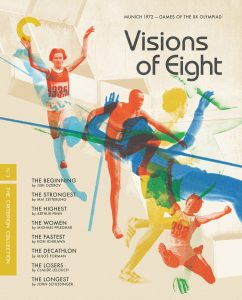 Synopsis: In Munich in 1972, eight renowned filmmakers each brought their singular artistry to the spectacle of the Olympic Games—the joy and pain of competition, the kinetic thrill of bodies in motion—for an aesthetically adventurous sports film unlike any other. Made to document the Olympic Summer Games—an event that was ultimately overshadowed by the tragedy of a terrorist attack—Visions of Eight features contributions from Miloš Forman, Kon Ichikawa, Claude Lelouch, Juri Ozerov, Arthur Penn, Michael Pfleghar, John Schlesinger, and Mai Zetterling, each given carte blanche to create a short focusing on any aspect of the Games that captured his or her imagination. The resulting films—ranging from the arresting abstraction of Penn’s pure cinema study of pole-vaulters to the playful irreverence of Forman’s musical take on the decathlon to Schlesinger’s haunting portrait of the single-minded solitude of a marathon runner—are triumphs of personal, poetic vision applied to one of the pinnacles of human achievement.
SPECIAL FEATURES
- New 4K digital restoration, with uncompressed monaural soundtrack on the Blu-ray
- New audio commentary by podcasters Amanda Dobbins, Sean Fennessey, and Chris Ryan of the website the Ringer
- New documentary featuring director Claude Lelouch; supervising editor Robert K. Lambert; Ousmane Sembène biographer Samba Gadjigo; Munich Olympic Games historian David Clay Large; producer David L. Wolper’s son, Mark Wolper; and director Arthur Penn’s son Matthew Penn, which also includes behind-the-scenes footage from the film and material from Sembène’s uncompleted short film
- On Location with “Visions of Eight,” a short promotional film
- Trailer
- New English subtitles for the deaf and hard of hearing
- PLUS: A 1973 article by author George Plimpton, excerpts from David L. Wolper’s 2003 memoir, and a new reflection on the film by novelist Sam Lipsyte
Street Date: June 29, 2021
 Synopsis: The path to living as one’s authentic self is paved with trials and tribulations in this revelatory, assured feature debut by Dee Rees—the all-too-rare coming-of-age tale to honestly represent the experiences of queer Black women. Grounded in the fine-grained specificity and deft characterizations of Rees’s script and built around a beautifully layered performance from Adepero Oduye, Pariah follows Brooklyn teenager Alike, who is dealing with the emotional minefields of both first love and heartache and the disapproval of her family as she navigates the expression of her gender and sexual identities within a system that does not make space for them. Achieving an aching intimacy with its subject through the expressive cinematography of Bradford Young, this deeply felt portrait finds strength in vulnerability and liberation in letting go.
DIRECTOR-APPROVED SPECIAL EDITION FEATURES
- 2K digital transfer, with 5.1 surround DTS-HD Master Audio soundtrack on the Blu-ray
- New conversation between director Dee Rees and filmmaker and scholar Michelle Parkerson
- New cast reunion featuring Rees, Adepero Oduye, Pernell Walker, Kim Wayans, Charles Parnell, and Aasha Davis, moderated by scholar Jacqueline Stewart
- New program on the making of the film, featuring Rees, cinematographer Bradford Young, production designer Inbal Weinberg, producer Nekisa Cooper, and editor Mako Kamitsuna, moderated by Stewart
- New interview with film scholar Kara Keeling, author of Queer Times, Black Futures
- English subtitles for the deaf and hard of hearing
- PLUS: An essay by critic Cassie da Costa
Street Date: June 29, 2021
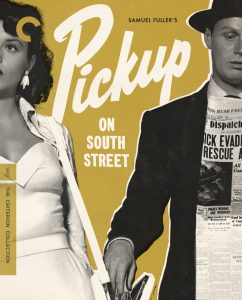 Synopsis: Petty crook Skip McCoy (Richard Widmark) has his eyes fixed on the big score. When the cocky three-time convict picks the pocketbook of unsuspecting Candy (Jean Peters), he finds a more spectacular haul than he could have imagined: a strip of microfilm bearing confidential U.S. information. Tailed by manipulative Feds and the unwitting courier’s Communist puppeteers, Skip and Candy find themselves in a precarious gambit that pits greed against redemption, right against Red, and passion against self-preservation. With its dazzling cast and writer-director Samuel Fuller’s signature hard-boiled repartee and raw energy, Pickup on South Street is a true film noir classic by one of America’s most passionate cinematic craftspeople.
SPECIAL FEATURES
- On the Blu-ray: New 4K digital restoration, with uncompressed monaural soundtrack
- On the DVD: High-definition digital transfer, with restored image and sound
- New interview with critic Imogen Sara Smith, author of In Lonely Places: Film Noir Beyond the City (Blu-ray only)
- Interview from 1989 with director Samuel Fuller, conducted by film critic Richard Schickel
- Cinéma cinémas: Fuller, a 1982 French television program in which the director discusses the making of the film
- Illustrated biographical essay on Fuller (DVD only)
- Complete Fuller poster filmography (DVD only)
- Stills galleries of photos, lobby cards, and original paintings (DVD only)
- Trailers
- English subtitles for the deaf and hard of hearing
- PLUS: An essay by critic Angelica Jade Bastién and a chapter from Fuller’s posthumously published 2002 autobiography, A Third Face: My Tale of Writing, Fighting, and Filmmaking, for the Blu-ray; essays by Martin Scorsese and acclaimed cultural historian Luc Sante for the DVD
Dillon is most comfortable sitting around in a theatre all day watching both big budget and independent movies.