
TL;DR
- Geralt voice actor Doug Cockle continues to speak out against unauthorized AI cloning of performers.
- Cockle says his problem is not AI itself, but companies using or enabling the use of actors’ voices without permission.
- He previously refused an AI company that wanted to add his Geralt voice to its database.
- Cockle believes human creativity comes from lived experience and cannot simply be reproduced by combining existing data.
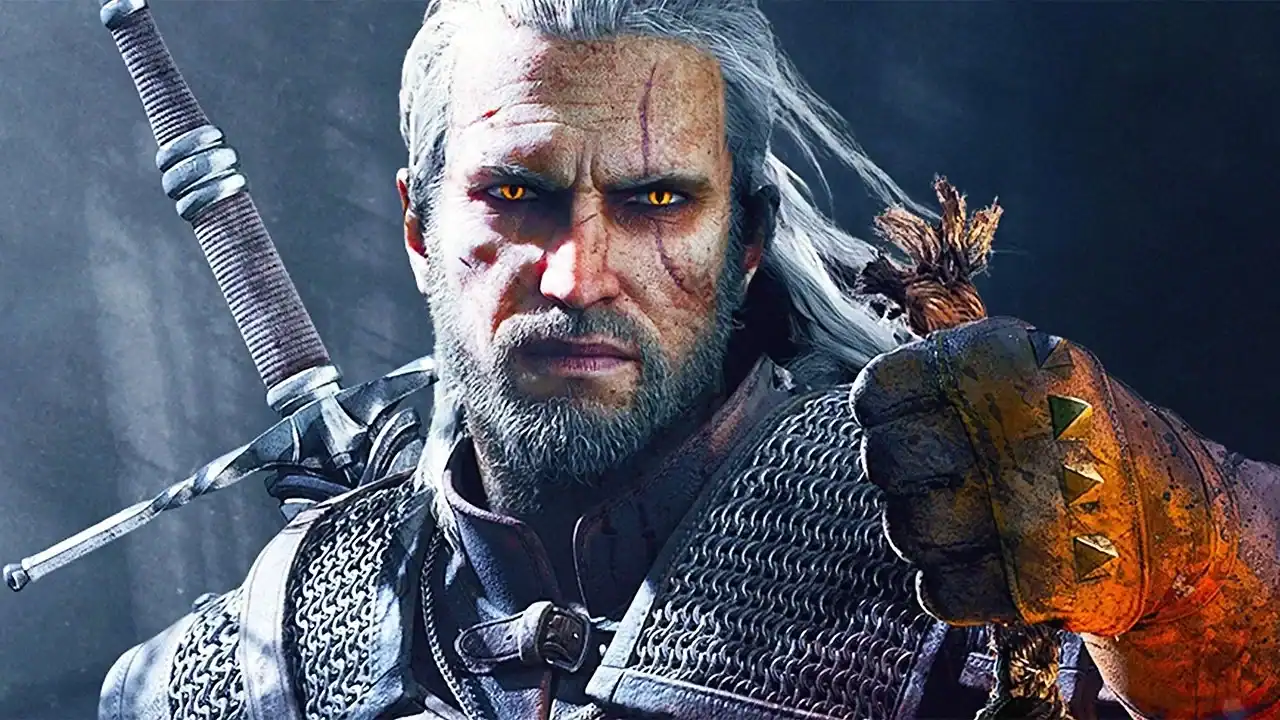
Doug Cockle has spent more than two decades building one of the most recognizable voices in video games. He has recorded thousands of lines as Geralt of Rivia, helped turn the White Wolf’s gravelly delivery into a defining part of The Witcher games and continued returning to the character across expansions and crossover appearances. The idea that a company could now take that work, copy his voice and make “Geralt” say almost anything without Cockle ever stepping into a recording booth understandably does not sit well with him.
The veteran actor has once again spoken forcefully about artificial intelligence and voice cloning, making it clear that his issue is not with every possible use of AI. Cockle sees enormous potential in areas such as medicine, but believes creative work occupies a very different space because it depends on human experience, emotion and expression. When technology is used to reproduce an actor’s voice without permission, he sees that as an issue of control and ownership rather than innovation.
Cockle Is Not Fighting AI — He Is Fighting Unauthorized Use
It would be easy to reduce Cockle’s position to another actor declaring war on artificial intelligence, but his actual argument is more nuanced. In a recent Tom’s Guide interview, Cockle pointed to AI potentially identifying cancer on medical scans earlier than a human doctor could as an example of technology capable of doing something extraordinary. His objection begins when AI companies move into creative work by taking material produced by real performers and using it to generate something those performers never created.
Cockle has described creativity as something inherently connected to the person making the work. An actor brings memories, instincts, emotions and years of experience into a performance, even when delivering a line for the first time in a recording booth. In his view, an AI model can process and recombine information, but that process is fundamentally different from a human being making an emotional choice about how a character should sound.
That position is particularly relevant in Cockle’s case because so much of Geralt’s personality came from choices he made behind the microphone. CD Projekt Red originally pushed him toward an almost emotionless interpretation of the witcher, but Cockle believed Geralt needed a recognizable emotional life beneath the restrained delivery. He gradually pushed more humanity into the performance, arguing that audiences would have little reason to care about Geralt if there were truly nothing happening underneath the monotone exterior.
Someone Already Tried To Put His Geralt Voice Into An AI Database
Cockle’s concern is not hypothetical. He revealed years ago that an AI company contacted him and wanted permission to place his Geralt voice into a database. He refused the offer and has maintained that position as voice-cloning technology has become increasingly accessible.
His voice has nevertheless been replicated through AI tools. One of the earliest high-profile examples came from a fan-made Witcher 3 quest that used artificial intelligence to create new Geralt dialogue without Cockle recording the lines himself. The results were convincing enough to demonstrate exactly why actors became concerned about where the technology was heading.
For Cockle, the bigger target is not necessarily the fan who wants to create a new quest for a game they love. He has previously praised modding communities and said he does not want to punish people making celebratory fan content. His frustration is aimed more directly at platforms that provide the tools needed to copy a performer’s voice and generate unlimited new dialogue from it.
The Real Problem Is That AI Geralt Can Say Anything
There is an obvious financial issue when a synthetic voice can potentially replace paid recording work, but Cockle has repeatedly pointed toward an even more troubling possibility: an AI-generated version of his voice can be made to say things he would never agree to say himself. That could mean offensive material, political statements, misinformation or virtually anything else a user decides to type into a generator.
That creates a problem very different from somebody doing a bad Geralt impression. Cockle’s voice has become so closely associated with the character that a convincing AI clone can carry a level of authenticity whether he approved the words or not. Someone unfamiliar with the original source could hear a generated recording and reasonably assume Cockle actually performed it.
This is why consent sits at the center of the debate. An actor can agree to license a voice for a specific purpose, negotiate compensation and establish limitations around how the resulting model can be used. Cockle’s concern is what happens when the first step — permission — simply disappears.
Geralt Makes Cockle An Especially Valuable Target For Voice Cloning
Cockle estimates that he has recorded somewhere between 15,000 and 20,000 lines as Geralt since beginning work on the character in 2005. That enormous archive gives voice-cloning systems a considerable amount of existing material from which to learn the cadence, pitch and recognizable rasp associated with his performance.
Geralt is also far more recognizable today than he was when Cockle first entered the recording booth. CD Projekt Red says The Witcher 3: Wild Hunt alone has sold more than 50 million copies, while the overall Witcher game series has exceeded 75 million. Cockle’s performance has therefore been heard by an enormous global audience and remains closely tied to one of modern gaming’s most successful RPG franchises.
That recognition makes an AI Geralt voice commercially useful. A platform can attract users specifically because they want to type something and hear it spoken by a voice that sounds like a famous character. From an actor’s perspective, however, the appeal of the tool comes directly from years of work that built that recognizable performance in the first place.
The Witcher Is Moving Forward, And Cockle Is Still Part Of It
This debate also arrives while The Witcher franchise is preparing for another major era. CD Projekt Red has officially introduced The Witcher IV, which shifts the lead role to Ciri and begins a new saga for the series. Geralt is no longer the primary playable hero, but Cockle remains closely associated with the games and has continued discussing his long history with the character.
That makes protecting his performance more than a question about old recordings from games released years ago. Geralt remains an active character with enormous commercial value, and Cockle remains the performer audiences identify with the English-language version of that character. An unlimited AI clone could potentially generate new “Geralt” performances indefinitely, regardless of whether Cockle ever approves them.
Voice Actors Are Asking For Control, Not A Ban On Technology
The broader argument surrounding AI in games sometimes becomes framed as artists trying to stop technological progress altogether. Cockle’s comments do not fit that description. He has repeatedly acknowledged that AI is not going away and can be enormously useful. What he wants is a system in which performers retain meaningful control over whether their voices become raw material for someone else’s product.
That is a much harder argument to dismiss than simply declaring AI good or bad. Voice actors are not only selling sound. They are selling performances tied to their professional identities, and modern cloning technology can separate that identity from the performer who created it. Once a sufficiently convincing model exists, the actor is no longer required for the voice to continue working.
Cockle’s position is therefore straightforward even if the surrounding technology is complicated: companies should not be able to build products around somebody’s recognizable voice simply because enough recordings already exist online or inside a video game.
Geralt May Hunt Monsters, But Cockle Has A Different Fight
There is a certain irony in one of gaming’s most famous monster hunters becoming part of a battle over technology capable of making his voice effectively immortal. Cockle spent years giving Geralt subtle emotions that developers initially wanted removed, shaping the character through tiny human decisions made line by line. An AI voice model can imitate the finished sound, but Cockle argues that it cannot recreate the human process that produced it.
That distinction is unlikely to become less important as voice-cloning technology improves. The more convincing synthetic performances become, the harder it will be for audiences to immediately distinguish an authorized recording from something generated by a stranger with a text box.
Doug Cockle is not asking technology to disappear. He is asking for the person behind the voice to remain part of the decision.
For the man who helped make Geralt sound unmistakably like Geralt, that seems like a reasonable place to draw the line.

DC Fanboy! Superman is the greatest comic book character of all time. Favorite movies are Man of Steel, Goonies, Back To the Future