
Michel Franco’s Dreams makes its intentions clear almost immediately. It doesn’t want to comfort you, seduce you, or guide you gently through its romance. It wants to sit you down in an unequal relationship and refuse to let you look away. This is a film obsessed with power—who has it, who pretends not to, and who pays the price for believing love might soften its grip. Whether that fixation results in something illuminating or simply numbing depends largely on your tolerance for emotional attrition, because Dreams is not interested in release. It withholds it on purpose.
The film opens with Fernando Rodríguez (Isaac Hernández), a young Mexican ballet dancer, crossing the U.S.-Mexico border illegally. Franco frames the sequence with ambiguity and curiosity: We observe this desperate, hungry man asking strangers for help, for money, for a ride. When he finally reaches an isolated California home, the film briefly toys with the idea that he might be breaking in. That assumption is overturned almost immediately. The house belongs to Jennifer McCarthy (Jessica Chastain), a wealthy American socialite and arts patron, and Fernando is not an intruder. He is her secret lover.

Their relationship predates the film, having begun in Mexico City, where Jennifer was doing charity work through her family’s arts foundation. She helped fund Fernando’s ballet training, positioning herself as both benefactor and partner. Franco wastes no time clarifying the imbalance at the center of their connection. When Jennifer finds Fernando in her bed, the reunion turns sexual almost instantly. The sex scenes are explicit and uncomfortable, but they are never decorative. Franco shoots them with a cold precision that strips away fantasy. Bodies are close, breath is heavy, but there is no illusion of equality. These moments communicate character and control more than desire, and they make it clear that intimacy here is another site where power is exercised.
Isaac Hernández is the film’s emotional anchor. A professional ballet dancer making his first lead role debut, he brings a physical expressiveness that dialogue alone could never capture. Fernando’s body carries his history: the discipline of his training, the vulnerability of his status, the tension of a man constantly bracing himself. Hernández understands how to perform stillness as much as movement. Even when Fernando says little, his posture and gaze reveal hope curdling into confusion, then fear. He believes in Jennifer, not just as a lover but as a promise. That belief feels tragically sincere.

Jessica Chastain, by contrast, plays Jennifer with restraint bordering on detachment. She is fine in the role, but deliberately so. Jennifer is a woman who has spent her life curating herself, her philanthropy, and her image. Chastain doesn’t ask us to like her, and Franco doesn’t give her many moments of vulnerability to latch onto. Jennifer’s affection for Fernando may be real, but it is filtered through self-preservation. She wants him close, but never close enough to disrupt the life she has built. The film understands that people with power rarely think of themselves as villains. They think of themselves as careful.
Rupert Friend appears as Jake McCarthy, Jennifer’s brother, though his presence feels strangely muted. He exists mostly as a reminder of the family structure and privilege Jennifer operates within. Friend does what he can with the material, but the role feels underwritten, as if Franco is less interested in expanding the world than tightening the screws on the central dynamic.
That narrowing focus is both Dreams’ strength and its biggest obstacle. Franco directs with discipline and severity, stripping away comfort and music for long stretches. Scenes often linger past the point of ease, forcing the viewer to sit with discomfort. The pacing is slow, and not in a meditative way. It’s sluggish and at times genuinely tedious. Franco seems committed to emotional exhaustion as a strategy, but endurance alone doesn’t always translate to insight. There are moments where the film feels empty, as if the withholding of warmth has crossed into a kind of emotional vacuum.
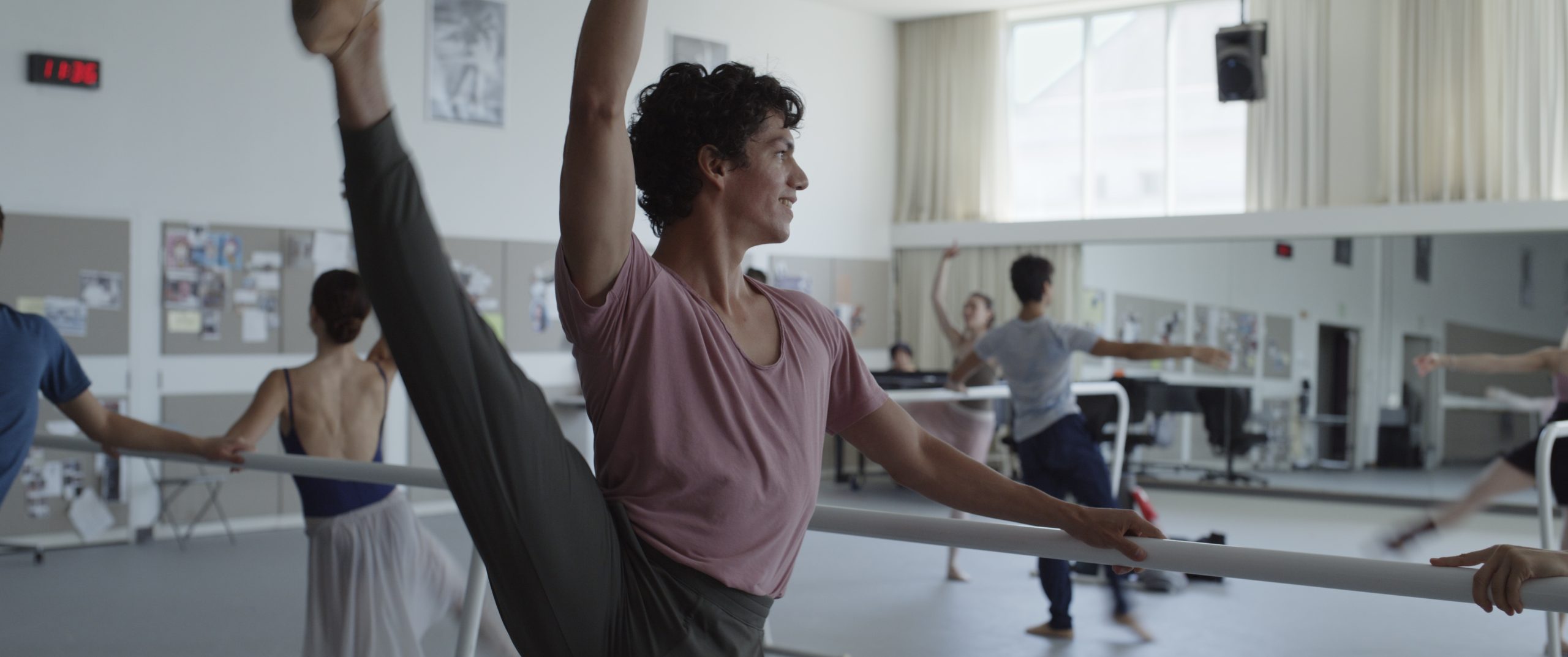
Still, the film’s thematic ambitions are clear. The title Dreams carries a bitter irony. Fernando’s dreams—of artistic recognition, of a life in the U.S., of a future with Jennifer—are never truly supported. They are tolerated when convenient and crushed when they become inconvenient. Franco is unsparing in his depiction of how privilege functions under the guise of generosity. Jennifer’s wealth allows her to frame herself as a savior while maintaining complete control over the terms of the relationship. Fernando’s gratitude becomes an unspoken obligation.
The ending is likely to be the film’s most divisive element. After subjecting the audience to relentless emotional strain, Franco offers no catharsis. The final moments feel alienating. There is a sense that the film wants us to walk away acknowledging that both parties are morally compromised, but the execution feels blunt rather than revelatory. By that point, the emotional well has already been drained, and the absence of release feels less purposeful than punishing. You may understand what Franco is saying, but that doesn’t mean you feel anything new by the time he’s finished. There’s an idea there, about mutual damage and the quiet cruelty embedded in unequal love, but it arrives drained of energy. After sitting through such a relentless experience, the lack of release doesn’t feel brave; it feels careless.

That’s ultimately where Dreams fully loses itself. It’s easy to admire what it’s reaching for more than what it actually achieves. Franco’s control is undeniable, and Hernández gives a performance that feels painfully real, but the film around him rarely meets that level of life or urgency. The slow pacing turns from deliberate to punishing. The emotional austerity stops revealing character and starts flattening it. Instead of deepening its themes, the film circles them, wearing them down until there’s nothing left to grasp.
As it stands, the film feels caught between sharp insight and emotional inertia. It feels rather empty because there seems to be no love or no real emotion. After finishing the movie, the only thing you can get out of it is respecting the intention, remembering Hernández’s physical grace and commitment, but feeling strangely unmoved. For a film called Dreams, that lingering sense of hollowness is hard to ignore. It’s a film one can appreciate in pieces, even admire in moments, but not one that ever fully came alive.
Dreams will debut exclusively in theaters on February 27, 2026, courtesy of Greenwich Entertainment.

For a film called Dreams, that lingering sense of hollowness is hard to ignore. It's a film one can appreciate in pieces, even admire in moments, but not one that ever fully came alive.

Roberto Tyler Ortiz is a movie and TV enthusiast with a love for literally any film. He is a writer for LoudAndClearReviews, and when he isn’t writing for them, he’s sharing his personal reviews and thoughts on Twitter, Instagram, and Letterboxd. As a member of the Austin Film Critics Association, Roberto is always ready to chat about the latest releases, dive deep into film discussions, or discover something new.
![‘The Boys’ Season 5 Premiere Doesn’t Pull Any Punches [SPOILER WARNING]](https://cdn.geekvibesnation.com/wp-media-folder-geek-vibes-nation/wp-content/uploads/2026/04/THBY_S5_UR_501_00331_R2_3000-450x300.jpg "‘The Boys’ Season 5 Premiere Doesn’t Pull Any Punches [SPOILER WARNING]")