

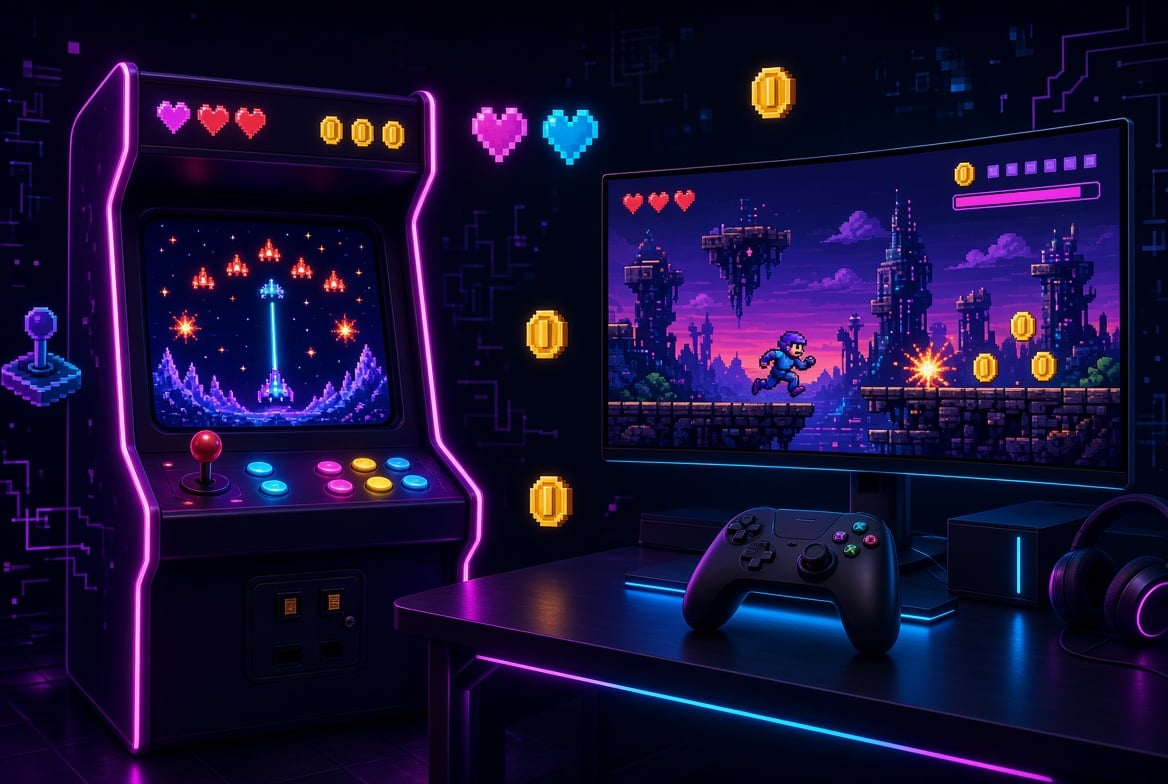
Video games have evolved dramatically since the days of arcade cabinets and simple pixel graphics. Modern games combine detailed artwork, immersive soundtracks and interactive storytelling to create experiences that appeal to audiences worldwide.
But the influence of gaming extends beyond traditional consoles and PCs.
Many design elements that became popular through video games have also appeared in other forms of digital entertainment, including online slot games.
From fantasy themes to animated characters, the connection between gaming culture and casino-style entertainment is increasingly visible.
How Arcade Games Shaped Modern Entertainment
Early arcade games established many principles that developers still use today.
Titles such as Pac-Man, Space Invaders and Donkey Kong relied on colourful visuals, recognisable characters and straightforward controls.
Their appeal came from making gameplay easy to understand while offering challenges that encouraged players to improve.
Modern video games have expanded these ideas with complex narratives, open worlds and multiplayer features.
However, the importance of accessible interfaces and engaging presentation remains.
These design principles have influenced everything from mobile applications to interactive entertainment platforms.
Why Online Slots Borrow From Gaming Culture
Online slot games were originally digital adaptations of mechanical slot machines.
Early versions generally featured simple symbols, basic animations and familiar themes.
As technology improved, developers introduced more elaborate visual designs.
Today, slot games may feature fantasy environments, science-fiction imagery, mythological characters and animated sequences.
These elements resemble the visual language of mainstream gaming.
Readers interested in seeing how these themes appear across different titles can explore guides to popular online slot games worth exploring, while keeping in mind that real-money slot games involve financial risk and are subject to local gambling laws.
Although slots and traditional video games share some design features, their underlying mechanics are fundamentally different.
The Role of Storytelling in Game Design
Storytelling has become one of the most important features of modern video games.
Franchises such as The Legend of Zelda, Final Fantasy and The Witcher use detailed worlds and character development to create emotional connections with players.
Even games without extensive dialogue often communicate stories through their environments.
A ruined castle, mysterious forest or futuristic city can suggest a larger fictional universe.
Online slot designers sometimes use similar visual techniques.
Fantasy-themed slots may feature magical creatures, ancient temples or fictional kingdoms.
Science-fiction titles might include robots, spaceships and futuristic technology.
However, these themes generally provide atmosphere rather than the deep interactive storytelling associated with role-playing games.
Graphics and Animation Have Raised Expectations
Gaming audiences have become accustomed to increasingly sophisticated visuals.
Modern consoles and PCs can render detailed environments, realistic lighting and complex character animations.
Mobile devices have also improved, allowing developers to create visually rich experiences for smaller screens.
These advances have influenced expectations across digital entertainment.
Users now often expect smooth transitions, responsive interfaces and consistent visual quality.
Why presentation matters
Strong visual design can help users understand how a game works.
Clear menus, readable text and recognisable symbols make interfaces easier to navigate.
Animation can provide feedback when a player completes an action or reaches a particular stage.
However, attractive graphics should not be confused with better gameplay or improved winning chances.
In gambling products, visual effects do not change the mathematical rules governing outcomes.
Randomness Works Differently Across Games
Randomness is a familiar concept in gaming.
Role-playing games may use random loot drops, while strategy games sometimes introduce unpredictable events.
These mechanics can make repeated playthroughs feel different.
Online slots also use randomness, typically through random number generators that determine game outcomes.
But there is an important distinction.
In many traditional video games, skill, strategy and practice influence a player’s success.
Slot outcomes are primarily determined by chance.
A player cannot reliably predict the next spin based on previous results.
Understanding the difference between skill and chance
A difficult boss battle can often be overcome through practice.
A competitive multiplayer match may reward teamwork and tactical decisions.
Real-money slot games do not offer the same relationship between skill and outcomes.
Understanding this distinction helps prevent misleading comparisons between gambling products and conventional games.
Mobile Technology Changed Both Industries
Smartphones have made interactive entertainment available almost anywhere.
Mobile games are designed around touchscreen controls, shorter sessions and interfaces that work on smaller displays.
Many developers now prioritise mobile compatibility from the beginning of production.
This approach has influenced other digital platforms, including browser-based games and online casino interfaces.
Responsive design allows content to adjust to different screen sizes.
Faster internet connections also make it easier to access games without lengthy downloads.
However, convenience can encourage longer screen time, making personal limits and healthy digital habits important.
What Traditional Gaming Can Teach Digital Platforms
The most successful video games tend to balance creativity with usability.
Players appreciate intuitive controls, clear instructions and experiences that respect their time.
These qualities are valuable across digital entertainment.
Accessibility is another important consideration.
Features such as adjustable text sizes, readable colour combinations and straightforward navigation can make platforms easier to use.
For gambling-related services, responsible design also requires transparent information about financial risks, game rules and available safeguards.
Engaging presentation should never obscure important consumer information.
The Future of Interactive Entertainment
Gaming technology will continue influencing digital entertainment.
Artificial intelligence, cloud-based services and improved graphics tools are creating new possibilities for developers.
Virtual reality and augmented reality may also introduce different ways to interact with fictional environments.
However, technological innovation does not make every form of gaming equivalent.
Traditional video games, competitive esports and real-money gambling serve different purposes and involve different risks.
Understanding those differences will remain important as their visual styles continue to overlap.

Taylor Wynn is an esports betting columnist and digital wagering expert focused on emerging online gambling markets. Tracking esports odds across major leagues—from CS2 to League of Legends—Taylor offers insight into odds movement, bookmaker trends, and new player bonuses. Their work highlights the rapid evolution of online sportsbooks and the future of digital wagering experiences.