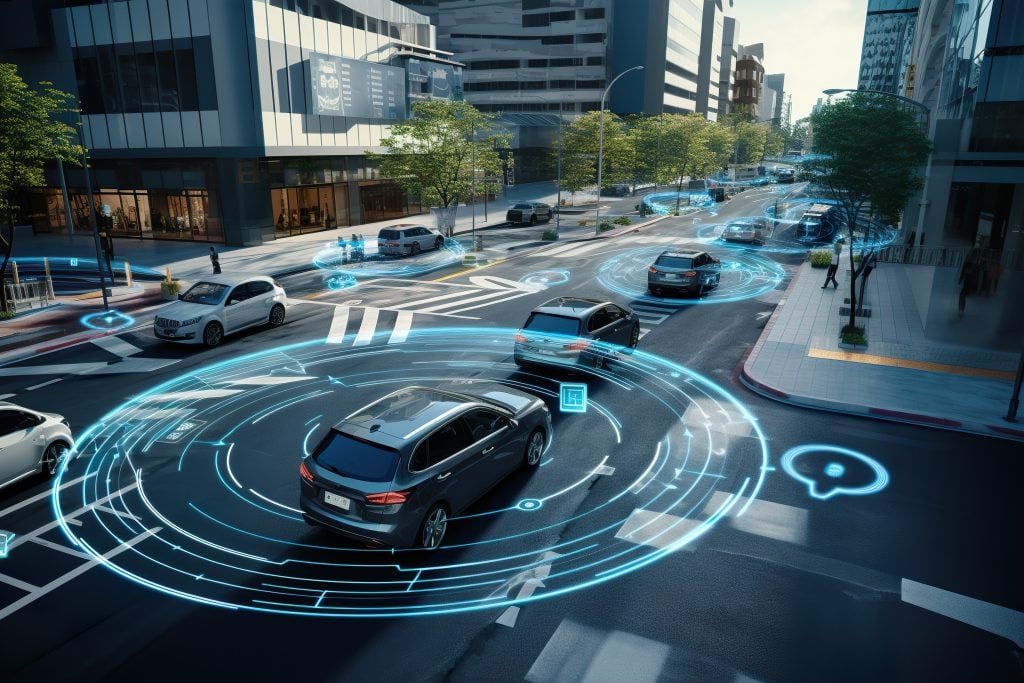
Modern vehicles increasingly rely on intelligent safety technologies designed to support driver awareness, improve reaction time, and reduce certain everyday driving risks. Compact SUVs, in particular, often combine family practicality with advanced driver-assistance systems intended to enhance confidence during commuting, highway travel, parking, and changing road conditions. The Ford Escape incorporates a broad collection of safety technologies focused on visibility, collision prevention support, driver monitoring, and digital awareness tools. Whether researching crossover safety systems or exploring available Ford Escape lease deals Michigan, understanding how these technologies function can help explain the role modern safety engineering plays in today’s driving experience.
Ford Co-Pilot360 Safety Technology Overview
One of the central safety technology platforms associated with the Ford Escape is Ford Co-Pilot360.
This system represents a collection of driver-assistance features designed to support safer operation through sensors, cameras, radar systems, and digital monitoring technology.
Rather than relying exclusively on driver observation, modern safety systems continuously analyze environmental conditions surrounding the vehicle.
Ford Co-Pilot360 integrates several technologies that focus on collision awareness, lane monitoring, visibility enhancement, and traffic observation.
The purpose of these systems is not to replace responsible driving practices. Instead, they function as supplemental tools intended to assist drivers under specific conditions.
Safety technologies increasingly emphasize prevention, awareness, and earlier recognition of changing roadway situations.
This reflects a larger trend across the automotive industry toward intelligent driver-support engineering.
Pre-Collision Assist and Automatic Emergency Braking
One of the most discussed safety technologies in modern vehicles involves collision prevention assistance.
The Ford Escape includes systems designed to monitor roadway activity ahead and identify conditions that may indicate elevated collision risk.
Pre-Collision Assist technology uses forward-facing sensors and camera systems to analyze traffic movement, vehicle spacing, and potential obstacles.
When the system identifies a possible frontal impact scenario, it may issue alerts intended to encourage driver response.
In some circumstances, automatic emergency braking support may engage if immediate action becomes necessary.
The technology operates by evaluating changing traffic behavior and calculating how quickly conditions are developing.
This capability can be particularly valuable in urban traffic, stop-and-go commuting conditions, and unpredictable roadway environments.
However, drivers remain responsible for maintaining full vehicle control and responding appropriately to traffic conditions.
These technologies are designed to supplement attention and situational awareness rather than replace active driver engagement.
Blind Spot Monitoring and Cross-Traffic Awareness
Visibility remains one of the most important elements of vehicle safety.
Even experienced drivers encounter challenges related to blind spots, lane changes, merging traffic, and obstructed parking situations.
The Ford Escape incorporates blind spot monitoring systems intended to improve awareness of surrounding traffic conditions.
Using sensor-based detection systems, the technology monitors adjacent traffic zones that may not always be fully visible through mirrors alone.
When another vehicle enters a monitored area, warning indicators typically notify the driver.
This technology can support safer decision-making during highway lane changes, traffic merging, and multi-lane driving environments.
Rear Cross-Traffic Alert technology often complements blind spot monitoring functionality.
During reversing maneuvers, the system helps monitor approaching traffic from the sides.
This feature can be particularly useful when backing out of crowded parking spaces, shopping centers, garages, or obstructed parking rows.
Together, these visibility technologies aim to improve environmental awareness during everyday driving scenarios.
Lane-Keeping Technology and Driver Positioning Support
Lane management technology has become increasingly common in modern vehicle safety design.
The Ford Escape includes systems designed to monitor roadway lane markings and assist drivers in maintaining proper lane positioning.
Lane-Keeping technology uses camera-based monitoring to observe visible lane boundaries during travel.
If unintended drifting behavior is detected, the system may issue warnings or provide steering-related feedback depending on system configuration.
Maintaining proper lane position is important for safe highway operation, long-distance driving, and heavy traffic navigation.
Lane monitoring technology may be especially beneficial during situations involving fatigue, distraction, unfamiliar routes, or prolonged travel periods.
Rather than functioning as an autonomous driving system, lane support technology is designed to reinforce driver awareness and positioning discipline.
Understanding roadway alignment remains a fundamental driver responsibility, but intelligent monitoring systems can provide additional feedback during changing travel conditions.
Adaptive Cruise Control and Highway Safety Assistance
Highway travel introduces unique safety considerations related to speed management, vehicle spacing, and driver workload.
The Ford Escape incorporates adaptive cruise technology intended to improve driving support during highway conditions.
Traditional cruise control systems maintain a fixed speed setting.
Adaptive cruise control expands upon this concept by monitoring traffic movement ahead and adjusting speed accordingly.
Using radar or sensor-based detection methods, the system measures following distance relative to vehicles traveling in front of the Escape.
If traffic slows, the vehicle may reduce speed to maintain the selected spacing.
When traffic conditions improve, speed adjustments may occur automatically according to system settings.
This technology can support smoother highway driving and reduce some repetitive speed adjustments associated with long-distance travel.
Proper spacing between vehicles is a key component of defensive driving, and adaptive systems reinforce awareness of this principle.
Although convenient, adaptive cruise systems still require active driver supervision and readiness to respond.
Parking Assistance and Camera Visibility Systems
Parking environments often involve reduced visibility, confined maneuvering space, and increased proximity to surrounding objects.
The Ford Escape incorporates technologies designed to improve parking awareness and low-speed maneuvering precision.
Rearview camera systems provide visual information related to the area behind the vehicle during reversing operations.
These systems help drivers identify obstacles, pedestrians, parking boundaries, or environmental conditions that may not be easily visible from the driver’s seat.
Enhanced camera technologies may also support improved positioning awareness during parking procedures.
Parking sensors further contribute to maneuvering assistance by detecting nearby objects and providing proximity notifications.
These technologies can be especially useful in urban environments, tight parking structures, residential driveways, and crowded commercial parking areas.
Improved visibility tools help reduce uncertainty during low-speed vehicle positioning tasks while supporting greater environmental awareness.
Driver Monitoring and Attention Technologies
Driver condition and attentiveness play critical roles in roadway safety.
Modern vehicle systems increasingly include technologies designed to observe driving behavior patterns and identify potential signs of reduced attentiveness.
The Ford Escape may incorporate driver monitoring functions intended to encourage awareness during extended travel or irregular driving behavior.
These systems analyze indicators such as steering patterns, lane positioning behavior, or other driving inputs.
When patterns associated with reduced attention are detected, notifications may encourage drivers to take appropriate breaks or refocus attention.
Fatigue, distraction, and reduced concentration can affect decision-making and reaction time.
Driver monitoring technologies reflect a broader automotive trend toward preventative safety engineering.
Instead of focusing only on external hazards, these systems also consider driver behavior as an important component of overall vehicle safety strategy.
Digital Safety Displays and Information Systems
Modern safety technology increasingly depends on digital communication between vehicle systems and drivers.
The Ford Escape incorporates display technologies that help present safety information in organized and accessible formats.
Dashboard displays, warning indicators, system notifications, and digital alerts contribute to driver understanding of vehicle conditions and system activity.
Drivers may receive information related to lane monitoring status, blind spot detection, adaptive cruise settings, or collision alerts through integrated display systems.
Clear communication is essential because advanced safety technologies depend on timely driver awareness.
Digital information systems help ensure that safety-related feedback remains understandable and accessible during vehicle operation.
As automotive technology continues advancing, digital interfaces are expected to play an even greater role in how safety information is delivered and interpreted.
The Growing Role of Integrated Vehicle Safety Systems
Modern vehicle safety no longer depends on isolated features operating independently.
The Ford Escape’s safety technologies demonstrate how multiple systems increasingly interact within a coordinated safety ecosystem.
Collision monitoring, adaptive speed management, visibility assistance, driver awareness tools, and lane technologies often work together to support broader operational awareness.
This integration reflects ongoing changes in automotive engineering.
Safety technology is moving toward interconnected systems capable of sharing information, responding dynamically to conditions, and supporting more comprehensive driver assistance.
The future direction of vehicle safety will likely involve stronger integration between artificial intelligence, predictive analytics, connected systems, and advanced environmental monitoring.
Conclusion
The Ford Escape’s safety technology systems represent a broad collection of modern driver-support tools designed to improve awareness, visibility, collision monitoring, and everyday driving confidence. Technologies such as Ford Co-Pilot360, Pre-Collision Assist, blind spot monitoring, adaptive cruise control, lane-keeping systems, parking assistance tools, and digital safety displays illustrate how intelligent safety engineering has become central to modern vehicle design.
Understanding how these systems operate helps drivers better appreciate the role technology plays in supporting safer vehicle operation. As automotive innovation continues advancing, integrated safety technologies will likely remain an important part of how drivers interact with vehicles and navigate increasingly complex transportation environments.

Sandra Larson is a writer with the personal blog at ElizabethanAuthor and an academic coach for students. Her main sphere of professional interest is the connection between AI and modern study techniques. Sandra believes that digital tools are a way to a better future in the education system.