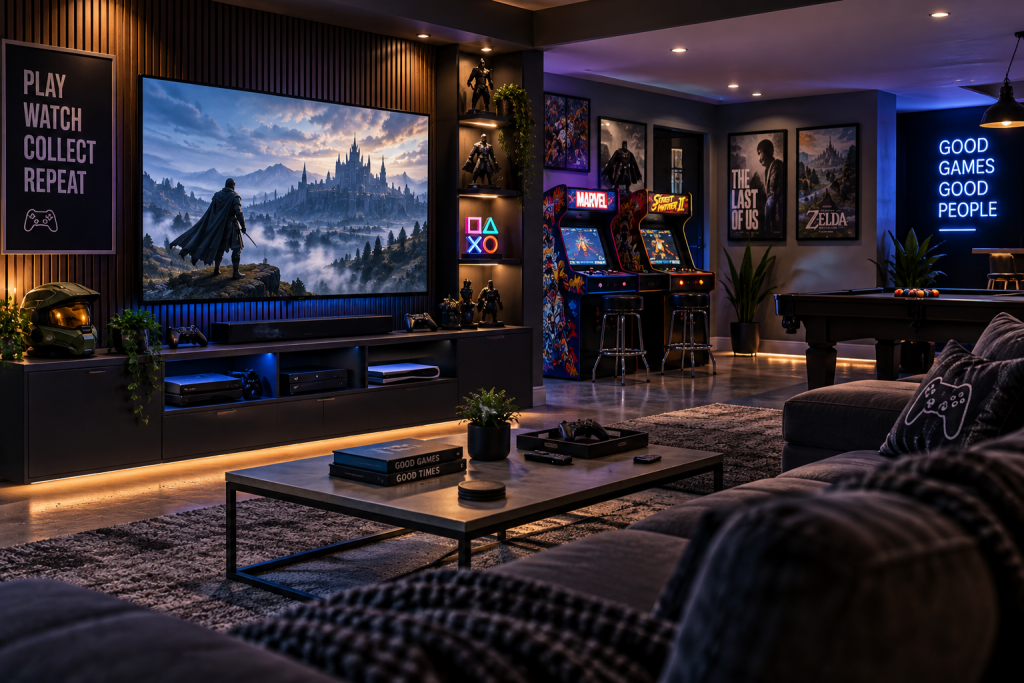
Game Room Ideas for a Fun and Functional Home focus on creating an entertaining, comfortable, and practical space for gaming, social activities, and relaxation. A well-planned game room combines suitable furniture, efficient layouts, dedicated storage, functional lighting, and décor that reflects household interests. Gaming setups benefit from comfortable seating, organized cable management, suitable screen placement, and accessible controllers. Board games, card games, puzzles, and word games provide activities for different age groups and group sizes. Digital options add variety through browser-based games and word puzzles, including UnscrambleX as a resource for anagram and word-solving activities.
Game Room Ideas for a Fun and Functional Home also depend on available floor space, household needs, and preferred activities. Larger rooms support pool tables, arcade machines, gaming desks, and sectional seating. Smaller rooms benefit from multifunctional furniture, wall-mounted storage, foldable tables, and compact gaming stations. Adjustable lighting creates suitable conditions for gaming, reading, and social gatherings. Shelving keeps board games, controllers, accessories, and puzzles organized while reducing floor clutter. Durable flooring and easy-to-clean surfaces support regular use. A balanced layout keeps pathways clear while giving each activity a defined area. Thoughtful décor adds personality through themed artwork, display shelves, rugs, wall graphics, and coordinated furnishings.
What Makes a Good Game Room Design?
A good game room design combines practical layout, comfortable seating, suitable lighting, accessible storage, and dedicated activity zones. Room dimensions determine furniture placement, walking space, screen position, table size, and available gaming areas. Comfortable seating supports longer sessions without overcrowding the room. Lighting reduces screen glare while providing sufficient visibility around tables, shelves, and walkways. Storage keeps controllers, board games, cards, puzzles, and accessories organized near their activity zones.
Accessibility requires clear pathways, reachable storage, suitable furniture heights, and easy access to power outlets. Activity zones separate gaming desks, tabletop areas, viewing spaces, and relaxation corners without creating unnecessary barriers. A balanced layout keeps frequently used equipment within convenient reach. Durable materials support regular use while maintaining a clean appearance.
How can a Game Room Layout Maximize Available Space?
A game room layout maximizes available space through careful furniture placement, defined activity zones, and clear walking paths. Room size determines the amount of furniture, seating, tables, and gaming equipment that fits comfortably. Large furniture belongs against walls when possible to preserve central floor space. Gaming desks require sufficient clearance for chairs, monitors, storage, and movement. Board game tables need enough surrounding space for chairs and player movement. Seating arrangements work best when they face screens without blocking pathways. Vertical shelves provide storage without consuming substantial floor area. Foldable tables create flexible surfaces for board games, puzzles, and group activities. Activity zones gain efficiency when related equipment stays nearby. Clear paths from entrances to seating areas keep movement simple.
Can a Small Room Work as a Game Room?
Yes, a small room works as a game room when furniture, storage, and activity zones receive careful planning. Compact desks provide dedicated gaming surfaces without consuming excessive floor space. Wall-mounted shelves move game collections away from limited walking areas. Storage ottomans provide seating while holding controllers, cards, and accessories. Foldable tables create flexible surfaces for board games, puzzles, and group activities.
Multipurpose furniture reduces the number of separate pieces required inside the room. Corner desks use spaces that frequently remain unused. Cable management keeps gaming equipment organized around limited floor areas. Light colored walls and suitable lighting create a more open visual effect. Clear pathways remain necessary for comfortable movement around furniture.
Which Game Room Ideas fit Different Types of Players?
Game room ideas differ according to player preferences, group size, equipment needs, and preferred activities. Each setup gives the room a defined purpose while supporting comfortable use.
Game room ideas that fit different types of players are listed below.
- Video game room: A video game room focuses on consoles, gaming computers, monitors, controllers, headsets, and comfortable seating. Screen placement and cable organization receive priority.
- Family game room: A family game room supports shared activities across different age groups. Board games, card games, puzzles, television viewing, and flexible seating fit the setup.
- Adult game room: An adult game room emphasizes social entertainment and relaxed gatherings. Bar-style seating, pool tables, card tables, and display shelving suit the space.
- Board game space: A board game space centers on large tables, comfortable chairs, organized game storage, and adequate lighting. Table surfaces require enough room for boards, cards, and accessories.
- Puzzle area: A puzzle area needs a stable table, task lighting, and storage for unfinished projects. Dedicated surfaces prevent puzzle pieces from being disturbed between sessions.
- Multipurpose entertainment room: A multipurpose room combines gaming, television viewing, reading, puzzles, and social activities. Flexible furniture supports quick changes between different uses within a .
What Things Should a Game Room Include?
A functional game room includes equipment, furniture, lighting, storage, décor, and surfaces suited to preferred activities.
Things a game room should include are listed below.
- Gaming equipment: Consoles, computers, controllers, monitors, headsets, and charging stations support digital gaming.
- Tables: Gaming desks, board game tables, card tables, and multipurpose surfaces provide dedicated play areas.
- Comfortable seating: Gaming chairs, sofas, lounge chairs, and stools provide seating for different activities.
- Storage: Shelves, cabinets, drawers, and storage bins organize games, controllers, cables, and accessories.
- Lighting: Ceiling fixtures, task lamps, accent lighting, and adjustable lights support gaming and social activities.
- Décor: Posters, artwork, rugs, display pieces, and themed accessories give the room a distinct visual identity.
- Screens: Televisions and monitors support console gaming, computer gaming, streaming, and group viewing.
- Game collections: Board games, card games, puzzles, arcade games, and word games provide varied entertainment options.
- Power access: Accessible outlets, charging stations, and organized cable routes support electronic equipment.
How can Décor Improve a Game Room?
Game room décor improves the room by establishing a consistent visual style while supporting comfort and activity. Wall décor introduces personality through posters, framed artwork, game-related graphics, and display shelves. Themed elements connect furniture, accessories, and artwork around preferred gaming interests. Furniture style influences the room’s character through materials, shapes, finishes, and upholstery. Lighting adds atmosphere through ceiling fixtures, table lamps, LED strips, and accent fixtures placed around activity zones. Color choices define visual sections without requiring physical barriers. Display cabinets give collections a dedicated presentation area while keeping games organized. Rugs help define seating or gaming zones while adding comfort underfoot. Functional décor works best when decorative pieces do not obstruct screens, storage, pathways, or gaming surfaces.
How can a Game Room Support Family Activities?
A game room supports family activities by providing dedicated areas for board games, puzzles, reading, trivia, creative projects, and word games. Flexible tables accommodate board games, puzzles, drawing, crafts, and other seated activities. Comfortable seating creates space for reading sessions, trivia rounds, and group discussions. Open shelving keeps games, books, art supplies, and puzzles within easy reach. Adjustable lighting supports reading and detailed tabletop activities without creating excessive glare. A television or gaming monitor adds video gaming alongside traditional family entertainment.
A separate tabletop zone keeps physical games organized without interfering with digital gaming equipment. Word games provide quieter activities that require minimal equipment. A balanced room layout gives each activity enough space for comfortable participation. Family members gain options for competitive games, cooperative challenges, creative projects, and quiet hobbies within one shared space. Storage near each activity zone reduces setup time and keeps frequently used materials organized. Flexible seating supports small groups, larger family gatherings, and individual activities. A dedicated reading corner provides a quieter area away from active gaming zones. A Home Game Room supports varied family activities without requiring separate rooms for each interest.
Which Games Can Families Play in a Home Game Room?
Family games include tabletop activities, card games, puzzles, trivia, and word challenges that support shared participation.
The games families can play in a home game room are listed below.
- Board games: Board games provide structured activities around a shared table. Family options include Monopoly, Clue, Scrabble, and Ticket to Ride.
- Card games: Card games require limited space and support quick rounds. Uno, Go Fish, Crazy Eights, and standard playing cards suit family sessions.
- Puzzles: Jigsaw puzzles provide quiet activities that suit group participation. Puzzle tables give families a dedicated surface for unfinished projects.
- Trivia games: Trivia games test knowledge across subjects while encouraging discussion. Family editions provide questions suited to different age groups.
- Word games: Word games focus on spelling, vocabulary, and letter arrangement. Scrabble, Boggle, and anagram challenges provide different levels of difficulty.
- Creative activities: Drawing, crafts, coloring, and building activities add noncompetitive entertainment. Dedicated tables keep creative materials organized.
- Video games: Cooperative video games support shared digital play through consoles or computers. Multiplayer titles provide structured activities for family sessions in a Home Game Room.
Can Word Games Add Variety to a Game Room?
Yes, word games add variety to a game room by providing an alternative to video games and traditional tabletop activities. Word challenges require vocabulary knowledge, spelling skills, letter recognition, and problem-solving. Scrabble, Boggle, crossword puzzles, anagrams, and word association games suit different skill levels. Short word rounds fit between longer board games without requiring extensive setup. Competitive formats encourage friendly rivalry through timed rounds, point systems, and team challenges. Cooperative word games encourage family members to solve clues together. Word activities require limited physical equipment, making them suitable for smaller tables or flexible gaming areas. Digital word games provide another format when screens already form part of the room.
Where can UnscrambleX Fit Into a Game Room?
UnscrambleX fits into a game room as an optional digital resource for word challenges, vocabulary activities, and anagram games. A computer, tablet, or shared screen provides access during short word rounds between board games or dedicated puzzle sessions. Players use scrambled letters to identify possible words, compare answers, and create friendly competitions around vocabulary knowledge. Family members gain a quick mental activity alongside physical games. Digital word challenges add variety without requiring additional shelves, tables, or game boxes. A shared display supports group participation when several players solve the same letter challenge. Offline games remain the main focus while digital activities provide an additional entertainment option.
A game room also benefits from placing a shared device near the tabletop gaming area for convenient access. Short solving rounds fit into breaks during board games, trivia sessions, or family competitions. Players can create timed challenges by setting a fixed period for identifying words from scrambled letters. Vocabulary activities provide an accessible option for players who prefer quieter games. Anagram challenges require limited equipment, making them suitable for compact game rooms. Families can combine digital word activities with physical scoreboards, notebooks, or team-based competitions. The setup keeps digital entertainment connected to the room’s broader purpose rather than making screens the primary feature. A suitable supporting resource for family word activities is .
How can an Anagram Solver be used in a Game Room?
An Anagram Solver provides additional word challenges by rearranging scrambled letters into possible words. Players use generated results to create vocabulary rounds, timed challenges, or family competitions. A tabletop game gains a digital component when players enter letter groups during a puzzle session. Players compare possible answers against predefined word lists when creating structured challenges. Short rounds fit between board games without requiring lengthy preparation. Vocabulary activities benefit from comparing word lengths, letter patterns, and alternative arrangements. Family members gain a simple format for cooperative challenges when one player enters letters while others search for answers. A computer or tablet provides sufficient access for a shared activity. An additional digital resource for family and tabletop activities is Anagram Solver.
Can a Word Scrambler Complement Board Games?
Yes, a Word Scrambler complements board games by adding short vocabulary challenges between longer activities. Players enter selected words, rearrange letters, then compete to identify the original answer. Quick rounds provide an alternative when players need a short activity before starting another game. Word challenges reinforce spelling, vocabulary, letter recognition, and problem-solving. Family members divide into teams for timed rounds or compare individual scores. A tablet or computer provides the digital element without requiring another physical game set. Word scrambling fits alongside board games, card games, puzzles, and trivia sessions. A digital tool that supports short vocabulary challenges is a Word Scrambler.
How can a Game Room Work for Different Ages?
A game room works for different ages through flexible furniture, accessible storage, varied games, and clearly separated activity areas.
A game room can work for different ages by following the six steps below.
- Choose flexible seating. Use sofas, adjustable chairs, stools, and floor cushions to support different body sizes and activities.
- Organize accessible storage. Place frequently used games on reachable shelves. Store less frequently used equipment in higher cabinets.
- Provide varied games. Include board games, puzzles, cards, trivia, word games, video games, and creative activities for different interests.
- Add multipurpose furniture. Select tables that support gaming, crafts, puzzles, reading, and homework without occupying separate areas.
- Create activity zones. Separate video gaming, tabletop play, reading, and creative activities to reduce crowding and distractions.
- Maintain clear pathways. Keep entrances, seating areas, storage spaces, and gaming stations easy to access.
What Game Room Ideas Work for Adults and Families?
Adult and family game rooms work best when flexible layouts combine social entertainment with accessible activities.
The game room ideas that work for adults and families are listed below.
- Board game area: A spacious table supports family games, strategy games, card games, and adult tabletop sessions.
- Gaming station: A console or computer setup provides digital entertainment for different age groups. Adjustable seating supports longer sessions.
- Puzzle corner: A dedicated table provides space for jigsaw puzzles, logic games, and quiet activities.
- Word game area: Scrabble, anagrams, crossword puzzles, and vocabulary challenges provide activities requiring limited equipment.
- Social seating: Sofas, lounge chairs, and stools create comfortable areas for conversation, viewing, and casual games.
- Flexible entertainment zone: A multipurpose area supports board games, video gaming, puzzles, trivia, and family gatherings without requiring separate rooms.
What Should be Considered Before Creating a Game Room at Home?
A home game room requires planning around space, budget, furniture, lighting, storage, electrical access, comfort, durability, safety, décor, and intended activities. Each factor affects how efficiently the room supports gaming and family entertainment.
The things that should be considered before creating a game room at home are listed below.
- Available space: Measure the room, doors, windows, outlets, and fixed features. Room dimensions determine suitable furniture sizes and activity zones.
- Budget: Set spending limits for furniture, gaming equipment, lighting, storage, décor, and electrical accessories. Prioritized purchases help control costs.
- Layout: Plan clear walking paths around tables, seating, screens, and gaming stations. Separate activity zones reduce crowding during group sessions.
- Furniture: Select tables, chairs, sofas, desks, and storage pieces suited to room dimensions. Multipurpose furniture provides flexibility for different activities.
- Lighting: Combine ambient fixtures with task lighting for gaming, reading, puzzles, and tabletop activities. Screen placement requires attention to glare.
- Storage: Use shelves, cabinets, drawers, and bins for games, controllers, cables, books, and accessories. Accessible storage keeps frequently used items organized.
- Electrical requirements: Count outlets needed for consoles, computers, screens, speakers, chargers, and lighting. Cable management keeps floor areas clear.
- Comfort: Provide suitable seating, table heights, ventilation, and movement space. Comfortable furnishings support longer gaming and family sessions.
- Durability: Choose flooring, surfaces, upholstery, and storage materials suited to regular use. Durable finishes reduce maintenance needs.
- Safety: Secure unstable furniture and organize electrical cables away from walking paths. Clear pathways reduce trip hazards.
- Décor: Coordinate colors, wall art, rugs, displays, lighting, and furniture styles. Décor gives the room a consistent visual identity.
- Game types: Identify the activities the room needs to accommodate before purchasing equipment. Board games, video games, puzzles, trivia, creative activities, and word games require different furniture and space arrangements.

Ashley Rosa is a freelance writer and blogger. As writing is her passion that why she loves to write articles related to the latest trends in technology and sometimes on health-tech as well. She is crazy about chocolates. You can find her at twitter: @ashrosa2.