

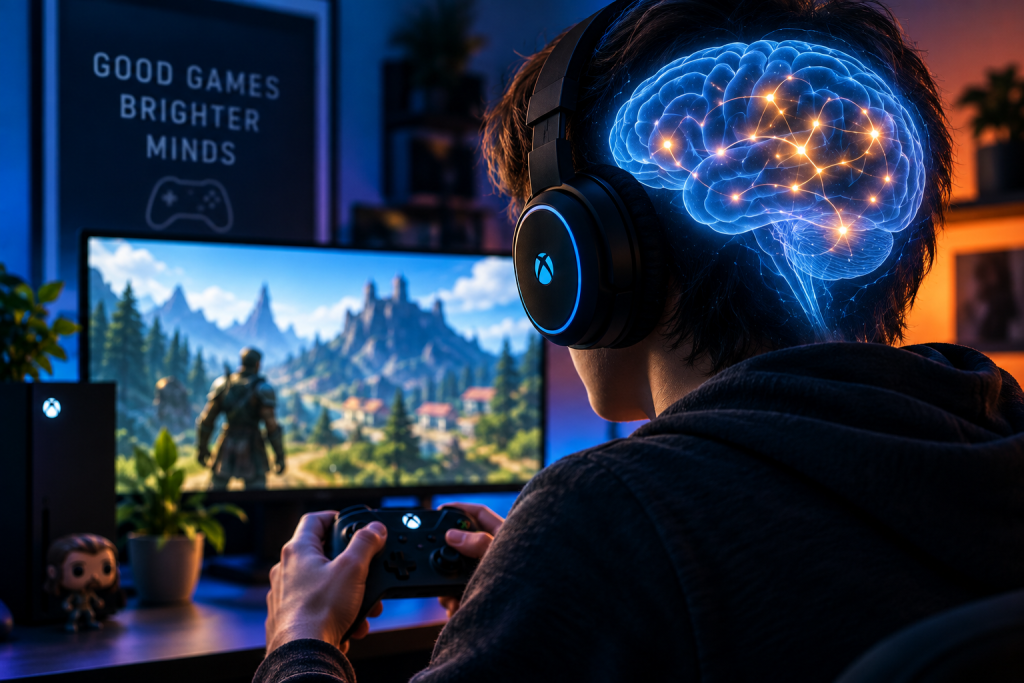
Video games are everywhere. Some people see them as a waste of time, others treat them like mental workouts. Between these two views sits a bigger question. Are games mainly a way to escape real life, or can they actually improve how the brain works?
Science does not give a simple yes or no answer. But the effects depend on how, why, and how often people play. Gaming is a mix of challenge, reward, stress relief, and habit.
Why the Brain Loves Virtual Worlds
Games offer something everyday life often does not. Clear goals, instant feedback, and a sense of progress. When real life feels stressful or uncertain, games can provide structure and control.
Psychologists describe this as escapism. It does not always mean avoiding problems. Sometimes it simply means taking a break from them. A fantasy world, a puzzle game, or even a competitive match can give the mind a rest from worries.
Common reasons people use games as escape include:
- Stress relief after work or school
- Emotional comfort during loneliness
- Distraction from anxiety or frustration
- Feeling capable and successful
In small amounts, this kind of escape can be healthy. It works much like reading a novel or watching a movie.
When Escape Becomes Avoidance
Problems appear when gaming replaces real coping skills. If someone only deals with stress by playing and never faces the source of the stress, habits can shift into dependency.
Researchers have linked excessive gaming to:
- Sleep problems
- Reduced physical activity
- Neglect of relationships
- Increased irritability
This does not mean games cause these issues on their own. Often, people who are already struggling emotionally are more likely to use games as their main escape. In that sense, gaming can be a symptom rather than the cause.
Attention and Reaction Skills
Many studies show that certain types of games improve specific mental abilities. Action and strategy games often require fast decision-making, tracking multiple objects, and switching attention quickly.
These skills include:
- Faster reaction times
- Better visual attention
- Improved hand-eye coordination
- Stronger task switching
This does not mean games make someone smarter in every way. The improvements tend to match the skills used in the game itself. A puzzle game strengthens problem-solving. A shooter improves visual tracking. The brain adapts to what it practices.
Memory and Problem Solving
Some games challenge memory and logic directly. Strategy games ask players to plan ahead and manage limited resources. Puzzle games train pattern recognition and mental flexibility.
In these cases, gaming works like a mental gym. Repeated effort strengthens certain cognitive pathways. Scientists call this neuroplasticity, the brain’s ability to change with experience. But these benefits depend on thoughtful play.
Mindless repetition does not train the brain the same way as games that require active thinking.
Emotional and Social Effects of Gaming
Games trigger the brain’s reward system. Completing tasks and earning points releases dopamine, the chemical linked to pleasure and motivation. This is why games feel satisfying and why people want to keep playing.
This reward loop can help with mood in short bursts. It can reduce feelings of sadness or boredom. But if rewards in games replace rewards in real life, motivation for school, work, or relationships can weaken.
Balance matters more than the game itself.
Social Connection in Digital Spaces
Not all gaming is solitary. Many players interact with friends or strangers through online games. These spaces can offer:
- Teamwork and cooperation
- A sense of belonging
- Communication practice
- Shared goals
For some people, especially those who feel shy offline, games become a social bridge. They allow connection without face-to-face pressure. Still, online interaction is not always positive. Toxic behavior, competition, and anonymity can increase stress instead of reducing it.
The Role of Rewards and Incentives
Modern games often use systems of bonuses and incentives to keep players engaged. On some gaming platforms, offers like free spins no deposit australia appear as part of reward structures that promise progress without immediate cost. Psychologically, this taps into anticipation and curiosity.
The brain reacts strongly to unpredictable rewards. This same mechanism exists in social media notifications and digital badges. It is not unique to gaming but games are very good at using it.
This does not make games harmful by nature. It simply means they are designed with psychology in mind. Awareness of these systems helps people play more consciously rather than automatically.
Escape and Training at the Same Time
Gaming is not just escape and it is not only brain training. It can be both. Games give relief from stress while also sharpening certain mental skills. They can support emotional well-being or quietly deepen avoidance patterns.
Science does not paint gaming as good or bad. It paints it as powerful. Games influence attention, mood, and behavior because they are built around motivation and challenge.
The real question is how people use games in their lives. In the end, gaming reflects human psychology more than it controls it.

Ashley Rosa is a freelance writer and blogger. As writing is her passion that why she loves to write articles related to the latest trends in technology and sometimes on health-tech as well. She is crazy about chocolates. You can find her at twitter: @ashrosa2.





1 Comment
A well-balanced and fascinating exploration of how video games intersect with cognitive psychology, neuroplasticity, and emotional well-being! Examining gaming through a dual lens—as both a restorative escape for stress relief and a cognitive workout that enhances visual attention, reaction times, and problem-solving—highlights the nuanced role digital media plays in daily life. Emphasizing the importance of intentional play, healthy boundary setting, and mindful engagement ensures that individuals can enjoy the psychological and social benefits of gaming while maintaining a well-rounded lifestyle. Thank you for sharing this insightful article!