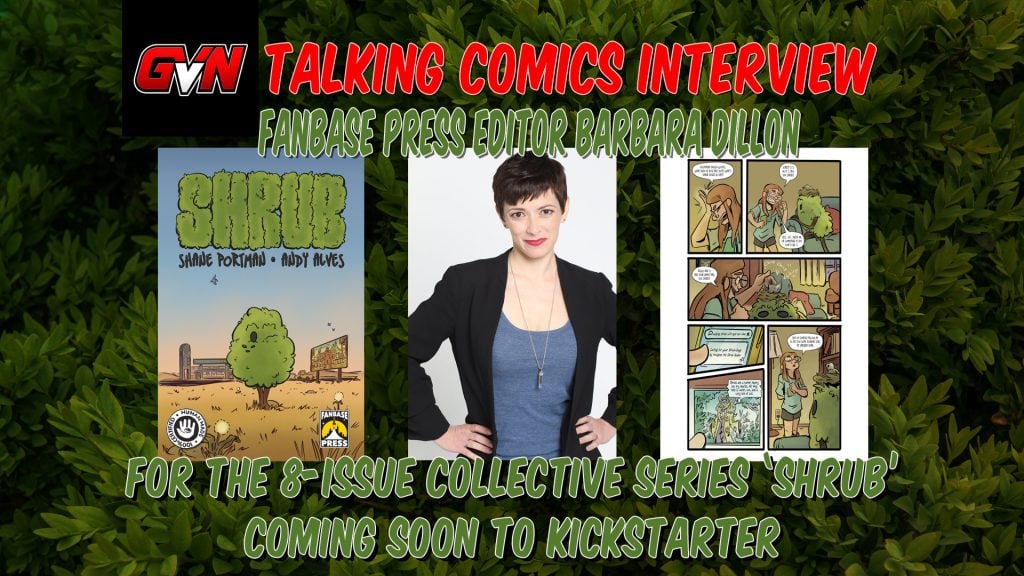
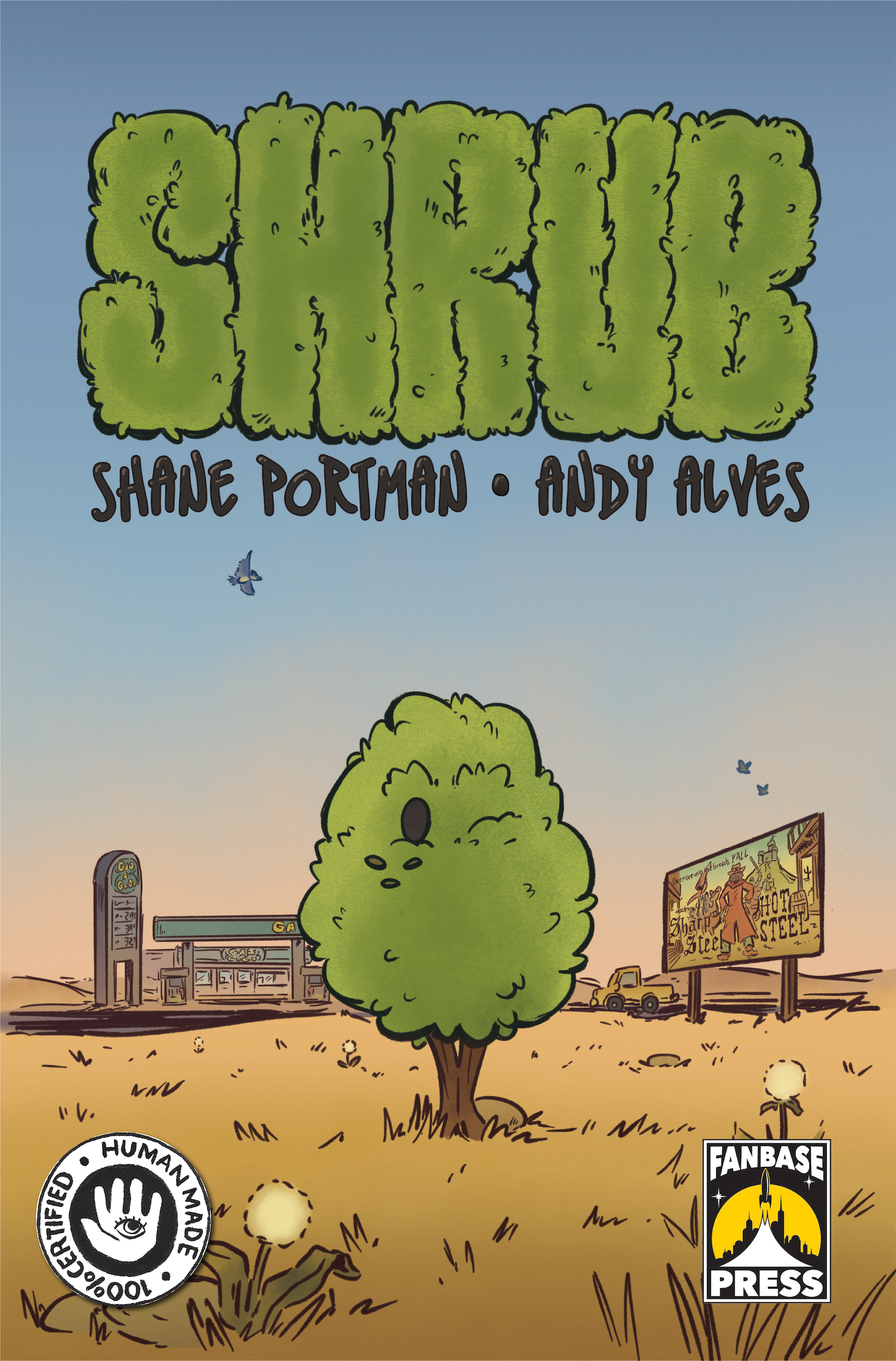
In the landscape of Graphic Medicine, few projects speak as gently — or as honestly — to young readers as Shrub. Written by Shane Portman and illustrated by Andy Alves, Fanbase Press is bringing its eight-issue collected series to Kickstarter, which explores how grief evolves, changes, and integrates into our lives. Rooted in a deeply personal story for Portman and crafted by an incredible team of storytellers and mental‑health experts, Shrub gives middle‑school readers a unique mix of emotional honesty, creative metaphor, and heartfelt guidance.
Fanbase Press Editor Barbara Dillon is the key driving force behind this series. Barbara’s steady hand and thoughtful editorial vision helped transform a sensitive subject into an accessible, resonant narrative for younger audiences. As Fanbase Press prepares to introduce Shrub to a broader audience, we caught up with Barbara to chat about how the project began, the teamwork that brought it to life, and the responsibility of creating a series aimed at helping kids through one of life’s toughest challenges.
GRAPHIC MEDICINE
GVN: Thank you for taking the time to speak with me, Barbara. Before we dive into our discussion about Shrubs, I’d like to take a moment to talk about Graphic Medicine. As a Board Member of the Graphic Medicine International Collective, what initially drew your attention to this organization and motivated you to support its mission?
BARBARA: So, I became aware of the term graphic medicine, I believe, in 2021 or 2022. it was when Fanbase Press was working on its series Ripple Effects. For those unaware, Ripple Effects was a series about exploring life as a superhero with an invisible illness. So I wanted to, as always, do my due diligence to learn about the field of graphic medicine and the amazing community that has been in existence for for many years, and for folks who may not be familiar with the term graphic medicine, it is very very simply the convergence of the entire field of medicine that could be physical medicine, mental health, all elements of of your well being and the sequential art medium. So it’s it’s those two put together, and it can be so many different things. It can be didactic in nature. It can be a graphic memoir, someone telling their own story, or in our case, what we do at FanBase Press, more fictional narratives.
GVN: While browsing the many graphic novels featured on the Graphic Medicine website, I noticed several that I’ve reviewed or discussed on Talking Comics. As an editor for Fanbase Press and given your close connection to Graphic Medicine, how is it determined which works qualify for inclusion under the Graphic Medicine umbrella?
BARBARA: So to clarify, Fanbase Press is the publisher of both Ripple Effects and Shrub, our current stories. But graphic medicine as a whole, as a community and as an organization, is really an avenue to promote and support graphic medicine creators, medical practitioners, patient advocates, really anyone interested in the field of graphic medicine. So, with graphic medicine and the Graphic Medicine International Collective, we have found a great deal of support and created inroads to be able to reach readers, creators, etc. about our stories, but they themselves don’t have any participation in in the production process.
‘SHRUB’
GVN: Understood, so let’s start discussing Shrub, the 8-issue series that began with Writer Shane Portman’s personal experience of losing his father. How did that foundational story and its contents shape your editorial approach, and what responsibilities come with guiding a project rooted in real grief?
BARBARA: So, Shane is someone that we at Fanbase Press knew for many years. We actually went to college together, and he has always been a creatively minded individual, very talented. He himself is an Emmy-nominated writer, having worked on animated series like Tumble Leaf and Shape Island, so he’s very familiar with writing and gearing creative stories towards younger viewers and younger readers. So he brought the concept and the script for Shrub to us, and we just absolutely fell in love with it. Shane himself has this innate gift to deftly tell really heartwarming stories that really just resonate with you on the surface. They seem very you know, fun and have a lot of whimsy to them.
But with Shrub in particular, as you noted, it was really inspired by the loss of his own father. What he wanted to do with it is tell a story that helps not only folks who have experienced grief, but those who have loved ones who have experienced. Grief or friends who have experienced grief to to be able to learn to engage their empathy and to meet folks where they are because grief really is a journey. It’s you know people experience it very differently, and we wanted readers and especially young readers to be able to know that they were not alone in that journey and that it’s okay to feel whatever you may be feeling, and with Shrub, we really wanted to help folks along that journey and to feel seen, heard, validated, and what their experiences might be.
THE COMPLEXITIES OF GRIEF
GVN: As a middle‑grade Graphic Medicine series, Shrub sits at the intersection of emotional education and accessible storytelling. With that in mind, as an editor, how did you ensure the book and its presentation speak to younger readers while still honoring the many complexities of grief?
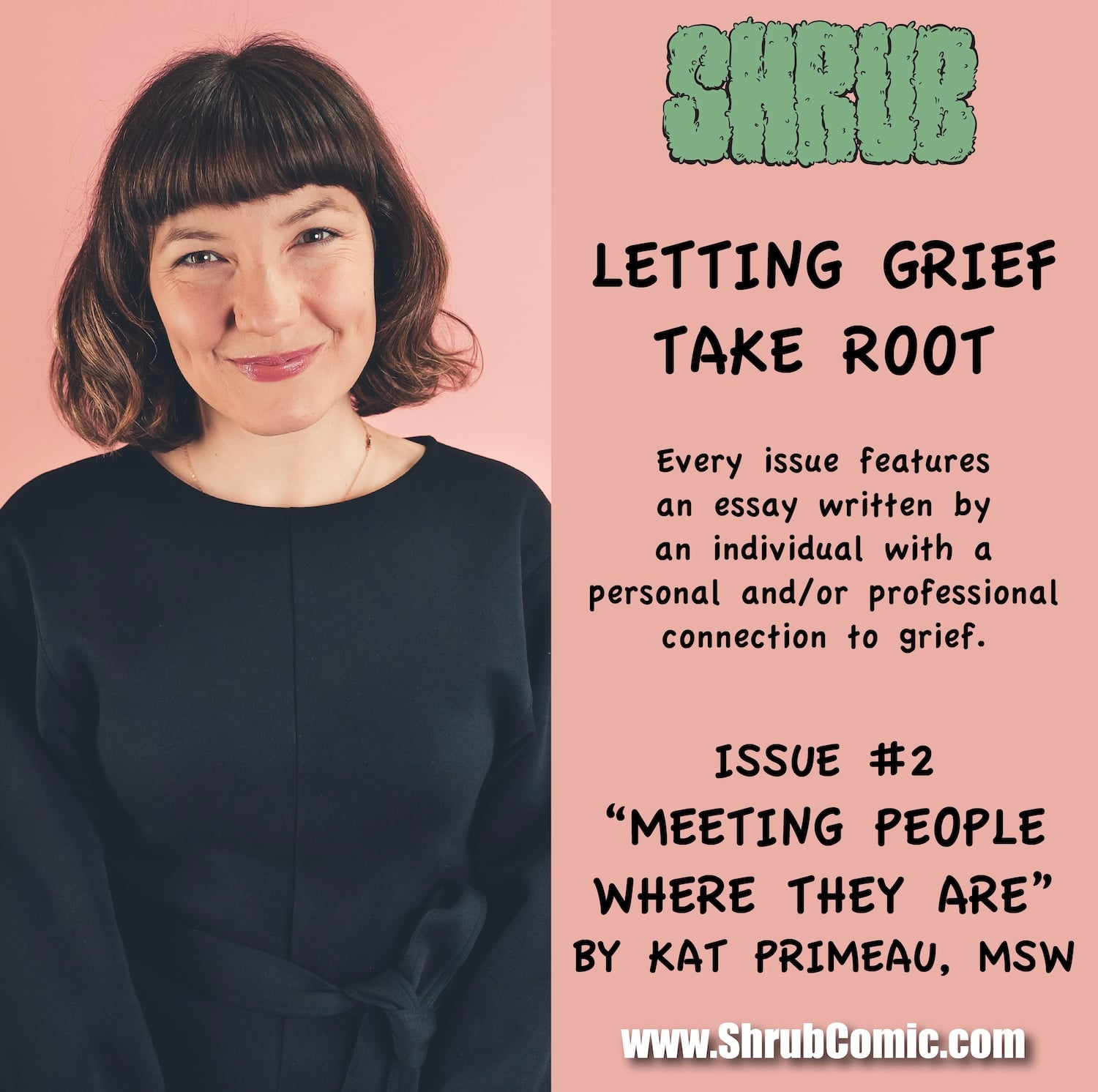
BARBARA: Oh, those are amazing questions. So one of the aspects, in addition to the story that we wanted to provide, is ancillary material. So bonus material that comes along with each issue, as well as upcoming for the Kickstarter campaign, the collected trade paperback. We wanted information that is based in real life experience as well as being educational in nature. So one of the things that we did with the whole series is that with each issue, there is a a writer, and it has been Shane. It has actually been various members of his family because they each have their own unique perspective with grief and the loss of their father or husband. And we also brought in mental health professionals and grief-related professionals.
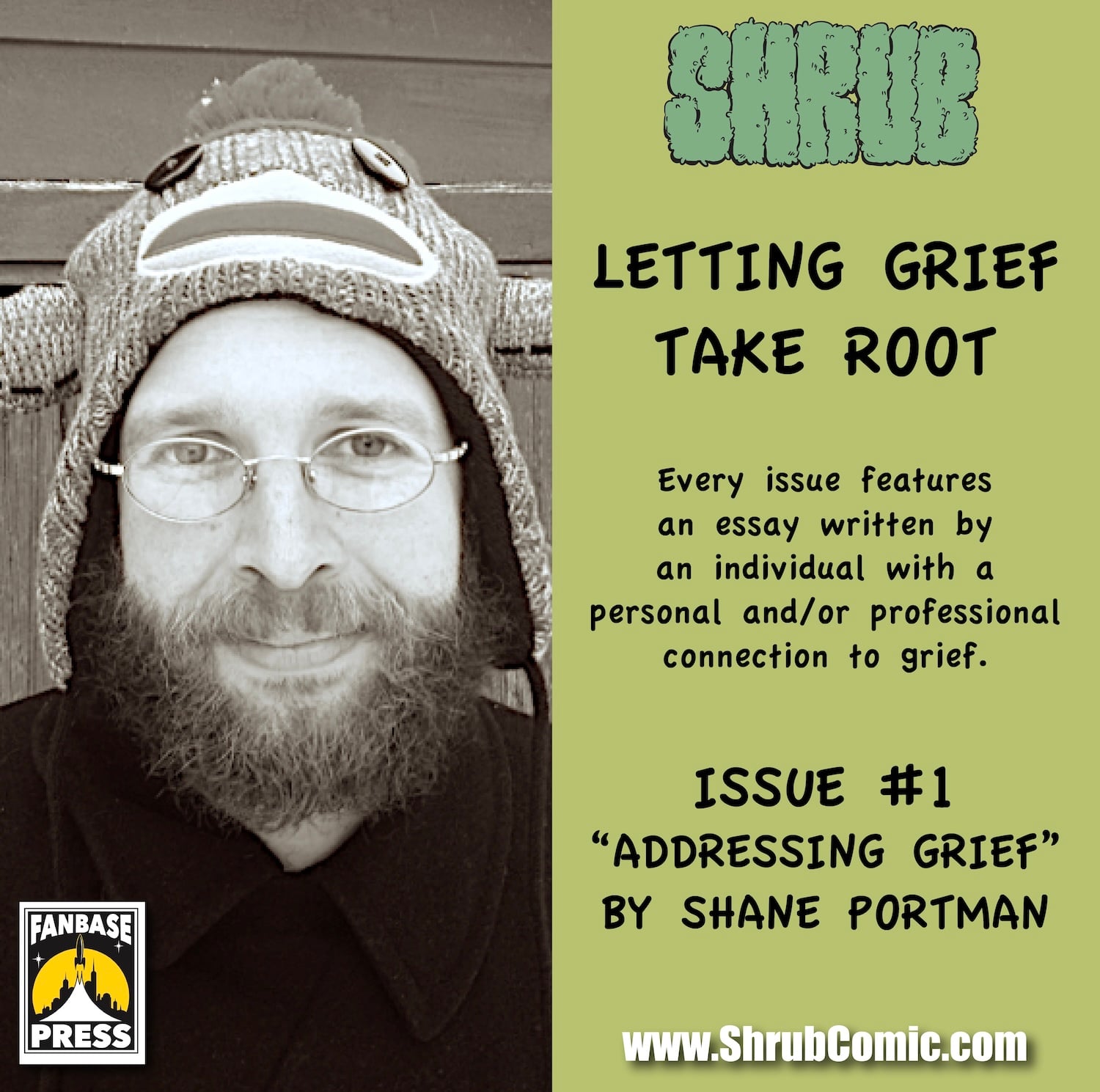
And with each essay after each issue, they write about their own personal and/or professional experience with grief, so we wanted to really connect the story to what grief might look like in real life, and also how we process those things. You know, we read the story, but then how does that apply to our own lives?
So that was one of the amazing things that we worked on in tandem with Shane to really garner the best people to write these essays and connect with the themes in each issue, but additionally, because we wanted to dive even deeper with the collected trade paperback, we’re going to have introductions and afterword and resource guides that further aid both middle grade aged readers as well as the adults in their life, to help them go through the the grief process.
COORDINATING THE TEAM FOR ‘SHRUB’
GVN: The series brings together an impressive lineup of entertainment and mental‑health contributors. What was it like coordinating such a multidisciplinary team, and how did each perspective strengthen the final work?
BARBARA: So, with each essayist, number one, and first and foremost, we wanted to be sure to touch on each of Shane’s family members because his real intention with this was to demonstrate that no one person’s experience with grief is similar, and that is even the case within a singular family. So by bringing in Shane’s family members, you got not only Shane’s experience with the loss of his father, but you got his older brother’s experience. You know what is grief in being the eldest child versus being the youngest child.
So we had a lot of different perspectives with that, and then I had reached out to a number of colleagues, having worked myself in the mental health field previously. We know a lot of folks like Dr. Dreya Lettamendi, who’s a clinical psychologist at UCLA. We went out to Ariel Lindell, who is also a mental health professional. We went to Kat Primo, who is a grief doula. So we wanted to touch on many different perspectives and lenses. To bring not only again the real life experience of family members who have dealt with grief, but also having the professional lens of their understanding of grief.
They (the professionals) also know how to help people and provide the resources and understanding of this might be how you’re feeling. What are healthy ways to deal with it versus what are maybe some not so healthy ways to deal with it? So we wanted to bring in as many disparate voices as possible again, not just for the lived experience, but the educational experience as well.
“TAKING ROOT”
GVN: The metaphor of grief “taking root” is central to Shrub. How did you and the creative team explore that idea visually and narratively in ways that feel both gentle and resonant for middle‑grade readers and perhaps adults?
BARBARA: Shane, actually, his experience comes from the field of animation. So when he came to us with the scripts, it was actually a much longer series because it was going to be episodes of an animated series. So, we worked in tandem to develop the series with him, and he worked very diligently in not only paring it down to eight issues, but also adapting it to the sequential art medium.
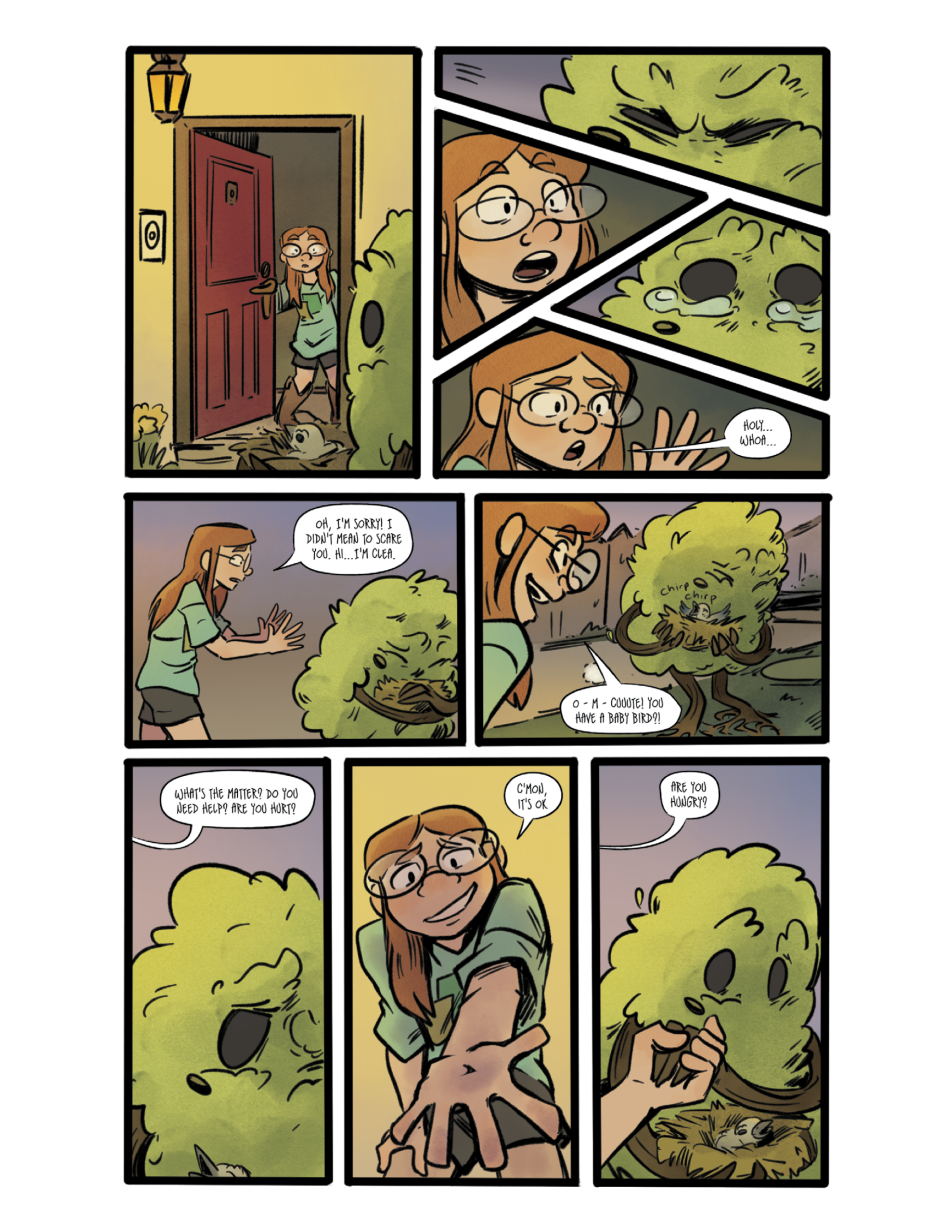
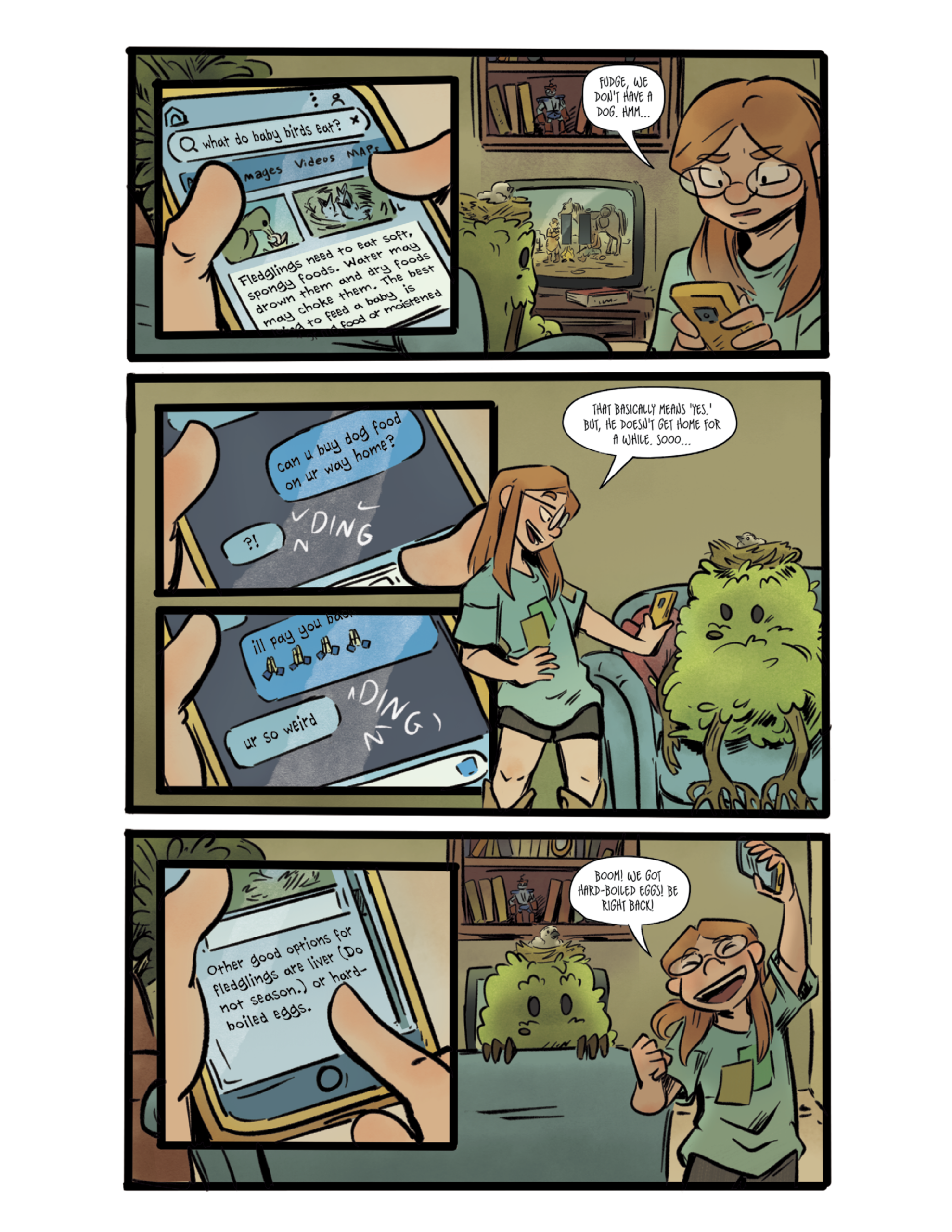
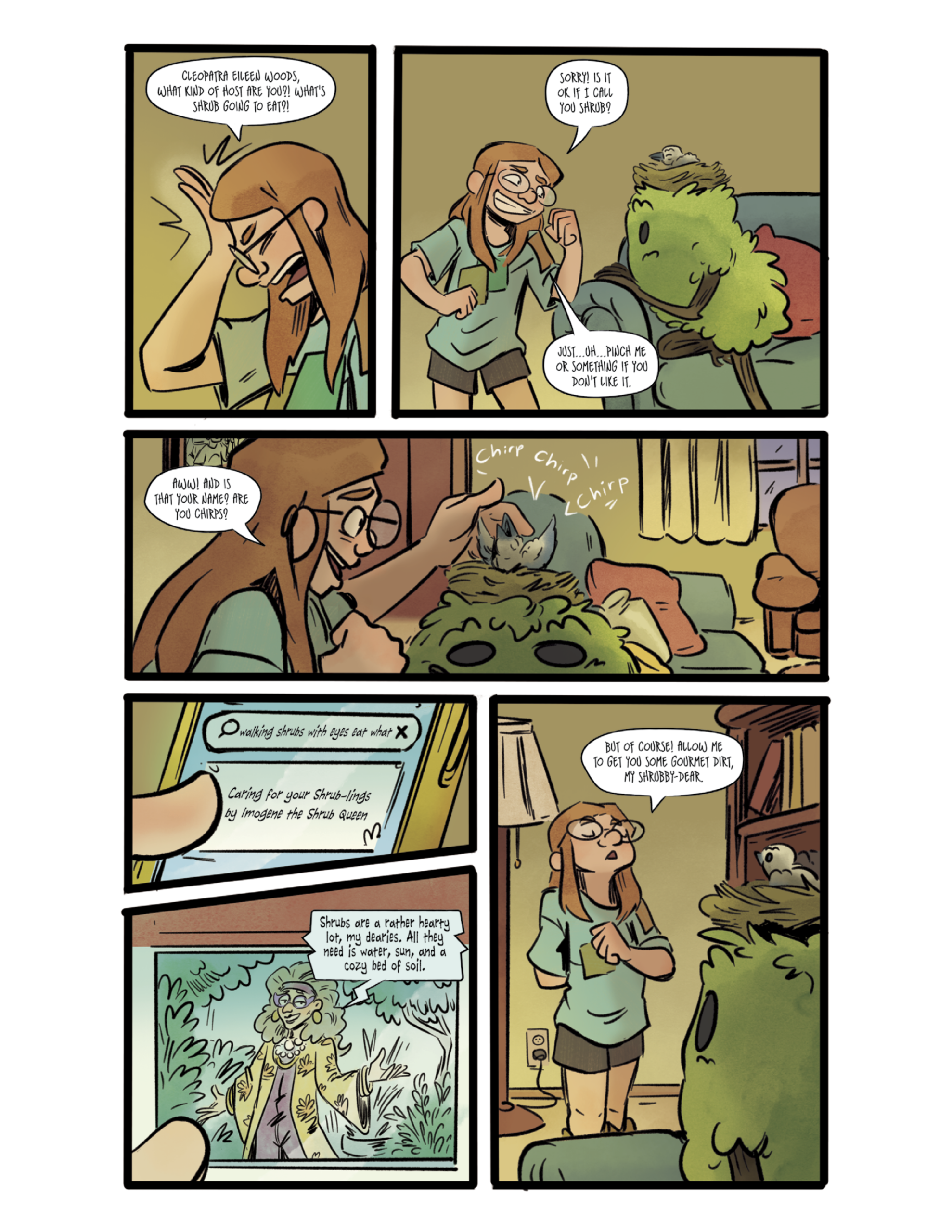
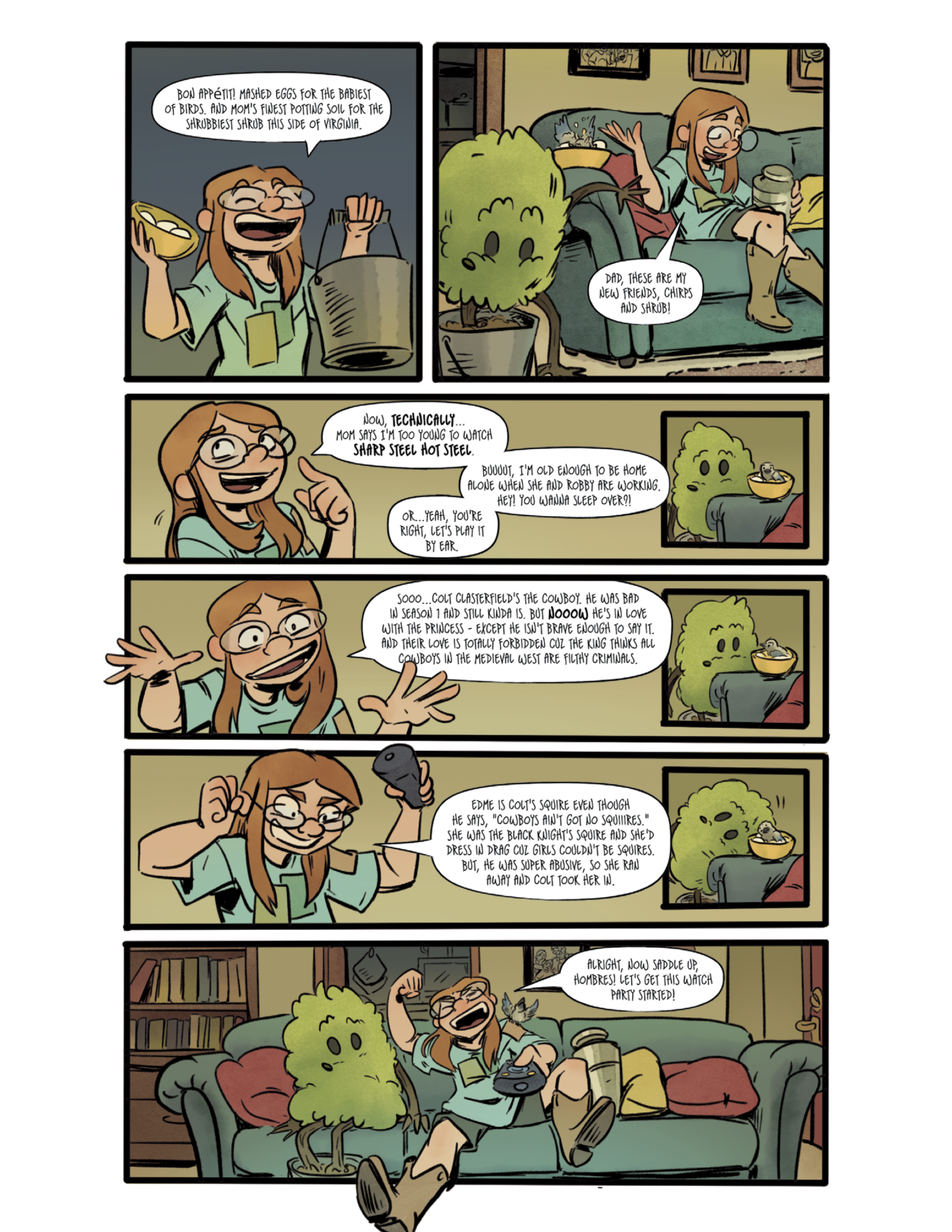
And then we worked with artist Andy Alves, and they have been simply phenomenal in being able to take what Shane envisioned and what we developed within the scripts, and and bring it to life on the page. Andy’s artwork is is simply tremendous because it really brings a sentient shrub to life on the page. And even though the shrub does not speak, they are so emotive with their eyes, with their facial expressions, and that’s something that not only middle grade readers but readers of all ages can engage with.
I myself am a mother to five year old twins, and they have read the first issue, or at least you know read through with us, and they still connect with the character of Shrub because they can get even from the emotive facial expressions, what might be happening in the story, and it allows us to talk through more challenging topics as well.
EDITORIAL DECISIONS
GVN: Editing a project that blends emotional vulnerability, mental‑health insight, and imaginative storytelling can be uniquely challenging. As you approached the project, what editorial decisions were most crucial in shaping the collected edition?
BARBARA: One of the earliest actions that we took was, in addition to being mindful of having a mental health professional review it for accuracy, we also reached out to a library professional, someone that has been working in the library space for decades. Because we wanted to also be mindful of the the content being delivered for a middle grade audience.
So we wanted to be mindful of: Is this appropriate for middle grade audiences? Are we keeping in mind what they might be learning in school at this at this age developmentally where are they? We wanted to be really mindful of every aspect of the story, not only for the the story itself, what the actions and you know conflict that might be happening. As well as the language that we’re utilizing, and simply as you noted, just these concepts of grief. You know, grief is is something that people of all ages deal with, but some concepts may be really challenging for younger readers. So we wanted to be really thoughtful and mindful of what is the best most most helpful and most importantly most healthy way to engage readers, especially within the middle grade group.
The Different Forms of Grief
GVN: I imagine that this is challenging because, just like adults, children are all different. Some children may internalize their feelings, while others may express them openly. It seems like a real juggling act to understand the wide range of reactions that can come not only from young people but also from adults.
BARBARA: Absolutely, I completely agree, and I think you know any time that a story of any medium tackles a topic, especially a challenging topic, I think it’s why it’s the absolute reason why we need so many stories like that. Because as you noted, one singular story is never going to be able to tell everyone’s experience. So we want to be with Shrub really specific about what various characters’ journeys with grief might look like, so that it’s authentic and so that it’s genuine and palpable as it comes across. And yet, of course, we can’t speak to everyone’s journey. So, with the addition of the the ancillary essays, which we call the letting grief take root essays after each issue, we hope that it provides that perspective of you know again what what might grief look like for an eldest child, what might it look like for a youngest child, and everything in between, as well as you know, more professional lenses as well. So we hope that with not only the story itself, but all of the added content around it, that we can allow young readers to engage with it in a thoughtful way, but also for the adults in their lives, whether it’s parents, guardians, educators, etc. that they are also able to be provided with the tools to to speak with young people in a thoughtful, healthy manner.
Kickstarter Campaign
GVN: As Shrub moves near its Kickstarter Campaign, what do you hope young readers—and the adults who may read alongside them—take away from Shrub in terms of understanding grief, healing, and emotional expression?
BARBARA: I hope that it provides comfort to those who may be experiencing grief. That number one, they’re not alone, and number two, that whatever they might be feeling is okay to feel. That there’s no right way to feel when you’re in your grief journey, and additionally that how you feel may change in every given day, any given moment, and that’s okay as well.
So I think that for me, I hope that for people experiencing grief, that allows them to feel okay to feel however they may be feeling, and then for those that have loved ones, friends, colleagues, etc. that might be experiencing grief, I hope that it helps them to engage their empathy and compassion. And you know, sometimes it’s really hard if people have lived experiences outside of our own that we are not familiar with, that we you know we can’t relate to necessarily. I think that’s the real power of storytelling that we can engage with a story that’s maybe a little bit removed from our own lived experience, but it can help us to at least walk in the shoes or better understand, engage that empathy with what might be happening.
But additionally, with the Kickstarter campaign, we’re going to be offering so many different things. One of the things we love to do is because we love and respect the work that librarians and educators are doing. We will have reward tiers where you can not only buy a copy of Shrub, but you can also donate a copy to a library or school of your toys. So we’re we’re super excited about that because at the end of the day, we just want as many readers as possible to be able to engage with this story.
FANBASE PRESS
GVN: Fanbase Press has a strong reputation for championing socially meaningful and creator‑driven work. How does Shrub embody that mission, and why was this story an essential one to launch under the Fanbase Press Banner?
BARBARA: I think that when the the moment that we read Shrub, we knew that it was a story for us. It was it was so heartwarming, but fun and relatable. But most importantly, it did exactly what you’re saying. It’s one of the things that we value with Fanbase Press is being able to release stories that not only engage empathy but allow you to ask questions. Because I feel like that is the thing we as a community at large need the most. We need to be able to engage one another in a thoughtful and considerate way and ask questions to learn about one another, to engage with one another. And to like we were talking about, learn about experiences outside of your own. Because when you do, I think it just opens you up to a world of possibilities, a world of connection.
I think at the end of the day, that’s what Shrub is all about. It’s not only about learning about grief and and experiencing our own journeys with that, but it’s about reconnection. It’s about how grief can be such a solitary process to go through, a journey to go through. And at the end of the day, we really want readers to make that reconnection. We want them to talk about their experiences because sometimes that comfort comes from talking with someone else who has also experienced their own grief journey. So I think that Shrub fits really well and complements our existing catalog by engaging that empathy, engaging people in conversation. In this one specifically, as it relates to grief and as it relates to middle grade readers in particular.
GVN: I want to thank you for visiting us today, Barbara. Before we wrap up, I’d like to allow you to share any upcoming projects you have with Fanbase Press. Additionally, could you let our followers know where they can find the Shrub campaign when it kicks off?
BARBARA: Absolutely. Well, first, thank you, Martin, for giving me time to chat about shrub. We’re super excited about it. I hope that folks will check out the Kickstarter campaign and all of the amazing rewards that we have available. Shrub is our sole focus right now, so we’re putting all of our time and attention to it, but for folks who would like to learn more about Fanbase Press, you can visit us online at fanbasepress.com. We’re on all of the social medias as well. We also have a weekly newsletter that you can subscribe to for really everyone in our community to provide the latest updates, reviews, interviews, podcasts, and other resources. To support everyone in the weeks and months ahead.
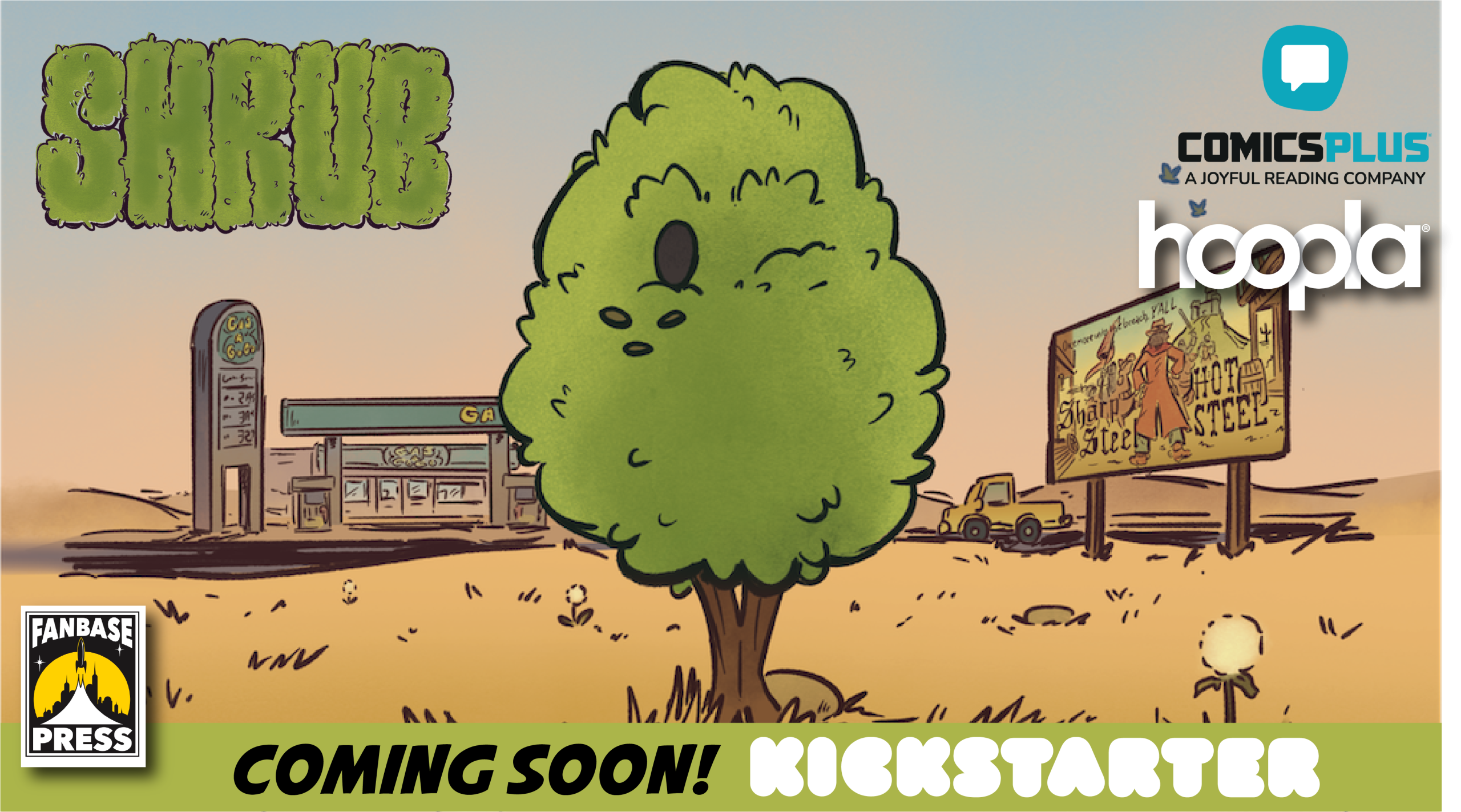
With Shrub, Fanbase Press delivers a Graphic Medicine story that speaks softly but stays with you. Barbara Dillon’s Editorial perspective reveals how every narrative choice, visual metaphor, and collaborative voice contributes to the book. Their goal: a story that helps grief “take root” in ways young readers can understand. We thank Barbara for providing insight into a project that will resonate long after the final page. You can check out the Kickstarter campaign.

Senior Writer at GeekVibesNation – I am a 60 something child of the 70’s who admits to being a Star Trek/Star Wars/Comic Book junkie who once dove headfirst over a cliff (Ok, it was a small hill) to try to rescue his Fantastic Four comic from a watery grave. I am married to a lovely woman who is as crazy as I am and the proud parent of a 21-year-old young man with autism. My wife and son are my real heroes.