When was the last time Japan produced a significant entry in the canon of jidaigeki–the period dramas Westerners erroneously refer to as “samurai films”? After accounting for jidaigeki films made so far in the 2020s, like Takeshi Kitano’s Kubi (yet to receive a U.S. theatrical run) and Jun’ichi Yasuda’s A Samurai in Time (which functions as homage to and a meta-commentary on jidaigeki as a narrative mode), we must go back to the early 2010s, when Takashi Miike released 13 Assassins and Hara-Kiri: Death of a Samurai in rapid succession; arguably the subgenre peaked this century when Yoji Yamada released The Twilight Samurai in 2002.
It’s not that jidaigeki has vanished from Japanese and world cinema culture as much as it has lost prominence in popular culture. Rachel Kondo and Justin Marks’ FX series Shōgun is the exception that proves the rule–a smash hit with seasons two and three in development, plus a handful of Primetime Emmy and Golden Globe awards on the shelf for posterity, capped off with a wildly positive reception from viewers in Japan. Broadly speaking, jidaigeki is passé for modern Japanese audiences, and thus also for Japanese studios; it isn’t “in” at the moment, and as such demands little time and fewer resources from production companies. Then again, maybe they just need to see Kazuya Shiraishi’s new film, Bushido.
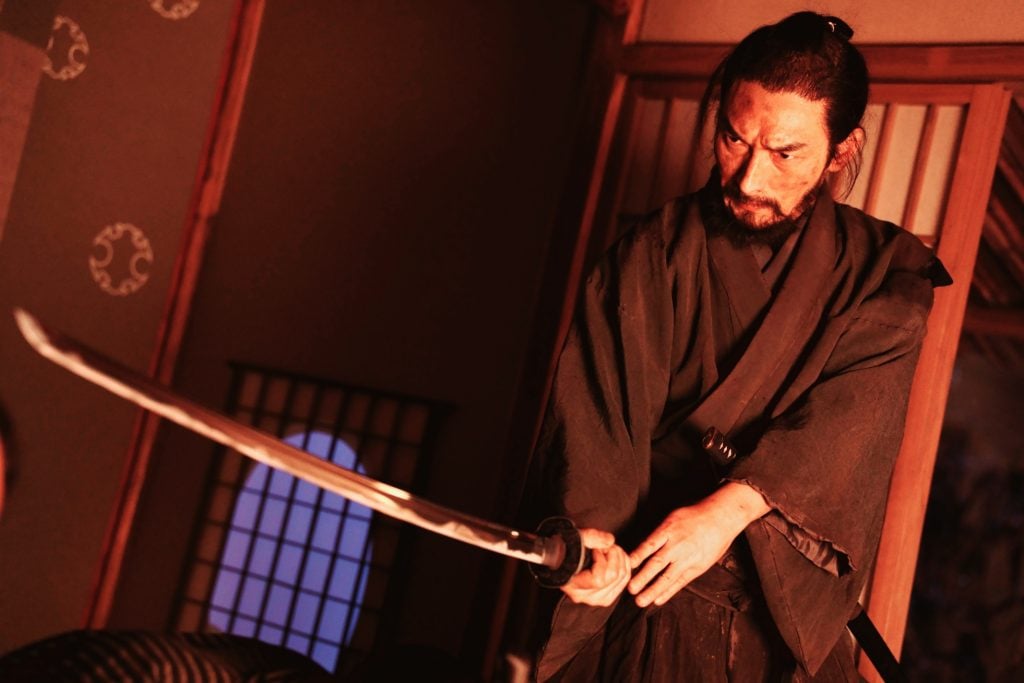
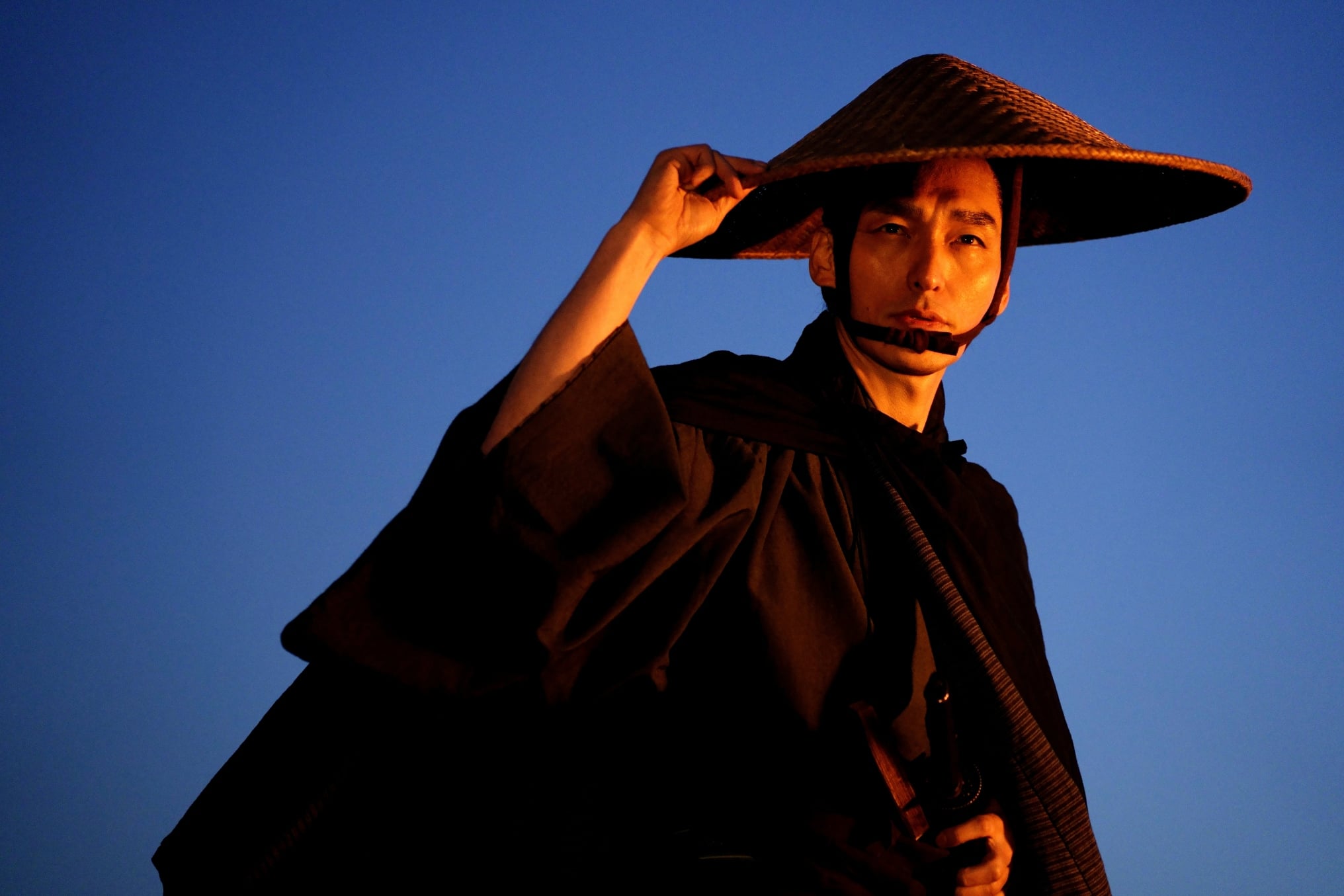
Set in Japan’s Edo era, defined by rigid social order, isolationist policies, and a national embrace of the arts, Bushido concerns itself with Kakunoshin Yanagida (Tsuyoshi Kusanagi), a ronin–a masterless samurai–living under the radar in a ramshackle home with his daughter, Okinu (Kaya Kiyohara). Years prior, Hyogo Shibata (Takumi Saitoh), Kakunoshin’s bitter rival, accused him of stealing a sacred text, forcing him into hiding to protect himself and Okinu; in the film’s present, Kakunoshin gets by as a seal maker and partakes in games of Go in his spare time. When a colleague from his old clan tracks Kakunoshin down and informs him he’s been found innocent of the theft, the news gives him no comfort. Instead, it sparks a drive for vengeance in him, and from there, the film follows his quest to reclaim his tarnished honor.
There’s much to like about Bushido, from its attention to detail in the set design and character conception to the choreography in its climactic duel, but more than anything else, the film succeeds as a revitalization of jidaigeki. Shiraishi’s work within this space is a necessary reminder that the jidaigeki’s period settings belie its efficacy as a social mirror: hold these films up in front of an audience, and what they’ll see, once they look beyond the concomitant details, is a reflection of the world as it is right now. I had the opportunity to talk with director Shiraishi about the potency that particular quality gives jidaigeki films in the 2020s.
Geek Vibes Nation: The detail that’s stuck with me since watching the movie is what happens when justice is unsatisfying; when Kakunoshin is cleared of suspicion for stealing the scroll, it doesn’t bring him relief. I’m wondering if you could talk about what inspired that storytelling choice? It feels appropriate for the genre, but timely for the moments we’re living in today.
Kazuya Shiraishi: It’s interesting, because I think in every single one of my films, I am trying to depict a sense of justice versus evil, but I think that in contemporary society, that’s not a dichotomy that exists anymore. It’s as if on the other side of justice is a different sense of justice, and that’s why maybe we can describe wars between nations in that sense, too. So that’s why even if one person prevails over the other, there isn’t a sense of relief. That’s definitely something, a complexity that I was trying to grapple with in this film.
GVN: It struck me as humorous, in a way, that while I watched this historical epic, set in a completely different time and country from my own, all I could think of were the murders of Alex Pretti and Renée Nicole Good in Minneapolis–how there’s video footage of [the shootings], but Americans can’t agree that something bad happened here. There were those of us who observed and said, “Clearly this is a miscarriage of justice.” Then there were those who said, “No, what happened was okay.” Even though there was a clear truth, people still obscured it.
The question I’m building to is: do you hope that people watch this, wherever they’re from, and take the story back to relevant, similar issues happening in their countries today? Because the film speaks to a broad international audience that’s observing these kinds of injustices.
Kazuya: I wasn’t really thinking about the potential impact that this film might have on people from other cultures, but I do think that a central theme of this film is systems that we live within, or systems that are established within our cultures, and how the moment that you establish a system, what ends up happening is the protection of that system, which inevitably leads to the dehumanization of people and overlooking of individual parts of those systems; and I think that that is a function that happens across all countries. I think that’s very clear. So I think that, in that sense, that is an accessible theme for anyone living anywhere. But to encounter someone like yourself, who speaks so passionately to how the themes of the film reflect things that are happening in your own society, is such an incredible feeling for me.
GVN: Bushido reminded me of a lot of great contemporary jidaigeki movies right off the bat (like 13 Assassins and Twilight Samurai). I think of that genre as a window into another time and place, Japan’s background, history and culture. I started thinking about how these movies don’t get made anymore. If I were to think of recent jidaigeki productions, it’d be Shōgun, the TV series that we had a couple of years back here in the U.S. Why, in your opinion, have filmmakers moved on from that style of cinema in Japan? Because to me, Bushido is a great example of how those films show us the past, but also give us the chance to reflect on our present.
Kazuya: I think, to put very simply, it’s just that younger audiences aren’t being drawn towards jidaigeki. They’re not showing up to the theaters, and they’re not watching the television dramas that are on TV. So I think that if we made an effort to try to appeal to younger audiences, we would be able to get them in those seats. But also trying to mold the jidaigeki towards a younger audience wouldn’t allow me to make the kinds of films that I want to make. So that’s a bit of a challenge. But as you mentioned, with something like the popularity of Shōgun, it shows us that there are international audiences that want to see more jidaigeki and are interested in that genre. I think if we, as an industry, stop focusing so much on this domestic aspect and really see that if we market towards an international audience, there’s still a desire for this genre of filmmaking, then maybe the trends will change. That’s something that I want to keep thinking about.
GVN: I’m curious what influences you specifically drew on for both picking an aesthetic and especially for your dramatic choices. Jidaigeki isn’t chanbara; [the genre] isn’t about sword fighting, but at the same time, having almost no sword fighting in the film until the final act is such a powerful choice.
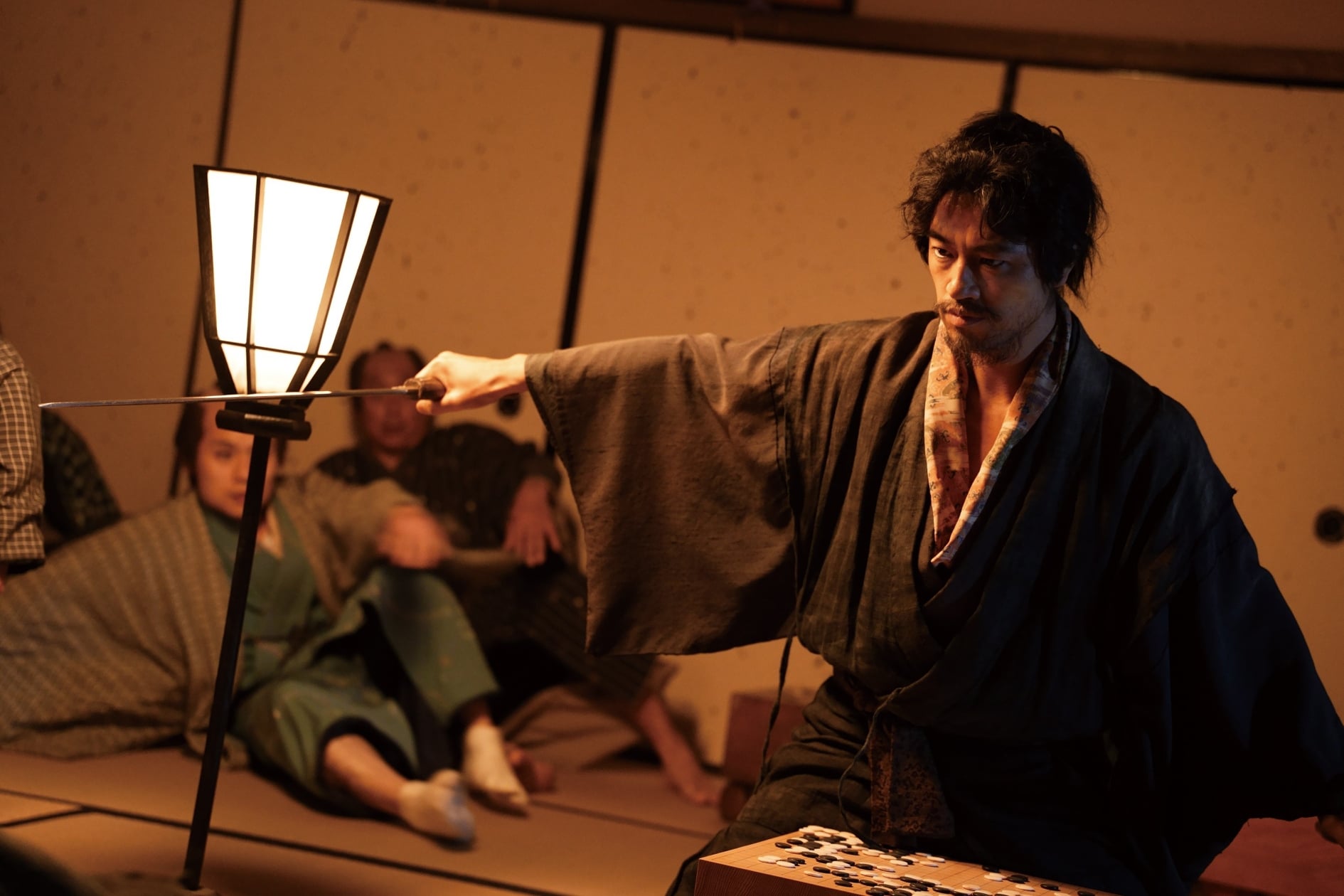
Kazuya: Cameras these days have become increasingly sensitive to light, so now we’re able to actually depict the world back then, where, in the evening time, people were basically playing Go games just by the light of a single candle. I think back to films like Barry Lyndon by Stanley Kubrick, which was famously shot in candlelight, which was very challenging at the time because it was shot on film; now, it’s become very easy to shoot under dark lighting conditions. Being able to depict that world, the darkness that they lived in, was very important to me, and also to depict the world in as beautiful a way as possible. Those are the things that were top of mind for me when establishing the visual style of the film.
The rakugo that this is based on doesn’t actually have any fighting within the story, so I also knew that the film had to be entertaining and satisfy the elements that people really want from a samurai film. Within the storyline, I tried to increase the revenge storyline, as well as a scene where Kakunoshin is about to commit harakiri. You may notice that the tone shifts. The first half is very much about human drama, and then the latter half becomes more of an action film. It was strategic in that sense, to try to make it as entertaining as possible for viewers.
GVN: At the same time, you continue that commitment to human drama. The action allows you to build characters and let them be who they are. The fact that [Hyogo] draws a sword during a Go game speaks volumes to the kind of person he is. So while there’s this thrilling confrontation between Kakunoshin and Hyogo, you successfully convey human drama because the characters still get to be who they are. It feels like it was important to you to commit to storytelling through action.
Kazuya: I appreciate you saying that, because certainly I don’t think that action should be divorced from the story or the characters’ arcs. It was an organic process of building out these action scenes in a way that would still be central to the story and the personalities of the characters. You can’t really make a good action scene without considering those elements.
GVN: What makes right now a good time for revisiting jidaigeki cinema? Considering what we’ve talked about in terms of justice, in terms of international audiences being able to reflect on issues within their own countries through this genre, why is 2026 a good time for jidaigeki to be explored anew? I think it’s a great idea and I’d love to see more of it.
Kazuya: I think the lives that [the characters] lived were much simpler than our day-to-day lives, in our contemporary times, and because of that simplicity, we’re able to depict the absurdity and irrationality of life in a much more clear-cut way. I think that allows us to convey messages around, for instance, justice in a straightforward way to audiences, and I think that’s what makes it a great genre for our contemporary times.
Bushido will debut in theaters on March 13, 2026, courtesy of Film Movement.