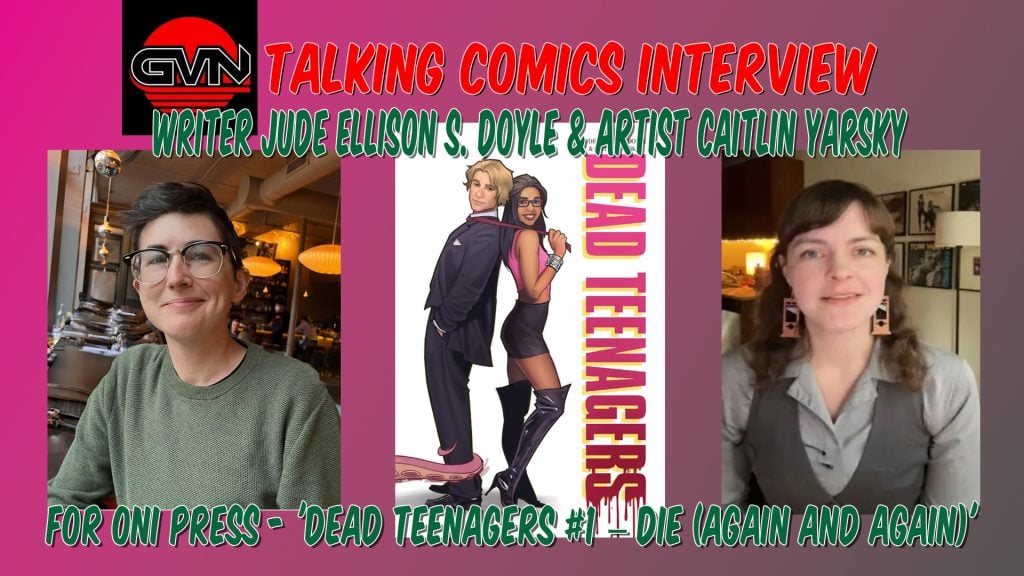
Some stories don’t stay dead—and some refuse to go quietly. DEAD TEENAGERS #1 – Die (Again and Again) is one of those stories: a razor‑sharp, unsettling, and strangely beautiful descent into the ghosts we create and the violence we pretend not to see. Today, we’re stepping straight into that haunted space with the two creators who built it from the ground up.
I’m thrilled to welcome Writer Jude Ellison S. Doyle and Artist Caitlin Yarsky. Together, they’ve crafted a series that’s as much about the horrors lurking in the supernatural as the ones embedded in everyday life.
We’ll be digging into the origins of DEAD TEENAGERS, the themes that compelled them, the creative alchemy between script and art, and what readers can expect as this story spirals deeper into its eerie, emotionally charged world. Jude, Caitlin—thank you for joining me. I’m excited to peel back the layers of this debut issue and explore the beating heart beneath its ghosts. Starting with Jude Ellison S. Doyle, the acclaimed writer known for their incisive cultural criticism and fearless storytelling. Thanks, Jude, for chatting with us.
Jude Ellison S. Doyle – “An Antidote to Previous Stories”
GVN: So, let’s jump right into the thick of things. Dead Teenagers blends horror, mystery, and social commentary. What was the spark that made you say, “This is the story we need to tell now”?
Jude: I’ve done a lot of horror comics that were intentionally bleak. Maw, my first series, was very dark and refused to let anyone grow or heal. Be Not Afraid, my most recent series, starts with “God has abandoned the world” and then gets darker from there.
Dead Teenagers sort of bubbled out of those stories, almost as an antidote. I was thinking about my own mortality and feeling very powerless in the face of the news cycle, and somehow, I started sympathizing with the teenagers in slashers, who are just created in order to get cut down. I wanted to spend time with them. Like: All right, the world is literally as dark as it can possibly get, and we’re all going to die, and I’m going to die one day, so what’s next? How can I have some fun?
One thing I love about horror is that it has room for a lot of tones – it can be silly and campy or deadly serious. It’s very up-front in talking about darkness and trauma, but it’s also got joy and laughter in it, the way life does. So Dead Teenagers was about finding light in the dark.
An Examination of “Girlhood”
GVN: You’ve written extensively about gender, violence, and cultural mythmaking. How did those interests shape the emotional core of Dead Teenagers?
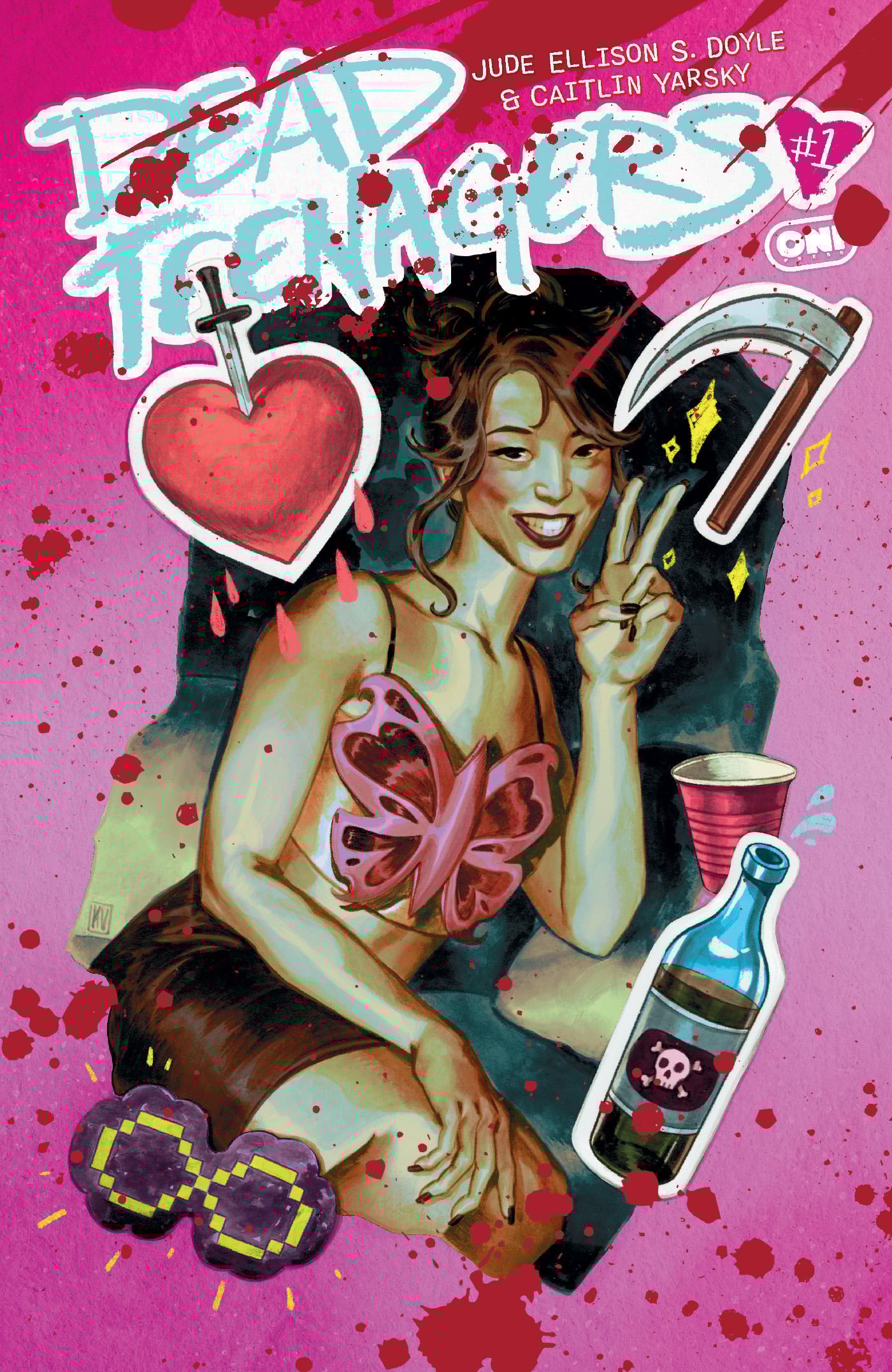
Jude: I don’t want to go too far into the series plot, but I think it’s safe to say that this winds up being very much a story about *girlhood* — there are a lot of different experiences collected under the label of “girl,” and all of them are hellish in their own ways. I wanted to show a whole range of them, and to ask how all these different people managed to survive the experience of being a girl (and not yet a woman, as Britney reminds us).
Groundhog Day for Teens
GVN: The story centers on a group of teens who return as ghosts to investigate their own murders. What drew you to that structure, and what does it let you explore that a traditional whodunit wouldn’t?
Jude: They actually aren’t ghosts! They’re caught in a time loop. So they’re stuck in a situation wherein the worst possible thing happens to them all, but it happens over and over, to the point that it’s almost stopped registering.
By the time we run into the characters, they’ve experienced over 11,000 prom nights, which translates to about thirty years of our time.
The time loop structure is fun because you can just throw things in – several times in the series, we just cut to a really ludicrous loop, and cut back out again; I think one of them is that the gym teacher has gone mad and is going to blow up the gym if the students ever stop square-dancing – but it’s also a really interesting way to explore consequences and agency. Which decisions make a difference to the outcome? Which don’t? If you know everything is going to end badly, no matter what you do, what do you choose to do with that time?
The Strength of Caitlin’s Art
GVN: As with many of my favorite stories, your prose often blends sharp social critique with dark humor. How did you calibrate tone in a story that deals with both tragedy and the supernatural?
Jude: It’s really hard to do that in a series like this – the silly parts have to be really silly, and the serious parts have to be really serious, and you have to do that without the two extremes canceling each other out or giving the reader whiplash. At best, it’s like a box of candy, where every taste is good in a different way, and at worst, everything kind of blends together and you get mud.
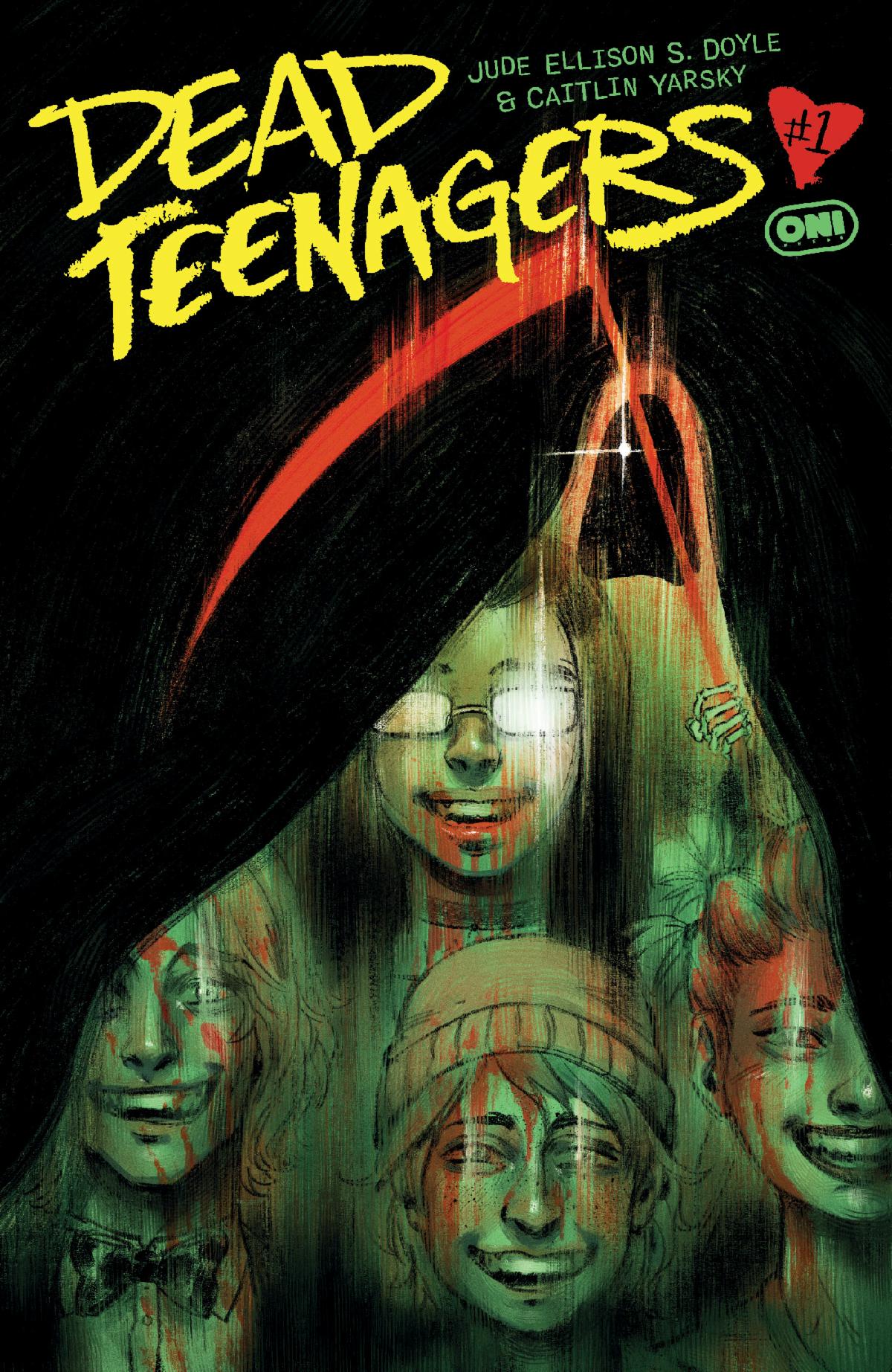
I absolutely think Caitlin’s art is why it works. I could provide her with any scenario I could dream up, and she’d find the right way to execute it – her character acting is great, her monsters are great, her comedy is great, her drama is great. The script could stretch any which way and she’d get right out ahead of it, which was wonderful to behold.
Resisting the Idea of “Disposable Teenagers”
GVN: Did any real-world cases, folklore, or media narratives influence the way you approached the “dead teenager” trope?
Jude: Again, without getting too far into it, the “dead teenager” trope of slashers relies on the idea that all these teenagers – usually teenage girls, let it be said – are interchangeable and disposable. You can just kill them off, and it won’t really matter, especially if they’re queer, or if they have sex, or if they do drugs, or if they’re not perfect in every way.
I think that the dominant culture tends to treat actual teenagers as disposable, too, in a lot of ways. We have ideas about who matters and who doesn’t, who deserves a future and who doesn’t. We demand that teenagers reflect all our adult fantasies about what teenagers are or should be like, or else we toss them in the garbage.
One of the points of the series is that all these young people are people, and they’re all still figuring out who they want to be, or how to be a person. They deserve grace. They deserve to write their own futures, rather than having them determined by outside forces. We start out taking some characters very un-seriously, but my hope is that we take them all seriously by the time the story ends.
“What is Worse than Death?”
GVN: What was the most challenging part of writing a story where the protagonists are already dead?
Jude: I mean, what’s worse than death? What is there left to be afraid of? For me, the answers are “change” and/or “having roommates,” but your mileage may vary.
“Growing Up is Scary…”
GVN: Thank you Jude for your time. Finally, from stories past, Horror often reflects cultural anxieties. What anxieties (if any) — personal or societal — were you tapping into with this series?
Jude: I think growing up is really scary – and you have to keep doing it, no matter how old you get. The characters in Dead Teenagers are all in a state of stasis, cycling through the same scenario over and over again. They never really die, but they never really live, either. Growing up means making choices that matter. It means living with the choices you’ve made and watching them play out over the years. It means that everything is real, and that when you die, you actually die. There’s no re-do. It’s a terrifying prospect, but is staying in your safe zone – whether that’s a TV show you’ve watched a hundred times or a dead-end relationship that never actually gives you what you want — actually any better?
Artist Caitlin Yarsky – Visualizing the Characters
Now let’s catch up with the talented Caitlin Yarsky, the celebrated artist whose lush, expressive visuals bring this book’s terror and tenderness into stark, unforgettable focus. Thanks for taking some time with us, Caitlin.
GVN: Your art has a cinematic, emotionally expressive quality. How did you approach visualizing characters who are both teenagers and ghosts?
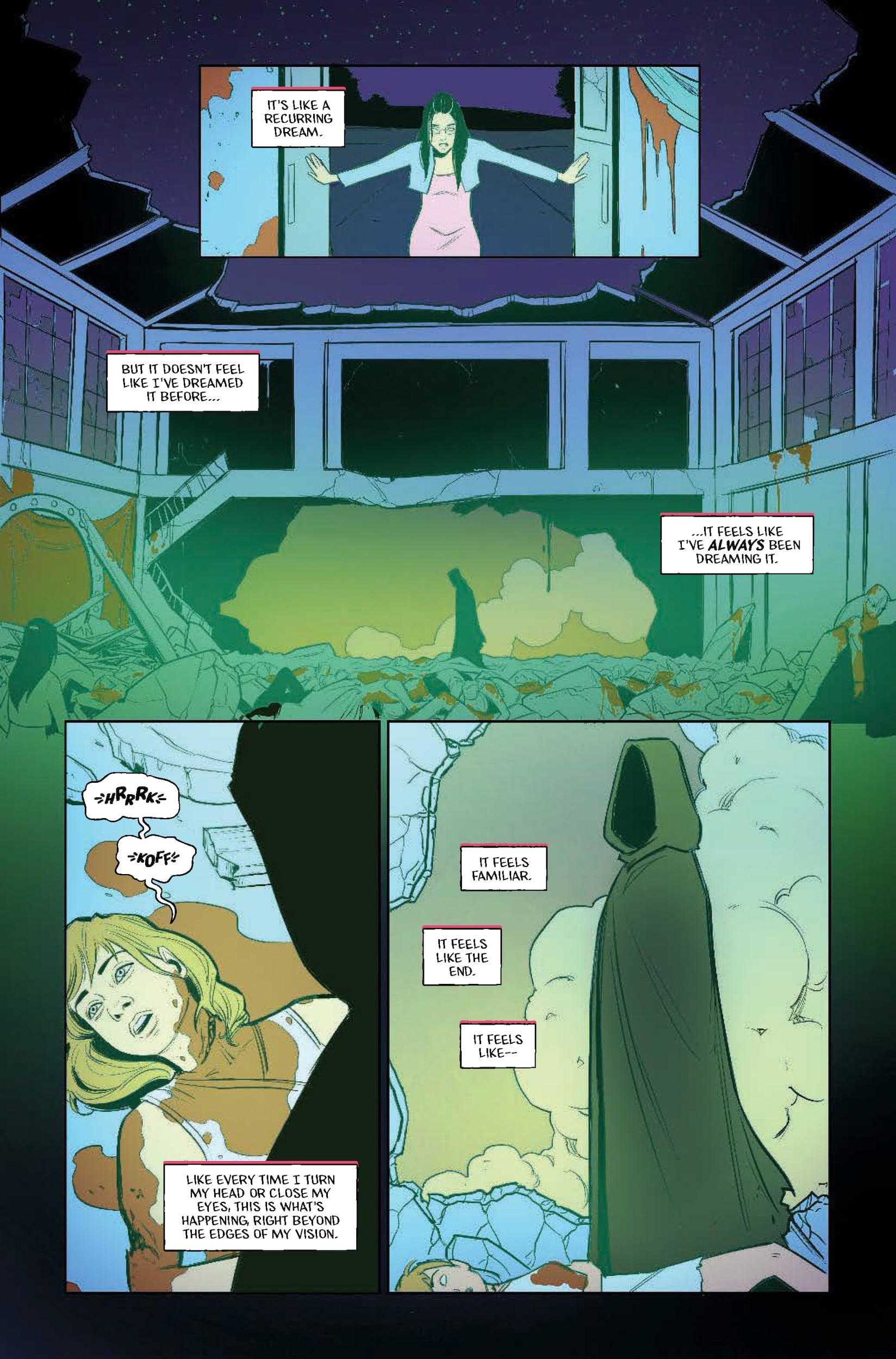
Caitlin: Character acting is my favorite part of drawing any comic- I think accurately portraying emotion through gesture and facial expressions really aid the writing. And watching shows like Buffy and Charmed as a kid really made it easy to work with characters that were teenagers who were also living strange and paranormal lives as a metaphor for growing up.
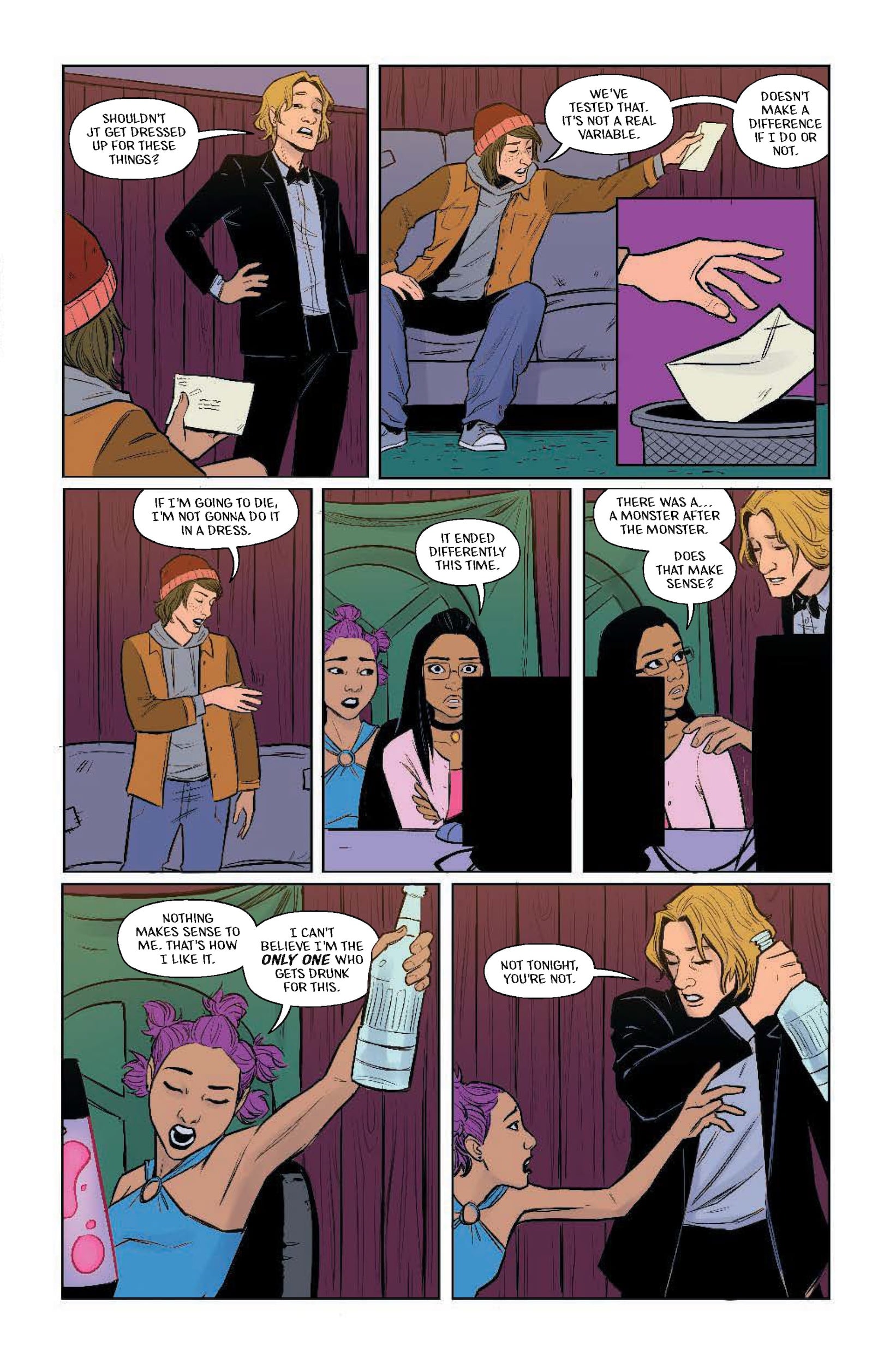
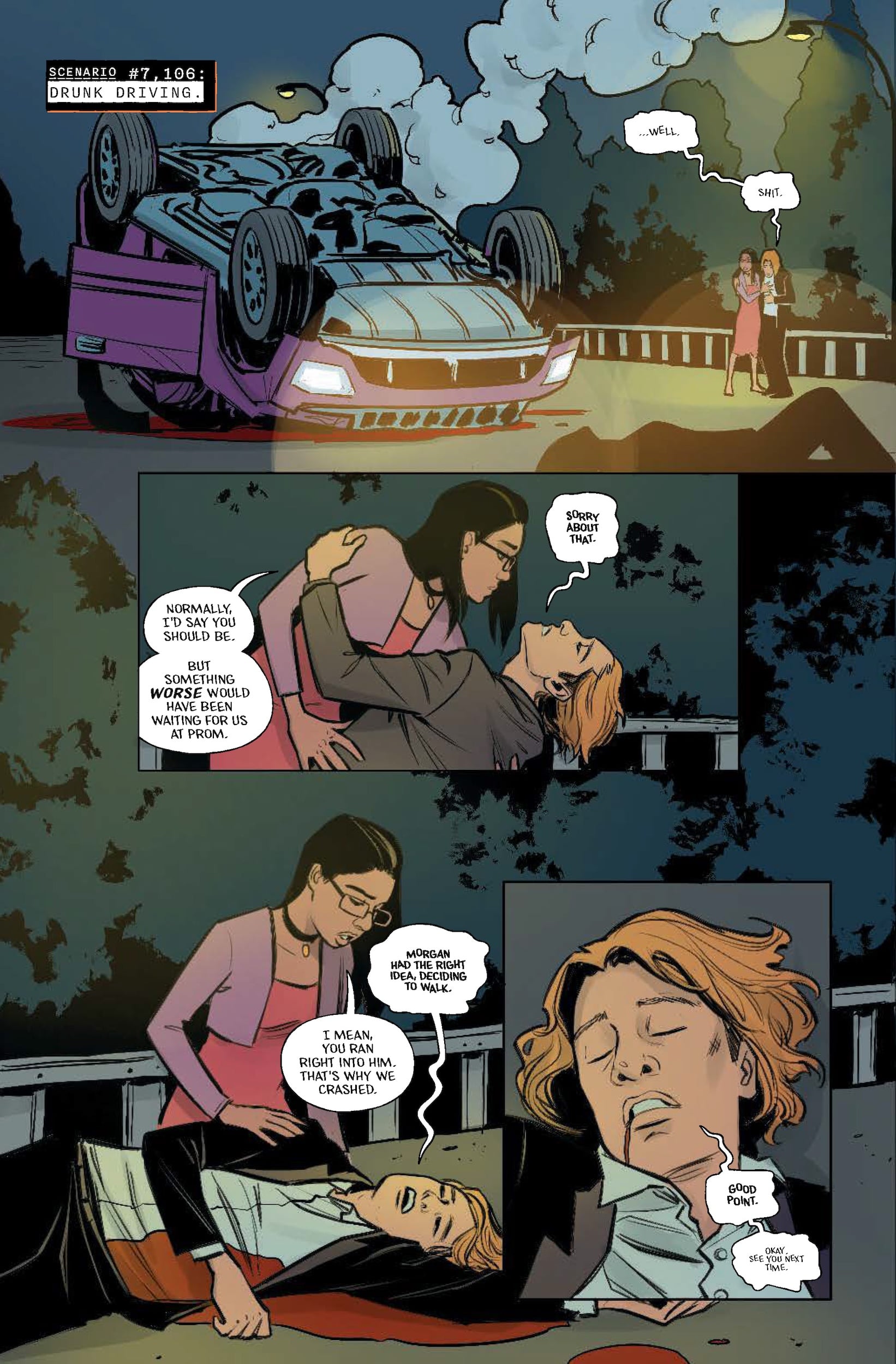
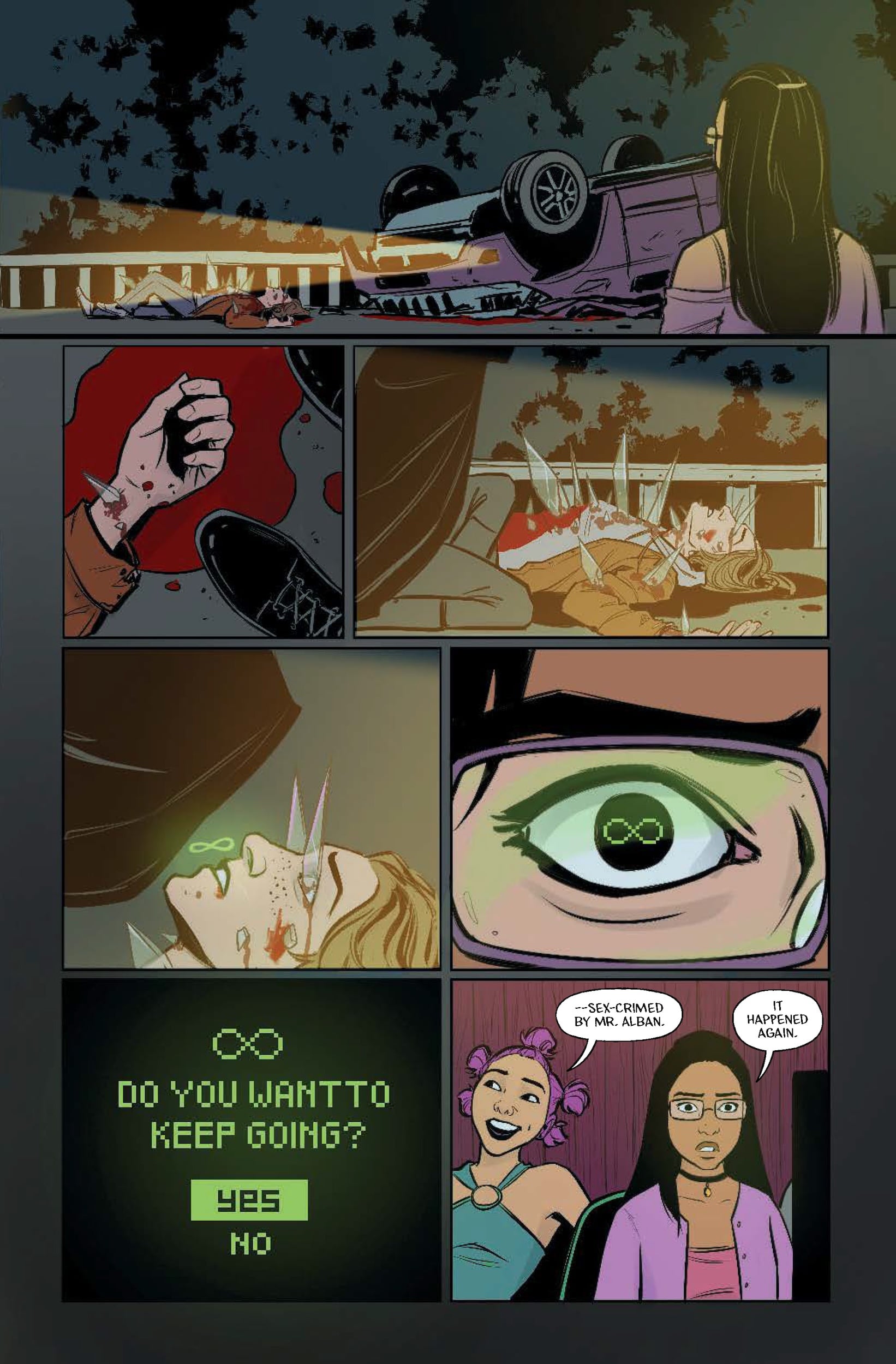
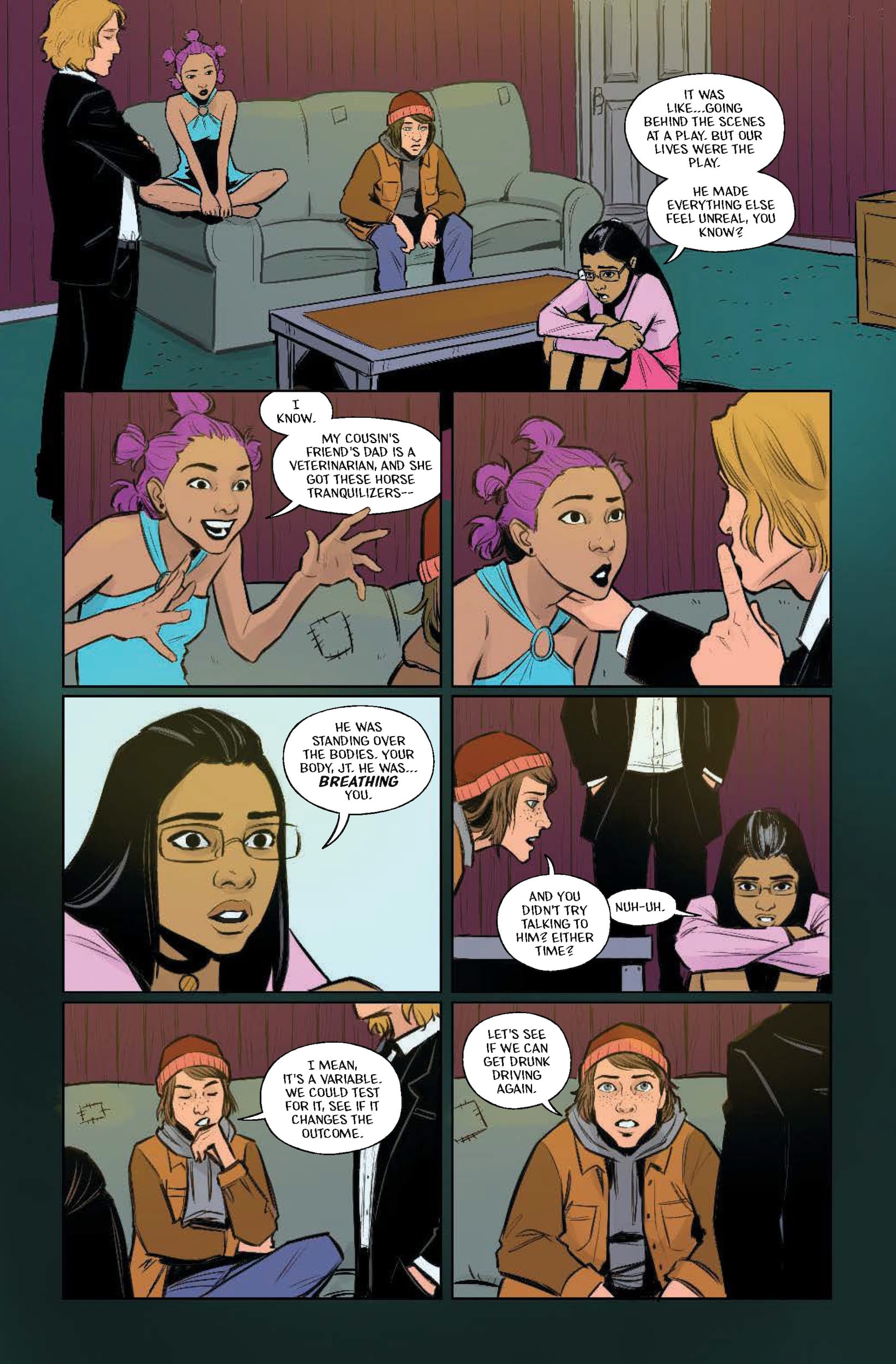
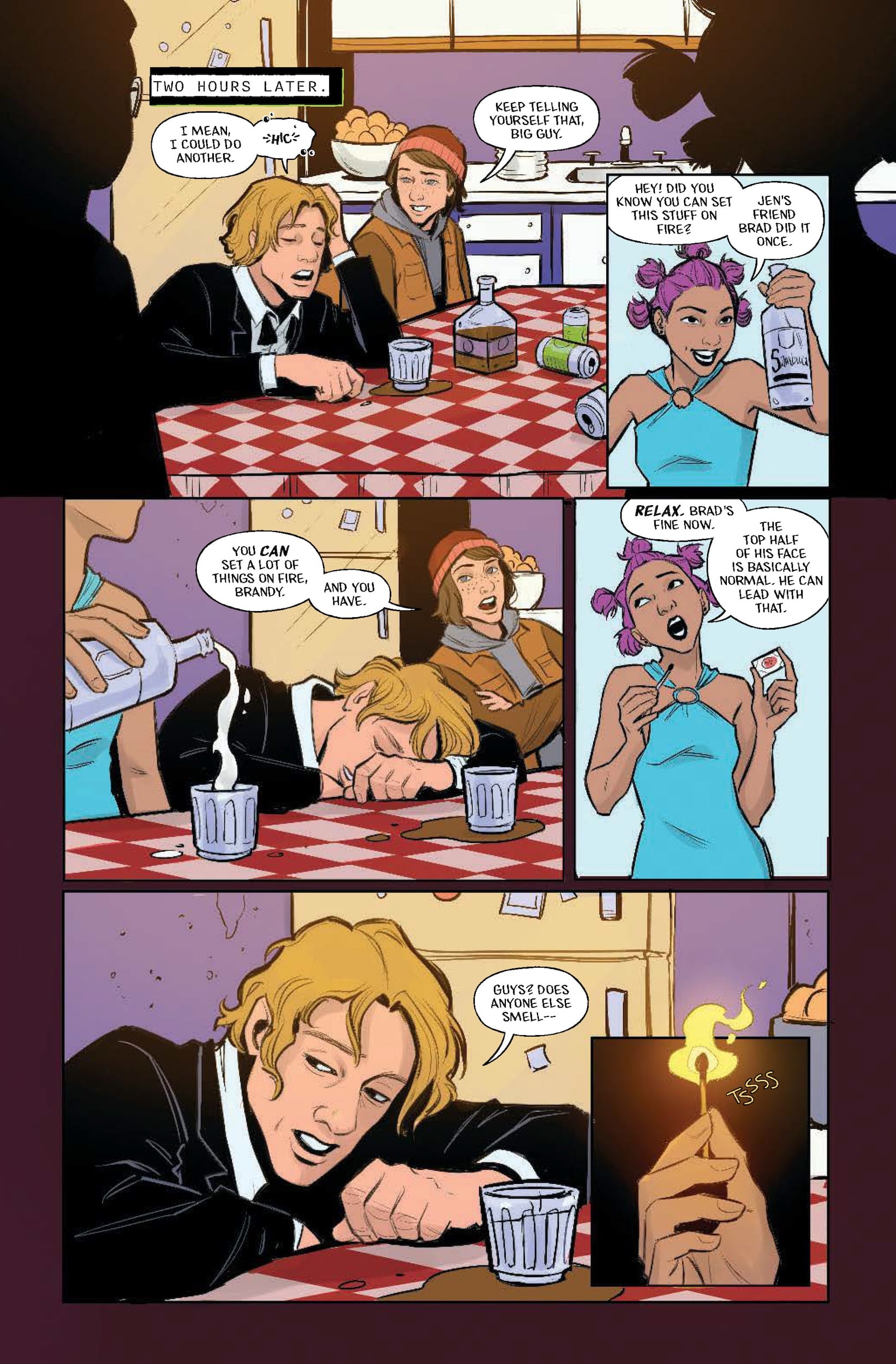
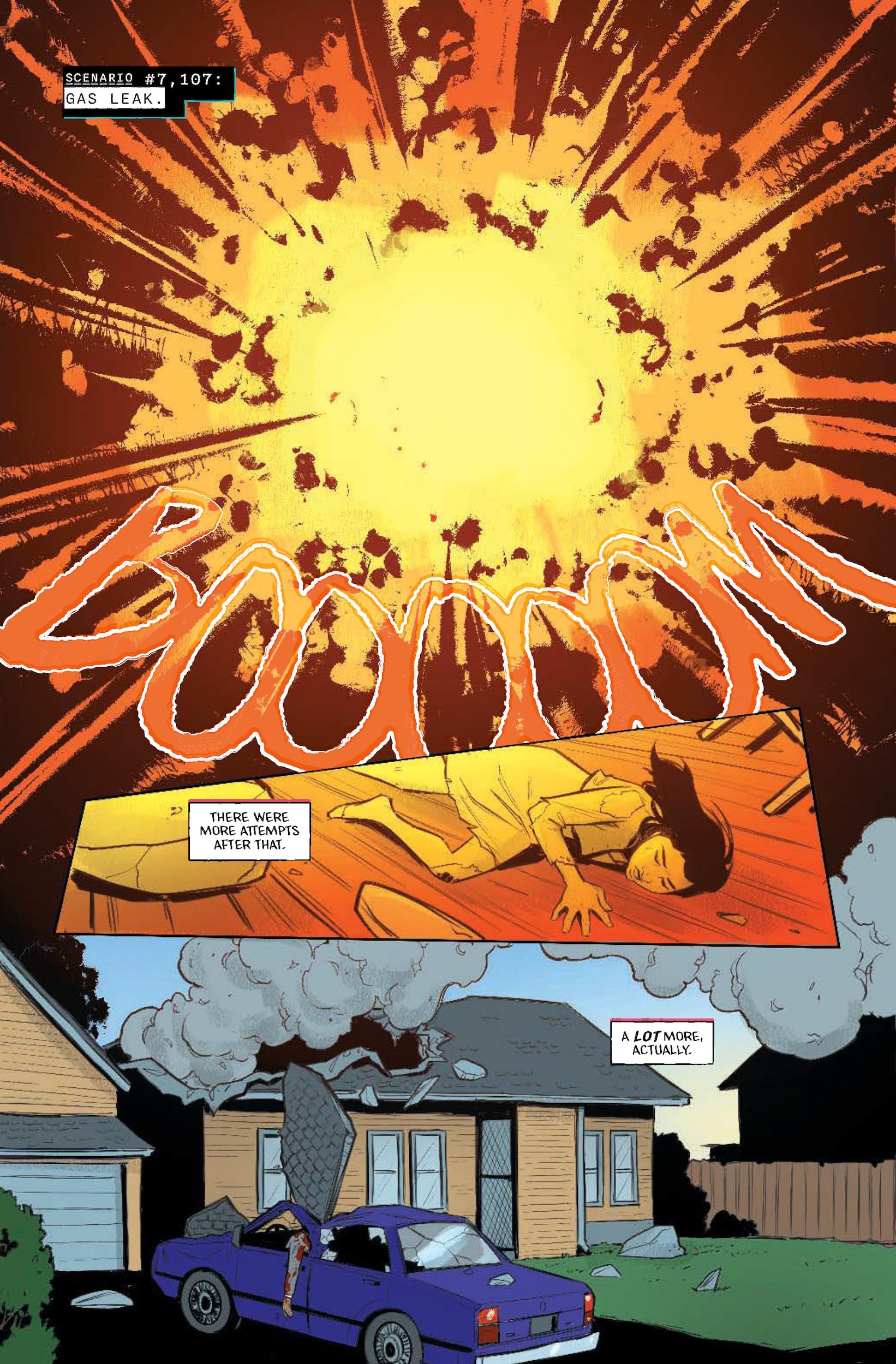
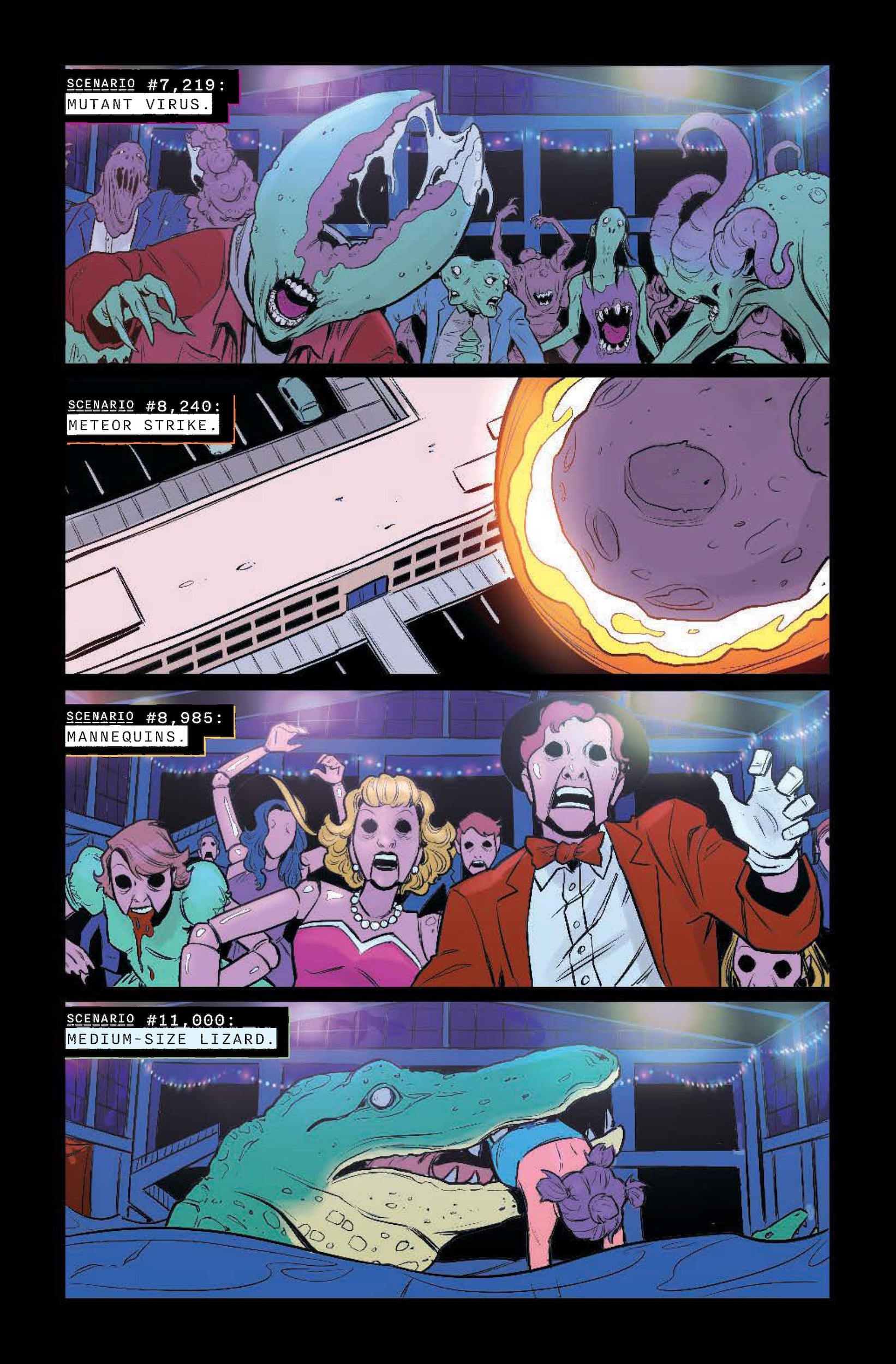
GVN: The book’s atmosphere is crucial—moody, eerie, but grounded. What visual decisions helped you strike that balance?
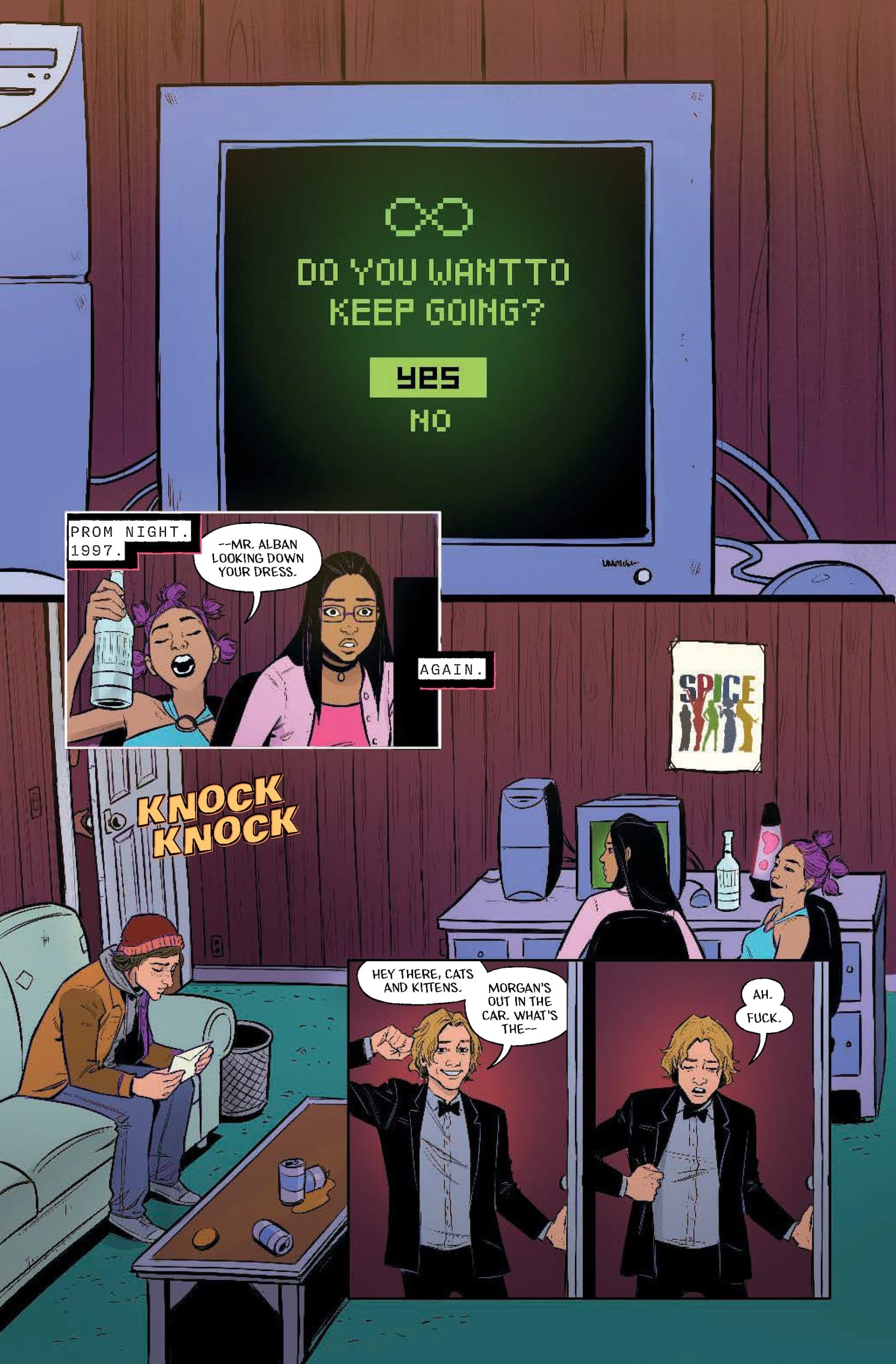
Caitlin: I tried to marry the fun, pop-y colors of the 90’s with more muted tones that hinted this was more than a campy thriller. That underneath it all were real human experiences and pain.
Life Experience Helps
GVN: How did you design the look and feel of the afterlife or supernatural elements without leaning on familiar horror clichés?
Caitlin: We definitely did veer toward some cliche colors, such as the glowing green of the growing menace throughout the story. But I tried to make it feel unique; I think living through that era helped me figure out how to give a nod to those times while giving the world its own unique flavor. We also consciously avoided some 90’s elements that would’ve been too silly/cheesy and would take you out of the story.
Challenging Scenes
GVN: Were there particular pages or sequences that pushed you creatively or technically?
Caitlin: Haha for sure- the prom scenes were all a big challenge. Creating scene after scene of crowds and new absurd, fantastical threats was a big hurdle.
Working with Jude
GVN: As you progressed on the book, how did you collaborate with Jude to ensure the emotional beats landed visually?
Caitlin: We shared a ton of process work with each other. He sent me lots of great visual reference/inspiration for the character designs and look of the world. I shared layouts and character designs and we made sure we were on the same page the whole way through.
Possible Conversations that “Dead Teenagers” Might Invoke
GVN: Thanks for spending some time with us, Caitlin. In closing, what conversations do you hope this series will spark, either within comics or in the broader culture? Or was your main focus simply to entertain?
Caitlin: I’ve always been drawn to stories like Dead Teenagers; books that tell a really deep story, cloaked in fun sci-fi or fantasy elements and tropes. I’m interested in working on comics that may help increase the reader’s empathy or even challenge their world view a little bit. I often think about shows like Ted Lasso, which came around at a time when people really needed stories about compassion and kindness. Stories that help bridge gaps or start conversations (while being fun/entertaining) are important to me.
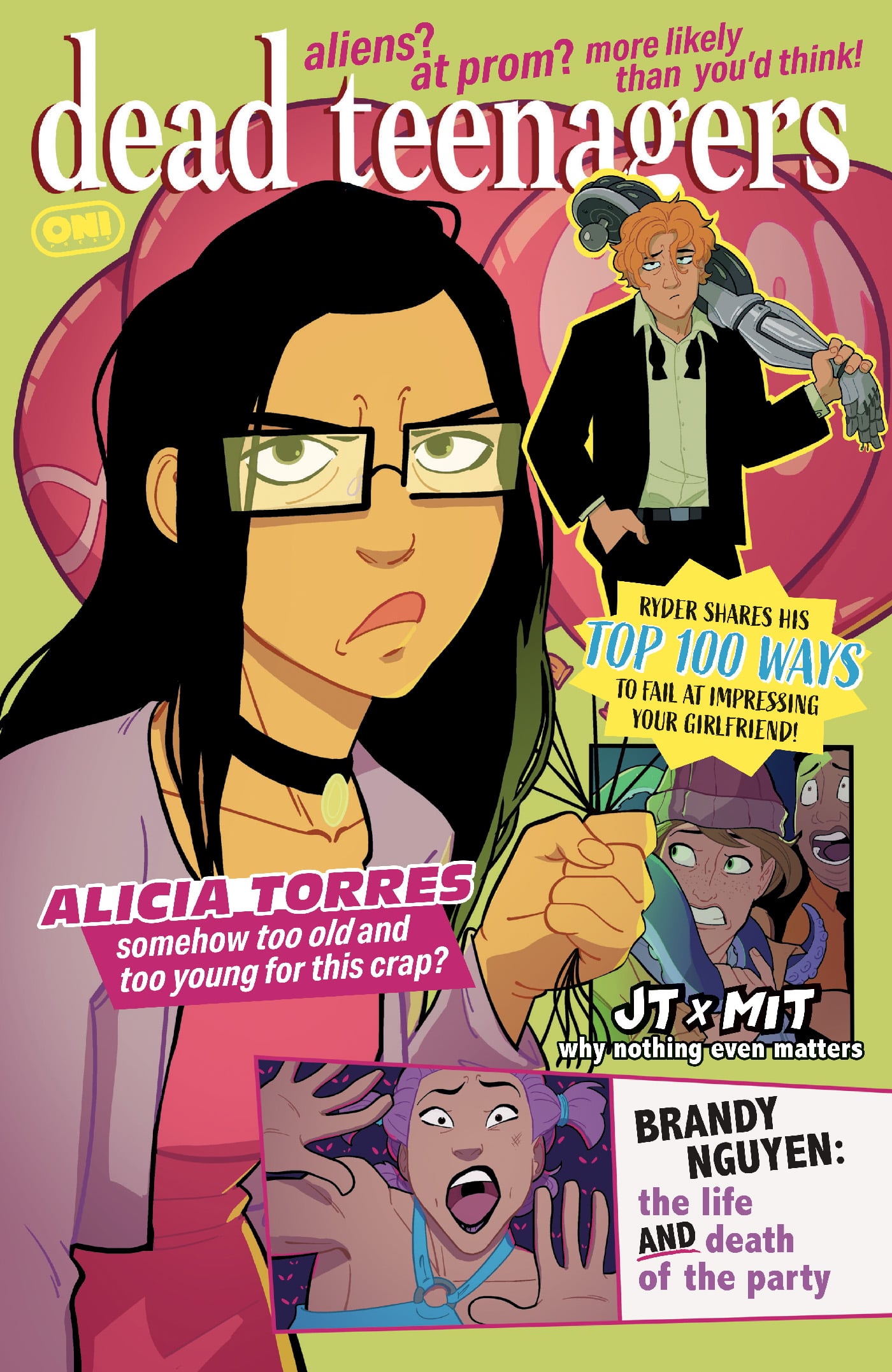
Oni Press “Dead Teenagers #1 by Jude Ellison S. Doyle and Artist Caitlin Yarsky
In the opening chapter of Dead Teenagers, the creative team of Doyle and Yarsky designed this series not only to scare and entertain the reader but also to encourage a deeper examination. They have crafted a story that lingers long after the page turns, a story that refuses to stay quiet or stay dead (so to speak), and one that feels at times whimsical, and at the same time, uncomfortably—and powerfully—alive.
For readers, Oni Press DEAD TEENAGERS #1 – Die (Again and Again) is only the beginning. If today’s conversation is any indication, the path ahead is going to be unsettling, incisive, and impossible to look away from. Check it out when it hits stores on the 18th.

Senior Writer at GeekVibesNation – I am a 60 something child of the 70’s who admits to being a Star Trek/Star Wars/Comic Book junkie who once dove headfirst over a cliff (Ok, it was a small hill) to try to rescue his Fantastic Four comic from a watery grave. I am married to a lovely woman who is as crazy as I am and the proud parent of a 21-year-old young man with autism. My wife and son are my real heroes.