

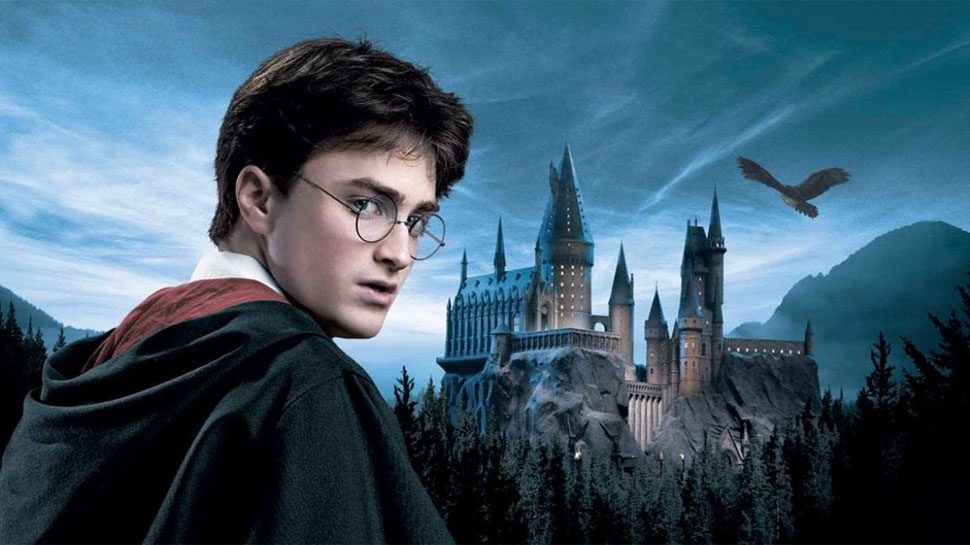
The Harry Potter films gave us a magnificent Hogwarts, unforgettable characters and enough magical creatures to fill a small zoo. But they also left us with a wizarding world that was considerably smaller than the one in the books.
November 2026 marks 25 years since Harry Potter and the Philosopher’s Stone first arrived in cinemas. And with HBO’s new Harry Potter series premiering on December 25, there’s an opportunity to revisit everything the original films couldn’t squeeze into eight movies.
Harry, Hermione and Ron are so recognisable that their faces appear everywhere from posters to Harry Potter figures. But beyond those familiar faces, the books contain an entire society with its own celebrities, political scandals, prejudices and wonderfully eccentric personalities. Much of that never properly reached the screen.
The question isn’t simply which missing characters HBO should bring back. It’s whether the new series can restore the parts of the wizarding world that made the books feel so alive.
Quidditch Was Supposed to Be Much Bigger Than Hogwarts
Imagine watching a film about a football-loving teenager that takes you to the World Cup, builds up the excitement and then skips the actual match.
That’s more or less what happened in Harry Potter and the Goblet of Fire.
The Quidditch World Cup is one of the book’s most entertaining sequences. Thousands of witches and wizards gather from around the world, rival fans celebrate, magical mascots perform and Ireland eventually defeats Bulgaria despite Viktor Krum catching the Golden Snitch.
The film skips the match entirely.
It’s an understandable decision when you’re trying to fit an enormous novel into a couple of hours, but something important disappears with it. Quidditch isn’t just a Hogwarts extracurricular activity. It’s an international sport with celebrities, devoted supporters, commercial interests and questionable officials.
And nobody represents that last category better than Ludo Bagman.
A former Quidditch star turned Head of the Department of Magical Games and Sports, Bagman is charming, irresponsible and spectacularly bad at managing his gambling debts.
His dealings with Fred and George Weasley are particularly entertaining. After losing a bet to the twins, he attempts to pay them with Leprechaun gold, which conveniently disappears.
Bagman also plays a significant role in the Triwizard Tournament, where his eagerness to help Harry makes him seem suspicious for reasons that have more to do with money than dark magic.
Removing him didn’t just cost the fourth film a funny character. It removed a glimpse of an entire sporting establishment, complete with corruption, celebrity culture and incompetent management.
Who wouldn’t want to see more of that?
The Ministry of Magic Had Problems Long Before Voldemort Returned
The films make one thing abundantly clear: the Ministry of Magic isn’t particularly good at its job.
Between Cornelius Fudge’s spectacular denial about Voldemort’s return and Dolores Umbridge’s enthusiasm for authoritarian school management, it’s hardly an institution that inspires confidence.
But the books reveal something more interesting. The Ministry’s problems didn’t begin when Voldemort returned. They were already deeply embedded in its political culture.
Barty Crouch Sr. is probably the best example.
In Goblet of Fire, Crouch is introduced as a stern Ministry official who helps oversee the Triwizard Tournament. He looks permanently annoyed, behaves mysteriously and eventually meets an unpleasant end.
His backstory in the book is considerably darker.
Crouch was once a powerful figure in the Ministry, known for his ruthless campaign against Voldemort’s followers. His willingness to authorise extreme measures helped establish his reputation, but his career collapsed when his own son was convicted of involvement with the Death Eaters.
Then things became even more complicated.
Crouch secretly arranged for his dying wife to take their son’s place in Azkaban using Polyjuice Potion, allowing Barty Crouch Jr. to escape. He subsequently kept his son hidden and controlled under the Imperius Curse.
It’s a remarkable story of political ambition, family tragedy and terrible judgement.
More importantly, it reveals a Ministry where the people supposedly defending wizarding society are capable of some horrifying decisions themselves.
The films give us corrupt officials and bureaucratic incompetence. The books show how the institution became vulnerable in the first place.
That’s a far more interesting story than simply watching another politician refuse to believe Harry Potter.
Being Different Had Real Consequences in the Wizarding World
One of the more fascinating aspects of the Harry Potter books is that magic doesn’t make society particularly accepting.
Take Remus Lupin.
David Thewlis was excellent in Prisoner of Azkaban, but the films only briefly explore how being a werewolf has shaped Lupin’s life.
In the books, his condition makes it difficult to find employment, maintain relationships or imagine a normal future. Even when people recognise his intelligence and kindness, the prejudice surrounding werewolves remains.
His relationship with Nymphadora Tonks brings those fears into sharper focus.
Tonks is almost Lupin’s opposite. She’s energetic, gloriously clumsy and blessed with one of the coolest magical abilities in the entire series.
As a Metamorphmagus, she can change her appearance at will. Different hair colour? Easy. A completely different nose? No problem.
The films barely scratch the surface of what makes her entertaining.
But Tonks is much more than comic relief. Her relationship with Lupin challenges his belief that his condition makes him unworthy of love, particularly when he fears passing it on to their child.
Their story gives us something the films rarely have time to explore: what the war against Voldemort means for adults trying to build ordinary lives.
The same wider issue appears throughout the books, from the treatment of house-elves to attitudes towards giants and other magical beings.
These aren’t just background details. They establish that the wizarding world’s social problems run much deeper than the conflict between Harry and Voldemort.
A longer adaptation has the chance to make those tensions part of everyday life rather than occasionally mentioning them between battles.
Hogwarts Was Full of Outsiders Who Didn’t Need Saving
Luna Lovegood might be the perfect example of a character whose personality survived the adaptation even when much of her story didn’t.
Evanna Lynch captured Luna beautifully. Her unusual observations, calm delivery and apparent indifference to what everybody thinks of her made her instantly memorable.
But the books give Luna considerably more room to demonstrate why she’s such a wonderful character.
Take her Quidditch commentary in Half-Blood Prince. Rather than focusing on the match, Luna wanders into observations about the players, the weather and whatever else happens to interest her.
It’s wonderfully ridiculous, and Professor McGonagall probably regrets every second of it.
Yet Luna’s eccentricity hides something more meaningful.
When Harry struggles with grief, she understands him in ways that many of his closest friends can’t. She’s also perfectly capable of recognising cruelty, even if she doesn’t respond to it the way others expect.
Unlike some of the more conventional Hogwarts characters, Luna doesn’t need to become popular, fashionable or socially acceptable to earn her place in the story.
She finds friendship without abandoning what makes her different.
That’s particularly important in a school where students are constantly judged by their houses, family backgrounds, abilities and reputations.
Hogwarts is supposed to be a place where extraordinary people belong, but the books repeatedly show how difficult belonging can be.
Luna’s story makes that contradiction impossible to ignore.
The Real Challenge for HBO Is Making the Small Stories Matter
Of course, having more episodes doesn’t automatically produce a better adaptation.
The original films made difficult choices for good reasons. Audiences needed a coherent story, and not every entertaining subplot could survive the editing process.
HBO’s eight-episode first season will have more room to develop the first book, but that doesn’t mean every missing detail should make the cut.
The real opportunity lies in giving the wizarding world a sense of life beyond Harry’s immediate adventures.
As Geek Vibes Nation has reported, HBO doesn’t expect to release a new season every year. The production has ambitious plans, and the scale of the adaptation makes patience part of the equation.
Later books will present an even greater challenge. Their stories expand beyond Hogwarts into international sporting events, Ministry politics, complicated family histories and a society increasingly divided by fear.
Those elements deserve attention because they make Harry’s adventures more meaningful, not because every book scene needs to appear on television.
And sometimes, it’s the seemingly insignificant moments that make a fictional world believable. A disastrous Quidditch bet. An uncomfortable conversation between two people in love. A girl cheerfully delivering the worst sports commentary Hogwarts has ever heard.
There’s room for epic magical battles, of course.
But if HBO can make us care just as much about a crooked sports official and his disappearing gambling winnings, it might finally give us the wizarding world the books promised.

Andrea Bell is a blogger by choice. She loves to discover the world around her. She likes to share her discoveries, experiences and express herself through her blogs. You can find her on Twitter:@IM_AndreaBell