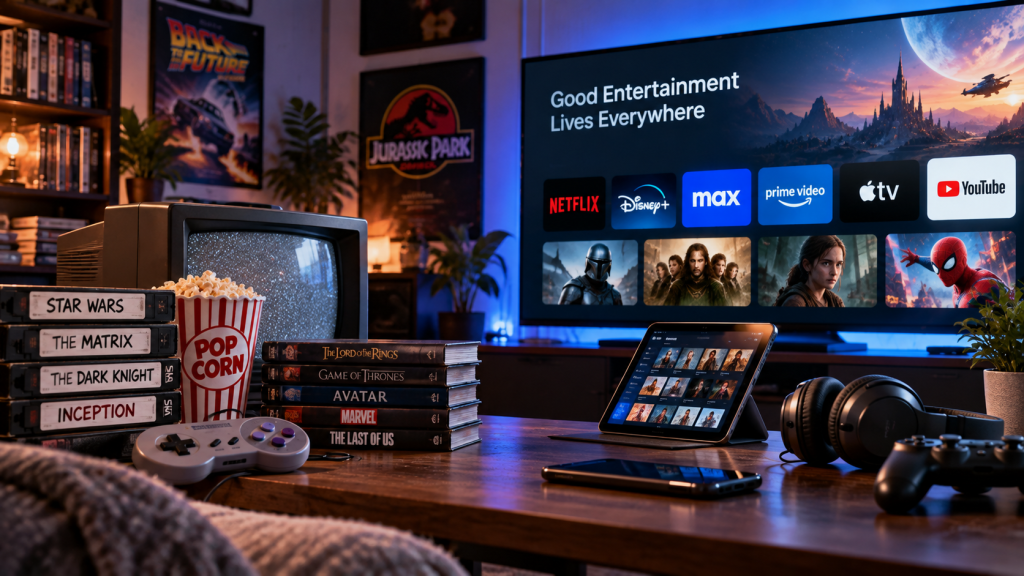
Entertainment’s always mattered. Live performances. Radio. TV. Blockbuster movies. People finding ways to relax, connect, get lost in a story. But the digital age? Changed things faster than almost anything before it. Not just what people watch or listen to. How. When. Where. All of it, rewritten.
From Fixed Schedules to Anything, Anytime
Most of the twentieth century — TV, cinema, radio, newspapers, physical music. Fixed schedules ruled everything. A show aired at a certain time. You were there, or you missed it. Or you recorded it and hoped the tape worked.
The internet broke that model, slowly then all at once. Digital platforms put entertainment on computers, phones, tablets, smart TVs. No more waiting for the scheduled slot. Choose based on interest. Choose based on when you actually had time.
That shift handed people real control over their own habits. And it opened doors for creators — reaching audiences without depending entirely on the old media gatekeepers.
On-Demand Changed Everything
Streaming’s probably the biggest shift here. Watch a movie, a series, a documentary — whenever. No schedule dictating the moment.
Changed viewing habits in a bunch of ways. Binge a whole season in one sitting. Pause. Come back days later. Stumble onto something old sitting right next to something brand new. Entertainment stopped being tied to a broadcast slot entirely.
Music went through the same transformation. Digital services put enormous libraries on any connected device. Playlists, recommendations, personalized listening — all of it changed how people actually find new artists, new songs.
The Phone Became the Main Entertainment Device
Smartphones turned into one of the defining entertainment devices of this whole era. One phone — movies, music, games, podcasts, books, social media, short videos. All of it, in your pocket.
That portability made entertainment stop caring about location. Podcast during the commute. Video during a break. Game while traveling. Book almost anywhere at all.
Smaller screen, though — that shaped a whole new format too. Short videos. Vertical content. Quick tutorials. Brief comedy clips. All built specifically to fit into small pockets of free time, not a two-hour sitting.
Social Media Handed Everyone a Camera
User-generated entertainment’s a genuinely major development here. Old media system — studios, broadcasters, publishers controlled most of what reached big audiences. Digital platforms tore down a lot of those barriers.
Now, individuals make videos, podcasts, livestreams, reviews, comedy sketches, music performances — real production, relatively accessible technology. Some creators build massive communities without ever going through a TV network or a major production company. Never needed to.
Modern tools have made video production a lot more accessible too. An AI video generator, for instance, can help creators through certain stages of building visual content — illustrating ideas that might’ve needed heavier technical skill before.
Social media also lets audiences jump in directly. Comment. Share. Respond. Add their own take. The whole relationship between creator and audience’s gotten a lot more interactive because of it.
Video Games Grew Into Something Much Bigger
Video games became a real, major part of modern entertainment. Used to be just electronic recreation. Now — a genuinely broad cultural industry. Storytelling. Competition. Music. Animation. Whole online communities built around it.
Modern games carry detailed narratives, cinematic presentation rivaling other entertainment forms entirely. Online multiplayer connects players across completely different locations.
Gaming’s influenced other industries too. Popular games spawn movies, TV adaptations, animated projects, merchandise, entire online communities. Livestreaming added another layer — experiencing games through the personality and commentary of someone else playing.
Personalization Changed How People Discover Things
Digital entertainment’s gotten a lot more personal. Platforms analyze viewing, listening, browsing activity — then suggest what might actually fit your interests.
Recommendation systems make discovering unfamiliar movies, shows, music, podcasts, creators genuinely easier. No manual searching through an entire catalog. Just — here’s what fits, based on what you already did.
New production tech, including an AI video generator, is shaping how digital entertainment content gets planned and produced too. Real support for creative workflows. Human direction and editorial judgment still matter, though. Always will.
Worth a caveat, though. Personalization can narrow what people actually see. Recommendations circling the same subjects over and over means a narrower range of content overall. Intentional exploration — seeking out different genres on purpose — matters more because of that, not less.
Where Entertainment’s Actually Headed
This evolution’s not stopping. AI, VR, AR, interactive storytelling, increasingly sophisticated production tools — all of it’s opening new ways for audiences to actually experience content.
Future entertainment might get more interactive — audiences influencing stories, not just watching them unfold. Virtual and augmented environments could blend gaming, cinema, live events, and social interaction into something that doesn’t fit neatly into any one category anymore.
Through all the tech change, though — the basic purpose stays familiar. People still want stories. Music. Humor. Excitement. Creativity. A real way to connect with other people. That part hasn’t moved.
Bottom Line
The digital age turned entertainment from schedule-based into something flexible, personal, interactive. Streaming expanded access. Smartphones made it portable. Social media gave individuals a real shot at creating. Gaming grew into a major cultural force in its own right.
Technology’s going to keep reshaping how entertainment gets made and consumed. But underneath every new platform, every new device — the basic human desire for a good story, a genuinely enjoyable experience — that’s still sitting right at the center of it. Always has been.