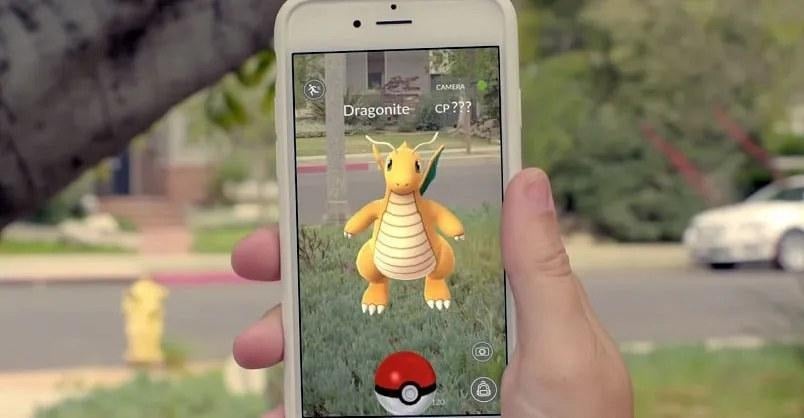
A delivery robot threading through downtown Los Angeles without clipping a single pedestrian is running on a map that millions of Pokémon GO players built for free, one PokéStop scan at a time. The game you thought was about catching Charizards quietly became one of the largest real-world data collection projects on the planet, and most of the people who fed it never noticed.
What Personal Data Pokémon GO Actually Collects

Every session hands Niantic a detailed picture of you. Its privacy policy is upfront about the app pulling your precise location from GPS, Wi-Fi, and cell signals, and it does so continuously while you play, not only when you tap a PokéStop. Add your email address, IP address, device details, username, and the messages you send other trainers, and you have a running log of where you go, when, and for how long.
Then there is the camera. Every AR scan and gym photo you submit is visual data pinned to a coordinate. Niantic says it anonymizes this data on its servers, automatically blurs faces and license plates, records no audio, and uses your 3D scans only with consent. The catch is that the valuable part was never one photo. It was all of them, stacked together.
There is also a paper trail on your wallet. After the ownership transfer, the privacy policy moved to explore.scopely.com/privacy, and it states that purchase history, payment details, and attribution data tied to those transactions are also collected. Every in-app purchase leaves a record of what you bought, when, and which ad or campaign is credited with sending you there.
| Data collected | How Niantic gathers it | What it feeds |
|---|---|---|
| Precise location | GPS, Wi-Fi, and cell signals, tracked continuously during play | Movement patterns and positioning |
| Camera and AR scans | PokéStop and gym scan submissions | A 30 billion image geospatial dataset |
| Position and orientation | Scan metadata: angle, direction, time of day | The Large Geospatial Model |
| Device and network | IP address, device ID, operating system | Analytics and account security |
| Account identity | Email address, username, in-game messages | Login and social features |
| Purchase and transaction data | In-app purchases and payment details, per Scopely’s privacy policy at explore.scopely.com/privacy | Spending analytics and ad attribution |
From PokéStop Scans to a Geospatial Map of the Planet

This is where a mobile game turns into infrastructure. Niantic stitched those millions of scans into a Visual Positioning System, or VPS, that works out where a camera is standing and which way it points from one photo matched against its 3D map. GPS gets you within roughly five meters. VPS pins your position and orientation to a few centimeters across more than a million locations.
The scale is the real story. Niantic holds around 10 million scanned locations worldwide, and close to a million fresh scans still arrive every week from Pokémon GO, Ingress, and its Scaniverse app. A single spot might hold thousands of images shot from different angles, in different weather, at different times of day. That is a pedestrian-level view of the world Google’s street-view cars physically cannot reach.
The Player Data Used to Train AI

In November 2024, Niantic said the quiet part out loud: all of this feeds a Large Geospatial Model. An LGM is to physical space what a large language model like ChatGPT is to text. Where ChatGPT learned language from billions of sentences, Niantic’s model learned the real world from more than 30 billion images shot at street level, then predicts how a place looks from angles it never actually saw.
The point was never better Pokémon spawns. It is spatial intelligence for machines: augmented reality glasses that understand a room, autonomous systems, and robots that cross a crowded sidewalk. That last one already shipped. Delivery company Coco Robotics runs roughly a thousand robots that lean on Niantic’s positioning tech to hit their windows in dense cities where GPS bounces off tall buildings.
Vast Amounts of Data, One Big Ownership Change

Here is the twist most players missed. In March 2025, Niantic sold its games division, Pokémon GO included, to mobile publisher Scopely for $3.5 billion, then spun its geospatial AI into a separate company, Niantic Spatial. The game that harvests the data and the company built to mine it now sit under different roofs.
Scopely is not the end of that chain either. It is owned by Savvy Games Group, which is majority-owned by Saudi Arabia’s Public Investment Fund, so a sovereign wealth fund now sits above a decade of player location and photo data.
The consent question is the uncomfortable one. Submitting a scan was technically opt-in, yet almost nobody reading a privacy policy in 2018 pictured their storefront photos teaching robots to walk. Niantic has openly described the payoff: its system knows “where you’re standing within several centimeters of accuracy and, most importantly, where you’re looking.” The gap between what people tapped agree on and what the data became is exactly what worries privacy researchers.
What’s Actually at Stake If Your Account Gets Compromised

Strip away the AI angle and a Pokémon GO account is still a rich target on its own. It holds years of location history, a linked email, and a profile that maps your home, your job, and your daily walking routes. Whoever controls the login can read that map.
It is also worth money. A maxed-out account with rare Legendaries, strong PvP IVs, and shiny event catches is a genuine asset, which is why high-level Pokémon GO accounts change hands on the secondary market for hundreds and sometimes thousands. That value is worth protecting through changing passwords and using two-factor authentication. Treat the account like the data vault it is.
Playing Without Handing Over the Whole Map

You do not have to quit to shrink your footprint. Switch off the AR camera features you never use, because the scanning is where the richest geospatial data comes from. Set location access to “while using” so the app cannot track you in the background. Read the privacy policy instead of tapping through it, lock the account with a unique password and two-factor authentication, and avoid third-party sellers you cannot verify.
The bigger lesson outlives Pokémon GO. Any app that wants your camera and your coordinates at the same time can quietly build a 3D map with you inside it. Pokémon GO simply proved how much of the physical world a mobile game can digitize. The next one is already asking for the same permissions.

Andrea Bell is a blogger by choice. She loves to discover the world around her. She likes to share her discoveries, experiences and express herself through her blogs. You can find her on Twitter:@IM_AndreaBell