Watching Josephine doesn’t feel like watching a movie, but more like being trapped inside a moment that refuses to release you. It’s not the kind of film that builds toward catharsis or tries to guide the audience gently through difficult material. It drops you into a child’s experience of fear and refuses to offer distance or relief. By the time it ends, you don’t feel enlightened or comforted. You just feel exhausted and unsettled, and now aware of the scary reality of how little control anyone truly has once safety has been shattered.
The film opens with what appears to be an ordinary morning. Josephine (Mason Reeves) and her father Damien (Channing Tatum) are up early, jogging through Golden Gate Park before the city wakes up. He carries a soccer ball. They talk to each other. Beth de Araújo lets the scene play naturally, letting the audience settle in.
When Josephine runs ahead and momentarily disappears from her father’s view, the film doesn’t underline the danger. There’s no score shift or sudden panic. She wanders behind a tree and witnesses a violent sexual assault outside a public restroom. The sequence is among the most upsetting one can witness, because it refuses to look away from Josephine’s perspective. The audience is forced to watch what she is watching.
What’s crucial is that the film never treats this event as something that happens and then becomes “the plot.” Instead, it becomes something that leaks into every moment afterward. Josephine can’t articulate what she saw or how it made her feel. She only knows that the world no longer feels safe.
From that point on, Josephine commits entirely to her point of view. The camera frequently stays at her eye level, hovering close to her face or tracking her movement through spaces that suddenly feel too large. The film understands something many trauma narratives don’t: fear doesn’t need logic to be overwhelming.
Mason Reeves gives a performance that feels almost impossible for someone her age. There’s nothing performative or manipulative about it. She plays her as a child desperately trying to regain a sense of control in a world that has suddenly turned hostile. Her behavior often frustrates the adults around her, and at times, the audience as well.
There are several scenes where Josephine lashes out, but one of the most revealing occurs early on, it involves her fixation on buying a toy gun. The impulse is painfully clear. She witnessed violence. Violence held power. She wants something that might offer protection. When her father refuses, her reaction is extreme: she spits at him and runs away. What follows, her fights, her defiance, even moments of physical aggression, aren’t expressions of anger so much as fear. She isn’t rebelling against her parents but rather responding to a world that now feels unpredictable and dangerous, grasping for anything that might give her agency.
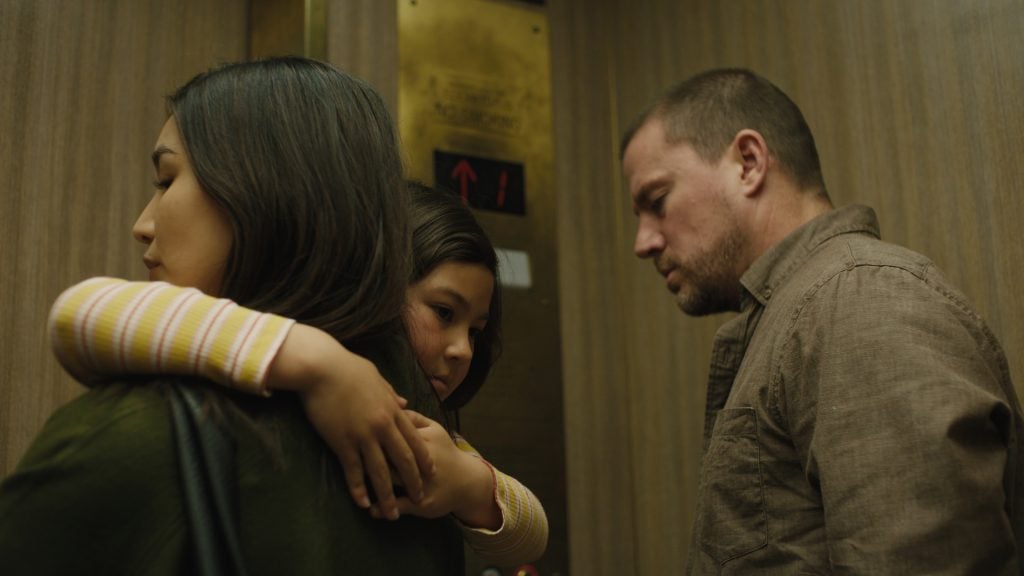
Channing Tatum is remarkably effective as Damien. He is loving, present, and clearly devoted to his daughter, but he is also consistently dismissive in ways that feel painfully real. He tells Josephine that something like the assault would never happen to her, a reassurance his wife Claire (Gemma Chan) immediately challenges, correctly. He pushes exercise and self-defense as solutions, dismisses therapy, and repeatedly overrides Claire’s concerns in favor of what he believes will help. Tatum never plays Damien as malicious. He plays him as a man clinging to certainty, convinced that action and control can outrun fear. Watching that conviction slowly reveal its limits is one of the film’s most frustrating and honest achievements.
Gemma Chan delivers what may be the best performance of her career as Claire. Her work is quieter, but it carries enormous emotional weight. Claire recognizes early on that something deeper is wrong, that reassurance and discipline won’t be enough. Chan plays her as a parent caught between knowing her child needs help and being unable to reach her. The guilt, the doubt, and the helplessness sit on her face, unresolved, scene after scene.
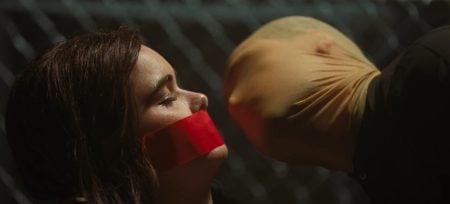
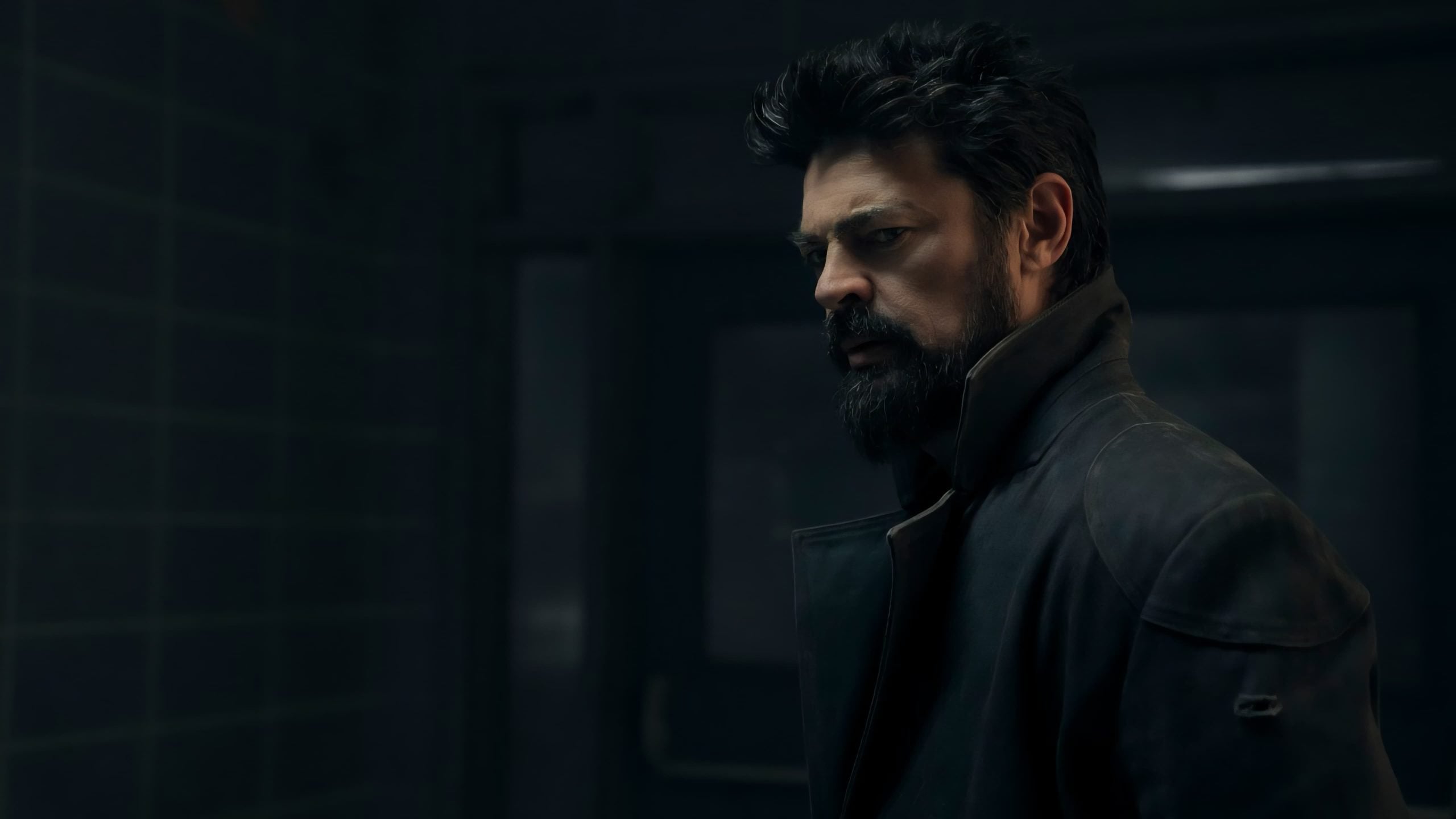
What makes Josephine so unsettling is how the attacker’s presence continues to haunt the film. Sometimes he appears literally in the frame, watching from a distance. Other times, he exists only as a possibility, or sometimes he interacts with her or the things around her. The film treats him like a ghost because trauma doesn’t announce itself; it simply returns.
There are moments where the parents’ choices are deeply frustrating, especially as professional help is delayed or dismissed. But this frustration feels intentional, even if it is hard to stomach. The film understands that loving parents can still make harmful decisions, and that fear often disguises itself as certainty. Unlike many films about childhood trauma, Josephine never pivots into a story about adults fixing what’s broken. The focus stays exactly where it belongs: on the child living inside the aftermath.
By the end, nothing is neatly resolved. Josephine isn’t “better.” Her parents don’t arrive at clarity or closure. What remains is the uncomfortable understanding that safety, once broken, is not easily restored.
Josephine is a harrowing and deeply empathetic examination of fear and how it embeds itself, how it reshapes behavior, and how ill-equipped even loving families can be when faced with it. Anchored by a staggering child performance and supported by career-best work from Gemma Chan and Channing Tatum, the film doesn’t offer hope in the traditional sense. It offers honesty, and sometimes, that’s enough.
Josephine had its World Premiere in the U.S. Dramatic Competition section of the 2026 Sundance Film Festival.
Director: Beth de Araújo
Writer: Beth de Araújo
Rated: NR
Runtime: 120m
Josephine is a harrowing and deeply empathetic examination of fear and how it embeds itself, how it reshapes behavior, and how ill-equipped even loving families can be when faced with it.
-
9
-
User Ratings (0 Votes)
0

Roberto Tyler Ortiz is a movie and TV enthusiast with a love for literally any film. He is a writer for LoudAndClearReviews, and when he isn’t writing for them, he’s sharing his personal reviews and thoughts on Twitter, Instagram, and Letterboxd. As a member of the Austin Film Critics Association, Roberto is always ready to chat about the latest releases, dive deep into film discussions, or discover something new.