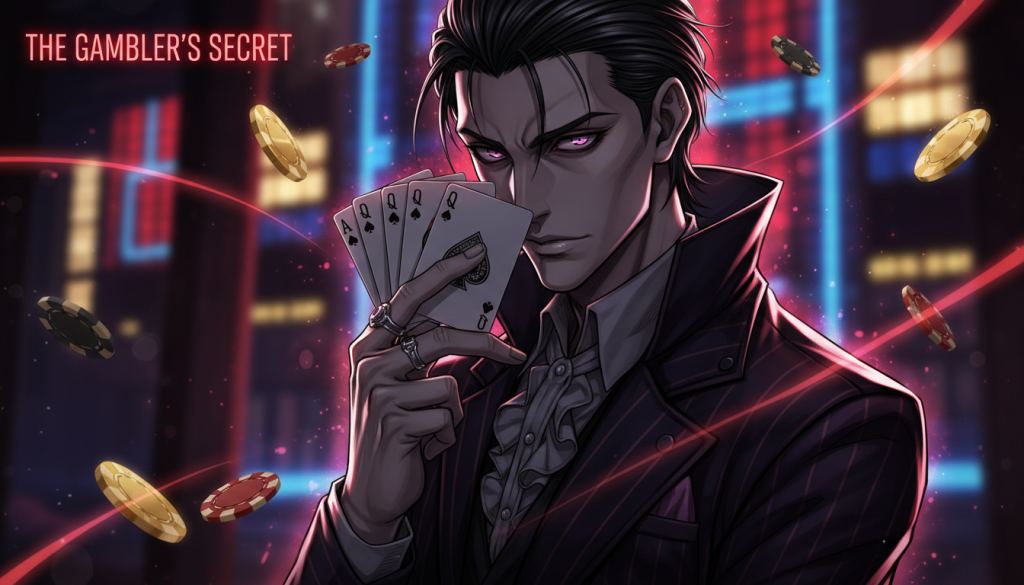
There’s a funny thing about “gambling anime”: most fans aren’t watching to learn poker math or to pick up a new habit. They’re watching because gambling, as a story engine, turns emotions into something you can see. Every glance becomes a tell, every pause becomes a threat, and every rule becomes a weapon.
Series like Kakegurui and Kaiji understand that the real currency isn’t money – it’s status, freedom, identity, and the fear of losing them. That’s why the genre can hook you even if you’ve never placed a wager in your life.
Why Kakegurui feels like a social horror story
Kakegurui’s premise is simple: a prestigious school runs on gambling, and the hierarchy is built around who wins and who owes. It’s a setting that functions like a microscope for social pressure – how people behave when reputation is on the line, when the room is watching, and when “fair” is just a costume.
If you’re not a gambler, the show still lands because it’s less “casino” and more “power drama.” The games are theatrical, the expressions are extreme, and the stakes are personal. You’re not asked to care about money; you’re asked to care about humiliation, control, and the rush of refusing to be intimidated.
The genius trick Kakegurui pulls is that it makes rules feel like choreography. Even when a game is ridiculous, it’s presented with such confidence that you lean in just to see how the characters will break it, exploit it, or survive it.
Yumeko isn’t “relatable,” and that’s the point
A lot of protagonists succeed because they mirror the audience. Yumeko Jabami succeeds because she doesn’t. She’s not gambling to pay rent or to climb the ladder – she’s gambling because the moment itself thrills her, and that single obsession makes every scene unpredictable.
For non-gamblers, Yumeko reads like a force of nature in a world that tries to quantify everyone. She walks into a system built on manipulation and treats it like entertainment. That flips the usual power dynamic and creates a kind of catharsis: the “rules” stop being sacred, and the bullies stop being untouchable.
Kaiji: when gambling becomes a survival thriller
If Kakegurui is a neon-lit social duel, Kaiji: Ultimate Survivor is a pressure cooker. It follows Kaiji Itō, an impoverished young man pulled into high-stakes games orbiting debt and exploitation. It’s grimier, slower, and often more upsetting – because it’s about systems that trap people, not just rivals who outplay them.
The reason Kaiji works for non-gamblers is that it treats gambling as a metaphor for real-life desperation. The games are structured like escape rooms with consequences: choose wrong, and you don’t just lose money – you lose dignity, safety, sometimes your future. Even if you never bet, you know what it feels like to be cornered by a choice you didn’t ask for.
Kaiji also does something rare: it makes the audience feel time. Long pauses, sweating close-ups, and moral bargaining stretch the moment until it hurts. That discomfort is the hook.
Rules make tension “fair” (even when the world isn’t)
One reason gambling anime is so bingeable is that it offers a clear contract between story and viewer: here are the rules, watch how they’re tested. That clarity is satisfying in the same way mystery stories are satisfying. You might not be able to solve it before the reveal, but you can follow the logic.
In Kakegurui, rules are a social weapon – people pretend to play fair while cheating, bribing, and bullying. In Kaiji, rules are a cage – designers set you up to fail, and you survive by noticing tiny loopholes. Both approaches create the same addictive viewing experience: you’re always scanning for information.
It’s basically chess with feelings.
Why mind games are universally entertaining
You don’t need to gamble to love strategy. What you need is the pleasure of prediction: the moment you think you know what will happen, and then a character flips the board.
Gambling anime delivers that pleasure on repeat because it’s built around three reliable beats:
-
Establish the rules.
-
Hide the real rules.
Reveal the real rules at the worst possible time.
That rhythm works whether the game is cards, dice, mahjong, or something made up for maximum drama. The “bet” is just a countdown clock.
The aesthetic is doing half the work
These shows are masterclasses in visual storytelling. They use tight framing, sharp cuts, and exaggerated facial animation to make internal calculation feel physical. Kakegurui turns a glance into an explosion. Kaiji turns a swallow into a crisis.
Sound matters too. You’ll hear the weight of a decision in Kaiji’s silence – breaths, clicks, and distant crowd noise – like the world is waiting for the next mistake. In Kakegurui, the soundscape is often sharper and more performative, matching the show’s “stage play” energy.
When you watch, you’re not imagining odds – you’re watching the cost of a decision crawl across someone’s face.
A quick real-world aside (without turning it into homework)
Sometimes fans get curious about the real-world parallels: what “RNG” means, why some games feel streaky, or how online casinos even handle payments in different countries. If you ever want a practical explainer from the Polish market side – especially around local deposit options – this guide on casino blik is a straightforward reference you can skim in two minutes.
What gambling anime is really about: identity under pressure
The best gambling stories aren’t about winning. They’re about who you become when winning is the only way out.
Kakegurui asks: what if your social value had a literal price tag? Who would cheat? Who would break? Who would enjoy the chaos? Kaiji asks a darker version: what if the system is designed to grind you down, and “choice” is mostly an illusion?
When you’re not a gambler, these questions may hit even harder because you can watch with a bit more distance. You can see the manipulations as narrative architecture rather than personal temptation.
And that distance is part of the appeal: you get adrenaline without the aftermath.
Beyond Kakegurui and Kaiji: other shows that scratch the same itch
Once you notice that “gambling anime” is really “high-stakes psychology,” the genre opens up fast.
Akagi is a classic: it uses mahjong as a battlefield for ego, intuition, and intimidation, building a legend around a protagonist who treats risk like oxygen.
One Outs is a brilliant crossover for sports fans. It frames baseball as a series of wagers and mind games, where a pitcher essentially gambles on every out, turning performance into a contract and every inning into a negotiation with fate.
And then there are adjacent series that aren’t strictly “gambling,” but share the same DNA – game-based tension, manipulation, and psychological endurance. If you like the feeling of rules + betrayal + reveals, you’ll find plenty to explore.
For more Geek Vibes Nation reads in the same lane, these pieces pair naturally with this topic:
-
10 Best Anime About Gambling for a bigger watchlist beyond the headliners.
-
Best Japanese Gambling Movies if you want the same themes in live-action.
-
The Best Movies For Fans Who Love Cards, Chaos And High-stakes Drama when you want a watchlist that leans into tension-first storytelling.
How to watch gambling anime if you don’t gamble
If you’ve ever bounced off the genre because “I don’t get the game,” try watching with a different focus:
-
Track motives, not mechanics. Who needs to win, and why?
-
Watch for tells. These shows are obsessed with micro-reactions.
-
Treat each match like a character test. The game is just the test environment.
-
Notice the power shift. Every episode is a tug-of-war for control.
Doing this makes even the most complicated rules feel secondary. You’re not watching cards – you’re watching people.
A small note on the “thrill” factor
It’s worth saying out loud: gambling anime romanticizes risk in the same way action movies romanticize violence. That doesn’t make it bad. It just means the story is compressing a messy real-world behavior into a clean narrative shape.
If the themes ever hit too close to home – especially around debt, compulsion, or chasing losses – take that seriously. The best way to enjoy this genre is when it stays fiction, stays fun, and stays on your terms.
Why it works, in one sentence
Gambling anime works even if you never bet because it turns invisible pressure into visible drama – and it gives you the rush of the edge without asking you to step over it.
If you want a single “starter trio” after the big two, go Kakegurui for spectacle, Kaiji for dread, and One Outs for cerebral swagger.