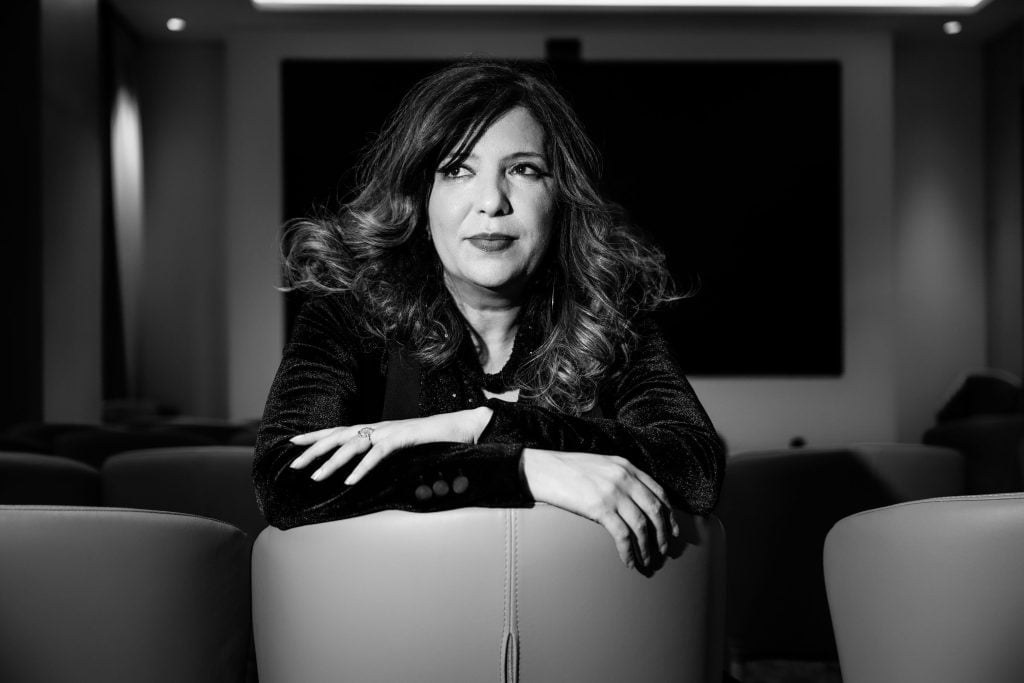
The first time Kaouther Ben Hania heard Hind Rajab’s voice was through a short audio clip circulating online, and it was impossible to ignore. In it, a child spoke from the middle of a war, her fear and clarity coexisting in real time. “I felt anger, sadness, and helplessness,” Ben Hania recalls. “And I thought the whole world needed to feel what I was feeling.”
That moment became the beginning of The Voice of Hind Rajab, Ben Hania’s latest film, which received a record 23-minute standing ovation following its world premiere at the Venice Film Festival. Now slowly rolling out in theaters, the film resists spectacle and reenactment in favor of something far more unsettling: listening.
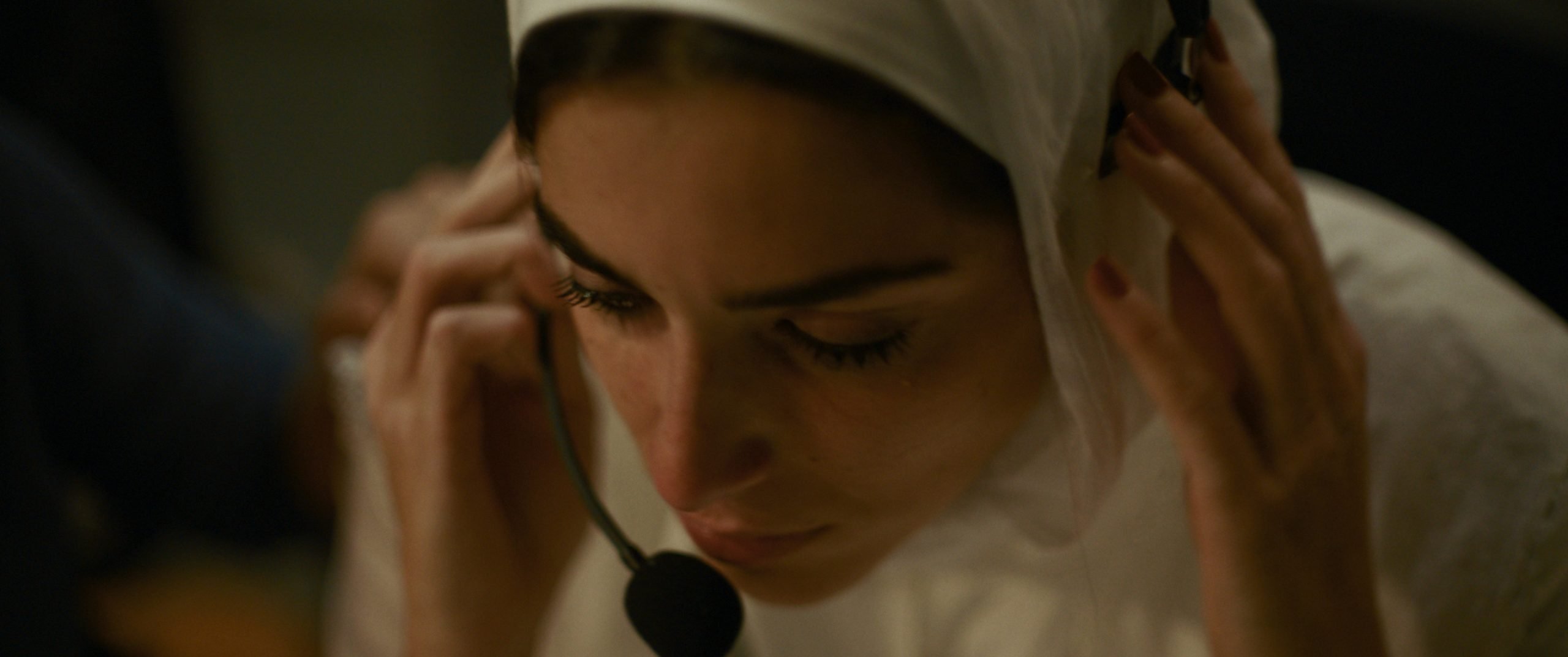
Rather than recreating events or dramatizing violence, The Voice of Hind Rajab unfolds almost entirely within the confines of a Red Crescent call center. The audience never sees the violence outside, yet it is omnipresent, carried through the voice of Hind herself. For Ben Hania, this choice was not merely aesthetic, but ethical.
“Her voice was already all over the internet,” she says. “And nobody was listening.” Recreating it with an actor felt, to her, morally questionable. “Bringing a child actress and asking her to mimic Hind’s voice would not honor her memory. I made this film so people could sit in a dark room and listen, to really listen.”
Before committing to the project, Ben Hania sought the blessing of Hind Rajab’s mother, who was still in Gaza at the time, mourning her daughter while living under ongoing bombardment. “Losing a child is an incredible pain,” the director says. “And she was fleeing from one house to another. I felt the weight of even asking.” The response was immediate and resolute: the mother wanted justice for her daughter. If the film could help amplify her voice, she supported it fully.
Ben Hania also spoke extensively with the Red Crescent dispatchers whose perspective anchors the film. Two paramedics lost their lives trying to reach Hind, part of a broader pattern of violence against emergency responders. “They wanted the story to be told,” she explains. “When all these people were behind the film, I felt less alone—and more legitimate in telling it.”
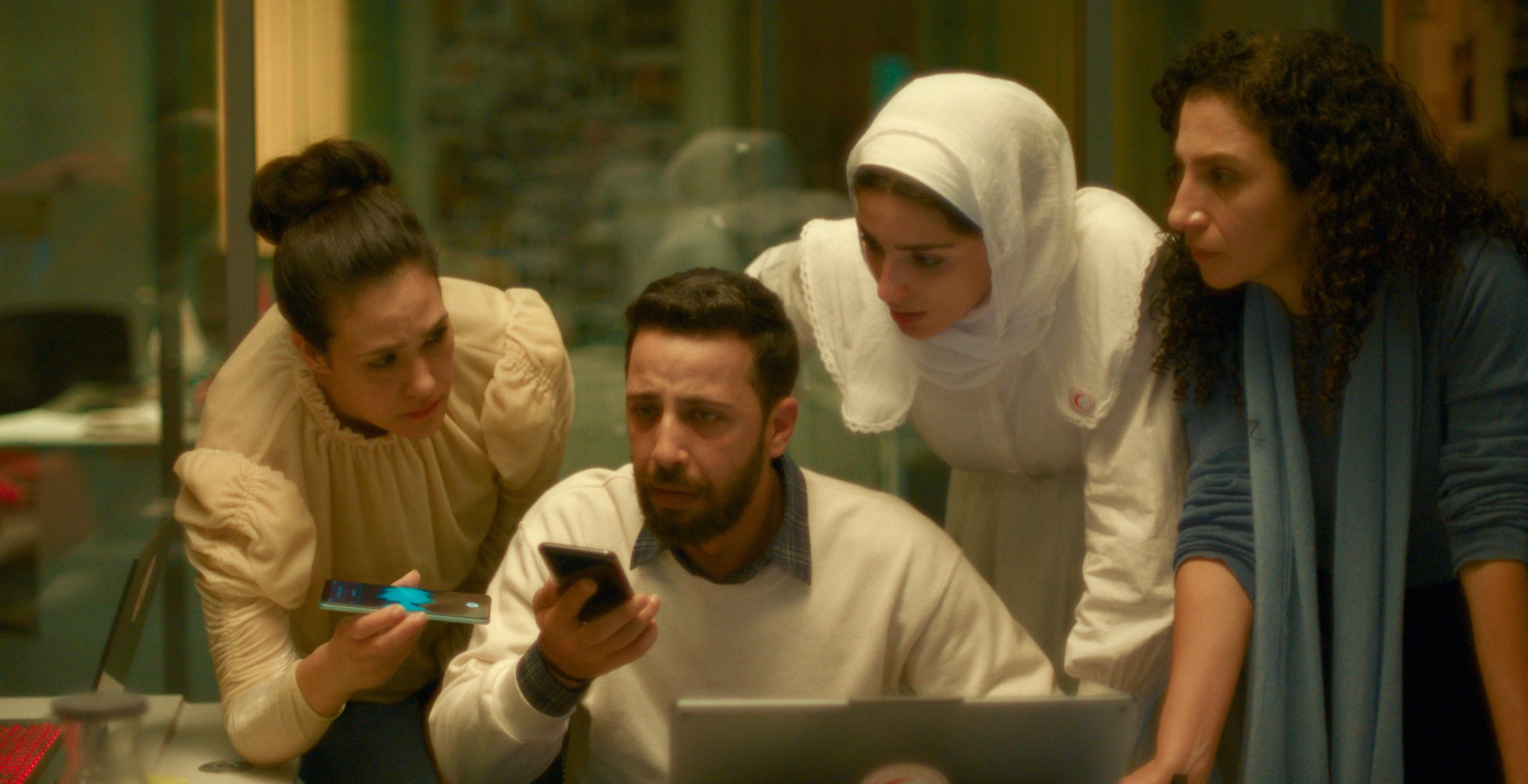
That legitimacy extended into the film’s formal constraints. Ben Hania describes herself as coming from “a poor cinema”—one shaped by limited budgets and necessity. Constraints, she says, have always been a source of creativity. By committing to a single location, she was able to fully inhabit the mechanics and limitations of the call center, revealing how systems—bureaucratic, political, and military—can make rescue impossible even when help is only minutes away.
Although visually restrained, the film expands outward through sound. Hind’s voice describes what she sees and hears, creating an unseen second location that exists entirely in the audience’s imagination. “The other space is in the sound,” Ben Hania says. “The audience can be inside it without showing the horror.”
The result is a sustained, almost unbearable tension. Viewers watch volunteers follow protocol, knowing time is running out. That frustration is intentional. “I didn’t want to protect the audience,” Ben Hania says. “I wanted to protect the victims.” The emotional strain mirrors what the real people involved experienced. Fidelity, not comfort, guided the film’s construction.
The actors portraying the dispatchers were cast to closely resemble their real-life counterparts, many of them Palestinian. Preparation involved direct contact with the people they were portraying and, crucially, listening to the original recordings. “This wasn’t about performance,” Ben Hania explains. “They weren’t acting. They were living the moment again.” When composure breaks onscreen, it reflects not improvisation, but reality—emotions already present in the original audio.

Financing the film followed an equally unconventional path. Ben Hania and her producer, Nadim Cheikhrouha, chose not to pursue public funding, relying instead on private support while shooting and fundraising simultaneously. “There was something miraculous about this film,” she says. “Everyone who wanted it to exist did everything they could to help make it happen.”
Now, as The Voice of Hind Rajab begins its theatrical life, Ben Hania hopes it will spark conversations that extend beyond cinema. “We need to talk about accountability. About justice,” she says. “Without accountability, there is no peace.” The film, she hopes, can be one small part of a larger movement—one that insists on bearing witness rather than looking away.
In refusing reenactment and spectacle, The Voice of Hind Rajab asks something deceptively simple of its audience: to sit, to listen, and to acknowledge a voice the world already heard—but failed to answer.
The Voice of Hind Rajab is currently playing in select theaters courtesy of Willa. The film will expand nationwide in the near future.

Roberto Tyler Ortiz is a movie and TV enthusiast with a love for literally any film. He is a writer for LoudAndClearReviews, and when he isn’t writing for them, he’s sharing his personal reviews and thoughts on Twitter, Instagram, and Letterboxd. As a member of the Austin Film Critics Association, Roberto is always ready to chat about the latest releases, dive deep into film discussions, or discover something new.