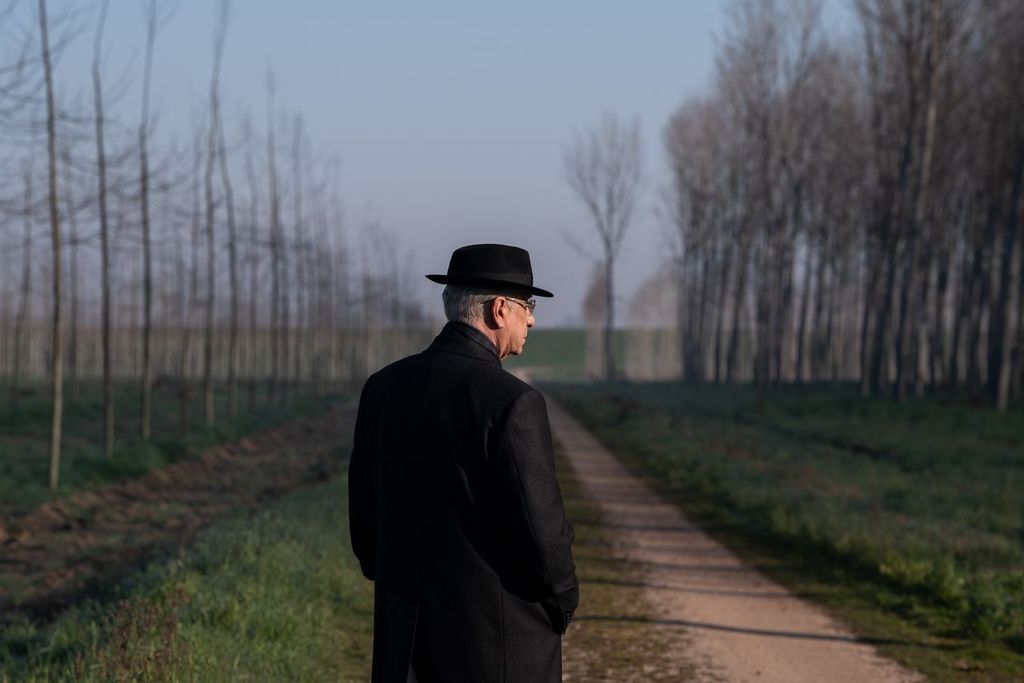
There is rarely dignity in politics. Many times, there is little contemplation or even self-reflection. This type of discourse is foreign to our world and therefore seems reserved only for the movies. Such is the case with La Grazia, in which director Paolo Sorrentino crafts an examination of moral dilemmas and legacy. In a story that moves with poetic flourishes, here is both a tale of love and life, responsibility, and purpose.
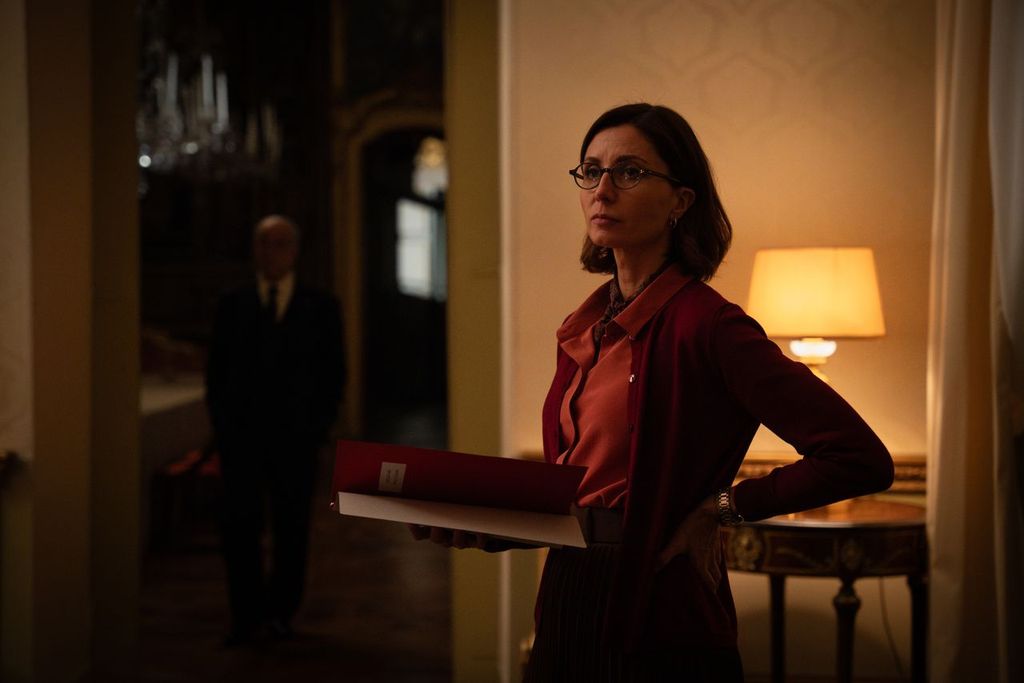
The outgoing president of Italy, Mariano De Santis (Toni Servillo), is facing a reckoning on two fronts—it is a political and personal quandary. As he debates his legacy and lasting impact, he must first decide whether or not to pardon two people convicted of murdering their partners in addition to signing a historic bill that would legalize euthanasia. To complicate matters, he is mourning the death of his wife, who he learns committed adultery in their marriage. Aided by his trusted confidante, his daughter Dorotea (Anna Ferzetti), he will reconcile both his personal and public legacy, while confronting the timeless question: who owns our days?
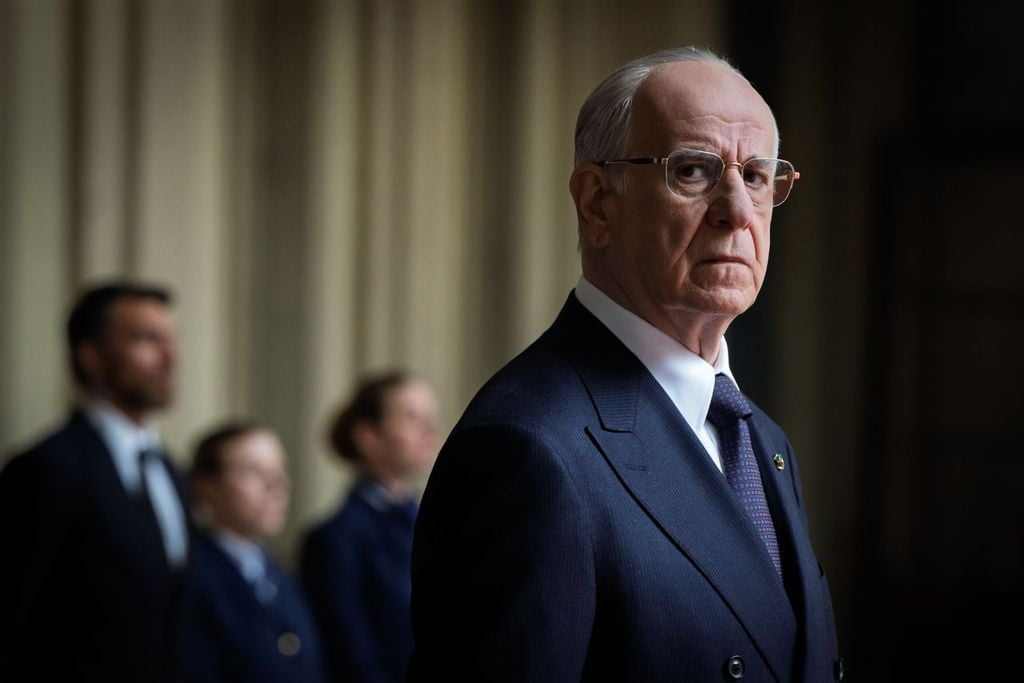
Let us begin with De Santis, a devout Catholic and student of the law. He has a premium on ethics and a low tolerance for hogwash. He acts as if unswayed by public pressure and wrestles with his decision-making by walking the lonely halls and occasionally listening to hip-hop. This musical inclusion runs contrary to his nature, yet is an integral part of his true character—a man with compassion and passion. There is a sense of a man looking at both how history will remember him and what he is to make of the time left to him on earth. We discover he is a complicated individual. Servillo gives us a living portrait of man, looking at both his role as a public servant and that of a father.
The question of legacy hangs over De Santis in all aspects of his life, both political and personal. His discovery of his wife’s hidden infidelity raises an inherent moral challenge vis-à-vis the pardon petition. There is anguish stemming from his wife’s betrayal, forcing him to reconcile his personal reaction with an unflinching, unbiased view of the matter.
The film takes seemingly mundane aspects of governance, such as the signing of a law (be it of historic significance or not) and issuing a pardon, and frames them as spokes in the wheel of personal dilemmas. Interestingly, the film makes a frank assessment that life and politics are interchangeable. A leader cannot leave their personal problems at the door when setting down to govern, nor can they leave governing behind when addressing personal matters.
In reality, leaders often operate within a narrow prism. Matters become binary choices. La Grazia, which means “pardon,” illustrates how life’s decisions, both in the political arena and in the personal sphere, are complex. De Santis is shown at first to be a man of serious intent and stoic nature, yet through a slow reveal, we see a man far from a public character, but one of immense personality and emotional complexity.
Here is where the father-daughter pairing works well for this story. Through the children, a better understanding of the parent can be reached, and vice versa. At times, they feel as though they are talking to one another rather than speaking at one another. The story focuses on a presidential figure, which adds a degree of separation to the parent/child dynamic. There is a desire for understanding and for reaching one another.
The central theme of the story is love. It encompasses De Santis with the matters of the heart and the law. It is how he addresses his role as a president and as a father. A leader needs love, or better said, empathy, but in turn, a leader requires an emotional response. Part of this film’s genius is showcasing a man who, at first glance, is stoic and stern, but through revelation and personal discovery, we see someone who wishes to love and ultimately is loved. Be it all conventional or original.
The film unfolds gradually. We are treated to the waning days of a presidential term. There is a sense of pause, but also a desire for hurried completion. What is legacy, and can be a matter indistinguishable from one’s personal sphere. La Grazia suggests there is no degree of separation. Politics is everywhere and in everything. A wife’s infidelity can become a matter of policy, be it reactive or not. There is a sense of trying to reach the heart, like that of an artichoke. There are spiny leaves on the front that must be peeled away, layer by layer.
La Grazia, as a film, moves in bold sweeps, yet takes its time unfolding in quiet moments of reflection and contemplation. Some may find this laborious or even jarring, but it works because the film anchors itself in a captivating lead performance. There is poetry to the story. It breathes refreshing breaths into what could be stuffy topics, turning them into something more picturesque. The story wrestles with complex moral and ethical questions while putting front and center a portrait of a man who is the epitome of well-rounded, thoughtful, and inherently complex, as any of us.
La Grazia will debut in select theaters on December 5, 2025, courtesy of Mubi.

The story wrestles with complex moral and ethical questions while putting front and center a portrait of a man who is the epitome of well-rounded, thoughtful, and inherently complex, as any of us.

Writing & podcasting, for the love of movies.
His Letterboxd Favorites: The Dark Knight, Halloween, Jaws & A Christmas Story.