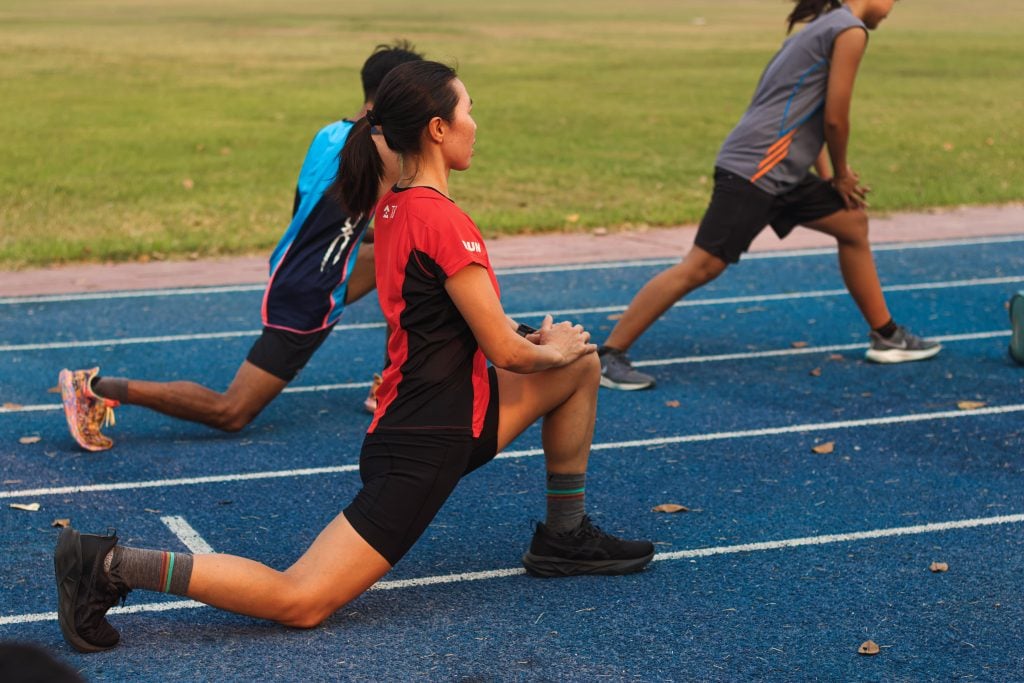
Want to train in a way that actually pays off decades from now?
Most trainees train with looks in one month. However the most intelligent lifters, athletes and civilians are adopting a far superior methodology — longevity training.
Because let’s be honest… Chasing a shredded look in eight weeks is easy. Staying strong, mobile and pain-free at 60 is a completely different game. That takes a smarter approach. One that keeps you performing at a high level for decades — not just for the next beach holiday or summer photoshoot.
The idea is simple:
- Build habits that keep the body strong for life
- Focus on performance that can be sustained
- Protect the body from breaking down over time
Here’s how to make it happen…
Inside This Guide:
- Why Longevity Training Actually Matters
- The Core Fitness Habits That Support Long-Term Performance
- Recovery Tools That Extend Your Training Lifespan
- How To Build A Longevity Routine That Sticks
Why Longevity Training Actually Matters
Here are some staggering stats. WHO says 31% of adults globally were physically inactive in 2022.
That’s around 1.8 billion people at risk of chronic disease.
But here’s the good news…
According to studies conducted by the Weizmann Institute of Science, up to 45–50% of life expectancy is dictated by lifestyle choices like diet, exercise and habits.
You’re actually in control of way more than you realize. Which is why today’s longevity tools focus on just that. Stem cell activation therapy is quickly becoming the most popular recovery technique for those who wish to train hard for years to come — not just a few months. Utilized with devices such as a seated hyperbaric chamber, stem cell activation works with your body to enhance natural repair mechanisms, decrease inflammation and promote healthy tissue recovery.
That’s why longevity athletes are layering these techniques on top of their exercise programs. Exercise breaks you down. Recovery practices build you back up. Stem cell activation therapy is at the core of your recovery process. Alongside these practices, some athletes also explore nutritional options such as https://www.amazon.com/Nutricost-Ashwagandha-Herbal-Supplement-Capsules/dp/B073DN2YG9, as part of their broader recovery routine.
The Core Fitness Habits That Support Long-Term Performance
Now to the good stuff.
These are the precise fitness habits that fuel long-term performance. They’re not sexy. They’re not trendy. But they work… year after year after year.
Build Strength (Not Just Muscle)
Strength training is the number one habit in every longevity study.
Because: Muscle mass begins to decline as the body ages. And when muscle declines, independence declines, balance declines, bone density declines and metabolic health declines.
Research from adults aged over 4,800 showed those who performed roughly 90 minutes of strength training weekly had telomeres 4 years younger than their actual age.
That’s insane.
Ninety minutes a week is nothing. That’s three 30-minute sessions. Focus on:
- Squats (bodyweight or loaded)
- Hinges (deadlifts, kettlebell swings)
- Push movements (press-ups, overhead press)
- Pull movements (rows, pull-ups)
Keep it simple. Keep it consistent.
Train The Heart, Not Just The Legs
Cardio has a bad reputation in the strength community. However your VO2 max is one of the best indicators of how long you’ll live (and how healthy).
One study discovered when people engaged in aerobic exercise and strength training they improved at both while people who only did cardio got better at one but not both.
The takeaway? You need both.
Two easy cardio habits to build:
- Zone 2 sessions: 30-45 minutes of easy jogging, cycling or brisk walking (2-3x per week)
- Short intervals: Quick bursts of hard effort (1-2x per week)
Zone 2 sessions increase your aerobic capacity. Intervals raise the upper limit. They complement each other like nobody’s business.
Prioritise Mobility Over PRs
Here’s something most gym-goers get wrong…
They go after heavier poundages every week never worrying about how their body actually functions. Then at 45 they question why their shoulders ache and hips don’t move.
Mobility work is needed for long-term performance. Not the sexy Instagram stretches — the boring work. Ankles, hips, thoracic spine and shoulders.
Spend 10 minutes a day moving differently for the next 30 years.
Recovery Tools That Extend Your Training Lifespan
Training breaks you down. Recovery builds you back up.
If you don’t recover properly, your longevity will suffer. Period. No matter how well you think you train this is where most people fail.
Sleep First, Always
Sleep is nature’s most powerful performance enhancement tool. It’s also free. Get 7-9 hours a night and guard it with your life (because your career kinda relies on it).
Regenerative Recovery Support
Longevity athletes today are now using regenerative medicine therapies to aid tissue repair. Some common therapies include:
- Stem cell activation therapy
- Hyperbaric oxygen recovery sessions
- Red light therapy
- Cold and heat contrast protocols
These products aid recovery by assisting the body’s own recovery systems – allowing muscles, joints and connective tissue to recover quicker from intense training.
Nutrition That Supports Recovery
You can’t out-train a bad diet. And you definitely can’t out-supplement one.
Focus on:
- Enough protein (roughly 1.6-2.2g per kg of body weight)
- Whole food carbs around workouts
- Healthy fats for hormones
- Water. Lots of it.
That’s it. No magic formula.
How To Build A Longevity Routine That Sticks
Alright, here’s how to put it all together…
For longevity training to be effective, you have to be able to do it for decades. This means that your routine shouldn’t suck the life out of you.
Try this simple weekly template:
- 3x strength sessions (45 minutes each)
- 2x cardio sessions (one zone 2, one interval)
- Daily mobility work (10 minutes)
- Weekly recovery focus (sleep, therapy, nutrition)
That’s roughly 5 hours of training a week. That’s it.
Consistency will ALWAYS beat intensity. Someone who trains 5 hours a week for 20 years will crush the person who trains 15 hours a week for 6 months and flames out.
The Long Game Wins
Longevity Training isn’t a fad… it’s the evolution of fitness. And you don’t need high-tech machines, $500 bottles of supplements or fancy programs.
Just remember the fundamentals:
- Strength training — build muscle to protect your future self
- Cardio work — protect the heart and lungs
- Mobility — keep the body moving well
- Recovery — sleep, nutrition and regenerative tools
- Consistency — show up week after week, year after year
Incorporate regenerative recovery modalities such as stem cell activation therapy if you want to enhance tissue healing and stay ahead of the curve. Stack the small wins. Believe in the process. And always play the long game – because that’s the ONLY game worth playing with your health.
Your 70-year-old self will thank you.

Sharon is an avid writer who has a concentration on nonfiction content. She has been treading the writers’ field for more than ten years and hopes to broaden her experience by delving further into book publishing. In her spare time, she enjoys a good read or movie that takes her back in time.