Many people, especially in the creative realm, think of death in all of its great mysteries. This makes sense, given that we can never know what it will be like until it is too late to write about it. But oddly, there is a universality in the experience of death. No, we cannot detail what the process will be like, but we all have been left behind to ponder our new existence without those we love. It is easy to look at others’ reactions to loss and think it strange or inappropriate. Yet, there is no rulebook for how to deal with any of this. There is no possible normality in grief. But if it gets us through, maybe it is enough to just move through it.
Miroirs No. 3, the newest film from German director Christian Petzold, introduces us to Laura (Paula Beer) and, briefly, her boyfriend Jakob (Philip Froissant). We do not learn much about their relationship, besides a connection to music and a general strained quality. They are on a car journey with another couple, but it quickly goes south, and she requests to be taken back home. Moments later, there is a shocking accident, which leaves Laura injured and Jakob dead. In an instant, the movie turns from standard relationship drama to something much odder. The only witness to the carnage is a woman by the side of the road, Betty (Barbara Auer). After being stitched up by the medics, Laura requests to stay with Betty. This takes her by surprise, but she quickly acquiesces.

The film, despite its minimal length, takes a languorous pace, which is to its great advantage. As Laura and Betty get to know one another in this space, we (and they) forget about the world outside. All that matters is the safe space offered as Laura heals from her wounds. Even Betty’s home seems soft, as if from a storybook—not in the sense of perfection, but of removal from harsh realities. Sure, some things don’t work, but there is even a comfort in the imperfections. This idyllic pairing feels as if it could go on without interruption. Petzold, along with cinematographer Hans Fromm, shows us every inch of the house, in direct opposition to the way they protect us from the violence of the earlier vehicle crash. However, it is soon revealed that even that caution will not shield the viewer forever. Petzold’s script shows us that even in a slow, charming film, shocking revelations can come in many forms.
As Laura offers to cook for Betty, she happens to mention the one dish that is beloved by her husband and son, two individuals who were not known to exist before this moment. In this singular reveal, Miroirs No. 3 is turned on its head. Everything that we thought we knew now has a new context. The introduction of her husband, Richard (Matthias Brandt), and their adult son, Max (Enno Trebs), removes peace through no fault of their own, as masculine energy interrupts the calm, idyllic new life of these two women.
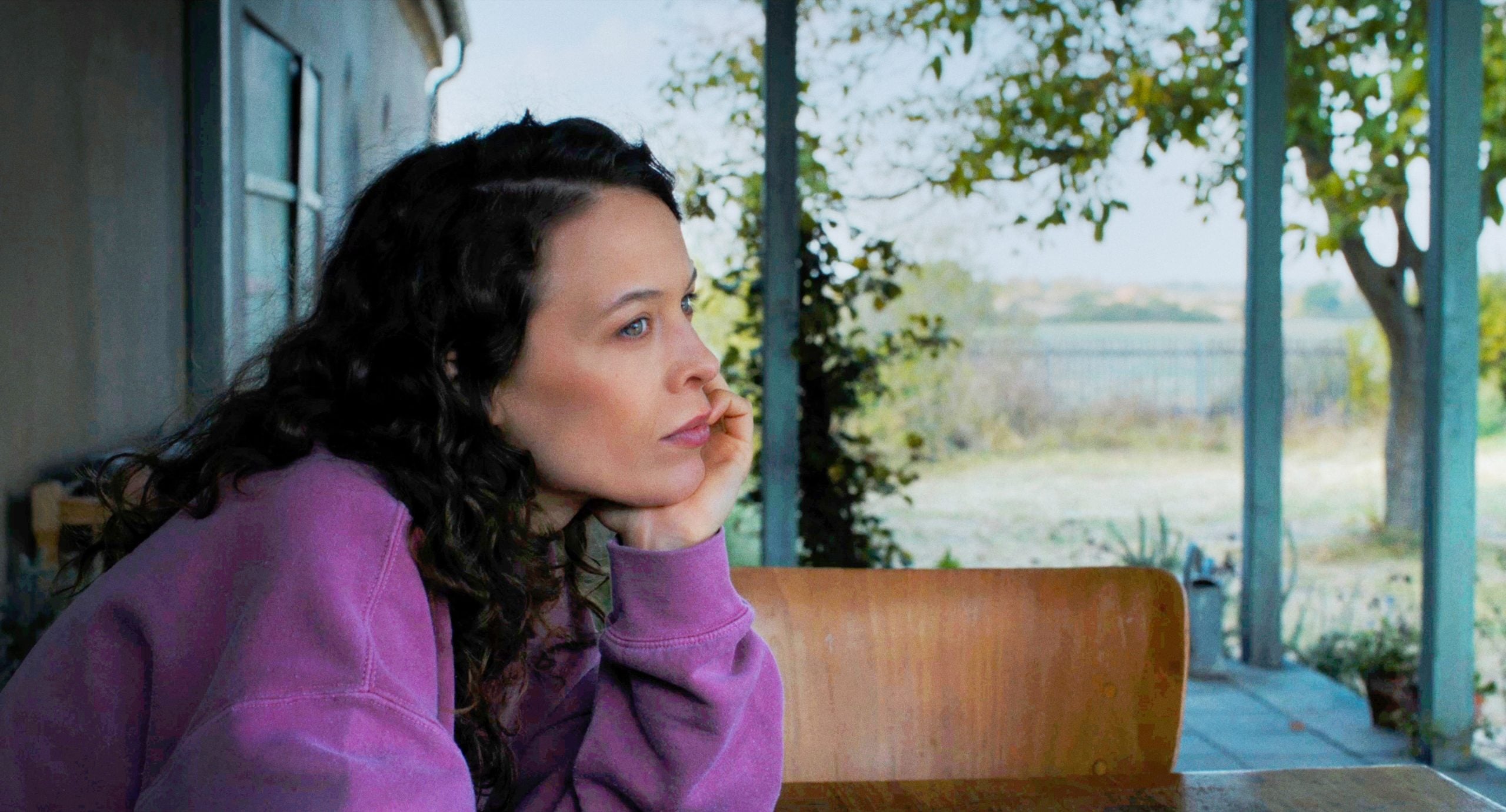
For the first time since the opening scene, Petzold introduces pain and rage. As the story unfolds, we do quickly intuit where this pain comes from, but the director masterfully controls the pace of this unlocking of the past, with help from the soulful eyes of Paula Beer, taking all of this in. There is a particular moment, aided by the addition of “The Night” by Frankie Valli and the Four Seasons, that is at once awkward, endearing, and dangerous. Petzold has long been infatuated with Alfred Hitchcock, and Miroirs No. 3 is no exception. Much like Guillermo del Toro recreating Frankenstein his entire career, Petzold seems to focus in on films like Vertigo. The recreation of women from characters’ pasts is an intriguing one, especially here, where some of that molding is being pushed by another female character.
The slow unraveling of emotion, of personality, of long-buried secrets; it all comes to a head without much warning. As interlopers into this family, much like Laura, we realize that we have strayed close to a burning fire without being aware of the danger. Petzold plays us all like finely tuned instruments, leading us around until we are too connected to stop ourselves from leaning in too far. Although the ending feels slightly rushed, no film that focuses on the healing of a family unit, paired with assistance from an outsider, can leave the audience unaffected. There is no right way to heal, except to do it. Some may question the methods of this family, but the ends justify the means when the goal is connecting and somehow moving forward past the unimaginable.
Miroirs No. 3 is currently playing in theaters courtesy of 1-2 Special.

Petzold plays us all like finely tuned instruments, leading us around until we are too connected to stop ourselves from leaning in too far. Although the ending feels slightly rushed, no film that focuses on the healing of a family unit, paired with assistance from an outsider, can leave the audience unaffected.

Dave is a lifelong film fan who really got his start in the independent film heyday of the 90’s. Since then, he has tried to branch out into arthouse, international, and avant garde film. Despite that, he still enjoys a good romcom or action movie. His goal is to always expand his horizons, through writing and watching new movies.