Spoiler warning: This article discusses major events in Monster: The Lizzie Borden Story.
Watch Monster: The Lizzie Borden Story and you get an answer to a question people have argued over for more than a century. Open the historical record, and that answer becomes much less certain.
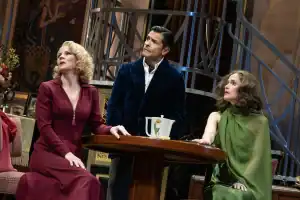
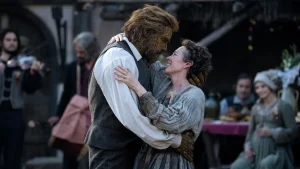
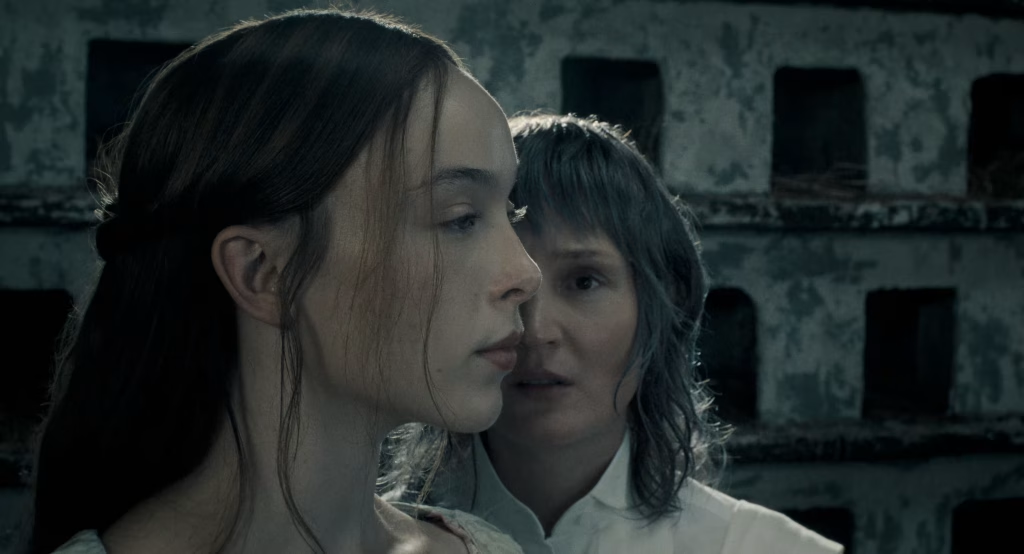
The fourth installment of Ryan Murphy and Ian Brennan’s Netflix anthology stars Ella Beatty as Lizzie, with Vicky Krieps as Bridget Sullivan, Charlie Hunnam as Andrew Borden and Rebecca Hall as Abby Borden. It builds its story around a real double murder, but the relationships and motives driving its version of events often belong to the writers.
Even Beatty has described her character to Netflix’s Tudum as a heavily fictionalized interpretation. That matters here: some scenes draw from testimony, others reshape real events, and several give invented answers to questions history has left open.
Fact: Andrew and Abby Borden Were Murdered, and Lizzie Was Acquitted
Andrew Borden and his wife, Abby, were killed in their Fall River, Massachusetts, home on August 4, 1892. Lizzie was 32. Abby was her stepmother, a detail often blurred in popular retellings.
Lizzie went on trial in June 1893 and was acquitted on June 20. The National Women’s History Museum describes the murders as unsolved.
That is the essential distinction between the case and the series. The show can put Lizzie in the room and depict her committing the crimes. History cannot offer the same certainty. Her acquittal did not establish who killed Andrew and Abby, and enduring suspicion is not a conviction.
Fiction: Lizzie and Bridget’s Romance Is Established History
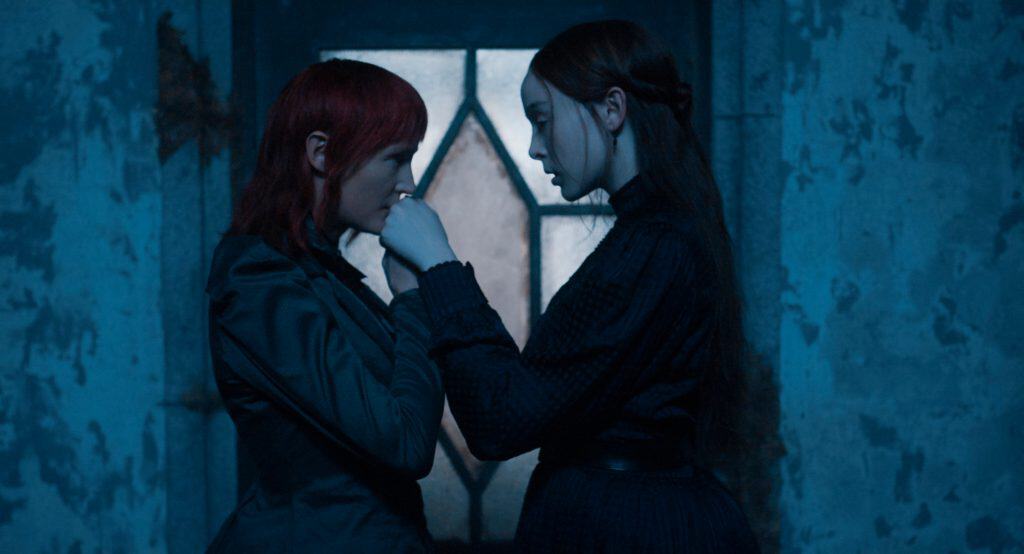
Bridget Sullivan was real and worked as the Bordens’ live-in maid. The series turns her relationship with Lizzie into both a romance and a murder partnership.
There is no established historical evidence for either arrangement. Business Insider’s examination of Sullivan’s story traces the romantic theory to fictional retellings, including Evan Hunter’s 1984 novel Lizzie.
The distinction is not a verdict on Lizzie’s sexuality. It means the surviving evidence does not confirm this particular relationship or conspiracy. A convincing onscreen partnership does not make it a documented one.
Fiction: Nance O’Neil Helped Lizzie Prepare for Her Trial
Nance O’Neil was a real actress and a real friend of Lizzie’s. However, Netflix acknowledges that their friendship began in 1904, more than a decade after the acquittal.
That rules out the series’ storyline in which Nance coaches Lizzie’s courtroom behavior. The writers moved a later friendship into an earlier chapter of her life to give the trial a different dramatic angle.
It is a substantial change. Advice from an actress creates a story about rehearsing innocence; the fact that Lizzie later knew an actress does not prove that story happened.
Fiction: Bertha Manchester Was a Practice Victim
The series makes Bertha Manchester’s murder a rehearsal for the Borden killings. The real timeline runs in the opposite direction.
Manchester was killed on May 30, 1893, nearly ten months after Andrew and Abby died and shortly before Lizzie’s trial began. Research published in The Hatchet: Journal of Lizzie Borden Studies examines contemporary reporting and the later myths linking the cases.
Lizzie was already in custody awaiting trial. Manchester’s death therefore could not have been her earlier attempt at the crime depicted in Monster. A separate suspect was arrested in the Manchester case. The show borrows a real victim while inventing Lizzie and Bridget’s involvement.
Fact, With an Important Caveat: Lizzie Burned a Dress
This detail has a basis in sworn testimony. Family friend Alice Russell described seeing Lizzie preparing to burn a dress after the murders. According to Russell’s trial testimony, Lizzie said the garment was covered with paint.
Russell also testified that she later warned Lizzie how bad destroying the dress could look. It was an understandably suspicious act during a murder investigation.
But the testimony does not establish that the burned dress was bloodstained or worn during the killings. Russell said she could not identify Lizzie’s dress from the morning of the murders and had not seen blood on her clothing that day.
The burning is supported by testimony. The claim that it destroyed the killer’s bloody clothing is an interpretation. Those should not be presented as the same fact.
Partly True: The Household Was Sick Before the Murders
Monster turns a meal of spoiled oysters into a deliberate attempt to kill Andrew and Abby. Illness in the household is part of the historical record; that specific murder plan is not established.
The Famous Trials chronology records Andrew and Abby suffering stomach sickness before the killings and Abby raising a fear of poisoning with a skeptical doctor.
That supports the existence of illness and suspicion. It does not establish that Lizzie and Bridget deliberately caused it. The series supplies intent where the record leaves uncertainty.
Partly True: Emma and Lizzie Eventually Fell Out
The sisters’ estrangement was real, but it came years after Emma supported Lizzie through the trial. They lived together at Maplecroft following the acquittal; Emma left in 1905.
Reporting on their relationship links the later tension to Lizzie’s friendship with Nance and her social circle, while noting that the show’s physical confrontation and accusations are not supported by historical evidence.
A later family rupture does not establish that Emma believed Lizzie committed the murders.
Fiction: Aileen Wuornos’ Visit to the Borden House
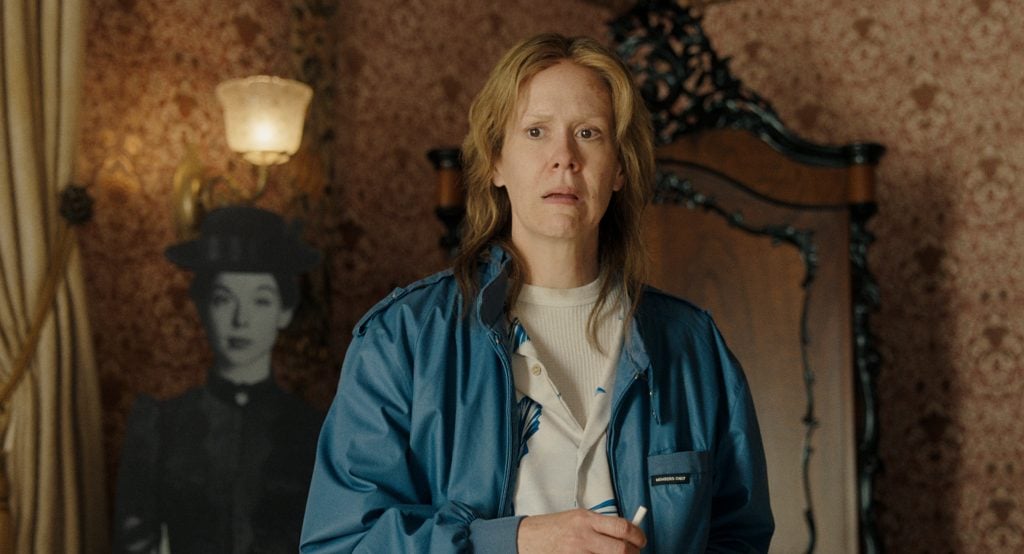
The series brings Aileen Wuornos, played by Sarah Paulson, into Lizzie’s story. Its depiction of an overnight visit to the Borden house in the 1980s is fictional.
Entertainment Weekly’s fact-check finds no evidence of the visit and notes that the house did not open as a bed-and-breakfast until 1996. The sequence connects the show’s themes across different eras; it does not document a real encounter with Borden’s legacy.
Even the Famous Rhyme Gets the Story Wrong
The familiar rhyme exaggerates the blows and calls Abby Lizzie’s mother. The National Women’s History Museum records 19 blows to Abby and 11 to Andrew, rather than the rhyme’s 40 and 41.
Long before Netflix, a memorable version of this case was already replacing the evidence in public memory. Monster adds another interpretation. Its scenes may give viewers plenty to discuss, but they cannot settle the unanswered question at the center of the Borden murders.

DC Fanboy! Superman is the greatest comic book character of all time. Favorite movies are Man of Steel, Goonies, Back To the Future