

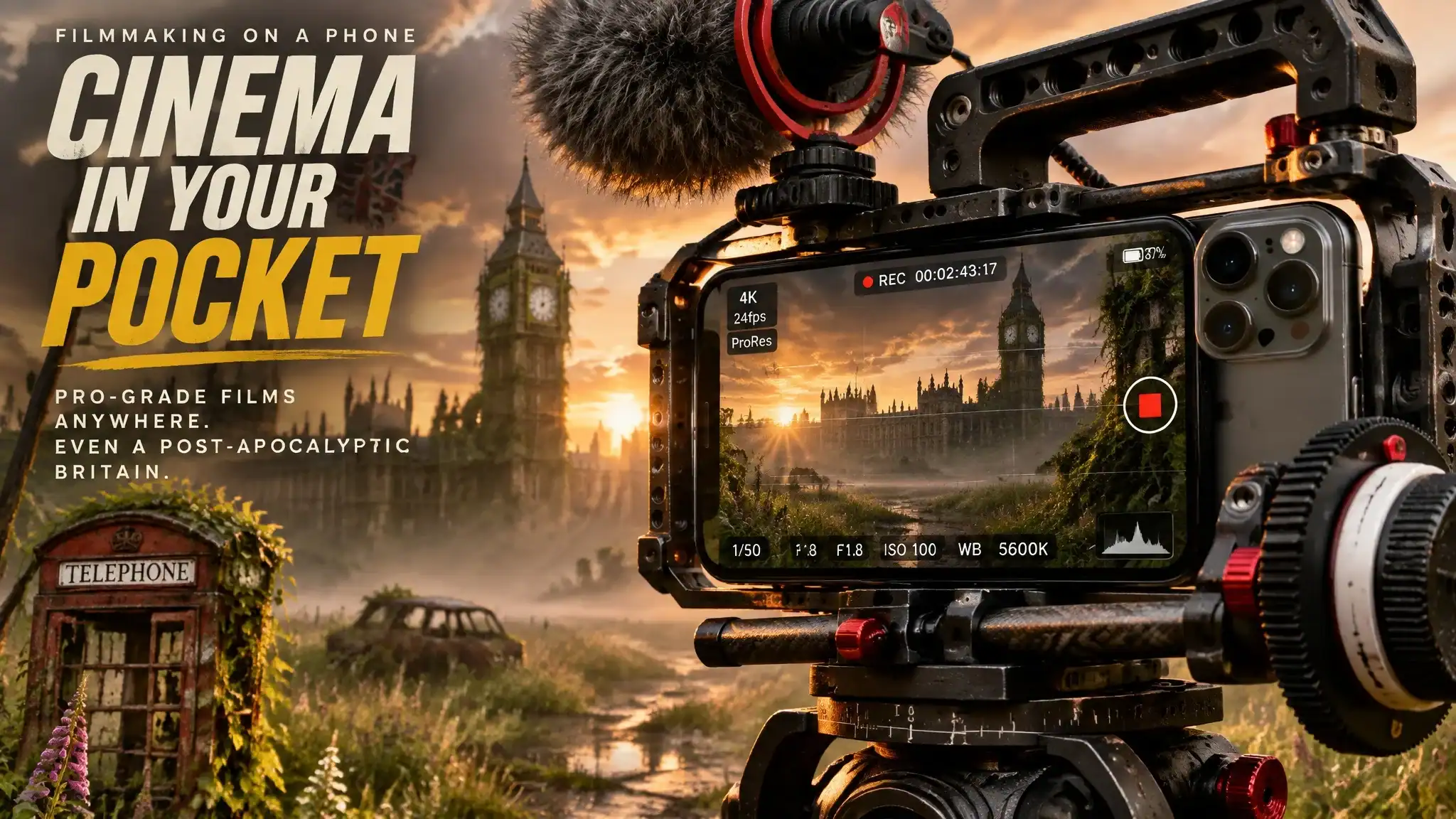
Danny Boyle took a zombie sequel into the British countryside in 2025 and left the standard studio cinema cameras behind, shooting 28 Years Later on an iPhone 15 Pro Max. Whenever a “Shot on iPhone” credit rolls on a major release, the immediate question is how much of that footage comes from the pocket sensor and how much is carried by a six-figure rig strapped around the chassis. That consumer-tech debate echoes how, according to GeekExtreme’s Millie Bobby Brown deepfake analysis, accessible machine learning tools are also shrinking the gap between hobbyist demos and studio visual effects pipelines. Looking at the actual production history of movies filmed on iPhones reveals a sharp split in how sets deploy the hardware.
Some productions run start to finish on a bare handset to move fast in tight spaces, while others bolt the phone into a wider camera package or studio stabilization setup. The verified track record spans six major productions: Sean Baker’s 2015 Sundance breakthrough Tangerine, Steven Soderbergh’s Unsane and High Flying Bird, pop music videos from Olivia Rodrigo and The Weeknd, and Boyle’s 28 Years Later.
Key takeaways
- Six major productions anchor the verified iPhone record: Tangerine (2015, iPhone 5S), Steven Soderbergh’s Unsane and High Flying Bird, Olivia Rodrigo’s “Get Him Back” (iPhone 15), The Weeknd’s “Dancing in the Flames” (iPhone 16), and Danny Boyle’s 28 Years Later (2025, iPhone 15 Pro Max).
- Crews pair the identical pocket camera with anything from zero support gear (Soderbergh holding a phone in a wheelchair) to roughly $100,000 in stabilized heads and dollies on Olivia Rodrigo’s iPhone-shot commercials.
- Current iPhones record theatrical-grade footage in 4K ProRes and Apple Log with manual controls unlocked through the Blackmagic Camera app. Small-sensor physics still apply: crews keep ISO low and stage subjects 15 feet from walls to get cleaner separation.
Movies filmed on iPhones: from Tangerine to 28 Years Later
Verified feature movies filmed on iPhones include Sean Baker’s Tangerine (2015, iPhone 5S), Steven Soderbergh’s Unsane and High Flying Bird, and Danny Boyle’s 28 Years Later (2025). The production catalog also covers pop music videos: Olivia Rodrigo’s “Get Him Back” (iPhone 15) and The Weeknd’s “Dancing in the Flames” (iPhone 16). These projects span indie festival winners to wide studio releases, with 28 Years Later standing as the flagship feature shot on an iPhone 15 Pro Max.
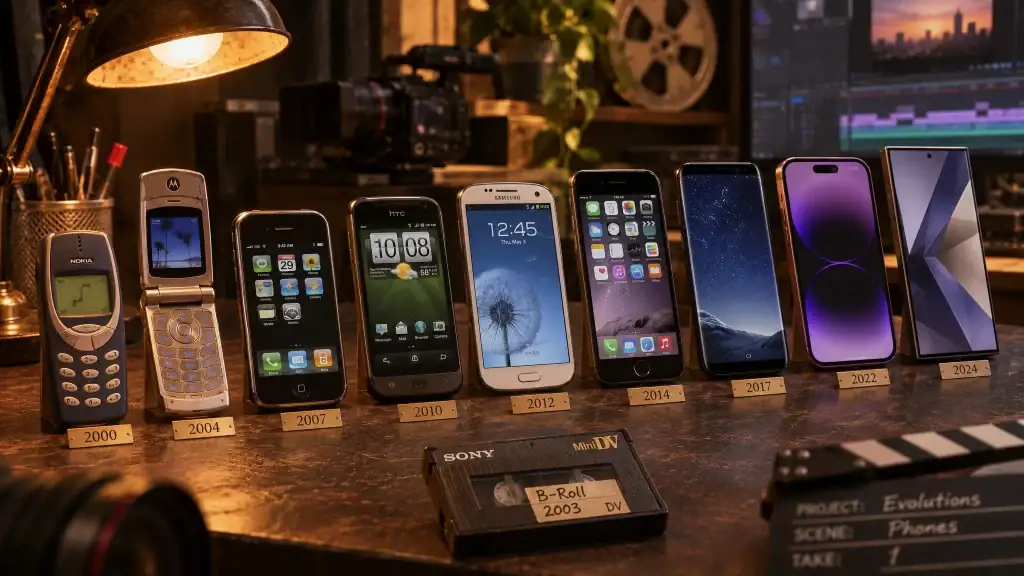
From Tangerine’s iPhone 5S to Boyle’s 15 Pro Max, the verified filmography is only six credits deep but spans every tier of production.
Sean Baker proved the format could carry a theatrical release when he shot Tangerine start to finish on an iPhone 5S, premiered it at the Sundance Film Festival, and took home multiple awards. With that consensus established across festivals and multiplexes, the iPhone is a proven filmmaking tool whenever a production values mobility and location access over native large-sensor optics.
| Production | Director / Artist | iPhone Model | Verified Scope |
|---|---|---|---|
| Tangerine (2015) | Sean Baker | iPhone 5S | Yes: entire film on iPhone 5S |
| Unsane | Steven Soderbergh | iPhone | Yes: full feature on iPhone |
| High Flying Bird | Steven Soderbergh | iPhone | Yes: full feature on iPhone |
| “Get Him Back” | Olivia Rodrigo | iPhone 15 | Yes: entire video on iPhone 15 |
| “Dancing in the Flames” | The Weeknd | iPhone 16 | Yes: shot on iPhone 16 |
| 28 Years Later (2025) | Danny Boyle | iPhone 15 Pro Max | Partial: shot on iPhone 15 Pro Max; exact share of footage not public |
Looking past the model numbers, these six credits divide into two distinct workflows. Tangerine, Unsane, High Flying Bird, and “Get Him Back” committed to the handset for the entire shoot, whereas 28 Years Later used the iPhone 15 Pro Max without making the exact share of phone footage public.
No verified feature films appear in the record for the iPhone 11, 12, 13, or 14, and no feature beyond 28 Years Later is documented for the iPhone 15 Pro Max. Across these shoots, the identical consumer phone sits in a director’s bare hand in a wheelchair or on a roommate’s borrowed tripod. On commercial sets, it bolts into roughly $100,000 in stabilized heads and dollies.
Tangerine: the 2015 iPhone 5S breakthrough
Tangerine is the widely credited indie feature breakthrough that launched the modern wave of mobile filmmaking. Rather than claiming to be the literal first experiment ever recorded on a handset, since earlier unverified shorts may exist, Tangerine holds the title of the canonical first landmark that proved a smartphone movie could win over major festival juries. Directed by Sean Baker in 2015, the feature was shot entirely on an iPhone 5S and premiered at the Sundance Film Festival, where it won multiple awards.
Before Baker brought an iPhone 5S edit to Park City, shooting a feature on a consumer phone was largely dismissed as an amateur novelty. Winning multiple awards out of a Sundance premiere changed the math for working directors. Tangerine established a clear blueprint: a filmmaker could skip traditional camera package rentals, shoot start to finish on a pocket device, and still walk away with festival hardware and serious critical backing.
Unsane and High Flying Bird: Soderbergh’s iPhone features
Steven Soderbergh shot two complete feature films on iPhones. Unsane and High Flying Bird, using minimal gear to maximize creative freedom on set. Instead of surrounding the handset with heavy studio cages and giant camera trucks, the Academy Award-winning director stripped the physical production down to the essentials so he could move as fast as his cast. At times on set, Soderbergh operated the camera by simply holding the iPhone in his hand while sitting in a wheelchair.
Unsane: a full feature shot on iPhone
When Steven Soderbergh decided to shoot Unsane as a full feature on an iPhone, the draw was creative freedom on set. Traditional studio packages lock a crew into slow lighting resets, heavy tripod heads, and long lens swaps that eat up shooting days. Working without elaborate rigs or expensive camera setups let Soderbergh treat the set like a live rehearsal space, rolling takes quickly and pivoting angles on the fly. That stripped-down workflow paid off outside the edit bay as well: Unsane landed critical acclaim and turned a profit at the box office.
High Flying Bird: a full feature shot on iPhone
Soderbergh doubled down on the exact same handheld philosophy for High Flying Bird, shooting a second full feature on an iPhone without dragging expensive stabilization hardware onto the call sheet. Rather than treating Unsane as a one-off thriller gimmick, he used the pocket camera again to keep his footprint small and his blocking flexible. Rolling around a location in a wheelchair with a bare phone in hand turns a complex tracking shot into a two-minute adjustment. Like its predecessor, High Flying Bird earned strong critical praise and was box-office profitable, proving a director could repeat the minimal-gear model across multiple genres.
Music videos shot on iPhones: Rodrigo and The Weeknd
Pop music videos use current-generation iPhones inside six-figure production packages, proving that a professional “Shot on iPhone” credit is a deliberate choice for visual style and camera access inside a budget rather than a cheap shortcut. While the iPhone 15 and iPhone 16 carry headline music-video credits, no notable Hollywood feature films are documented for the iPhone 16, iPhone 14, or iPhone 13.
‘Get Him Back’: Olivia Rodrigo’s iPhone 15 video
Olivia Rodrigo’s music video “Get Him Back” was shot entirely on an iPhone 15. Across her broader iPhone-shot commercial work, having a consumer phone at the center of the camera department didn’t mean working with consumer tripods: as filmmaker Isaac Carlton and the Tomorrows Filmmakers breakdown point out, Olivia Rodrigo’s iPhone-shot commercials used roughly $100,000 in stabilized heads and dollies to move the phone through the frame. At Geek Vibes Nation, we love pointing out that hardware contrast: the camera fits in a jeans pocket, while the robotics carrying it cost as much as a cinema package.
‘Dancing in the Flames’: The Weeknd’s iPhone 16 video
The Weeknd’s music video “Dancing in the Flames” pushed the hardware generation forward, going out as a release shot on an iPhone 16. That video is the flagship professional showcase for the iPhone 16 sensor, as feature film productions haven’t logged a documented Hollywood theatrical credit on the model yet.
Years Later: the iPhone 15 Pro Max blockbuster
Yes, 28 Years Later was shot on an iPhone 15 Pro Max by director Danny Boyle. The production skipped the standard studio package, no RED cinema camera, ARRI Alexa, Sony mirrorless rig, or roughly $100,000 camera rig. Instead, this sequel to zombie-cinema landmarks 28 Days Later and 28 Weeks Later put a smartphone at the core of its capture setup. Boyle made the switch so his crew could maintain a minimal production footprint in remote British locations meant to look untouched for 28 years.
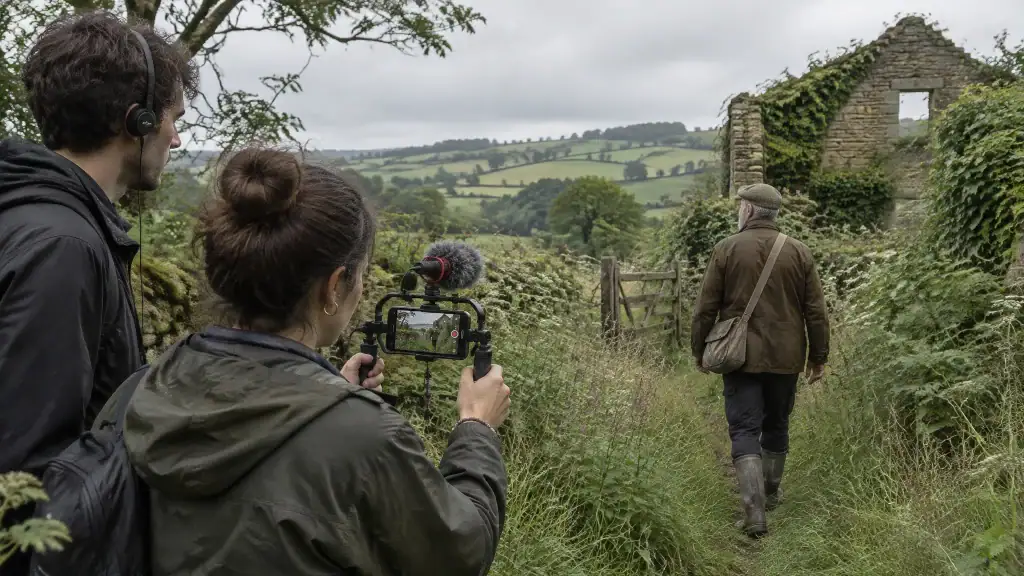
Boyle picked the phone so the crew could slip into overgrown locations without flattening the scenery a camera truck would trample.
Why Danny Boyle shot 28 Years Later on an iPhone
Danny Boyle’s reason for shooting 28 Years Later on an iPhone was to keep his crew’s physical production footprint light in untouched rural locations. Moving a traditional studio camera truck into overgrown countryside flattens the exact scenery the script needs to preserve, whereas Boyle noted in the Tomorrows Filmmakers breakdown that normal equipment leaves a mark and that he loves employing technology whenever there’s a reason inside the story for it. He noted that the setup let the camera blend into the background more effectively than anything he had used since 28 Days Later, while cinematographer Anthony Dod Mantle explained that the phone gave the crew new freedoms to sneak into tight locations and execute guerrilla-style filming in real environments without shutting down city blocks.
What the iPhone footage looks like in 28 Years Later
Movies shot on iPhones can look indistinguishable from traditional cinema-camera features on the big screen because the pocket hardware delivers what Boyle described as quality for cinema without needing a RED or ARRI Alexa body. Boyle pushed back on the idea that he picked the phone for grittiness or found-footage realism, noting that the original film’s aesthetic was almost like recovered, phoned footage. Instead, as the Tomorrows Filmmakers narrator interprets the sequel’s visuals, the iPhone shots capture nature’s rebirth and wide cinematic scope so the images feel like something naturally found inside the story’s world.
How 28 Years Later performed with audiences
Certified fresh on Rotten Tomatoes, 28 Years Later was characterized by the Tomorrows Filmmakers narrator as the highest-profile iPhone film ever made. When that narrator scanned post-release reviews and audience reactions after the theatrical debut, not a single viewer complained that the movie looked like it was shot on an iPhone; people debated the acting, individual scenes, and the story arc instead. That tracks with the narrator’s own experience shooting multiple weddings and commercials on an iPhone, where no filmmaker shown the final cut could tell the difference.
From 28 Days Later’s mini DV to the iPhone 15 Pro Max
Danny Boyle’s decision to put an iPhone 15 Pro Max on a theatrical sequel traces straight back to 2002, when he shot 28 Days Later on a mini DV camera of the type used for skateboarding videos. That early digital tape format wasn’t an iPhone, of course, but its lower image quality matched the apocalyptic story and set Boyle’s career precedent for pairing accessible consumer tech with a film’s aesthetic. From that 2002 mini DV experiment, the verified hardware lineage jumps to Sean Baker’s Tangerine on an iPhone 5S in 2015, moves through Steven Soderbergh’s Unsane and High Flying Bird, picks up Olivia Rodrigo’s iPhone 15 video and The Weeknd’s iPhone 16 shoot, and lands on 28 Years Later.
Despite that decade-plus catalog, the myth that phones haven’t touched real movies still floats around online. In his short-film challenge video, creator Isaac Carlton opened with a novelty hook claiming that no movie had ever been made on an iPhone and no Hollywood feature had been edited on one, an assertion directly contradicted by full iPhone features like Tangerine and Unsane. Meanwhile, whenever a new release leans on kinetic handheld camera work, audiences immediately wonder if a phone was involved, sparking searches over whether the entire F1 movie was shot on an iPhone even when no verified phone-camera data exists in the record.
Why directors shoot movies on iPhones
Filmmakers shoot full movies on iPhones without expensive rigs by treating camera support gear as an optional variable matched to location access rather than a mandatory cost of admission. Once a director stops trying to rebuild a studio tripod package around a smartphone, the production can scale its hardware down to whatever fits through the door.
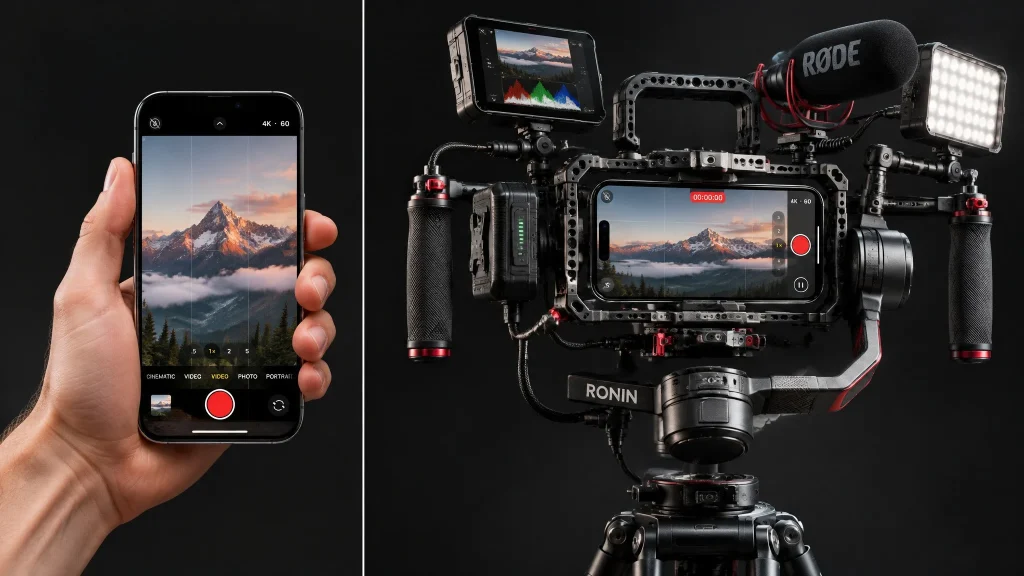
The sensor stays identical while the support gear swings from Soderbergh’s bare hand in a wheelchair to roughly $100,000 in stabilized heads and dollies.
Access and footprint: the directors’ reasons
Working directors pick the phone for where a crew can physically fit, not because they think a tiny sensor beats cinema glass in a lab test. Boyle wanted a light footprint in untouched countryside and the feeling of being invisible with a camera for the first time since 28 Days Later. Dod Mantle wanted guerrilla access to tight locations without the municipal headache of shutting down city blocks. Soderbergh wanted creative freedom unburdened by slow, elaborate studio setups. In every case, the iPhone’s decisive advantage on set is fitting into spaces a traditional camera package can’t go.
The support-gear spectrum: from no rig to $100,000
The exact same consumer camera operates across a wild spectrum of physical support gear depending on the shot list. At the zero-dollar end, Soderbergh held the phone in his hands while sitting in a wheelchair. One step up sits household improvisation, where Isaac Carlton relied on his own arms and a roommate’s borrowed tripod. At the studio commercial ceiling sit Olivia Rodrigo’s iPhone-shot commercials, where Carlton and Tomorrows Filmmakers report the production paired the handset with roughly $100,000 in stabilized heads and dollies.
What an iPhone camera can and can’t capture on set
Modern iPhones output files that survive a theatrical color grade, provided the crew works around the physics of a tiny smartphone sensor.
The capture stack behind gradeable film footage
Current iPhones record 4K ProRes and Apple Log, which unlocks extra dynamic range for editing and color grading. Combined with external cinematic lenses, stabilization accessories, and the Blackmagic Camera app to unlock manual settings the native camera app hides, the phone delivers clean, gradeable footage.
Small-sensor limits: depth of field and low light
Because an iPhone lacks a large sensor and a low-aperture lens, shooters fake shallow depth of field (keeping the subject sharp against a blurry background) by increasing subject-to-background distance, a Content Creators test showing noticeably stronger blur at 15 feet from a wall than at 3 feet. Small sensor physics also cause visible high ISO noise when digital brightness is cranked, forcing crews to keep ISO as low as possible and light the scene properly.
Can you make a movie with just an iPhone?
Everyday creators can make a complete movie with just an iPhone, provided they’re willing to trade the speed of a desktop monitor for an edit suite that lives in their pocket. You don’t need Danny Boyle’s location budget to finish a project on a handset.
Isaac Carlton’s iPhone-only short film
To test a true zero-computer workflow, creator Isaac Carlton challenged himself to write, direct, shoot, edit, and export an action short film using only an iPhone’s 6-inch screen and an unnamed free editing app, with no separate cameras or paid software. He scripted a fight between two friends playing “roll the dice,” a nonsensical game mixing 50 dice, two card decks, and poker chips that erupts after a player lays down a joker card with three poker chips. Typing the entire script on the phone’s glass keyboard left him with sore fingers before cameras ever rolled.
Shooting action on a phone with no rig
Carlton picked the action genre so kinetic handheld movement could carry the fight choreography once he moved his lights and dropped his roommate’s borrowed tripod. Shooting with a small crew of friends and real breakable glass bottles, the fight scene took about 3 hours of combined rehearsal and filming, passing an on-set checkpoint at 2.5 hours.
Editing and sound design on the phone
Cutting a film via mobile editing on a long-form timeline hit an immediate wall: Carlton initially called the process a nightmare that felt easy for TikTok clips but impossible for a true movie. He refused to switch to a computer, pushing through the slower interface because the edit suite was always in his pocket.
To make the fight land, he pulled nearly every song and sound effect from Artlist, a library he had used on every project for two years, and recorded custom house foley by dropping a Topo Chico bottle on cement when the library’s glass-break audio fell flat. Carlton finished and exported the short directly from the handset, then posted a link to watch the completed cut.
What iPhone-shot movies mean for filmmaking
With a Sundance winner like Tangerine, a theatrical release like 28 Years Later, and Carlton’s phone-edited short on the record, the gear gap has closed and major directors, studios, festivals, and audiences treat the smartphone as a legitimate tool. Boyle pointed to this democratization of cinema by noting that the technology sits in everyone’s pockets with superb quality for the big screen.
According to Gamcore’s iOS games section, mobile users also seek out web-based adult interactive stories designed for iPhone and iPad that bypass standard App Store restrictions. What separates amateur clips from cinema is seven craft skills: lighting setups, shot selection, storytelling, editing, color grading, sound design, and camera movement.
Frequently Asked Questions
What famous movies were shot on iPhones?
Four feature films anchor the verified smartphone catalog: Sean Baker’s Tangerine (2015, iPhone 5S), Steven Soderbergh’s Unsane and High Flying Bird, and Danny Boyle’s 28 Years Later (2025, iPhone 15 Pro Max). Beyond theatrical features, major pop music videos like Olivia Rodrigo’s “Get Him Back” (iPhone 15) and The Weeknd’s “Dancing in the Flames” (iPhone 16) also relied on Apple’s pocket hardware.
Why did Danny Boyle shoot 28 Years Later on an iPhone?
Boyle ditched bulky studio camera trucks so his crew wouldn’t trample the overgrown rural British landscapes meant to look untouched for 28 years. Cinematographer Anthony Dod Mantle also used the compact phone setup for guerrilla-style access, slipping into tight spaces and real environments without having to shut down city blocks.
What was the first movie shot on an iPhone?
While earlier unverified shorts may exist, Sean Baker’s 2015 indie drama Tangerine is widely credited as the canonical feature breakthrough for smartphone cinema. Shot start to finish on an iPhone 5S, it premiered at the Sundance Film Festival, took home multiple awards, and proved a pocket device could carry a legitimate theatrical release.
Have any Hollywood movies been shot on an iPhone 16, 14, or 13?
No verified Hollywood feature films have been documented on the iPhone 16, 14, 13, 12, or 11. The iPhone 16’s flagship professional showcase is The Weeknd’s “Dancing in the Flames” music video rather than a theatrical feature.
Is the iPhone good for filmmaking?
An iPhone is a legitimate filmmaking tool whenever a shoot prioritizes speed, tight location access, and a light footprint over large-sensor optics. Even solo creators like Isaac Carlton have written, shot, edited, and exported complete action shorts entirely on a 6-inch iPhone screen using a free editing app and a borrowed tripod. What ultimately separates amateur clips from cinema isn’t the camera body, but how you handle lighting setups, shot selection, storytelling, editing, color grading, sound design, and camera movement.

Sandra Larson is a writer with the personal blog at ElizabethanAuthor and an academic coach for students. Her main sphere of professional interest is the connection between AI and modern study techniques. Sandra believes that digital tools are a way to a better future in the education system.