

As NAZA co-directors Yuval Abraham and Rachel Szor stood solemnly, maybe even uncomfortably, during their record-breaking 25-minute standing ovation after their film’s world premiere at the 2026 Venice International Film Festival, you could almost feel the rise of a thick, palpable air of cognitive dissonance, even if you watched it all go down through your smartphone screen. “It doesn’t sit right with me to see Yuval Abraham and Rachel Szor get a standing ovation at Venice while their No Other Land co-director Basel Adra is watching his community get bulldozed,” wrote Twitter user @ariellebeau. Indeed, as the Israeli directorial duo endured the echoes of applause bouncing off the Palazzo walls, Adra was continuing to document the further destruction of his home village, Masafer Yatta, by the Israel Defense Forces on Instagram. Abraham and Szor, along with a fourth co-director, Palestinian activist Hamdan Ballal, had worked with Adra on the aforementioned film, which went on to win the Oscar for Best Documentary Feature and bring both their activism and the struggles of Masafer Yatta worldwide recognition. And yet here were the Israeli contingent of the film’s artistic team screening their follow-up in Venice, all while the IDF was (and is) continuing to demolish homes and displace Palestinians with little to no international fanfare. “Two Israelis are being applauded for documenting the genocide their people are committing,” wrote another Twitter user, @muerteserena_. “You can’t make this shit up.”
This type of sentiment was overwhelming on Twitter, a platform whose heinous algorithm conveniently drowns out nuance and counterpoint, such as when Abraham himself brought attention to and commended the silenced Palestinian journalists who laid the groundwork for his film as he was receiving the Special Jury Prize, or the hundreds of tweets earnestly recognizing Abraham and Szor’s work in continuing to expose their own country’s genocidal occupation, work that has effectively made them enemies of the Israeli state and his put their citizenship in the country at risk. Twitter’s algorithm was, of course, kind enough to leave room to propagate hateful reply tweets from Zionists and patriotic Israelis, deeming them traitors and, in so many words, just as bad as the Nazis. Oh, the irony. All of this is an old song at this point, particularly for those who have endured years of endless debate and discourse over the Israeli-Palestinian conflict both before and after the events of October 7, 2023. However, if you have actually watched NAZA, all of this looks wildly misguided. To suggest that Abraham and Szor are complicit in their own country’s genocide by being commended for presenting a condemnation of it on the world stage is, on its face, preposterous, but the deeper implication that NAZA’s lack of Palestinian involvement makes it a lesser portrait of the ongoing genocide weaponizes the politics of a specific conflict, one that it clinically dissects to harrowing effect, against a film whose insights speak volumes to a much larger societal evil, one that is not exclusive to Israel or Palestine.
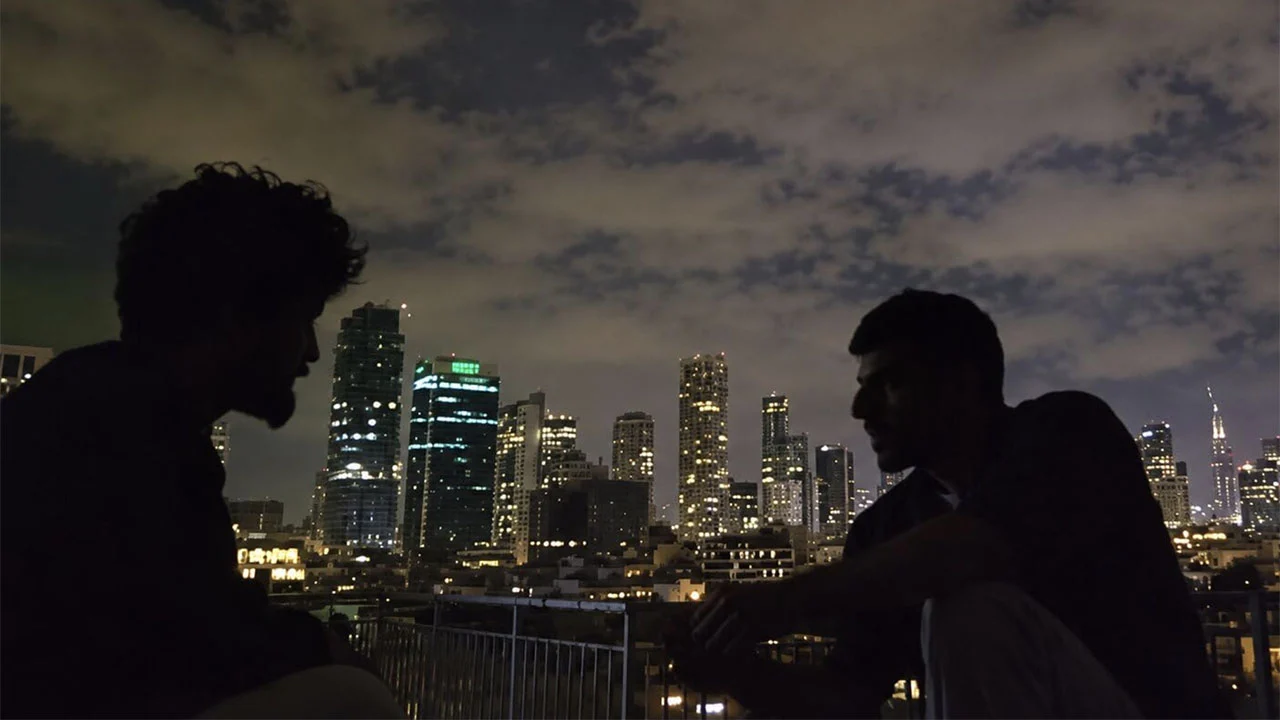
NAZA, whose title refers to the IDF’s shorthand for collateral damage, explores the IDF’s tools of artificial intelligence and mass surveillance in the targeting of Hamas operatives through the testimonies of 24 different anonymous IDF officers who have firsthand experience using the technology. Filmed almost entirely on the rooftops of Tel Aviv, each interviewee is filmed in silhouette to obscure their identities, barely backlit by street lamps or apartment windows. However, the exacting detail of their testimonies, the matter-of-fact way they describe how flippantly this advanced military technology has become a tool of mass killing rather than covert tracking, is anything but obscure. In fact, their testimonies do more to illuminate the sheer terror of Israel’s military industrial complex than a well-lit interview ever could. Subjects detail Israel’s heinous methodology in exacting violence against Hamas members and, subsequently, surrounding Palestinian women and children, such as locating individuals through intelligence gathered from an Israeli phone network and, upon seeing them return to what they assume is their home, pinpointing a location to execute an airstrike. With the push of a button, IDF soldiers behind a computer screen can slaughter anywhere between 50 to 500 innocent Palestinian citizens all because they may or may not successfully target one (1) Hamas operative.
As we listen to these devastating vignettes of carnage, Abraham and Szor complement the voiceovers with views of Tel Aviv from the rooftops. We watch buildings light up the night, but we also peer into people’s apartments through their windows, voyeuristically watching them like L. B. Jeffries in Rear Window. Sometimes, we watch people stroll the streets and local parks, completely unaware that a camera is following them. It’s an eerie reflection of the very surveillance state NAZA’s subjects are describing, forcing the audience to be complicit in the reality that all of us are being watched everywhere we go, even in our most vulnerable moments. All the more ironic are views of individuals watching the news in their living rooms, specifically press conferences in which Israeli Prime Minister Benjamin Netanyahu insists that the country is doing everything to keep them safe.
This startling formal choice immediately sets NAZA apart from its predecessor, No Other Land. The latter was an urgent document of Israel’s actions in the West Bank but grounded in a traditional cinema verite that did what it needed to do and little else. NAZA is a more introspective experiment in the art of documentary, a formally daring and journalistically incisive attempt at deconstructing one’s own country by analyzing how the sausage of the modern surveillance state is made. There are no Palestinian perspectives in NAZA because they are not the ones who need to look in the mirror; it is the responsibility of Israelis, who are born and bred to dehumanize Palestinians and desire their destruction, to look within themselves and dismantle their indoctrination, all the while taking stock of the slippery slope of their country’s surveillance tools. NAZA’s visual language implies that the very same tools used to kill Palestinians can be used to surveil or even kill you at any moment. It’s a sobering reality to process, one that any citizen of a nation ruled by autocrats or tech conglomerates will face while watching.
No Other Land was released while the genocide was still fresh in the minds of moviegoers, particularly those who were desperate to support a film that clearly displayed atrocities in a way online discourse could not overlook. Now, three years after the events of October 7, as the majority of the modern world has come to terms with the fact that global complacency has allowed for Palestine to be turned to rubble, it is no longer about merely coming to terms with the action of genocide. It is now about recognizing the tools of genocide, the ways in which our governments neuter its citizens in believing panoptical tools are here for our safety and sanctity when, in reality, they are used as weapons of control. For those living in the United States, consider: how many times have you spoken something to a friend and you suddenly begin getting advertisements for it on your phone? Do you think those Flock cameras just appeared out the blue? How about all of the robo-calls coming through your phone, or the bots sliding into your DMs? Not of it is a coincidence, and if NAZA’s microcosmic look at the methodology behind the genocide in Palestine is enough to start making you ask questions about your own country’s government, then it has done more good for society than any individual activist ever could.
NAZA held its North American Premiere as part of the Main Slate section of the 2026 New York Film Festival. It is currently playing in select theaters nationwide and will be available to stream for free via The Guardian in late November.
Director: Yuval Abraham and Rachel Szor
Screenwriter: Yuval Abraham and Rachel Szor
Rated: NR
Runtime: 77m
Formally daring and unflinching in its portrayal of complacency amidst evil, NAZA is a stirring document of the Palestinian genocide that speaks volumes toward the broader growth of the modern surveillance state around the world and the potentially devastating effects of totalitarian governmental regimes.
-
GVN Rating

Larry Fried is a filmmaker, writer, and podcaster based in New Jersey. He is the host and creator of the podcast “My Favorite Movie is…,” a podcast dedicated to helping filmmakers make somebody’s next favorite movie. He is also the Visual Content Manager for Special Olympics New Jersey, an organization dedicated to competition and training opportunities for athletes with intellectual disabilities across the Garden State.