
You do not need to understand Zelda’s timeline to enjoy Ocarina of Time. You do not need to recognize its music, remember an old Nintendo controller, or have strong opinions about the Water Temple. For all the history surrounding this adventure, its invitation is simple: step outside somewhere familiar and discover how much bigger the world can be.
That makes a first playthrough something worth protecting. Longtime fans have spent decades discussing its memorable moments, sometimes forgetting that other people have yet to experience them. A little preparation can help you settle into the adventure, but there is no reason to study its surprises before you begin.
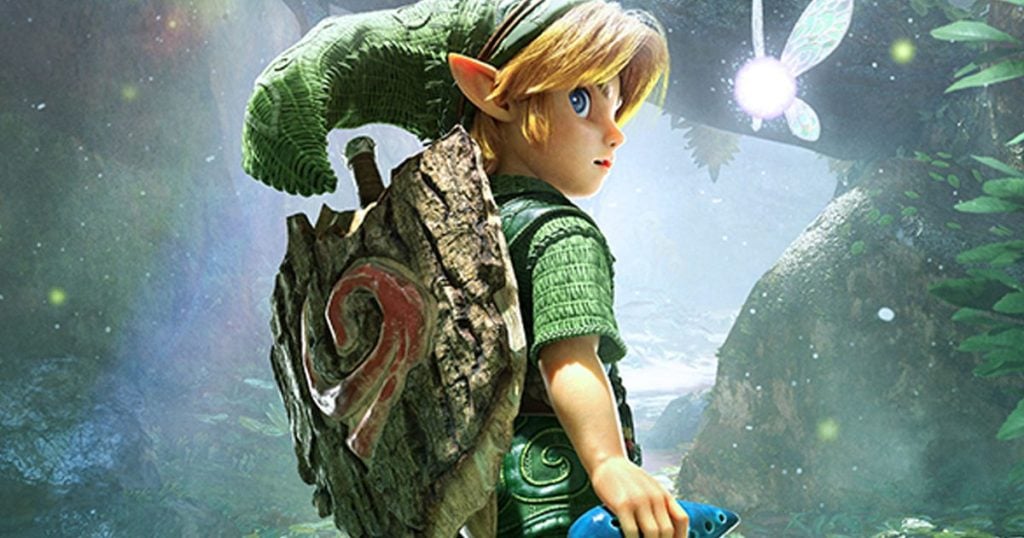
The story starts with Link, a young boy living in a forest, whose life changes when a fairy named Navi brings him an urgent summons. His journey carries him into Hyrule, a kingdom threatened by Ganondorf’s pursuit of the Triforce, a sacred source of power. Princess Zelda becomes central to his efforts to confront that danger. The game introduces its people, places, and mythology as you encounter them, giving newcomers the context they need along the way.
Understanding how the adventure moves forward is more useful than learning what happens next.
Ocarina of Time builds progress around exploration, conversations, dungeons, and equipment. You arrive somewhere new, discover a problem, and gradually learn what you can do about it. Sometimes the next step comes from a character’s request. Sometimes it comes from noticing a path you could not reach before.
Dungeons concentrate that rhythm into connected spaces. They combine enemies, locked doors, environmental puzzles, and rooms that become easier to understand as you explore. A new item might help you overcome an obstacle, then reveal possibilities in rooms you have already visited. You are building an understanding of the place alongside Link’s collection of tools.
This is why returning to earlier locations matters. An unreachable ledge or an unusual feature may be an invitation to come back with different equipment. Finding something you cannot use immediately does not necessarily mean you have missed a nearby solution. Remember it, continue exploring, and see whether a later discovery changes the situation.
If you keep notes while playing, a short description is enough: an inaccessible path near a recognizable landmark, for example. You do not need a spreadsheet of every chest. The pleasure comes from remembering an old obstacle at the moment a new possibility presents itself.
Players arriving from Breath of the Wild or Tears of the Kingdom will recognize the curiosity that drives this process. The difference is how the game directs it.
Those newer adventures give Link broad freedom to cross the landscape and experiment with interacting systems. Climbing, gliding, manipulating objects, and choosing distant destinations are central to their appeal. Ocarina of Time’s original design follows a more directed progression, with access to areas and challenges often depending on equipment or story progress.
That structure creates a different kind of anticipation. You may know where you want to go before you have the means to get there. A new tool can feel significant because the adventure has already shown you reasons to want it. Progress also gives individual locations time to establish their characters, problems, and atmosphere.
Expect puzzles to reward careful observation of the space and the tools available to you. When something seems impossible, examine the room, consider what has changed, and revisit the purpose of your equipment. Habits formed in modern Zelda remain useful, especially curiosity and experimentation, but expecting unrestricted climbing or elaborate construction would give you the wrong starting point.
Combat benefits from a similarly patient approach. Learn how targeting, guarding, and movement work in the version you are playing. Watch an unfamiliar enemy long enough to recognize when it attacks and when it leaves an opening. A little attention often accomplishes more than repeatedly swinging your sword.
Conversations deserve that attention too. Characters can provide directions, explain local problems, or draw your eye toward something unusual. You do not have to memorize every line, but rushing through dialogue can make the next objective feel less clear than it really is.
Music also belongs among your tools. The ocarina is an instrument you use during the adventure, and the songs you learn have practical roles. Let the game introduce those melodies and their significance. You do not need to memorize a song list beforehand, and discovering when a familiar tune becomes useful is part of the experience.
The same restraint helps when looking for assistance. If you are stuck, start with a hint about your immediate problem. A complete dungeon walkthrough can reveal several discoveries beyond the one blocking your progress. There is nothing wrong with getting help; choosing how much information to reveal lets you preserve the parts you still want to solve yourself.
Completion can wait as well. You can enjoy the central adventure without locating every collectible or exhausting every optional activity. Follow the detours that interest you. Leaving something unexplored gives you a reason to return, rather than a reason to treat your first visit as unfinished business.
Before choosing what to play or which guide to follow, it helps to separate three releases that often appear in the same conversation.
The Nintendo 64 original launched in 1998. Its controls and presentation reflect that hardware, and discussions of the “original experience” generally refer to this version. Older videos and walkthroughs may assume its button layout and interface.
Ocarina of Time 3D arrived on Nintendo 3DS in 2011. It revisited the adventure with updated graphics, stereoscopic 3D, touchscreen inventory management, and optional motion aiming. Those interface changes are especially relevant when comparing older advice about switching equipment. Nintendo’s description of the 3DS release explains its major improvements.
The new Nintendo Switch 2 remake is a separate release, scheduled for November 5, 2026. Nintendo has confirmed overhauled visuals, voiced cutscenes, expanded character dialogue, orchestral music, and revised camera and movement controls. These updates mean footage or control instructions from an earlier edition should not automatically be treated as a guide to the new game. Nintendo’s remake announcement establishes those changes.
For an ongoing reference, Zelda Central’s Ocarina of Time remake hub brings together release information, announced features, and comparisons with the earlier editions. Its version details are a useful starting point when a search result leaves you unsure which Ocarina of Time someone is discussing.
You can check that maintained hub as release approaches, then let the adventure introduce itself. There is no required reading list before entering Hyrule. Learn the controls, listen to the people you meet, and give an interesting path a few minutes of your attention. The memories other players keep talking about began with discoveries of their own. Yours can too.

Elara is a dynamic writer and blogger who specializes in pop culture and movie reviews. With a background in film studies and journalism, she combines her deep knowledge of the entertainment industry with a sharp, insightful writing style that keeps readers coming back for more.