Our world is connected, more now than ever before. That is a sentence that continues to be more true every single day. And yet, the gulf that arises between people has never been greater. Technology has always brought people closer together, at least that is the goal. Of course, when we think of technology, we only consider the internet, cellular phones, and the like. But technology has taken many forms over human history. There was a time when traveling over the ocean demanded new technologies, and this also made the world smaller, or at least one that could be navigated. Of course, currently, these technologies provide many more opportunities for taking advantage of one another rather than an honest connection. But that does not mean that those connections cannot happen, even in terrible circumstances.
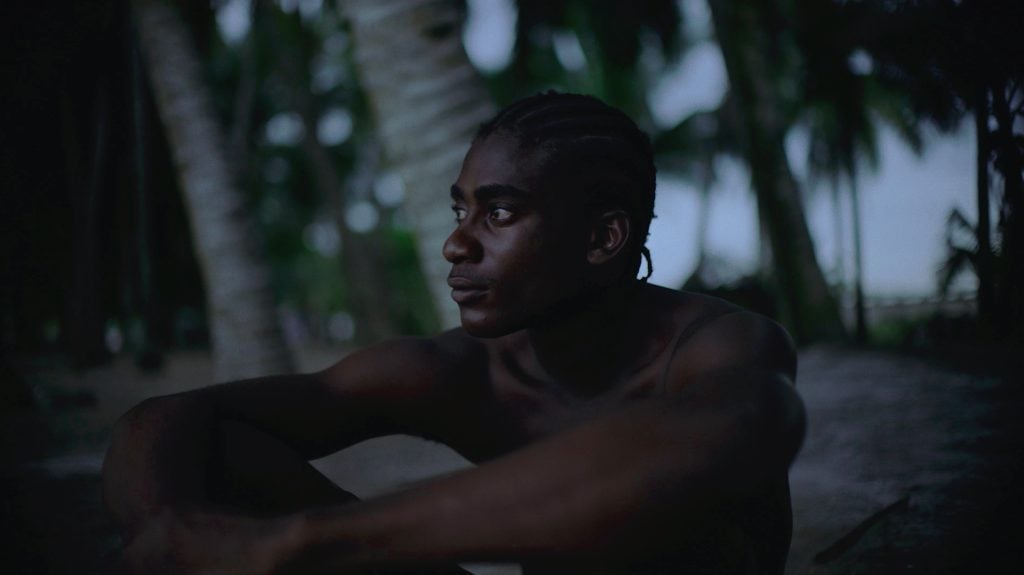
Paradise follows two stories bound to intersect. Kojo (Daniel Atsu Hukporti) is a teenager who lives in Ghana, in the city of Accra. He struggles with being torn between his fisherman father and the lure of quick money, aided by phishing schemes to take advantage of people on the internet. Many thousands of miles away, Tony (Joey Boivin-Desmeules), also a teenager, lives in Quebec with his unmarried mother, Chantal (Évelyne de la Chenelière). This young man lives a much more approachable life, spending time with his friends on a skateboard, getting into arguments with his mother, and struggling with his own personal growth. Yet, with a film like this, it leaves no doubt that the two will intersect. The magic of this film is its willingness to take a languorous pace to that crossover.
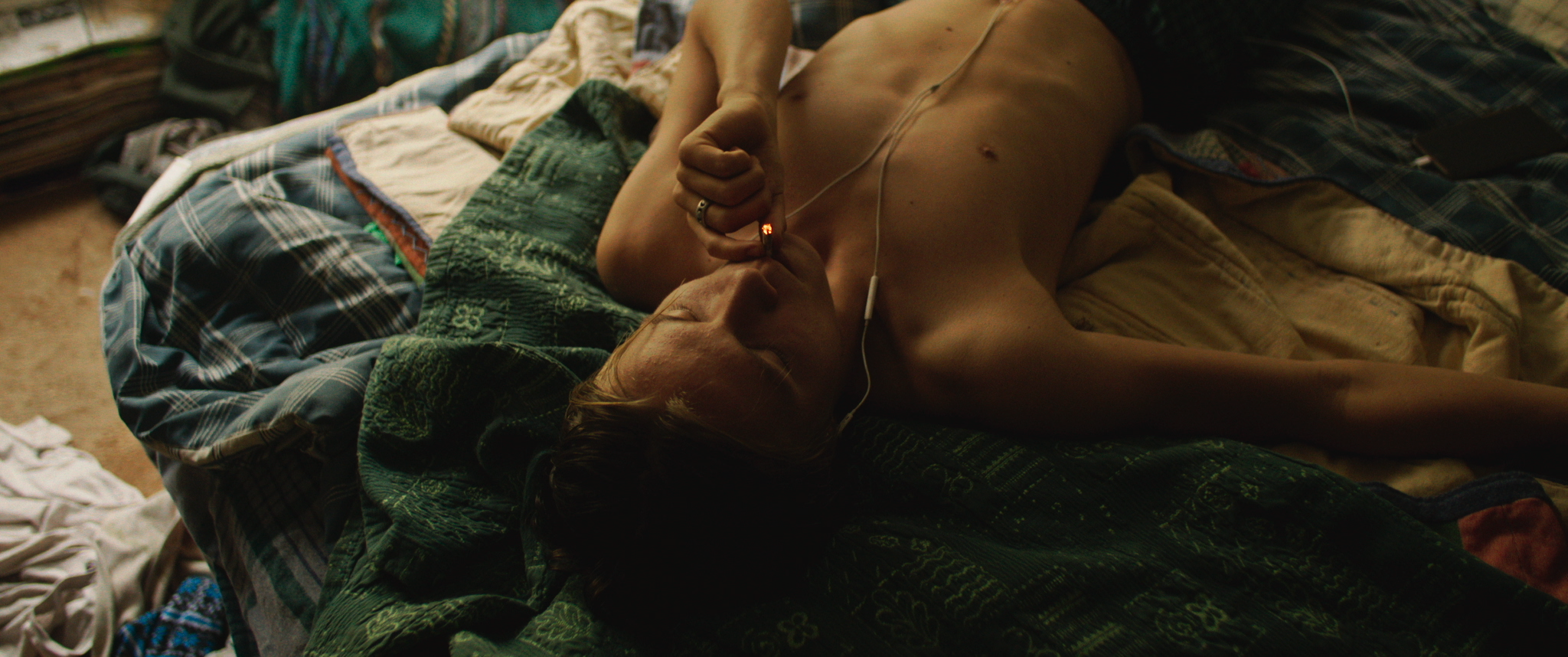
Director Jérémy Comte, along with cinematographer Olivier Gossot, creates striking images throughout, beginning with the opening scene. The blacks and blues created, which strike a contrast to the imagery of the bright red of a ship on fire, illuminating the night, will make even seasoned viewers lean forward in their seats. This, paired with whispered narration, sets the stage perfectly for Comte’s slowed pace and almost aching emotionality that echoes throughout the runtime. This poetic pace may be a detriment for some viewers, but fans of slow cinema will surely connect to it fairly easily.
There may be moments that lead to fidgeting in your seat, but it will be worth it in the end for the performances. Both Atsu Hukporti and Boivin-Desmeules are more than up to the task of leading this film, but in very different ways. The former has a quiet honor despite some less-than-savory decisions, while the latter perfectly portrays the difficulty of lacking parental stability and finding one’s own way. Additionally, both of these portrayals are aided by one parent, which creates a lovely parallel journey, despite their wildly disparate experiences.
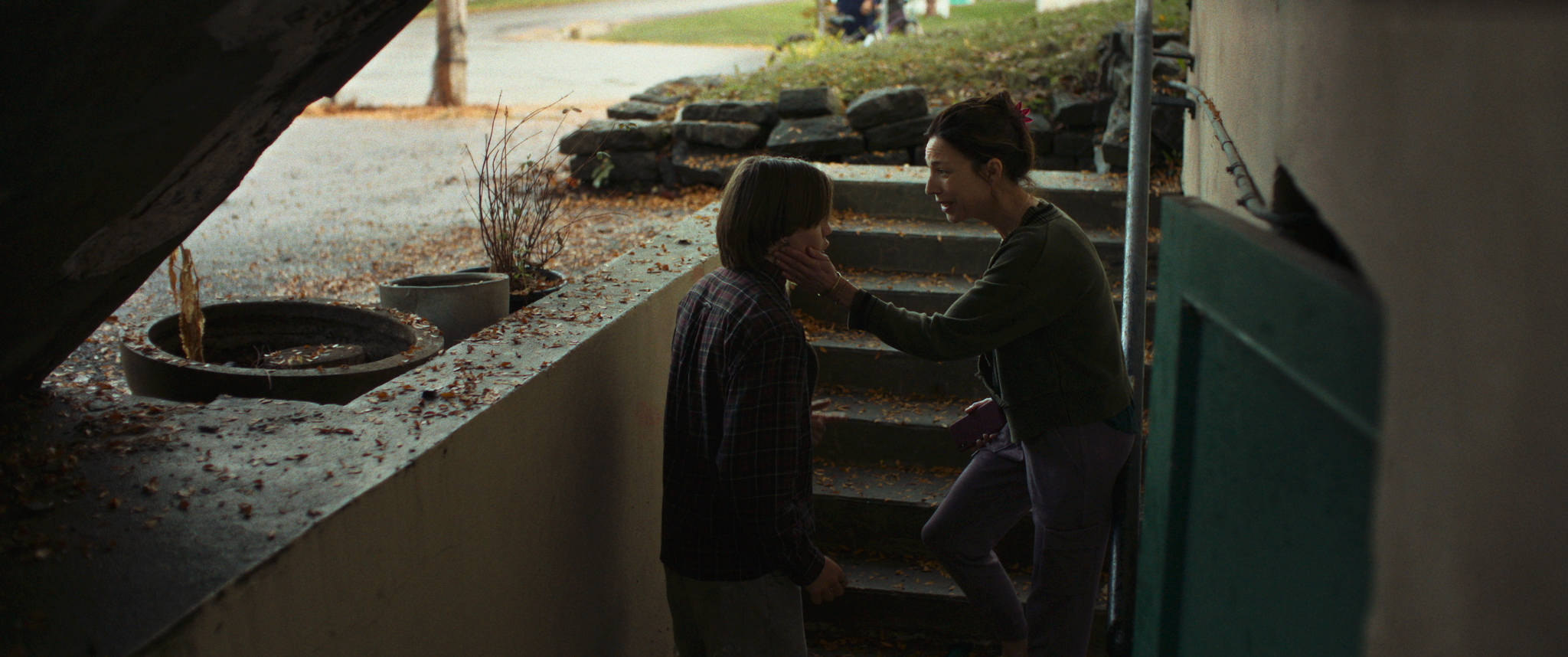
Despite a small role, Kojo’s father leaves an indelible mark on the film. Both in his brief presence and extended absence, he is never forgotten. As a matter of fact, it is possible to view Kojo’s choices as a direct result of that absence, which leads to the eventual connection of characters across literal oceans of distance. Chantal, on the other hand, is, in many ways, a woman adrift. She must find a way to take care of her son, all the while searching for her own happiness, mostly on the internet. The dangerous waters that she wades into certainly lead to a great amount of difficulty, but her subtle performance allows us to care for her, even if the decisions she makes put her (and her finances) in grave danger.
It would be easy to vilify those who trust other people, strangers, too easily. We have probably all done this, to some level, in our own lives. We wonder aloud how a relative or a friend could have their account hacked or send money to a person that they didn’t know in the real world. Comte, along with co-screenwriter Will Niava, never takes the easy route to an efficient lesson. There are no heroes and no villains. The world may be a dangerous place, but that does not mean kindness and trust should be eradicated. We are connected across oceans, but it is up to each of us to create a world worth living in.
Paradise had its World Premiere in the Panorama section of the 2026 Berlin International Film Festival.
Director: Jérémy Comte
Writer: Will Niava, Jérémy Comte
Rated: NR
Runtime: 90m
The world may be a dangerous place, but that does not mean kindness and trust should be eradicated. We are connected across oceans, but it is up to each of us to create a world worth living in.

Dave is a lifelong film fan who really got his start in the independent film heyday of the 90’s. Since then, he has tried to branch out into arthouse, international, and avant garde film. Despite that, he still enjoys a good romcom or action movie. His goal is to always expand his horizons, through writing and watching new movies.