

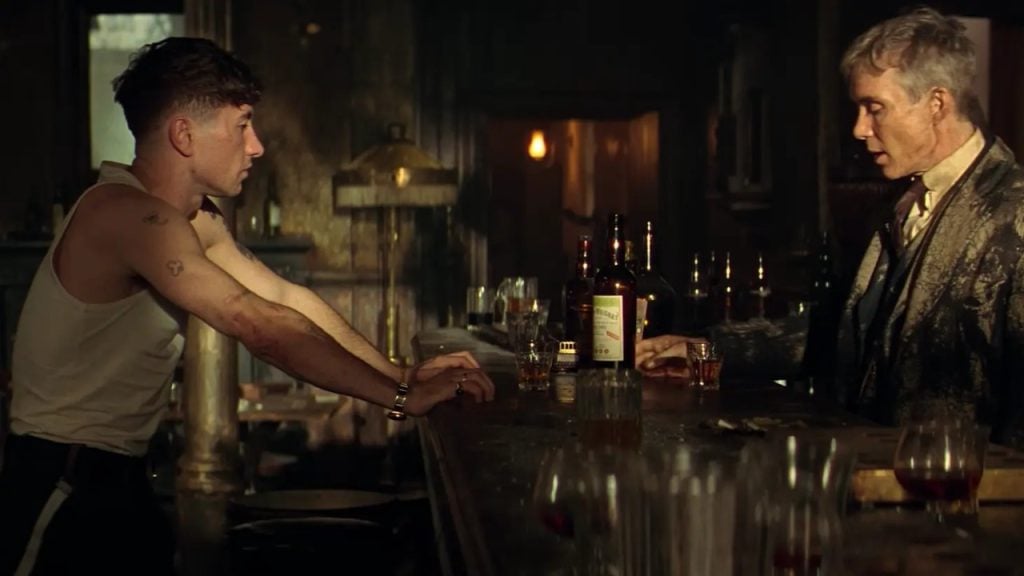
It’s been a while since the electric atmosphere in the cinema was this palpable. The last time audiences felt this way was during the Barbenheimer phenomenon, when excitement filled theatres worldwide. The love for Tommy Shelby, the Manchester crime world, and flat caps clearly hasn’t wavered after all those years. After a fitting gift from Netflix – on which the film will be released on the 20th of March – it was finally time to see how writer Steven Knight’s (Locke) global TV hit translates to the big screen.
Even more surprising than the unexpected introduction by Barry Keoghan (Crime 101) was the long wait for Nick Cave and the Bad Seeds’ Red Right Hand. What used to be the title track of the series is now used much later in the story. However, when this needle drop hits, it sets in motion one of the movie’s most iconic scenes. It takes a while to get there, and the drawn-out first act makes it feel even longer. After the explosive bombardment of a Birmingham arms factory, director Tom Harper (Wild Rose) and Knight take it down an entire notch action-wise.
They take the camera to a secluded mansion beyond Birmingham, where Tommy Shelby (Cillian Murphy) is now a mere trace of the man he once was. Gone are the days of him being one of the most feared gang bosses in Birmingham, as the memories of his late brother Arthur and daughter leave him drained. Even his attempt at writing his definitive autobiography, which is the laughing stock for the people around him, doesn’t make the ghosts disappear. On the contrary, when the spitting image and sister (Rebecca Ferguson) of his deceased love appears on his doorstep, the demons from his past start to haunt him even more.
While the introduction of Ferguson’s Kaulo provides more direction for Tommy, as her news about his troublesome son Duke (Keoghan) sets his life in motion, it has little impact on the film. It provides the opportunity to give Ferguson (A House of Dynamite) a strong female presence and significantly more magic to the Peaky Blinders world, but Knight soon discards her character to the sidelines. The same applies to Sophie Rundle. Besides experiencing the emotional influence her Ada has on Tommy and her character’s role as an MP in Birmingham, Rundle contributes very little to the overall storyline. That’s certainly not due to bad acting, as the Bodyguard actress delivers a striking performance. It is because Knight underuses her completely, which is where it becomes clear that Peaky Blinders works much better as a series than as a film.
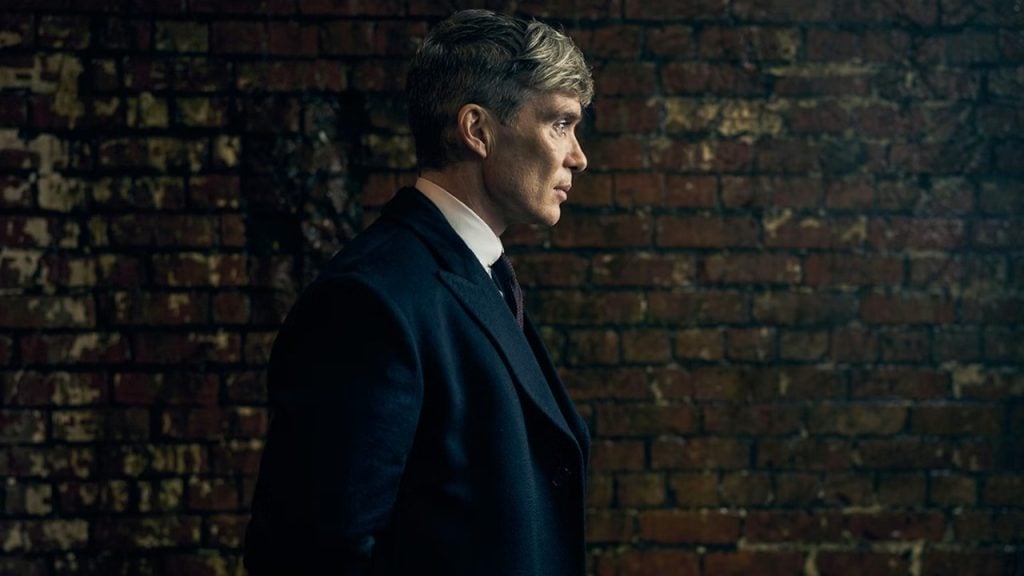
If Peaky Blinders: The Immortal Man had been six 50-minute-long episodes instead of a 112-minute feature, as there are certainly many scenes that could have been the ending of an episode, the supporting characters would be much more fleshed out. How did Ada navigate the events after the last season? How did she secure the political spot that once belonged to Tommy? What has she been up to? We know little to nothing about her comings and goings, as the filmmaker rightly wants to shine the brightest spotlight on Tommy. If Knight had dedicated one episode to Ada, her life and her strengthened connection with her brother, her presence and emotional impact would be far greater, allowing Rundle to become a far more significant presence.
The only two characters that hold comparable weight to Tommy are Duke and Nazi sympathiser John Beckett (Tim Roth). After hearing that Duke is raiding government artillery depots as the malicious leader of Gen Z Peaky Blinders and has formed a secret alliance with Beckett to distribute counterfeit money, Tommy heads back to his original stopping ground. Say farewell to the lengthy scenes of him wandering around his decaying house, smoking opium and visiting the graves and be ready to embrace him laying down the law in the most stylish and explosive way.
Tommy’s triumphant return results in the familiar ‘booting up and suiting up’ sequence, which certainly is one that will delight the fans, while also making the feature feel more like a movie than a prolonged episode for the very first time. When waging the emotional war with his son and the physical war with the Nazi’s, Tommy shows that he’s still the true alpha male, no matter how many times Duke tries to outshine him.
Murphy (Oppenheimer) gives once again an effortlessly charming and ruthless performance, while Keoghan delivers a solid effort, matching his cockiness, suave style, and squared-jaw appearance with a composed performance. While Duke could have easily been a cold-hearted ruffian, Keoghan does add the necessary subtle emotion without turning the movie into a drama. He could easily carry an entire episode on his own, and Roth (Tornado) could do the same. While his larger-than-life Nazi feels slightly over the top at times, Roth’s always enjoyable acting and the strained yet sadly unexplored relationship between Duke and Beckett add an extra explosive spark to the movie.
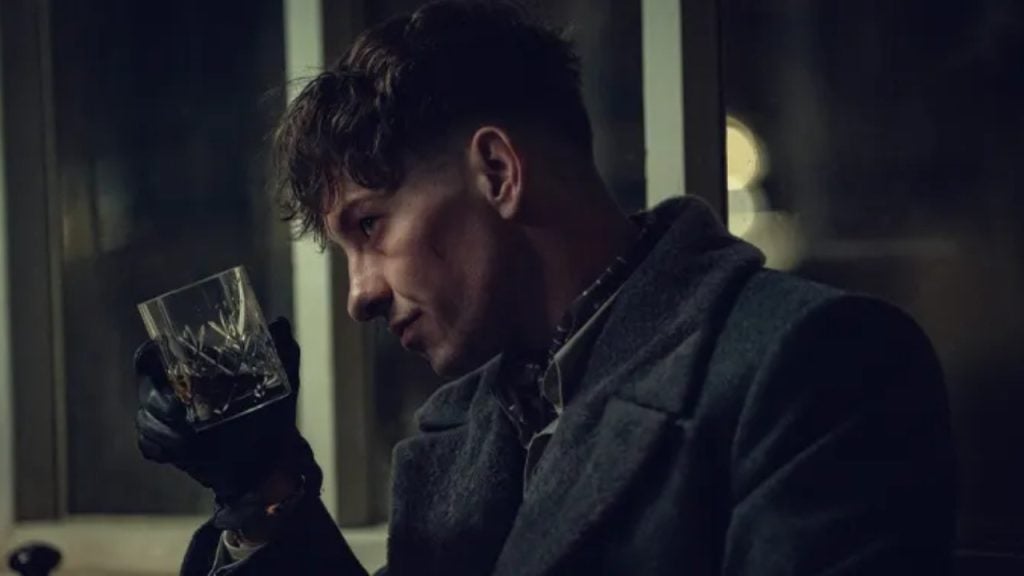
It’s also the typical Peaky Blinders business for George Steel (The Aeronauts) and Ben Wilson (The Crown). Their dark and gloomy cinematography becomes more captivating than ever, especially because, just like for the series, the majority of the sets were actually built, and we return in full force to the smoky Garrison pub, the dark canal docks, and the wartime warehouses. The Brummie underworld mischief becomes even more malevolent as the increasingly dark score, including the highly energetic tunes by Fontaines D.C. and Amy Taylor (Amyl and the Sniffers), truly is made for Dolby Atmos.
While the bloody showdown needs to be seen in cinemas, the rest of the feature doesn’t warrant Peaky Blinders’ transfer to the big screen. The cinematography is once again on point, while the terrific score and balanced performances result in multiple hair-raising scenes, but the all-over-the-place pace and the lack of strong supporting characters show that the story of the cursed gang boss and his Peaky Fookin’ Blinders fare much better on television after all.
‘Peaky Blinders: The Immortal Man’ is a stylish film that captivates visually but struggles with uneven pacing and underdeveloped characters.
Peaky Blinders: The Immortal Man is currently out in cinemas and on Netflix from 20 March
‘Peaky Blinders: The Immortal Man’ is a stylish film that captivates visually but struggles with uneven pacing and underdeveloped characters.

Freelancer by day. Film journalist by night.




1 Comment
Zelda, whose twin sister we see, was never his wife