
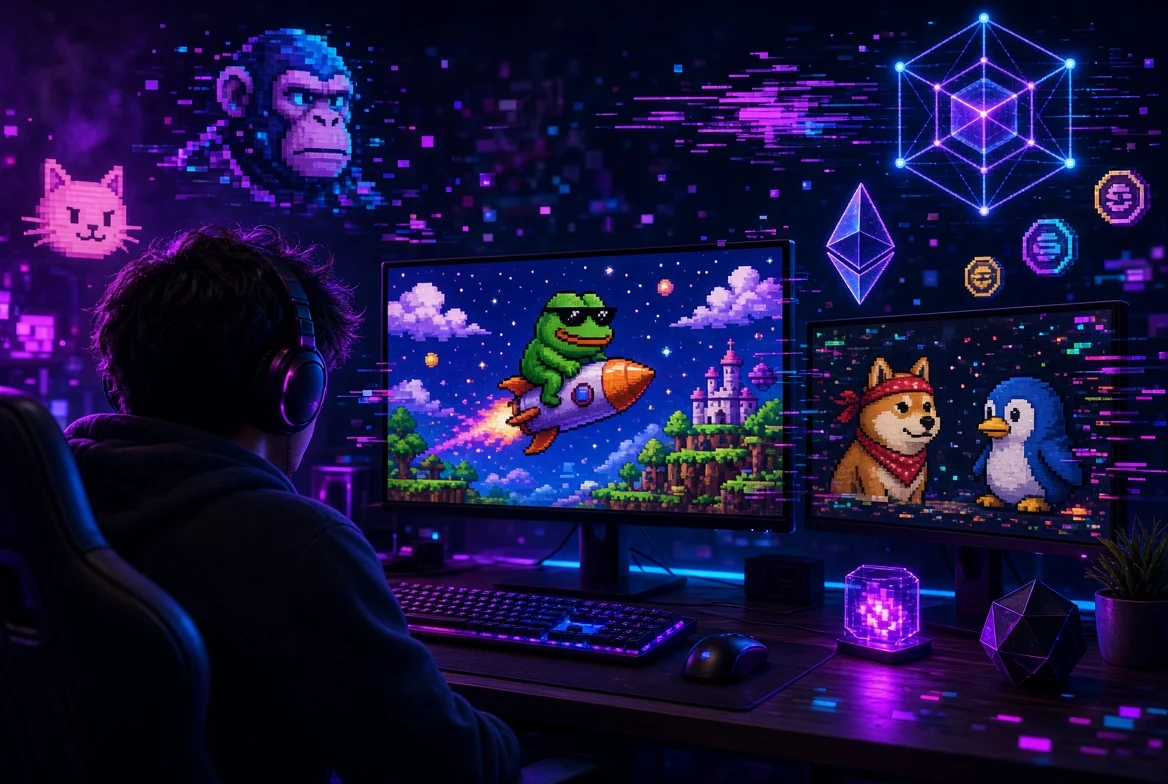
Gaming culture has always thrived on counterculture energy, playful experimentation, and genuine community bonding. Long before billion-dollar publishing conglomerates turned game development into corporate board meetings dominated by aggressive season passes and paywalled cosmetics, video games were built by passionate creators celebrating weird humor and interactive fun. Gamers fell in love with cheeky mascots, absurd plot twists, and hidden Easter eggs because they felt authentic and irreverent. In recent years, however, mainstream gaming has felt increasingly restrictive, locking player achievements, custom skins, and rare trophies behind corporate account systems that offer zero true player ownership. If a publisher decides to shut down a central server, years of dedicated community milestones simply disappear overnight. This persistent disconnect between corporate control and player dedication has ignited a powerful appetite for innovative, creator-led interactive formats that put community fun and digital sovereignty back in the spotlight.
The answer to this corporate fatigue is not coming from monolithic desktop game engines, but from the dynamic crossroads of internet meme culture, modern messaging apps, and transparent distributed ledger technology. Internet culture has always used humor as a creative weapon to challenge rigid corporate systems, and nowhere is that more visible than in the rise of lightweight, character-driven social games. Instead of forcing players through thirty-gigabyte downloads, endless cinematic cutscenes, and complex hardware requirements, progressive creators are bringing interactive worlds directly into social messaging platforms. By launching game experiences natively inside messaging feeds, developers let friends team up, compete, and share running gags with zero installation friction. Within this emerging creative wave, Duck My Duck has captured the imagination of thousands of internet geeks, proving that charming character design, sarcastic avian humor, and accessible mechanics can build an electric fandom faster than traditional marketing campaigns.
At the core of this cultural resurgence is the brilliant combination of minimalist idle loops and rewarding progression systems. Classic arcade history taught us that an experience does not need complicated key combinations or hyper-realistic graphics to be wildly addictive; it just needs a satisfying feedback loop, responsive controls, and a vibrant artistic identity. Duck My Duck embraces this classic philosophy by turning everyday smartphone interactions into an engaging creative universe. Navigating the world with a rebellious, eccentric duck character feels like stepping into an interactive comic strip where self-aware internet culture takes center stage. Players can tap into quick gaming sessions between streaming their favorite sci-fi shows, reading weekly comic drops, or discussing pop culture lore with friends, enjoying a refreshing dose of lighthearted humor without the grueling time commitments demanded by modern competitive titles.
What elevates this accessible format into a genuine technological breakthrough is the underlying architecture of true digital sovereignty. For decades, players accepted the frustrating reality that in-game items, special character variants, and virtual accolades were merely rented digital pixels. Modern decentralized ecosystems completely invert this dynamic by anchoring in-game items and character attributes directly to high-throughput blockchain networks like TON. When unique character skins, decorative trophies, and milestones are registered on an immutable ledger, players become authentic custodians of their virtual journey. Within this vibrant framework, the native game crypto coin powers on-chain governance, unlocking special collectible upgrades and rewarding active community participation without relying on predatory corporate microtransactions. Players are not merely passive consumers feeding an algorithmic metric; they are equal stakeholders in an open, evolving digital universe where every inside joke, community raid, and leaderboard triumph belongs permanently to the community.
The broader cultural impact of this digital evolution extends far into the future of geek entertainment. By stripping away intimidating technical barriers, lightweight social games act as an effortless gateway into decentralized tech for mainstream pop culture fans who never cared for complex cryptographic jargon. When decentralized tech is paired with charismatic storytelling, witty visual art, and frictionless messaging distribution, it transforms from an abstract concept into an exciting, everyday adventure. Projects like Duck My Duck prove that the next major frontier of gaming will not be defined by massive corporate studios recycling safe franchises, but by nimble, community-driven worlds where players share laughs, collect cool characters, and shape their own digital adventures across a truly open internet.

Hi! I’m Bryan, and I’m a passionate & expert writer with more than five years of experience. I have written about various topics such as product descriptions, travel, cryptocurrencies, and online gaming in my writing journey.