More people can hum the “Rocky” theme than could name the current heavyweight champion. And that’s not an insult to boxing, but just a measure of how much better Hollywood is at telling a boxing story than boxing itself is at telling one.
The sport and its movie version have been drifting apart for decades, and it’s worth looking at exactly where.
The movie version of boxing
“Rocky” premiered in 1976 and won Best Picture, and the formula it set down has barely changed since: an underdog nobody believes in, one clearly defined opponent, and a single fight that resolves everything. Stallone made five sequels off that template through 1990, then returned to it once more with “Rocky Balboa” in 2006.
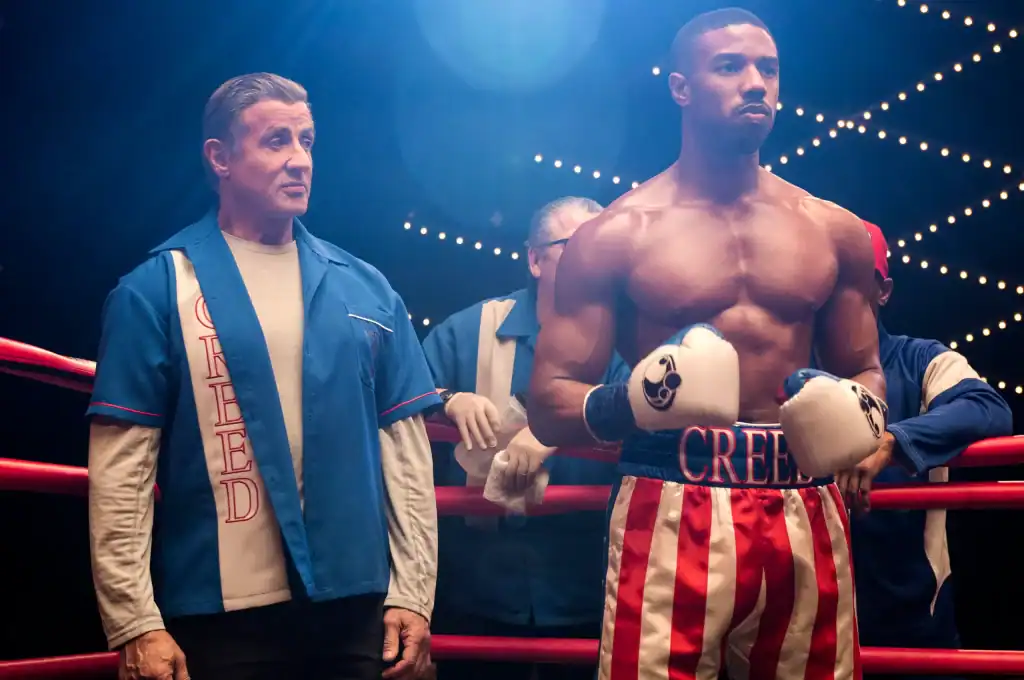
“Creed,” released in 2015, picked up the same structure and pointed it at a new generation, following Apollo Creed’s son as he tries to build a career out of his father’s shadow. It earned Stallone an Oscar nomination for playing Rocky (as a trainer now) one more time, and “Creed II” and “Creed III” kept the series going through 2023. Across nine films spanning almost fifty years, the emotional idea has stayed remarkably consistent: a boxer gets one shot, one opponent, and one night to prove something about who they are.
That structure makes these movies work, but it’s almost nothing like how the sport actually runs.
The real, messier sport
Real boxing has four champions per weight class: the WBA, WBC, IBF, and WBO each crown their own titleholder, and it’s common for a division to have three or f
our different men all called “world champion” at the same time. As of mid-2026, the heavyweight division is a good example. Oleksandr Usyk holds the WBC, WBA, and IBF belts, while Daniel Dubois holds the WBO after beating Fabio Wardley for it. There’s no undisputed champion holding all four at once. Usyk has actually unified all four titles twice in the past two years, which hadn’t happened in the division in a quarter century, and even that got undone by a vacated belt.
None of that fits neatly into a two-hour movie. Real title pictures involve promoters, competing broadcast deals, mandatory challengers, and fighters who avoid each other for years for reasons that have nothing to do with sport. A modern boxing fan has to track four organizations, several streaming platforms, and a rankings system that changes by the week, just to know who’s actually good.
What the movies still get right
None of that means the movies are lying about what draws people to boxing in the first place. The best fight cards really do produce underdog stories that sound scripted, like a late-career comeback, a massive weight or reach mismatch that the smaller fighter overcomes anyway. Boxing history is full of moments that a screenwriter would be accused of overwriting if they’d invented them.
But movies don’t show the waiting. A real career takes a decade of undercards and small purses to reach the fight “Rocky” gives its hero after one training montage. The mythology is true, but it’s stretched across years instead of a two-hour runtime, with a lot of business and politics filling the gaps that the movies skip entirely.
Following the Actual Sport
The gap between the two versions of boxing isn’t a flaw in either one. The films give people a clean, satisfying story about a sport that can’t produce a fitting format on its own, and the real sport keeps generating the raw material that makes those stories worth telling in the first place. Fans who follow both get the best of it: the myth on screen, and the far stranger reality it’s based on.
If you want this, too, you can easily find boxing movies on different streaming services, and follow real sport at https://sportbet.one/sports/boxing, which covers upcoming fight cards and odds in a lot more detail than any biopic ever could.

Frankie Wilde – is a content writer at various gambling sites. Also, he is a passionate traveler and a great cook. Frankie shares informative articles with the world.