

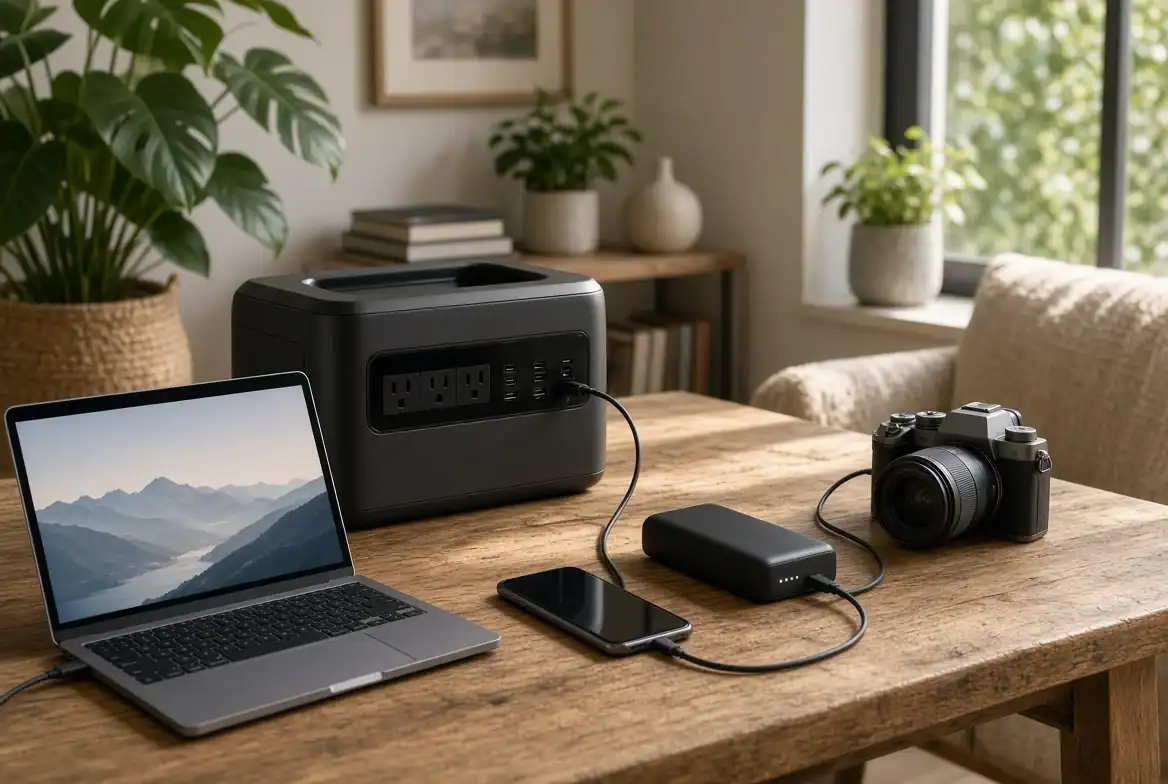
The value of a portable battery is easiest to notice on an ordinary day that becomes unexpectedly long. A delayed train, an extra client meeting, a spontaneous dinner, or an afternoon of navigation can turn a comfortable phone charge into a warning icon. A portable battery provides a private reserve of energy without requiring a café table or public outlet. Choosing one well is less about preparing for disaster than designing a smoother daily routine around the devices that support communication, payments, transport, entertainment, health tracking, and work.
Portable Power Has Become Part of Daily Infrastructure
Phones now consolidate tools that once had separate batteries: camera, map, wallet, ticket, music player, authenticator, and emergency contact list. Earbuds, watches, e-readers, cameras, and tablets add more demands. The result is not that everyone needs the largest battery available; it is that many people benefit from a modest reserve matched to their habits.
Newer wearables add to that list. Glasses with built-in cameras and audio, such as Kylie Jenner’s new Meta glasses, charge in a case that also needs regular topping up. For anyone who wears them alongside a phone and earbuds, that is one more battery to plan around.
Someone who works from home may need portable power only during outages or weekend trips. A city commuter may use it several times per week. A content creator, delivery worker, traveler, or event professional may consider it essential equipment. The best design differs for each lifestyle.
Different designs fit different routines. A magnetic or pocket-size battery can suit a city commuter, while a higher-output model may be useful for someone who carries a laptop and phone. For example, the Anker Laptop Power Bank (25K, 165W) has a 25,000mAh capacity and built-in and retractable USB-C cables, reducing the number of separate cables to pack. Its USB-C output is rated at up to 100W for one device; at 595g, its weight is also worth considering for daily carry.
Begin With an Energy Budget
Capacity is usually listed in milliamp-hours, but the number does not transfer directly into an exact count of phone recharges. The internal cells operate at a different voltage from the output, and conversion creates losses. Cable resistance, temperature, battery age, and using the phone while charging affect the result.
A small bank near 5,000mAh is primarily an emergency or top-up tool. Around 10,000mAh is a common everyday balance for people who want more reserve without a heavy bag. Capacities around 20,000mAh and above suit multiple devices, longer travel, or compatible laptops, but the physical commitment grows.
Think in scenarios rather than numbers. How much battery remains at the end of a difficult day? Is one phone the priority, or must earbuds and a tablet also survive? How often is the bank recharged? A person who begins each day near an outlet needs less reserve than someone spending two days in transit. Anker’s power-bank range includes magnetic models and models with built-in cables, giving users different ways to match a battery to how they carry and charge their devices.

Output Shapes the Experience
A battery with sufficient energy can still disappoint if its output is too low. USB-C Power Delivery lets compatible chargers and devices negotiate higher power, supporting faster phone charging and, in suitable models, tablets or laptops. The power bank, device, and cable all need to support the required level.
Maximum charging speed is not constant. Devices slow down as they approach full charge or become warm. A high wattage is most valuable when time is limited and the battery is low. For a slow overnight refill, efficiency and convenience may matter more.
Multiport banks divide a total power budget. The highest single-port figure may drop when two or three devices are connected. Anyone planning to charge a laptop and phone together should study the model’s allocation details. Port count without useful simultaneous output is merely decorative.
The Everyday-Carry Question
The ideal battery is the one that leaves home. Weight, thickness, surface texture, and shape influence that decision more than online photos suggest. A slim model can share a pocket with a phone. A larger unit belongs in a backpack, camera bag, or travel organizer.
Built-in cables reduce preparation. They are useful for commuters who do not want a separate pouch, though a detachable cable is easier to replace and can be chosen in different lengths. A clear percentage display helps avoid carrying an empty bank. Foldable plugs or charger-battery hybrids can simplify a kit further, but added functions should be assessed against size and replacement flexibility.
Buyers should compare dimensions and weight directly, especially when choosing between a slim magnetic product and a laptop-oriented battery with substantial USB-C output. A difference that looks minor on a screen may decide whether the bank fits a favorite bag or gets left at home.
Wireless Convenience and Its Tradeoffs
Magnetic wireless batteries can attach to compatible phones and begin charging without a cable. This is convenient during a meeting, while walking through an airport, or when no flat surface is available. Alignment matters, and a thick or incompatible case can reduce performance.
Wireless charging generally creates more heat and loses more energy than a wired connection. It may also be slower. A magnetic bank is therefore a lifestyle choice, not a universal upgrade. Someone who values quick attachment may accept the tradeoff; someone maximizing available energy on a long trip may prefer a cable.
Heat deserves attention. Avoid charging wirelessly in direct sun or leaving a phone and bank pressed together inside a hot bag. If either device becomes unusually hot, disconnect and allow it to cool.
Power for Work Beyond the Office
Mobile work mixes communication and creation. Video calls, hotspot use, photo editing, document syncing, and navigation can drain several devices. A higher-output power bank can extend a compatible laptop’s runtime, but it must meet the laptop’s charging requirement.
Check the original adapter’s wattage and the laptop manufacturer’s guidance. A bank with lower output may charge slowly while the computer sleeps but fail to keep up under load. Cable rating also matters. A phone cable with USB-C connectors is not automatically suitable for high-power laptop charging.
Remote workers should test their heaviest realistic workload. If the battery level still falls while connected, the bank may be extending runtime rather than charging. That can be useful, but it should be understood before a day away from outlets.
Travel and Transit
Portable batteries are most visible in airports, but their travel role begins earlier. They keep digital tickets accessible, support navigation after arrival, and recharge small devices when hotel outlets are inconvenient. A built-in cable or multiport layout can reduce the number of loose accessories.
Airlines regulate spare lithium batteries, usually using watt-hours. They are commonly required in cabin baggage rather than checked luggage, with additional approval or restrictions above defined energy levels. Rules can vary, so travelers must confirm the current policy of the carrier and route. A clearly printed watt-hour rating is valuable.
Protect the bank’s ports from metal objects and physical damage. Do not use a swollen or cracked unit. During security screening, keep it accessible rather than buried under clothing. International travel may also require a compatible wall charger and plug adapter to refill the bank.
Outdoor Days Without Pretending It Is Indestructible
A power bank supports hikes, festivals, beach days, and youth sports, yet most consumer models are not automatically waterproof, dustproof, or impact resistant. Read the model’s environmental rating if outdoor protection is important. A zip pouch can guard against dirt and splashes but should not trap heat while the bank is operating.
Cold conditions can temporarily reduce battery performance. Keep the bank close to the body in an inner pocket, then allow it to return gradually to a normal temperature. Avoid charging a battery that is extremely cold until it has warmed within the manufacturer’s recommended range.
For remote trips, portable power should complement—not replace—navigation backups, emergency planning, and communication procedures. A charged phone is helpful, but it cannot create cellular coverage.
Safety and Product Quality
Lithium-ion energy requires responsible design and use. Protection circuitry may respond to overcurrent, excessive voltage, short circuits, and temperature. Anker’s MultiProtect and model-specific ActiveShield features are examples of safeguards worth checking, though their versions and behavior vary. Consumers should confirm the exact product details rather than generalizing a collection-level claim.
Choose traceable products with clear specifications, appropriate certification information, accessible support, and a warranty. Extremely cheap batteries with vague capacity and no accountable manufacturer can create both performance and safety uncertainty.
User behavior still matters. Keep batteries away from high heat, water, puncture, and crushing. Do not charge under bedding. Retire a device that swells, smells unusual, becomes abnormally hot, or has been severely damaged. Recycle it through an approved battery program rather than household waste.
Building a Simple Charging Habit
A portable battery cannot help when it is empty. Add it to an existing routine: recharge it with the phone, check it before the workweek, or keep a reminder in a travel checklist. Larger batteries take longer to refill, so pair them with a charger that supports their input capability.
Store the bank in a cool, dry place. If it is reserved for emergencies, inspect and top it up periodically according to the manufacturer’s guidance. Batteries age even when unused. A unit forgotten for years should not be assumed ready.
Keep one suitable cable with the bank and replace it when worn. Clean ports carefully and avoid forcing connectors. A small organizer can hold the battery, cable, and plug adapter as one reliable module.
Common Lifestyle Mismatches
The most common mistake is buying the largest capacity and then leaving it at home. Another is choosing a magnetic bank for a phone or case that is not compatible. Laptop users may focus on capacity while overlooking output wattage. Multi-device users may count ports without checking shared power.
People also underestimate recharge time. A high-capacity bank filled from a low-power charger can take many hours. Others assume a built-in cable supports every device they own. A five-minute needs assessment prevents these mismatches.
Brand should be one part of the assessment, particularly when it brings clearer documentation, traceable specifications, warranty coverage, and accessible support. The purchase should still be model-specific because features, dimensions, and charging behavior can differ significantly within one lineup.
Choosing a Battery That Fits Real Life
Start with the longest normal day, not an imagined extreme. Select enough capacity to cover it with a reasonable margin. Match output to the largest device, choose ports for the actual cable mix, and compare the product’s weight with the bag or pocket where it will live.
Then decide which convenience feature genuinely changes behavior: a built-in cable, magnetic attachment, multiple ports, a display, or laptop-level output. Anker offers practical versions of each, but the successful purchase is not the battery with the largest specification. It is the one that quietly becomes part of the routine, stays charged, and is present when an ordinary day asks more from technology than expected.

Madeline Miller love to writes articles about gaming, coding, and pop culture.