

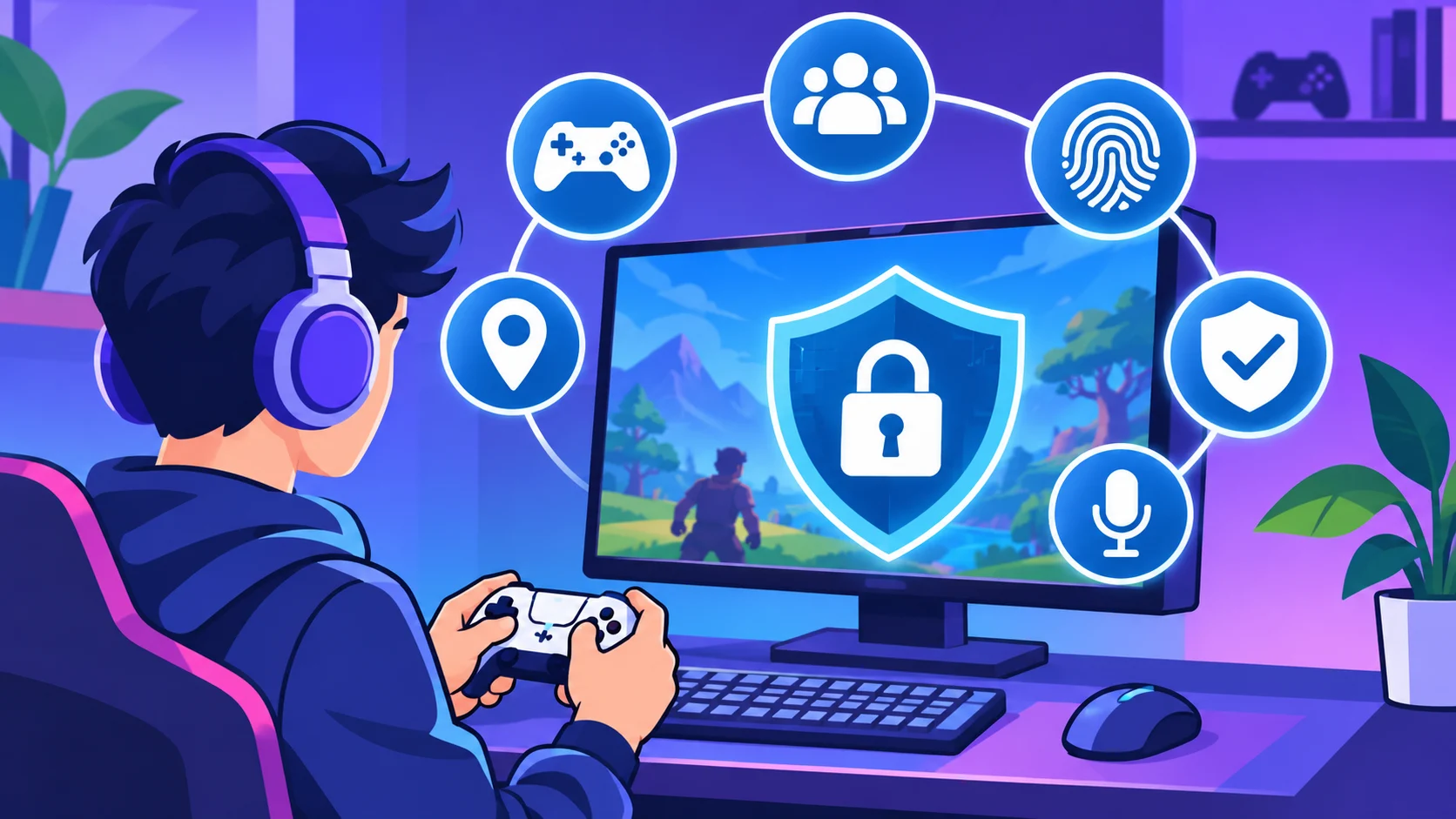
Online gaming connects millions of Americans through multiplayer matches, virtual worlds, and digital communities. Games such as Fortnite, Roblox, Minecraft, and Call of Duty offer entertainment across consoles, PCs, and mobile devices. However, playing online also involves sharing personal information, sometimes without realizing how much data is collected.
Understanding online gaming privacy helps players protect their accounts, manage their digital footprint, and make informed decisions about the services they use.
Why Some Gamers Prefer Minimal Personal Information
Online gaming services collect different amounts of personal information depending on their registration systems, payment methods, and security requirements. Some video games allow guest access, while others require an email address or linked account. Similar privacy discussions extend to real-money gambling services, including no KYC casinos providing reduced identity-verification requirements.
For many players, simpler registration means faster access and fewer personal details shared during account creation. However, reduced initial verification does not necessarily mean complete anonymity. Services may still collect IP addresses, payment information, or account activity.
Privacy-focused gamers increasingly consider what information is necessary before creating accounts. This approach, known as data minimization, encourages services to collect only the information needed for specific purposes.
What Personal Data Do Online Games Collect?
Modern video games collect information to operate accounts, improve gameplay, prevent cheating, and personalize experiences.
Common categories include:
-
Personally Identifiable Information (PII): Email addresses, usernames, dates of birth, and payment details.
-
Telemetry data: Gameplay statistics, session duration, performance metrics, and in-game interactions.
-
Location data: IP addresses and approximate geographic locations.
-
Cross-platform identifiers: Xbox Network IDs, PlayStation Network accounts, and Epic Games account information.
-
Communication data: Text messages, player reports, and voice chat recordings where monitoring is enabled.
Games such as Genshin Impact and Fortnite may use gameplay analytics to understand performance and engagement.
Some services also work with third-party analytics companies or advertising providers. Players should review privacy policies to understand how their information is collected, retained, and shared.
How US Privacy Laws Protect Online Gamers
The United States has several federal and state privacy protections affecting digital entertainment.
The Federal Trade Commission (FTC) oversees unfair or deceptive business practices, including misleading claims about consumer privacy and data security.
The Children’s Online Privacy Protection Act (COPPA) provides additional protections for children under 13. Its amended rules introduce stronger requirements involving parental consent, data retention, and certain disclosures of children’s information, with compliance obligations taking effect in 2026.
California residents also benefit from the California Consumer Privacy Act (CCPA), as amended by the California Privacy Rights Act (CPRA). These laws provide eligible consumers with rights to access, delete, and correct certain personal information.
The California Privacy Protection Agency (CPPA) helps enforce these protections.
Other states, including Virginia and Colorado, have comprehensive privacy laws. Their requirements vary, meaning player rights depend partly on location and whether a particular company falls within the law.
Account Security and Identity Theft Prevention
Protecting an online gaming account requires more than choosing a strong password.
Steam, PlayStation Network, and Xbox Network provide security features designed to reduce unauthorized access.
Players should follow several basic practices:
-
Enable multi-factor authentication (MFA) wherever available.
-
Use unique passwords for gaming accounts.
-
Avoid sharing login credentials with other players.
-
Review connected applications and account permissions.
-
Be cautious about unfamiliar links offering free in-game currency or rewards.
Account takeover (ATO) attacks can expose stored payment details, purchased content, and personal messages.
Players should also avoid publicly sharing sensitive information that could contribute to identity theft, harassment, or swatting incidents.
Voice Chat, Anti-Cheat Software, and Player Privacy
Competitive multiplayer games depend on systems that maintain fair gameplay and community safety.
Some publishers use voice chat processing, automated moderation, and transcription technologies to identify abusive behavior or investigate player reports.
Anti-cheat systems also collect technical information to detect unauthorized software. Riot Vanguard, used in Valorant, is a notable example of kernel-level anti-cheat software.
These tools serve legitimate security purposes, but players should understand what permissions they require.
Hardware identifiers, device information, and gameplay activity may be processed for enforcement purposes, including hardware-based bans.
Reading a game’s Terms of Service and privacy policy helps clarify how these technologies operate.
Privacy Concerns in Free-to-Play Games
Free-to-play titles such as Roblox and Fortnite allow users to access substantial gameplay without an upfront purchase.
Revenue often comes from optional cosmetic items, virtual currencies, and other digital purchases.
Some gaming services also use targeted advertising technologies and third-party analytics to measure engagement.
The FTC’s 2022 settlement announcements involving Epic Games, totaling $520 million in monetary relief and penalties, highlighted concerns involving children’s privacy and unwanted purchases.
Players should pay attention to purchase settings, advertising preferences, and interface designs that encourage unnecessary spending or information sharing. Such designs are sometimes called dark patterns.
Parents can also use available family controls to manage purchases, communication features, and younger players’ privacy settings.
How Players Can Control Their Gaming Data
Most major gaming services provide account settings that allow players to manage aspects of their privacy.
Depending on the service and applicable state law, players may be able to request access to personal information, delete certain records, or limit data sharing.
A Data Subject Access Request (DSAR) is one method of exercising applicable privacy rights.
Some websites also provide a “Do Not Sell or Share My Personal Information” link. Global Privacy Control (GPC) signals can communicate certain opt-out preferences to participating services, with legal recognition depending on jurisdiction.
Players should also review privacy settings when connecting gaming accounts across multiple devices or storefronts.
Deleting an account does not always mean every record disappears immediately, since companies may retain information for security, legal, or operational reasons.
The Future of Privacy in Online Gaming
Emerging technologies are creating new privacy considerations.
Cloud gaming services process gameplay remotely, while virtual reality devices such as Meta Quest and Apple Vision Pro can collect movement-related information and other sensor data.
Generative AI in non-player characters may introduce additional processing of player conversations and interactions.
As these technologies develop, transparent data collection and meaningful privacy controls will become increasingly important.
Final Thoughts
Online gaming privacy is about understanding what information a service collects and how that information is used.
American players can improve their protection by enabling MFA, reviewing privacy settings, limiting unnecessary data sharing, and understanding their rights under applicable US privacy laws.
Whether playing Fortnite, exploring Minecraft, or using a cloud gaming service, a few practical privacy habits can make online entertainment more secure without reducing enjoyment.

Hi! I’m Bryan, and I’m a passionate & expert writer with more than five years of experience. I have written about various topics such as product descriptions, travel, cryptocurrencies, and online gaming in my writing journey.