

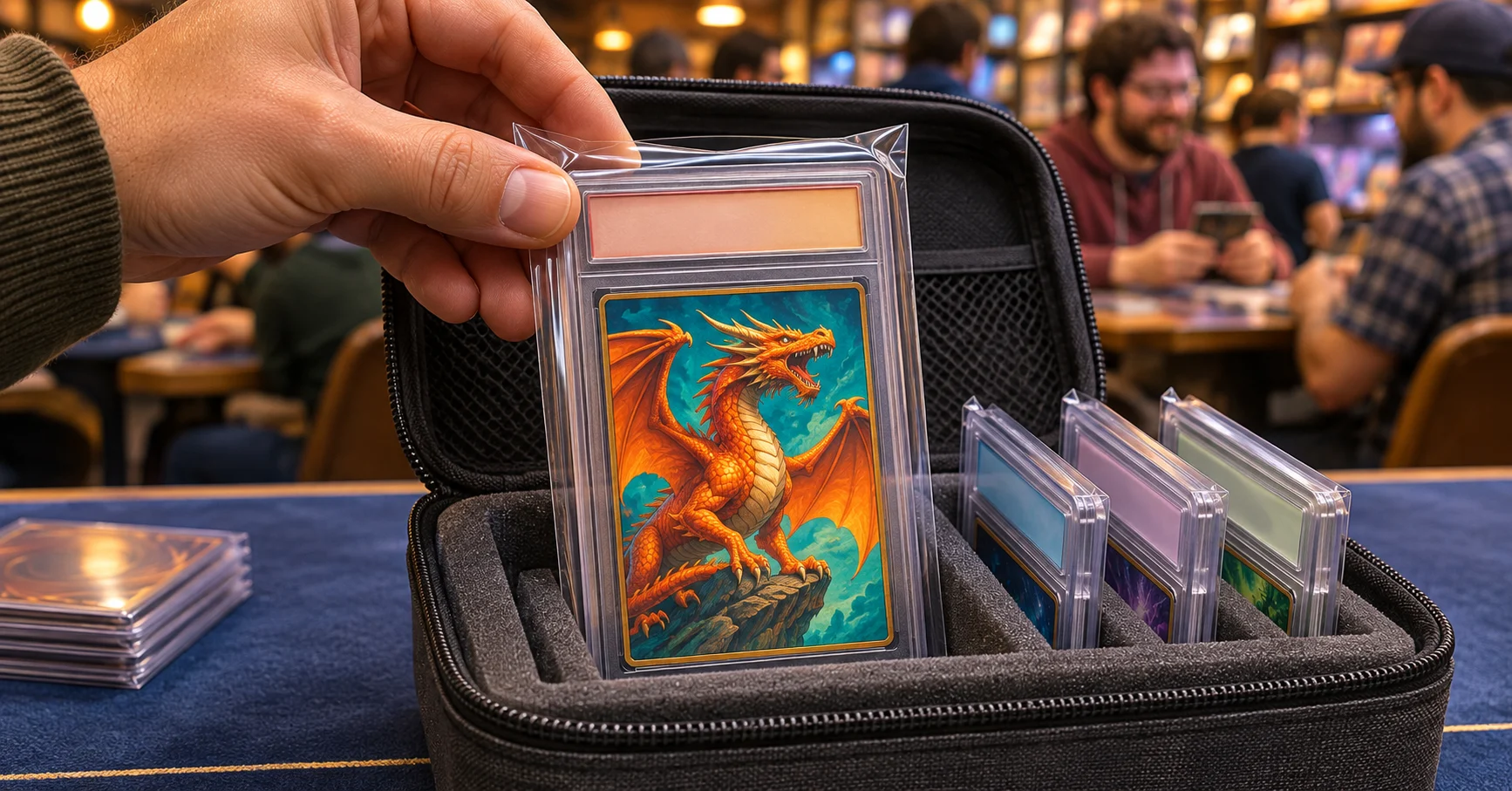
Graded cards look great on a shelf, but they’re not meant to live there forever. Sooner or later you’ll want to haul a few to a card show, a local game store trade night, or a meetup with friends. That’s where the fun is. It’s also where a pristine case can pick up its first scratch.
Once a slab leaves the house, it gets handed across tables, set down next to someone’s drink, slid in and out of bags, and stacked during trades. None of that is dramatic, but it adds up. The good news is that a little prep keeps your slabs looking as good at the end of the night as they did at the start.
Why Slabs Get Scuffed
A graded case is tough, but the plastic scratches more easily than most people expect. The usual culprits are:
- Table surfaces. Sliding a slab across a gritty table leaves fine scratches on the back and edges.
- Slab-on-slab contact. Stacking cases during a trade means hard plastic grinding against hard plastic.
- Bags and pockets. Zippers, keys, and loose gear all find a way to rub against a case.
- Hand-to-hand passing. Every handoff is another chance for a drop, a slip, or a thumbnail scrape.
The card inside stays safe and the grade doesn’t change, but the case is part of what you’re showing off. If you plan to sell or trade, a clean holder makes a better first impression, and buyers notice scuffed cases.
Where Slab Guards Come In
This is where slab guards earn their spot in your bag. They’re simple covers that fit around a graded case, protecting its edges and surfaces from everyday wear. The key point is that they go over the outside of the slab. You don’t open the case, you don’t touch the card, and the grade isn’t affected in any way.
Think of them like a screen protector for your phone. They take the scuffs so the case underneath doesn’t have to. You can slip them on before you leave the house, hand a slab to a friend without worrying as much, set it down on a table, or stack a few cards in a trade pile. When you get home, you take the guard off and the case looks the way it did when you left.
They’re also inexpensive compared to what most slabs are worth, which makes them an easy habit to build. Plenty of hobby shops and online sellers carry them. Dragonscale Supplies is one source worth checking out, and it’s worth comparing a few options to find a fit you like for your usual case sizes.
Keep Everything Organized in a Carry Case
Guards help a lot, but a good carrying setup does the rest. Tossing slabs loose into a backpack is asking for trouble.
Use a padded carry case or slab box with dividers or slots, so each case sits upright and separate. This keeps cards from knocking together, makes it easy to find what you need mid-conversation, and saves you from digging around at the table. If you’re bringing a mix of cards to sell and cards you’d rather keep with you, separate them into sections so you don’t accidentally offer up something that isn’t for sale.
A quick tip: put your most valuable pieces in the most protected spot, usually the center of the case, away from the edges where bumps happen first.
Don’t Stack Slabs Loose
It’s tempting to pile cards up on a table while you talk through a deal. Resist that urge. A loose stack can slide, topple, or get bumped, and slab edges and corners do a lot of damage to each other.
If you need to lay cards out, put them on a soft playmat or a microfiber cloth, not a bare table. Keep them in a single layer when you can, and if you do have to stack, use guards or leave a layer of cloth between them. Keep drinks and snacks well away from your setup, too.
Handle Other People’s Cards Like Your Own
Trade nights run on trust, and how you handle someone else’s slab says a lot about you.
- Ask before picking anything up. A quick “mind if I take a look?” goes a long way.
- Hold slabs by the edges. Keep your fingers off the front and back, which cuts down on fingerprints and smudges.
- Hold them over a table. If a card slips, it should land on a surface, not the floor.
- Hand cards back directly. Don’t toss them or leave them somewhere for the owner to retrieve.
- Never stack their cards on yours. Keep each person’s slabs separate during a trade.
Careful handling also builds goodwill. People remember who’s respectful with their collection, and those are the people they want to trade with again.
A Few Last Show-Prep Reminders
Before you head out, give each slab a quick once-over to note its current condition. If you ever need to compare later, you’ll know whether a scratch was already there. Bring a microfiber cloth to wipe off fingerprints, and double-check that your carry case latches securely. Keep it with you at all times rather than leaving it under a table or in a car.
Most of all, remember that cards are meant to be enjoyed. A little protection means you can say yes when someone wants to see your best pieces, without wincing every time one changes hands. Pack your guards, organize your case, and go have a great time.

Matthew is a Sr. Content Writer working as a freelancer in Outreachmonks for the past 5 years. He has completed his education in Bachelor’s in Business Administration. With his articles he loves to impart information about the latest business trends and models.