TL;DR
- Bryan reaches the laboratory, but his infection overtakes him before anyone can administer the cure.
- The film leaves the cure’s fate and Bryan’s next encounter with the arriving helicopter unresolved.
- Cregger has discussed the T-virus as the basis for the creatures; comparisons with specific game bosses do not establish their identities.
- The ending has no mid-credits or post-credits scene, and the director’s sequel ideas are not a production announcement.
Warning: Major spoilers for Resident Evil (2026), including the ending, follow.
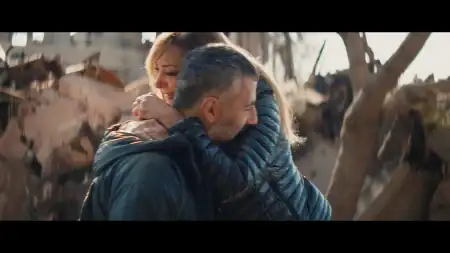
Reaching the hospital sounds like the end of Bryan’s nightmare. It is the destination he has been struggling toward, the place where his delivery matters, and the best chance he has of getting help. Zach Cregger’s Resident Evil makes that promise increasingly difficult to trust.
The final stretch leaves several different kinds of questions behind. Some have straightforward answers in the story. Others concern events the movie deliberately stops short of showing. Taking MovieWeb’s discussion of the film’s biggest questions as a starting point, here is how the outbreak, the hospital sequence, and Bryan’s fate fit together.
Why Does Getting To The Hospital Fail To Save Bryan?
Bryan’s infection begins with the bite he receives from an infected girl in a campervan. By the time he reaches the hospital laboratory, his condition is worsening. The scientists manage to prepare the cure, but his transformation accelerates before they can successfully treat him. GamesRadar+’s account of the ending documents that sequence.
The cruel timing is what makes the ending land. The destination is real, the scientists are there, and treatment is within reach. Bryan has completed the task that seemed to offer a way out, yet arriving does not stop what is happening inside him.
That is also why the laboratory does not function as a conventional safe room. Bryan brings the danger in with him. The problem that matters most can no longer be shut outside a door or escaped by moving to another floor.
What Was Umbrella Asking Bryan To Deliver?
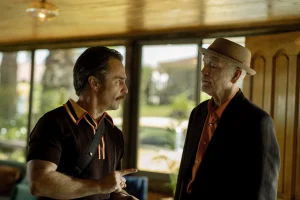
According to the explanation given by Umbrella’s employees, the outbreak escaped the company’s facility. Bryan’s bag contains replacement material needed to make a cure after the previous supplies were lost. His delivery therefore connects the people responsible for the crisis with their attempt to contain it. MovieWeb details the employees’ account and the purpose of the bag.
It is an especially grim position for a courier: he has been carrying something enormously important without being given the information needed to understand the job. The object stays the same while its meaning changes. What began as paid work becomes an emergency on which other people are depending.
Umbrella’s effort to produce treatment also does not, by itself, settle its motives or absolve it of responsibility. The film gives Bryan an immediate reason to finish the delivery. It leaves a much less complete picture of the company’s decisions behind the disaster.
Is The Monster Following Bryan A Known Resident Evil Boss?
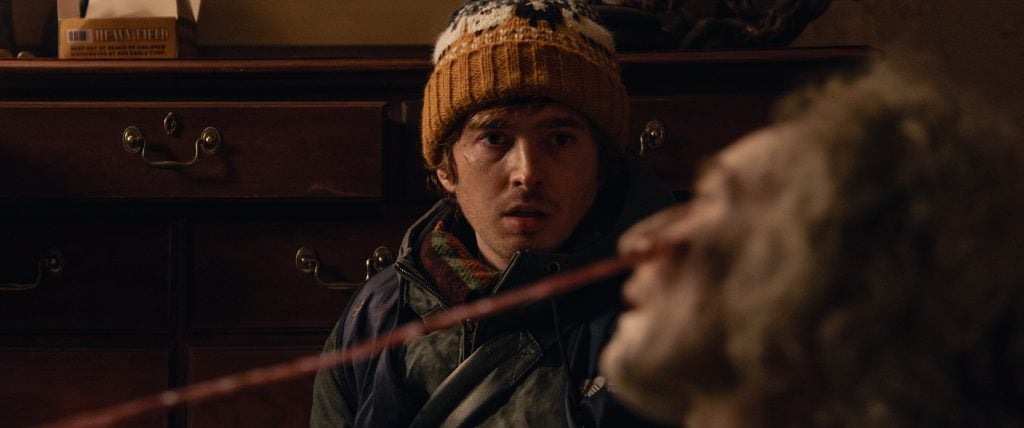
The recurring pursuer develops from the infected woman Bryan encounters on the road. As it incorporates other bodies, its appearance changes and its threat grows. MovieWeb describes this progression, while noting that the film never supplies the creature with a game-boss name. Its breakdown distinguishes the creature from the comparisons surrounding it.
Nyx is a popular comparison because of the body-absorption connection. However, GamesRadar+ presents the Nyx identification as a theory. Recognizing a similar design or ability does not mean the film has revealed that specific character.
The distinction matters particularly in this movie. A creature can borrow the games’ visual vocabulary and still belong to Bryan’s original story. Treating every mutation as a character reveal can distract from the more immediate horror: something he thought he had escaped keeps returning in a less recognizable form.
Which Virus Is Responsible For The Mutations?
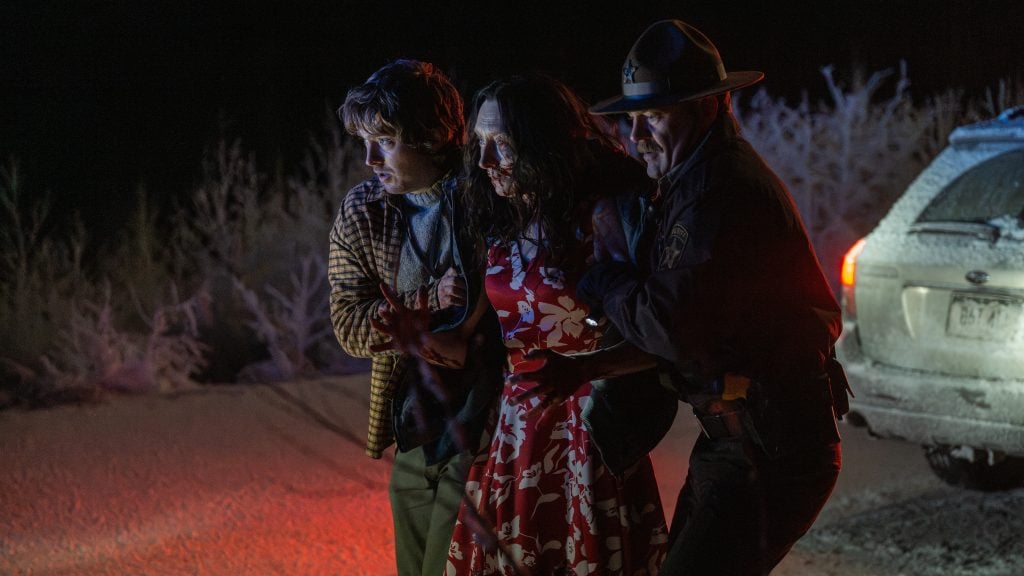
Cregger’s own promotional commentary provides a firmer starting point than identifying pathogens by appearance. In comments published by Sony Pictures, he explicitly discusses the T-virus and its capacity to produce different effects. He explains that he wanted a variety of adversaries rather than an entire film of interchangeable zombies.
That establishes the director’s stated basis for the creatures. It does not establish a separate G-virus or Las Plagas outbreak simply because a mutation reminds someone of another game. Nor does it mean the movie supplies a detailed scientific explanation for every change.
For Bryan, the lack of predictable rules is part of the danger. Learning how to survive one encounter does not guarantee that the next infected person will behave the same way. The audience has to adjust with him.
What Happens To The Cure And The Helicopter?
The laboratory produces a syringe of treatment, but it falls from the hospital during the final chaos. The film does not reveal whether it survives the impact. The National Guard is meant to collect the cure, which gives the arriving helicopter a story purpose beyond simply appearing at the climax. GamesRadar+ explains the planned collection and the unresolved fall.
What follows should remain an open question. A possible recovery, an attack on Bryan, or his capture would all require events beyond what the ending shows. None becomes established simply because it would fit a familiar franchise pattern.
The scene leaves an uncomfortable distance between help arriving and help being possible. An aircraft can reach the building, but the person who desperately needed rescuing has already changed.
Does Bryan Die, Or Become Something Else?
Bryan undergoes a catastrophic transformation and loses control of his body. During the change, he is still asking for help while his mutations attack the scientists. The final confrontation with the helicopter ends without showing his death. ComicBook.com’s ending analysis describes that separation between Bryan’s pleas and his body’s actions.
His immediate fate is therefore more specific than either a clean escape or an on-screen death: he has become the kind of threat he spent the film trying to survive. How much of him might remain afterward is not answered by a future scene.
That uncertainty gives the final image its emotional weight. The audience knows the frightened person behind the monstrous appearance. Someone encountering him for the first time would only see the danger. The film has spent its running time making those two perspectives impossible for the viewer to separate.
Why Does This Raccoon City Have Snow And Modern Phones?
The setting is a deliberate adaptation choice. Cregger addressed the contemporary phones and wintry weather by explaining that he was taking liberties with the material, including choosing snow for its visual appeal. GameSpot reports their explanation.
That means the movie’s connection with the Raccoon City games should not be treated as a promise to reproduce every detail of their 1998 setting. The familiar city provides the foundation for a version shaped around this film’s story and imagery.
The cold also should not be promoted into a confirmed explanation for Bryan’s infection rate. The cited filmmaker explanation concerns the setting’s appearance; it does not establish a medical rule about the weather delaying transformation.
Does The Ending Promise A Sequel?
There is no mid-credits or post-credits scene adding another reveal. ComicBook.com confirms that the ending is not extended by a credits tease.
Cregger has left the creative possibility open. In a separate ComicBook.com interview, he said the movie was conceived as a standalone project while acknowledging that he already had ideas for what could come afterward. That is interest from the filmmaker, not confirmation that a sequel has entered production.
The distinction allows the final scene to work on its own. A continuation could explore the consequences, but the present film has already reached its devastating turn: Bryan arrives where he was supposed to go and still cannot secure his rescue.
As Geek Vibes Nation’s Resident Evil review discusses, the movie draws much of its energy from the mechanics of survival. The ending makes the limit of that survival painfully clear. Making it through the next obstacle and getting out safely were never quite the same thing.

DC Fanboy! Superman is the greatest comic book character of all time. Favorite movies are Man of Steel, Goonies, Back To the Future