Pop-culture fans track a lot of fast moves. A steelbook run sells out in minutes. A con page flips from “soon” to “live” with no heads-up. A game patch note lands at 2 a.m., and Reddit spots it first.
Geek Vibes Nation lives in that churn with news hits, reviews, and buy tips. If you run a shop, a fan app, or a data team, you may want the same edge. Web scraping can power price checks, stock pings, and drop alerts. It can also earn you a hard block if you rush the job.
The real boss fight: bot checks and rate walls
Most sites fight scripts now. One widely cited bot report from Imperva put bot traffic near half of all web hits at about 47%. That fact shapes how stores, ticket hubs, and stream sites tune their guards.
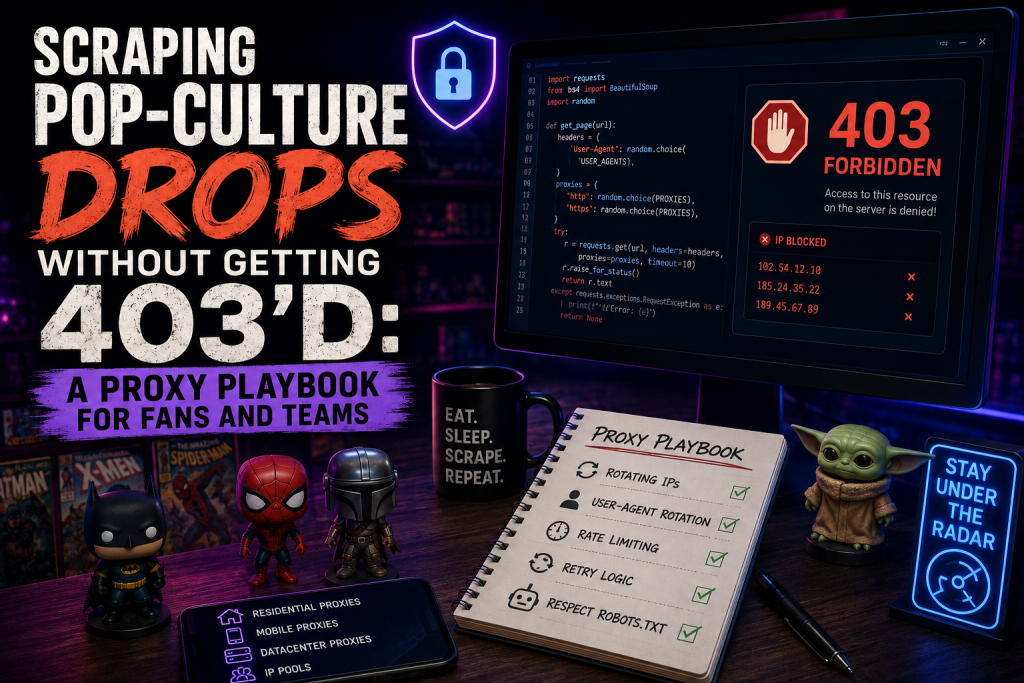
You will see three main pain points. Sites slam you with 403 blocks when your IP looks fake. They throw 429 “too many hits” when you rush. They pop CAPTCHAs when they doubt your path, your pace, or your IP pool.
Pick proxy types that match the job
Think in terms of where the IP “lives.” Server IPs run cheap and fast, so they fit public pages like patch notes, cast lists, and blog feeds. Sites spot them fast on retail and ticket flows. Use them where blocks stay rare.
Home IPs cost more, yet they blend in on store pages and “add to cart” flows. Cell IPs cost the most, but they can help on the toughest targets. Keep your pool size close to your hit rate. A small pool with a high hit rate will burn out.
CAPTCHAs need their own plan. Treat them like a fail state, not a step in your core flow. When you must solve them, keep solve rates and time in your logs so you can tune rules. Byteful breaks down a clean approach in CapSolver: Proxy setup for the AI CAPTCHA solver.
Build a scrape flow that survives drop day
Start with a queue and a pace cap. Your script should spread hits over time, not spike in one burst. Rotate IPs by task, not by each page, so you keep a sane session path. Cache pages that do not change, like item specs and cover art.
Track change, not noise. Most “drop watch” value comes from diffs on stock, price, ship date, and page text. Save a small hash per page and alert only when it flips. That one choice cuts cost and lowers block risk.
Use real browser headers, but keep them steady. Random header soup looks odd. Keep a tight set of user agents that match your render path. If you run headless, line up your TLS and JS traits with your tool stack.
Data roll-up that fits fandom work
Pop-culture data feels messy because sites name the same thing ten ways. One store writes “4K UHD,” another writes “Ultra HD,” and a third puts it in an image. You need a match layer that maps titles, SKUs, and drops to one “canon” item.
Build a rule set for common traps. Split editions by key tags like “steelbook,” “variant,” “exclusive,” and “bundle.” Keep per-site IDs, then map them to your own item ID. That map lets you post clean buy tips and clean deal notes.
Play fair: keep risk low for you and for fans
Read a site’s terms and respect their limits. Avoid logins unless you own the account and you need that data for a clear reason. Skip paywalls and gated pages. Do not scrape user posts, emails, or ship info.
Set guard rails in code. Add a hard cap per host. Add backoff on 429 and on slow load. Stop on repeated blocks and alert a human. Those steps protect your IP pool and cut the odds of a legal fight.
A simple use case: merch stock watch that feels like a news beat
Say you track three merch shops and one ticket page for a con. You pull each target every few minutes, then you diff stock and price fields. When a page flips from “sold out” to “in stock,” you fire one alert with a short link for your own team to check by hand.
That flow mirrors how a fan reads the room. You act fast, but you do not spam the site. You also earn trust with your readers, since you can back each alert with a quick manual check before you post.